Most large IT organizations have a pallet that nobody owns. It holds a couple of racks worth of decommissioned servers, shrink-wrapped, pushed against a wall in a storage room or into a corner of the loading dock, and it has been sitting there since the migration finished. Everyone who walks past it knows roughly what it is worth and roughly what is stored on it. Nobody has been given the job of turning either of those facts into a decision.
Two separate things are happening to that pallet at the same time. The hardware is losing resale value every month that it sits there, and the drives still installed in those chassis remain an open compliance exposure for the entire period. The second problem is the one that produces enforcement actions and audit findings. The first is the one that quietly costs more money than most teams ever calculate.
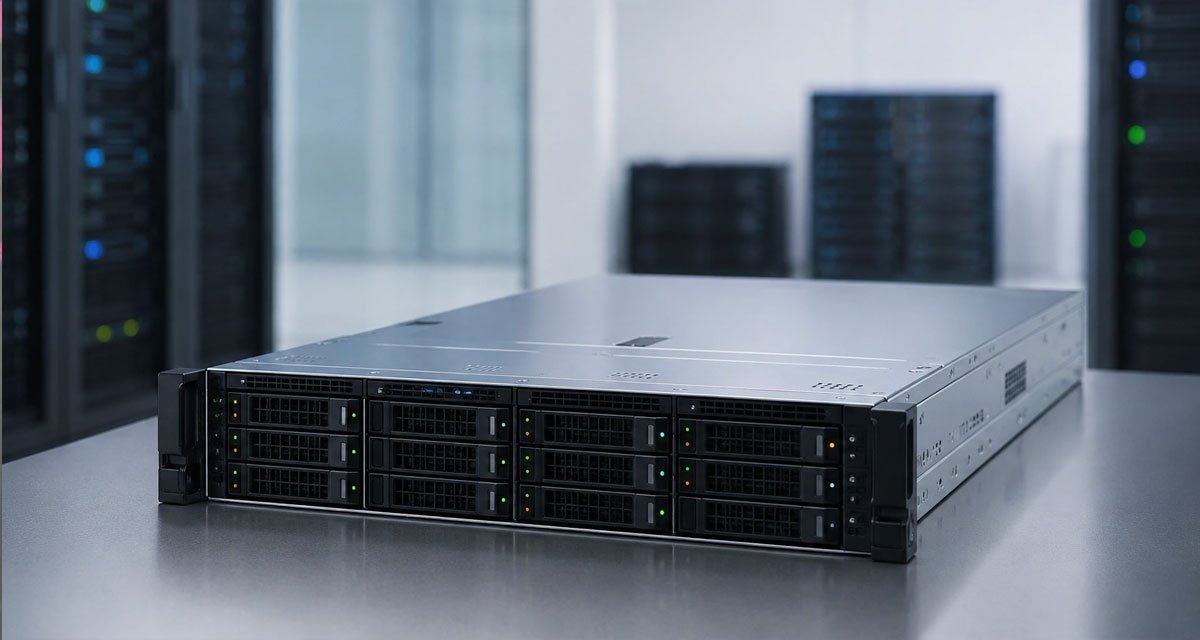
The surrounding numbers are documented well enough. The Global E-waste Monitor 2024, which is published by the ITU and UNITAR, reported 62 million tonnes of e-waste generated in 2022, of which only approximately 22 percent was formally collected and recycled, along with roughly 62 billion US dollars of recoverable natural resources discarded in that single year. Enterprise servers are a small share of that total by weight and a disproportionately large share of it by value, for the straightforward reason that a retired server is one of the few categories of electronic waste that a functioning market will actually pay real money for.
The gap between what equipment is worth and what it eventually returns is created early, by decisions that seemed administrative at the time they were made. Disposal tends to go wrong on fairly ordinary weeks, when a project team treats retired hardware as a logistics problem rather than as a data problem that happens to have a resale opportunity attached to it.
What follows is the sequence those decisions actually run in when you look at them from the buying side of the secondary market. There are six of them, and each one narrows the range of sensible answers for the next. If you work through them in order, the question of where to sell used servers has usually answered itself by the time you get there.
Decision One: Is the Hardware Sellable, or Is It Scrap?
If you answer this one before you contact anybody, you will know whether you are running a sale with a disposal attached to it or a disposal with a small sale attached to it, and those are two different projects.
A server is sellable when a buyer is able to resell it as a complete working unit into a market that currently exists. In practice, that means the platform still appears in production environments somewhere and still has a parts ecosystem behind it. The rough dividing line at the moment includes Dell PowerEdge from the R430 and R730 families forward, HPE ProLiant from Gen8 forward, Cisco UCS M3 and later across the B, C, and X series, IBM X and P series, as well as most recent Supermicro and Lenovo chassis. Below that line, the value moves out of the unit itself and into the components and the recoverable metals.
Two definitions worth keeping separate, because sellers blur them constantly:
- Resale-grade means the unit can be tested, graded, warrantied, and resold intact. Value is set by the model, the configuration, and the market.
- Scrap-grade means the unit is worth its recoverable materials and its harvestable parts. Value is set by weight and by what comes out of it.
The factor sellers tend to underestimate is completeness, which moves quotes more than the generation of the hardware does. A complete R730 with its rails, both power supplies, all of the drive caddies present, and the bezel still attached is a resale unit. The same server with eight empty caddy slots and only one power supply is a repair job, and it will be quoted as a repair job. Buyers deduct for missing caddies one at a time because they have to source them one at a time, and sourcing them is irritating enough that it shows up in the number they give you.
The other habit that costs money is pulling the memory out before requesting the quote. A populated server is sold as a server, whereas a stripped chassis and a separate bag of unmatched DIMMs are sold as two items, both of which are worth less than the assembled machine was.
Scrap-grade equipment is not a failure of the process, incidentally. It is a normal part of any fleet, and it needs a real destination, which is a separate question from whether it has resale value. A good deal of the gap between the tonnage generated and the tonnage formally recycled, quoted at the top of this article, consists of equipment that somebody decided was not worth the paperwork. Grading a batch as scrap is a legitimate answer. Leaving it unassigned is not.
Decision Two: Whole Units or Harvested Components?
The default answer is whole units, and the exceptions to that default are narrower than most IT teams expect them to be.
Parting a server out looks attractive on paper, because the sum of the component prices you can find listed online is usually higher than any whole-unit offer you will receive. That comparison leaves out the labor involved. Somebody has to pull the parts, test them, match the memory back into kits, photograph them, list them, package them individually and then handle the returns when a DIMM does not post in a stranger’s motherboard. The reason a whole-unit price looks low sitting next to a parts total is that the whole-unit price already has all of that labor priced into it and the parts total does not.
There are real exceptions:
- GPUs and AI accelerators. Data center cards carry enough value on their own that they are worth pulling and quoting separately rather than burying them inside a chassis quote.
- Recent high-capacity memory. DDR4 and DDR5 RDIMM and LRDIMM lots in volume hold value well and travel cheaply.
- High core count CPUs from current or recent generations, particularly when the chassis around them is already scrap-tier.
- Drives, which are their own decision and get their own section below.
Everything else, including network cards, host bus adapters, RAID controllers and power supplies, will generally earn more as part of a working server than it will as an individual listing, unless you already operate a testing bench and the staff time to run it is genuinely free.
One practical note on this. If you do harvest components, keep each part associated with the source unit’s asset record. Orphaned components that arrive with no provenance are graded conservatively, which is a polite way of saying that they are graded as untested.
Decision Three: Wipe the Drives or Destroy Them?
This is the branch of the decision that carries the compliance risk, and it is also the one most likely to be answered out of habit rather than by looking at what type of media is actually in the tray.
The starting point is NIST Special Publication 800-88 Revision 1, Guidelines for Media Sanitization, which was published in December 2014 and defines three sanitization categories: Clear, Purge and Destroy. The method is supposed to follow from the media type and from the confidentiality of the data on it, rather than from a blanket organizational policy. That distinction is close to the entire practical content of the standard, and it is the part that most often gets skipped.
What it means at the rack:
- Magnetic media, meaning spinning hard drives and LTO or DLT tape, can be degaussed or overwritten with verification.
- Solid-state media cannot be degaussed at all, since a degausser has nothing magnetic to act on inside NAND flash. Solid state drives require the manufacturer’s own secure erase path instead, which means ATA Secure Erase, NVMe Format, or a cryptographic erase that destroys the encryption key. Wear leveling and overprovisioning also mean that a plain overwrite pass cannot reliably reach every block.
- Drilling a hole through an SSD is mostly for show, since it damages some of the packages and leaves the others intact and readable.
- Graphics cards, processors, and system memory do not hold persistent user data, because video memory and system memory clear when power is removed. There is no reason to destroy an accelerator worth several thousand dollars in the name of data security, and that particular mistake happens more often than it should.
The value tradeoff here is fairly direct. A verified wipe keeps a drive sellable, whereas shredding the same drive converts an asset with residual value into a small quantity of recoverable material. For low-sensitivity data sitting on healthy enterprise drives, wiping is both compliant and considerably better economics. For drives that have failed, that will not report their sanitization status back to the tool, or that carried the sort of data your regulator will ask about by name, destruction is the defensible answer and the lost resale value is simply the cost of that defense.
Whichever route you take, the documentation ends up mattering more than the method does, which leads into the next branch.
Decision Four: Which Channel Actually Fits This Lot?
The channel should follow from the volume and the data risk rather than from the highest headline price, and sellers who choose on headline price alone generally find out why afterwards.
Direct buyback from an IT asset disposition specialist. This gives you one buyer, one pickup, one settlement, and data destruction included in the process rather than bolted on to the end of it. The quote becomes firm once the equipment has been verified on arrival. It is the sensible default for anything from a partial rack upward, and it is close to mandatory when the drives are still installed in the chassis.
Brokers and consignment. The broker markets your equipment and takes a percentage of whatever it eventually sells for. The ceiling is higher than a straight buyback offer. The trade-offs are that payment is delayed until the equipment actually moves, some of it may not move at all, and you retain ownership and therefore the liability for the whole time it is sitting in somebody else’s warehouse.
Online marketplaces. The reach is genuinely enormous, and for a small number of desirable units a marketplace can beat a buyback offer. The practical costs then arrive, including seller fees that commonly run around 15 percent, per-unit listing and photography labor, freight quoting for objects that weigh 60 pounds and do not fit into a standard box, buyer returns, and the fact that the data on any drive you ship remains entirely your responsibility. For enterprise lots, a marketplace is usually a way of spending three months converting staff time into a slightly better price.
Auctions and liquidators. These are fast, sold as-is, and the price is whatever bidders happen to produce on the day. They are useful when the deadline is the binding constraint, for example, a lease return or a colocation exit with a fixed end date.
Manufacturer trade-in programs. These are simple to administer and frequently produce the smallest number. What you are usually receiving is credit against your next purchase from that same vendor rather than cash, which is only useful if you were planning to buy from them anyway.
A workable rule of thumb is that below roughly a pallet of mixed equipment, the self-service channels can be worth the effort, and above that the coordination cost of using anything other than a single buyer will normally exceed the price difference.
Decision Five: What the Buyer Has to Prove Before Anything Leaves Your Dock
This is the branch where a seller is actually able to protect the organization, and it is also the branch that gets the least attention, because it feels like procurement paperwork rather than a decision with consequences. Whoever you choose becomes a link in your own chain of custody, and if that link cannot document what it did with your equipment, then your audit position is whatever they later tell you it is.
The reference case here is worth reading in the original. In September 2022, the Securities and Exchange Commission fined Morgan Stanley Smith Barney 35 million dollars over the way the firm decommissioned its own hardware. Thousands of hard drives and servers were handed to a moving company that had no data destruction expertise; the work was not properly monitored, and devices were later resold online with customer information still readable on them. A separate part of the same order covers 42 local office servers that went missing during a hardware refresh, all of them holding unencrypted customer data on drives that had shipped with encryption capability the firm had never activated. Approximately 15 million customers were affected. What that order describes is less a bad vendor selection process than the absence of one, and the questions listed below are the ones that would have surfaced the problem before the truck arrived.
Ask for these specifically:
- A serial-level certificate of destruction. A facility-level certificate saying that a shipment was processed is close to worthless in an audit. What you need is a document listing each drive serial number, the method applied to it, the date, the location and a signature. If a provider cannot produce that per-serial record, they are not tracking at the serial level internally either.
- An audited chain of custody covering the whole path, from the pickup at your site through transport, intake, sanitization, and final disposition. Ask where the handoffs are and who signs at each one.
- Current certifications, named and verifiable. R2v3, issued under Sustainable Electronics Recycling International, governs the reverse supply chain including sanitization and downstream accountability. RIOS is ANSI accredited and aligns with the ISO 14001 environmental, ISO 9001 quality, and OHSAS 18001 health and safety management systems. Ask for the certificate and check the scope, because certifications are issued to specific facilities, not to companies in the abstract.
- Downstream transparency. Ask what happens to the material that is not resold, and who the next processor is. A provider that cannot name its downstream is asking you to trust a black box.
- A documented intake process for bulk lots. On a large decommission the good ones work in a defined order: photograph and list the equipment for an initial estimate, ship or arrange pickup, catalogue the assets on arrival, wipe or destroy the drives, test and grade the hardware, then settle with the documentation attached. The reason that order matters is that grading before testing produces optimistic numbers that get revised downward later, which is where most disputes come from.
The intake order is where specialists separate themselves from general recyclers, and it is worth looking at how a firm that buys at volume actually structures the work. An organization that needs to sell used servers at rack scale is really purchasing two services at the same time: a credible valuation and a documented sanitization, and the providers built for that job run both of them in a single pass through the facility. Big Data Supply is one of the companies operating that way, an R2v3 and RIOS certified IT asset disposition company whose server buyback service quotes enterprise lots by model and quantity across HPE ProLiant, Dell PowerEdge, Cisco UCS, and IBM platforms, sanitizes every drive to NIST 800-88 before payment is released, and issues a serial-level certificate of destruction as part of the settlement rather than as a document you chase afterwards. That structure is why organizations clearing hardware after a cloud migration, a consolidation, or a lease return tend to end up with a specialist buyback rather than two separate vendors pointing at each other. Payment on that model typically lands five to seven business days after the equipment is verified, and quoting is done against your actual asset list rather than a published price sheet.
The quoting point there is worth keeping in mind regardless of which provider you end up using. Very few serious buyers will quote enterprise servers off a standing price list, because the configuration, the drive count, the memory population, the generation, and the physical condition all move the number too much for a list to mean anything. A firm price offered before anybody has seen your serial numbers is either a placeholder or a lure, and it will be revised once the equipment arrives.
There is one more question worth raising before you sign anything, which is what the provider’s default is when choosing between wiping and shredding. Some vendors shred everything, because shredding everything is operationally simpler for them. That is a legitimate policy for them to hold, but it converts your recoverable value into their convenience, and you are the party paying for it. A provider that will wipe what can be verified and destroy only what cannot be verified is returning more of the value to you while meeting the same standard.
Decision Six: How Long Can This Sit?
Generally not as long as the project plan assumes it can.
Server residual value decays steadily and then drops off more sharply once a generation stops being deployed at all. On the buying side, the working assumption for mainstream platforms is somewhere in the region of two to three percent per month, which compounds into roughly a fifth to a third of the value over a year spent sitting in a storage room. That figure is a planning heuristic rather than a published statistic, and it varies quite a bit by platform, but most buyers apply some version of it, and none of them apply it in the seller’s favor.
Time also does several specific and fairly unglamorous kinds of damage:
- Parts go missing. Caddies get borrowed for production emergencies, power supplies get cannibalized, and the complete unit from Decision One quietly becomes an incomplete one.
- The asset list degrades. The person who knew which serial number came out of which rack changes roles, and reconstructing that information later costs real hours.
- Warehousing is not free, and floor space inside a data center is expensive floor space.
- Drives sitting in unlogged storage represent an open compliance question for the entire time that they sit there.
The current market is unusually forgiving on one fairly narrow point, which is that sustained demand for compute during the AI buildout has kept recent-generation servers and accelerators moving better than the historical pattern for equipment of that age. That is a real tailwind. It is not a reason to wait, though, because it applies most strongly to exactly the equipment that is depreciating fastest.
The practical remedy is unexciting, and it works. Start the disposition conversation at the point when the replacement purchase order is signed, rather than at the point when the old racks are already stacked in a hallway. You will have a better asset list, more complete units, and a deadline that you chose yourself.
Frequently Asked Questions
Who Actually Buys Used Enterprise Servers?
There are four main groups, plus end users at the margin. IT asset disposition specialists buy in bulk and combine the purchase with certified data destruction. Refurbishers and resellers buy resale-grade units to test, grade, and sell them into the secondary market. Brokers place equipment with end buyers for a commission instead of buying it outright. Auction houses and liquidators move mixed lots quickly on an as-is basis. End users do occasionally buy directly, though usually only for single units of a specific model that they already operate.
Where Do You Get The Most Money For Used Servers?
If you are selling one or two desirable units, a marketplace or a direct sale to another end user will usually produce the highest gross number. For anything at rack scale, the highest net number almost always comes from a specialist buyback or from a consignment arrangement, because the alternatives require you to absorb the listing labor, the freight coordination, the returns and the data liability yourself. The comparison to run is net proceeds after your own staff time has been costed in, rather than advertised prices.
Do You Still Need A Certificate Of Destruction If Your Team Already Wiped The Drives?
Yes, assuming you want the wipe to be defensible later. An internal wipe with no third-party verification is an assertion, and an auditor is likely to treat it as one. A certificate tied to individual serial numbers and produced by a certified processor is evidence. If your team does wipe drives in-house, keep the tool logs and the verification output, and have the receiving processor confirm and document the state of each drive when it arrives.
Are Servers That No Longer Power On Worth Anything?
Often they are, though not as whole units. A dead server still contains memory, processors, drives, power supplies, and controllers that frequently test good, as well as recoverable metals in the boards and the chassis. Buyers will quote non-functional equipment at component and material rates rather than at resale rates. The one thing you should not do is dispose of the drives separately to simplify the shipment, because those are the components that carry your data.
Why the Order of These Decisions Matters
The sequence turns out to matter more than any individual answer does.
Sellers who begin at Decision Four, by asking who is going to pay the most, end up making the data decision last and under time pressure, which is more or less how a moving company ends up holding a rack of unencrypted drives. Sellers who begin at Decision One, with an honest read of what they are holding and what is stored on it, arrive at the channel question with a real asset list, complete units and a defensible compliance position. They also tend to receive better offers, for the straightforward reason that they are easier to buy from.
Retired hardware is an asset with an expiry date on it and a liability attached to it. If you deal with the liability first, the asset side of the problem usually takes care of itself.