The short answer? More than most parents realise. Well-designed children’s furniture directly supports early development by creating environments where children feel physically safe, cognitively stimulated, and emotionally at ease, and that’s not just good parenting instinct, it’s backed by developmental science. When you invest in quality kid furniture (this is commonly referred to as เฟอร์นิเจอร์เด็ก in Thai) , you’re not simply filling a room; you’re shaping the conditions in which your child learns, rests, explores, and grows. Every dimension, every material choice, and every colour decision can either work with your child’s developmental needs or quietly work against them.
The Business Case for Getting Children’s Spaces Right
Here’s something property developers and home investors increasingly understand: a well-appointed children’s room adds measurable value to a family home. Buyers with young children pay close attention to how thoughtfully a property accommodates family living. In the same way a kitchen remodel drives return on investment, a purposefully designed child’s room—fitted with durable, ergonomic furniture—signals quality and long-term livability.
For families, it’s not just about aesthetics. It’s a calculated investment in a space that will be used intensively for years.
How Furniture Design Directly Influences Development
1. Ergonomics and Physical Growth
A child’s body works entirely differently from an adult’s, with unique proportions, developing posture, and support needs that change as they grow. Furniture that isn’t designed to match a child’s frame can lead to poor posture habits that are difficult to correct later. Height-adjustable study desks, for instance, allow a growing child to maintain a healthy seated position from early primary school through to adolescence, rather than slouching over a surface that’s too high or straining upward at one that’s too low.
Beds and mattresses matter just as much. Proper spinal support during sleep is foundational to physical development, and it begins with the surface a child rests on every single night.
2. Cognitive Stimulation Through Environment
- Colour psychology: Soft, intentional colour palettes promote calm focus, while vibrant accent colours can spark creativity and playfulness—both have a role depending on the function of the space.
- Defined zones: When a room has a clear study area separate from the sleep area, children learn to associate specific spaces with specific activities. This supports focus, routine, and eventually, self-regulation.
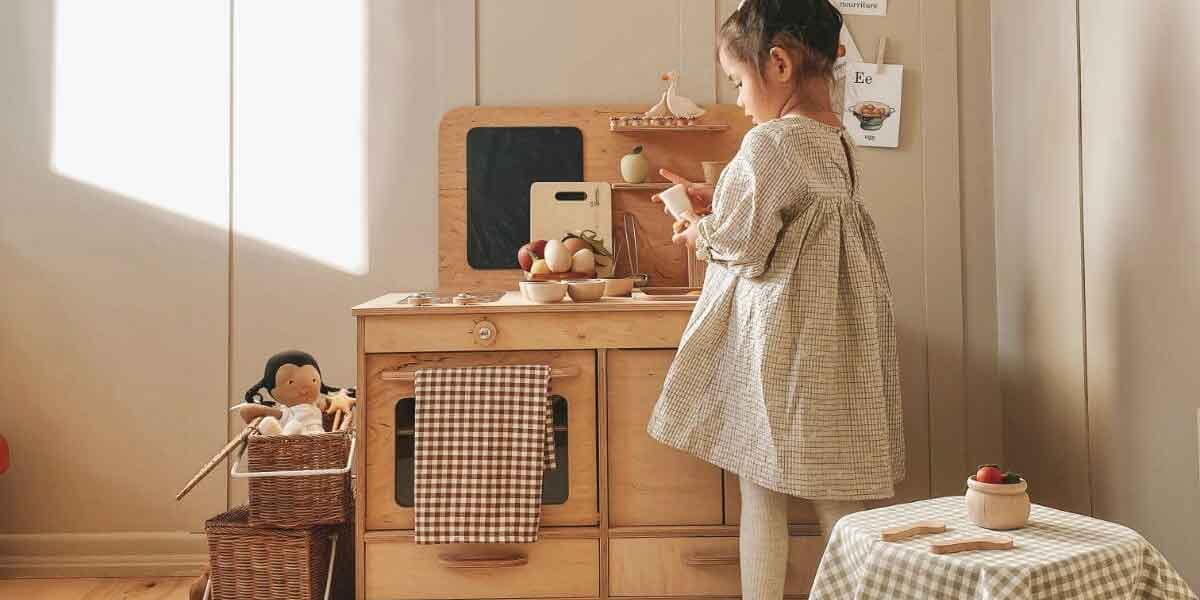
- Storage that children can actually use: Low, accessible shelving encourages independence. When children can retrieve and put away their own things, they build organisational habits and a sense of ownership over their environment.
3. Safety as a Developmental Foundation
Children cannot explore freely, which is essential for development, if their environment is hazardous. Rounded edges, non-toxic finishes, and structurally sound bunk beds with proper guardrails all remove physical risk from the equation. When a child feels physically secure, they’re free to focus energy on play, learning, and social interaction.
The Long-Term Return on Quality
Unlike fast-furniture that warps or wobbles within a couple of years, genuinely well-made children’s furniture grows with the child. A study station that adjusts as your child grows is a one-time investment rather than a recurring cost. From a household budget perspective and certainly from a business planning mindset, that durability represents genuine financial sense.
Your Child’s Development Starts at Home—Make It Count
If you’re ready to invest in furniture that genuinely serves your child’s growth, Tomato KidZ offers European-standard children’s furniture designed with both safety and development in mind. From adjustable study stations to solid wood bunk beds, their range is built to support children from their earliest years right through to young adulthood. Visit Tomato KidZ to explore a collection that treats your child’s space as seriously as you do.