Securing a mortgage pre-approval is a crucial step for many individuals embarking on the home-buying journey. This process involves a lender evaluating your financial health to determine how much they are tentatively willing to lend you. Understanding the nuances of pre-approval can significantly streamline your home search, providing clarity on your budget and strengthening your position as a buyer in a competitive market.

What is Mortgage Pre-Approval?
Mortgage pre-approval is a formal assessment by a lender that indicates the maximum loan amount you are likely to qualify for, based on a thorough review of your financial information and credit history.
A mortgage pre-approval is more than just an estimate; it is a conditional commitment from a lender. During this process, a lender examines your income, assets, debts, and credit score to ascertain your borrowing capacity. This evaluation culminates in a pre-approval letter, which specifies the potential loan amount, interest rate, and loan program you may be eligible for. This letter is invaluable as it demonstrates to real estate agents and sellers that you are a serious and qualified buyer, often a prerequisite for making an offer on a home.
Pre-Approval vs. Pre-Qualification vs. Final Approval
While often used interchangeably, mortgage pre-qualification, pre-approval, and final approval represent distinct stages in the home financing process, each with varying levels of lender commitment and financial scrutiny.
It is important to differentiate between these terms to understand their implications. Pre-qualification offers a preliminary estimate of your borrowing power based on self-reported financial information, without a credit check. It serves as a rough guide but carries no commitment from the lender. Pre-approval, as discussed, involves a more rigorous financial review, including a hard credit inquiry, resulting in a conditional offer. Final approval is the conclusive stage, granted after the lender has verified all documentation, appraised the property, and completed the underwriting process, leading to the official closing of the loan.
| Feature | Pre-Qualification | Pre-Approval | Final Approval |
|---|---|---|---|
| Financial Review | Self-reported, unverified | Verified income, assets, debts, credit check | Full verification, property appraisal, underwriting |
| Lender Commitment | None | Conditional offer | Binding loan offer |
| Credit Check | Soft pull (optional) | Hard pull | Hard pull |
| Purpose | Estimate borrowing power | Determine loan amount, strengthen offer | Secure the mortgage |
Benefits of Getting Pre-Approved for a Mortgage
Obtaining a mortgage pre-approval offers several advantages, including a clearer understanding of your home-buying budget, enhanced credibility with sellers, and a potentially smoother closing process.
A pre-approval letter provides a realistic budget, allowing you to focus your home search on properties within your financial reach. This prevents disappointment and saves time. Furthermore, in a competitive real estate market, a pre-approval letter signals to sellers that you are a serious and financially capable buyer, making your offer more attractive. It can also expedite the closing process, as much of the financial vetting has already been completed. Identifying potential financial issues early in the process allows you to address them before they become obstacles to securing a loan.
Steps to Get Pre-Approved for a Mortgage
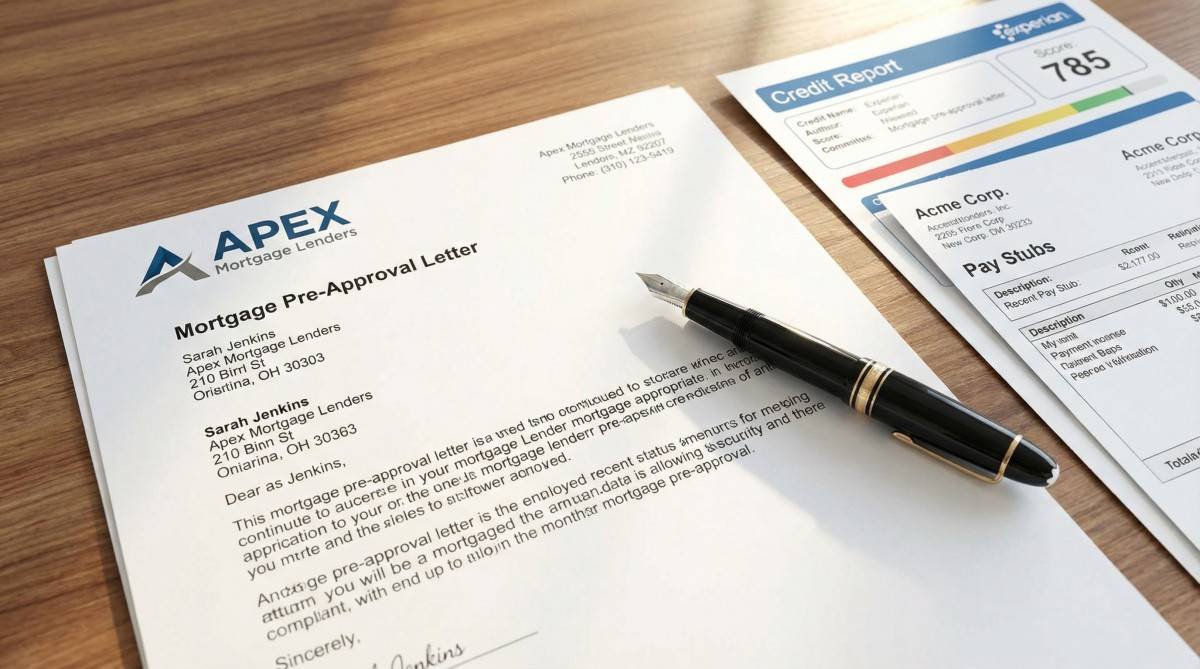
The process of getting pre-approved for a mortgage typically involves reviewing your financial standing, gathering necessary documentation, and submitting an application to a chosen lender.
The journey to mortgage pre-approval begins with a thorough review of your personal finances. This includes assessing your credit score, debt-to-income ratio, and available funds for a down payment and closing costs. Lenders generally look for a credit score of at least 620 for conventional loans, though government-backed options like FHA loans may accept scores as low as 580. Your debt-to-income ratio, which compares your monthly debt payments to your gross monthly income, should ideally not exceed 50%. Once you have a clear picture of your financial situation, you will need to collect a range of documents to support your application. Finally, you will submit these documents and your application to a mortgage lender for their review.
Documents Required for Mortgage Pre-Approval
To obtain a mortgage pre-approval, lenders typically require documentation that verifies your identity, income, assets, and existing debts to assess your financial stability.
Preparing the necessary documentation in advance can significantly speed up the pre-approval process. Lenders will request various financial records to verify the information provided in your application. This often includes proof of identity, such as a driver
’s license or passport, pay stubs from the last 30-60 days, W-2 forms from the past two years, and tax returns for the last two years. Additionally, bank statements and investment account statements for the past two to three months are typically required to verify assets. A comprehensive list of your current debts, including credit cards, auto loans, and student loans, will also be necessary. Having these documents organized and readily available will facilitate a smoother and faster pre-approval process.
| Category | Required Documents |
|---|---|
| Identification | Driver’s license, passport, Social Security card |
| Income Verification | Pay stubs (30-60 days), W-2s (2 years), tax returns (2 years) |
| Asset Verification | Bank statements (2-3 months), investment statements (2-3 months) |
| Debt Information | Credit card statements, loan statements (auto, student, etc.) |
Improving Your Chances of Mortgage Pre-Approval
To enhance your eligibility for mortgage pre-approval, focus on strengthening your financial profile by improving your credit score, reducing debt, and increasing your savings for a down payment.
Several strategies can help improve your chances of securing a favorable mortgage pre-approval. A primary focus should be on improving your credit score, as this directly impacts the interest rates and loan terms you are offered. This can be achieved by making all payments on time, reducing outstanding debt, and avoiding new credit inquiries. Reducing your overall debt-to-income ratio is also critical; paying down existing loans and credit card balances can significantly improve this metric. Furthermore, increasing your savings for a larger down payment can make you a more attractive borrower, potentially leading to better loan terms and a higher pre-approved amount. Avoiding new major purchases or taking on additional debt during the pre-approval process is also advisable, as these actions can negatively affect your financial standing.
Frequently Asked Questions About Mortgage Pre-Approval
How long does a mortgage pre-approval last?
A mortgage pre-approval typically lasts for 60 to 90 days, though this can vary by lender and may be renewable upon request.
Does mortgage pre-approval affect your credit score?
Yes, mortgage pre-approval involves a hard credit inquiry, which may cause a slight, temporary dip in your credit score.
Is there a cost to get pre-approved for a mortgage?
Many lenders offer mortgage pre-approval free of charge, though some may impose a small fee for the credit check.
Can you get pre-approved with a lower credit score?
Yes, some loan programs, such as FHA loans, allow for pre-approval with credit scores as low as 580, depending on other financial factors.
Why should I get pre-approved by multiple lenders?
Getting pre-approved by multiple lenders allows you to compare loan offers and secure the most favorable terms and interest rates.
Conclusion
Obtaining a mortgage pre-approval is a foundational step in the home-buying process, offering clarity, confidence, and a competitive edge. By understanding the process, preparing the necessary documentation, and proactively managing your financial health, you can navigate the path to homeownership more effectively. A pre-approval not only defines your purchasing power but also signals your readiness to sellers, making your home search more focused and ultimately more successful.