The residential real estate landscape is undergoing a profound transformation, driven by changing demographics, economic pressures, and an evolving understanding of how living spaces should function. At the forefront of this shift is the rapid proliferation of Accessory Dwelling Units (ADUs). Often referred to as granny flats, backyard cottages, or in-law suites, these secondary housing units are no longer a niche architectural novelty. They have emerged as a mainstream strategic asset for homeowners seeking to maximize the utility and financial potential of their properties, points out property management Pelican Bay.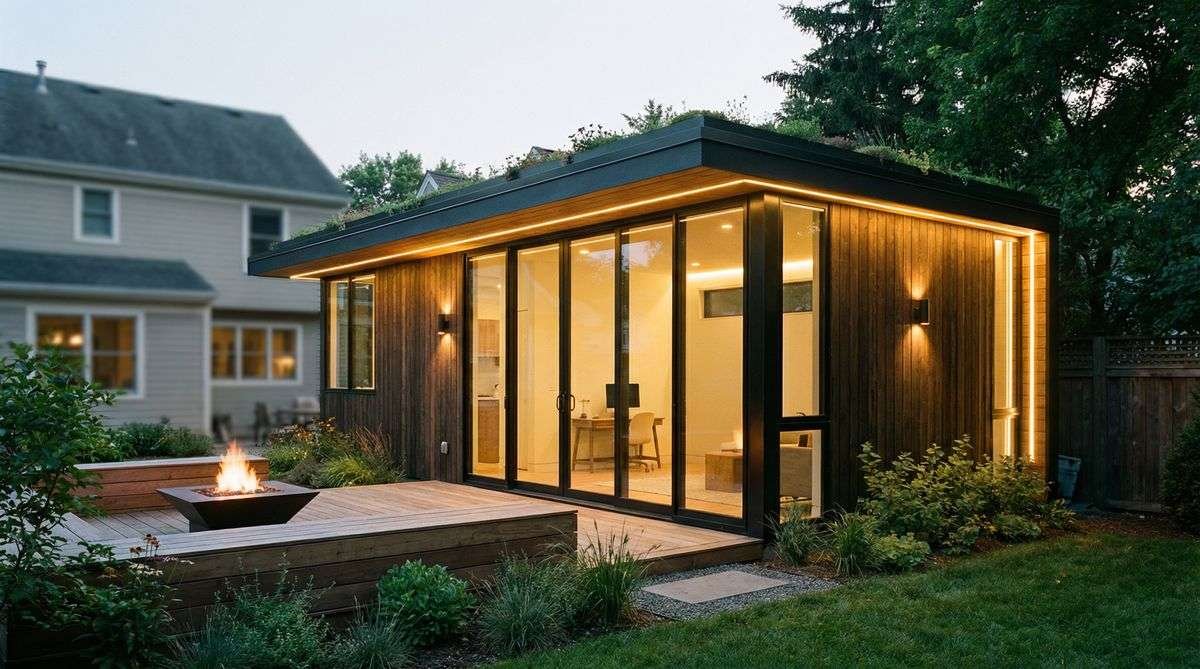
Recent market projections underscore the magnitude of this movement. By 2025, the overall ADU market is expected to reach a staggering valuation of $19.64 billion, expanding at a robust compound annual growth rate (CAGR) of 9.19%. This explosive growth is not merely a reaction to housing shortages; it represents a fundamental rethinking of residential density. Homeowners and real estate investors alike are recognizing that integrating an ADU is one of the most effective methods to generate passive income, accommodate multigenerational living, and significantly boost overall property value.
The Rise of Multigenerational Living and Flexible Spaces
One of the primary catalysts fueling the ADU boom is a significant shift in family dynamics. Economic realities and a renewed emphasis on familial support have made multigenerational living increasingly attractive. Current demographic studies reveal that approximately 63% of millennials express a strong interest in multigenerational housing arrangements. ADUs provide an elegant solution to this demand, offering aging parents or adult children a distinct, independent living space while maintaining close physical proximity to the primary residence.
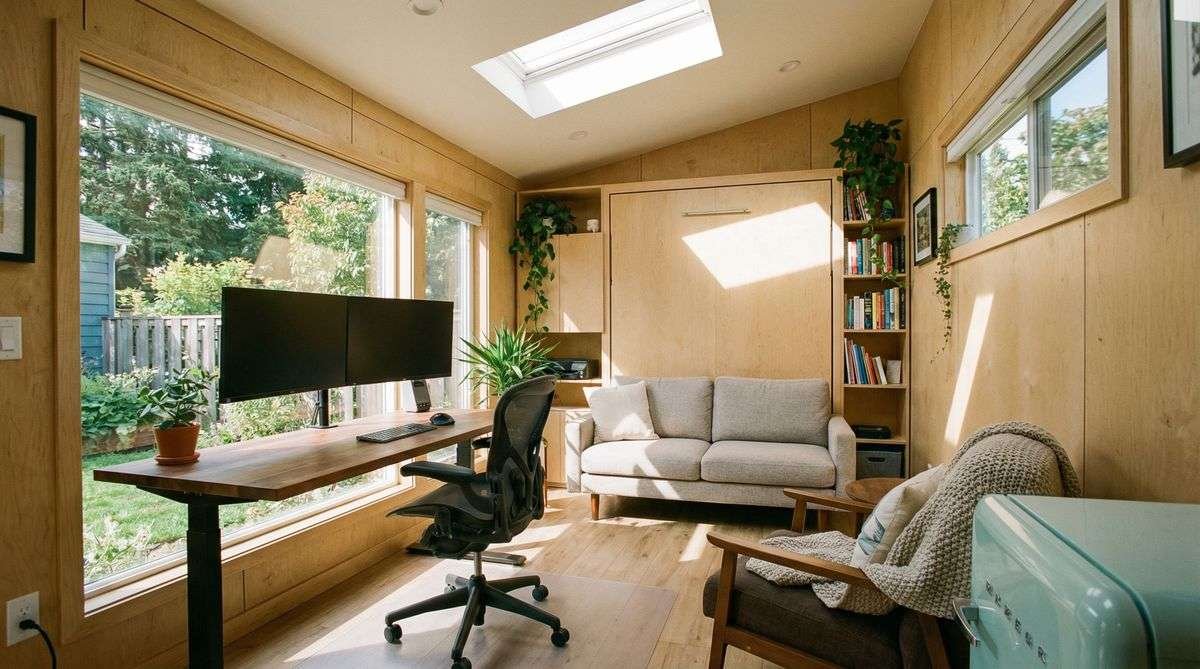
Beyond family accommodation, the functional flexibility of ADUs is a major draw. The structural shift toward remote and hybrid work models has created a permanent need for dedicated, distraction-free workspaces. An ADU serves as an ideal detached home office, creative studio, or private gym, physically separating professional or personal pursuits from the daily rhythms of the main household. Interestingly, industry data indicates that 54% of newly constructed ADUs are under 800 square feet, highlighting a strong consumer preference for highly efficient, compact designs that do not overwhelm existing outdoor spaces.
Maximizing ROI and Generating Passive Income
From an economic perspective, the financial incentives associated with ADU development are compelling. For many property owners, the primary motivation is the creation of a reliable stream of passive income. Surveys indicate that up to 70% of urban households consider adding an ADU specifically to supplement their monthly earnings. Whether utilized for long-term leasing to steady tenants or leveraged in the short-term rental market, an ADU transforms an underutilized backyard into an active revenue-generating asset.
Furthermore, the addition of an ADU yields a substantial return on investment (ROI) upon the eventual resale of the property. Real estate market analyses from 2025 demonstrate that homes equipped with a permitted, well-constructed ADU command a significant market premium. On average, these properties transact for 35% more than comparable homes lacking a secondary unit. This impressive appreciation frequently outpaces the initial construction costs, making ADUs one of the most lucrative home improvement projects available to modern homeowners.
Traditional Home Additions vs. Modular ADUs
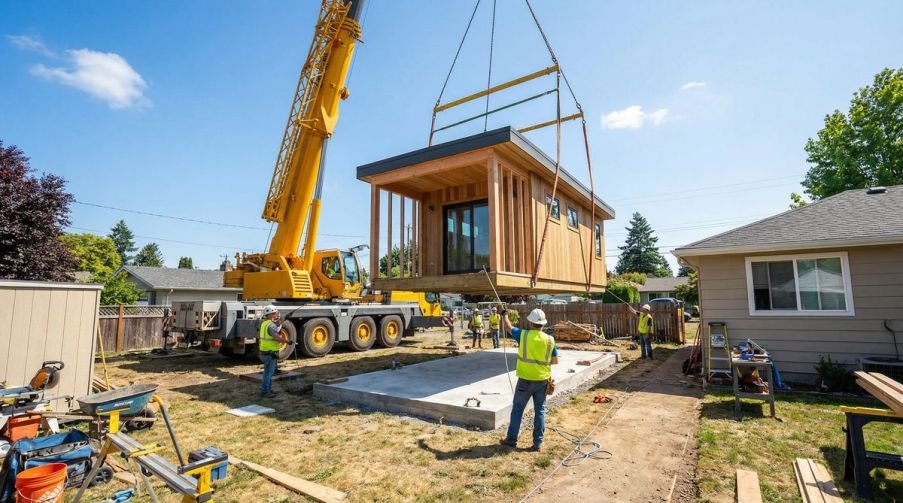
As the demand for secondary units has surged, the construction methods have evolved. Factory-built, modular ADUs are rapidly gaining dominance, currently representing 57% of the total market share. Understanding the distinction between traditional custom builds and modern modular solutions is crucial for property owners planning a project.
| Project Aspect | Traditional Custom Addition | Modern Modular ADU |
|---|---|---|
| Construction Timeline | Often requires 6 to 12 months of active on-site labor. | Can be installed and finished in a matter of weeks. |
| Cost Predictability | Highly susceptible to weather delays and material price fluctuations. | Fixed factory pricing provides excellent budget certainty. |
| On-Site Disruption | Extensive noise, debris, and loss of yard access for months. | Minimal site preparation; the unit arrives nearly complete. |
| Quality Control | Dependent on the varying skill levels of local subcontractors. | Manufactured in a climate-controlled facility to strict tolerances. |
| Sustainability | Typically generates significant on-site material waste. | Highly efficient material usage with minimal environmental impact. |
Overcoming Barriers: Regulatory Reforms and Financing
Historically, strict zoning laws and complex permitting processes posed significant barriers to ADU construction. However, recognizing the urgent need to increase housing density without disrupting neighborhood character, many regional governments have enacted sweeping regulatory reforms. These legislative changes have streamlined approval processes, reduced setback requirements, and in some cases, eliminated mandatory parking additions, making it easier than ever for homeowners to legally build an ADU.
Simultaneously, the financial sector has adapted to support this trend. Financial institutions are increasingly offering specialized lending products tailored specifically for ADU construction. Options such as renovation loans, home equity lines of credit (HELOCs), and specialized ADU construction loans provide homeowners with the necessary capital, lowering the barrier to entry and accelerating the adoption of these secondary units across diverse residential markets.
Frequently Asked Questions
How much does an Accessory Dwelling Unit increase property value?
Current real estate data indicates that properties featuring a legally permitted ADU sell at an average premium of 35% compared to similar homes without one. The exact increase depends on the quality of construction, the local housing market, and the unit’s potential for generating rental income.
Are modular ADUs better than traditional custom builds?
Modular ADUs, which now account for 57% of the market, offer distinct advantages including significantly faster installation times, predictable costs, and reduced disruption to the primary residence. While traditional builds offer total design customization, modular units provide a highly efficient and increasingly popular alternative.
What is the most popular size for an ADU?
The majority of new Accessory Dwelling Units—approximately 54%—are designed to be under 800 square feet. This compact size is favored because it maximizes the efficiency of the interior layout while preserving adequate outdoor space for the primary residence.
Embracing the Future of Residential Density
The growing trend of Accessory Dwelling Units is much more than a fleeting architectural fad; it is a strategic response to modern living requirements. By offering a practical solution for multigenerational housing, creating new avenues for passive income, and driving substantial property appreciation, ADUs are fundamentally reshaping the residential real estate market.
As regulatory environments continue to become more favorable and construction technologies like modular building advance, the accessibility and appeal of ADUs will only increase. For forward-thinking property owners, investing in an Accessory Dwelling Unit represents a unique opportunity to maximize the value, utility, and resilience of their real estate assets for decades to come.