If you’ve been searching for The 5th Wave 2 release date, here’s the answer you probably don’t want to hear: there isn’t one. The sequel is not happening, and there’s no official announcement on the horizon.
The confusion is understandable, especially after viral AI-generated trailers flooded social media in 2025, convincing fans that the sequel was finally greenlit. It wasn’t. Those trailers were fake, created by AI tools that have gotten disturbingly good at mimicking Hollywood marketing.
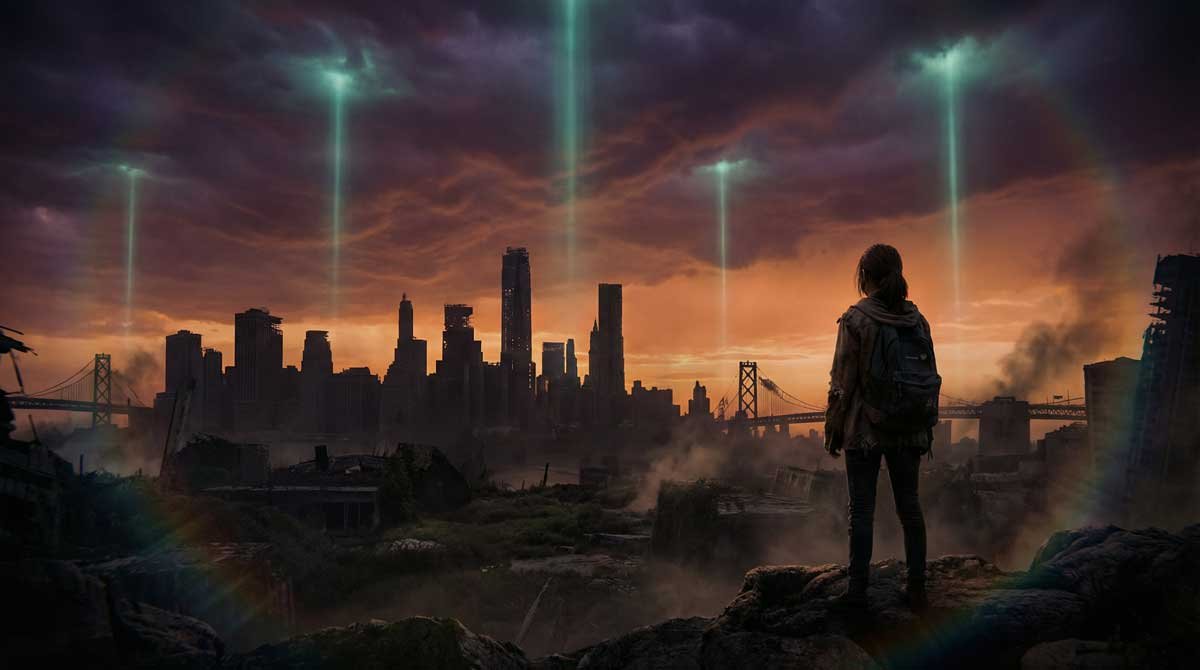
The original film hit theaters on January 22, 2016, leaving audiences with a massive cliffhanger that’s now been unresolved for a decade. Ten years is a long time to wait for answers that will likely never come on screen, even though the story has a complete ending in book form. Rick Yancey’s trilogy includes The Infinite Sea (2014) and The Last Star (2016), so readers know how it all ends.
Why did Hollywood abandon the franchise after one film? The answer involves disappointing box office numbers, lukewarm critical reception, and the broader collapse of YA dystopian adaptations that once dominated multiplexes. We’ll break down exactly what went wrong and why The 5th Wave became another casualty of Hollywood’s failed franchise ambitions.
What You Need to Know
- The 5th Wave sequel is not happening despite a decade of fan hope since the 2016 original left audiences on a cliffhanger. Sony Pictures has never officially canceled it, but ten years of silence means the franchise is dead without a funeral.
- The film flopped at the box office with only $109.9 million worldwide against an estimated $100-150 million total budget for production and marketing. Combined with brutal reviews (16% on Rotten Tomatoes from critics), Sony had no financial incentive to continue the series.
- Viral AI-generated trailers in 2025 fooled millions into believing the sequel was greenlit. These fakes used sophisticated AI tools to mimic Hollywood marketing, highlighting how fan-made content can spread misinformation across social media.
- The story does have a complete ending in Rick Yancey’s book trilogy, with The Infinite Sea and The Last Star wrapping up the narrative that the movie adaptation never finished.
The 5th Wave Movie: A Quick Refresher
Released on January 22, 2016, The 5th Wave had all the ingredients for a successful YA franchise: Rick Yancey’s bestselling trilogy as source material, Chloë Grace Moretz in the lead role, and heavyweight producers Graham King and Tobey Maguire backing the project. Columbia Pictures snapped up the film rights back in March 2012, betting that director J Blakeson could turn the post-apocalyptic sci-fi story into the next Hunger Games.
The premise was compelling enough. Earth faces an alien invasion that doesn’t arrive in a single dramatic assault but rather unfolds in waves designed to systematically wipe out humanity. The first wave knocked out all technology with an electromagnetic pulse. The second wave triggered catastrophic earthquakes and tsunamis. The third wave unleashed a modified avian flu virus that killed billions.
By the fourth wave, things got truly sinister: the aliens began inhabiting human bodies, turning the invasion into a paranoid nightmare where anyone could be the enemy. You couldn’t trust your neighbor, your friend, or even your family.
Moretz played Cassie Sullivan, a teenager trying to survive this hellscape while searching for her younger brother. The film follows her journey as she navigates the increasingly dangerous world and grapples with the question that drives the entire plot: who’s still human?
The movie ends on a cliffhanger, with the fifth wave still looming and major plot threads unresolved. That ending practically screamed “sequel coming soon,” especially since Yancey had already published two more books in the trilogy (The Infinite Sea and The Last Star). The source material was sitting right there, ready to adapt.
Fans walked out of theaters fully expecting this to become a multi-film franchise. That expectation makes the radio silence that followed even more frustrating.
Why There’s No 5th Wave Sequel: The Numbers Don’t Lie
When a big-budget franchise film doesn’t get a sequel, it’s rarely about artistic vision. It’s about money, reception, and whether the studio believes they can make it work twice.
Box Office Performance Killed Sequel Plans
The 5th Wave pulled in $109.9 million worldwide – $34.9 million domestically and $75 million internationally. Against a production budget of $54 million, that might sound like a win. It wasn’t.
Here’s the math Hollywood actually uses: marketing budgets typically match or exceed production budgets. That means Sony likely spent $100-150 million total to make and promote the film. At that scale, the box office take needs to hit $200-250 million just to break even after theaters take their cut. The 5th Wave fell roughly $100 million short.
The domestic numbers were particularly brutal for a US-produced YA franchise. Compare that to The Hunger Games, which opened to $152.5 million domestically in its first weekend alone, or even The Maze Runner, which managed $102.4 million domestic in its entire run but had a significantly smaller budget. The 5th Wave couldn’t build the North American fanbase that franchise sustainability requires.
International markets kept the film from being a total disaster, but they couldn’t save it. Studios greenlight sequels when they see growth potential, not when they’re grateful a film didn’t lose more money.
Critical Reception Was Brutal
Rotten Tomatoes tells the harsh story: 16% from critics and 38% from audiences. Those aren’t “mixed review” numbers. Those are “actively disliked” numbers.
The critical consensus didn’t pull punches: “With unimpressive effects and plot points seemingly pieced together from previous dystopian YA sci-fi films, The 5th Wave ends up feeling like more of a limp, derivative wriggle.”
Fan reactions were split. Some viewers genuinely connected with the story and characters, particularly those who’d read Rick Yancey’s novels. But many felt the film played like a greatest-hits compilation of every other YA dystopia that came before it – a little Hunger Games here, some Divergent there, nothing particularly its own.
Poor reviews don’t automatically kill sequels if the box office is strong enough. But when you combine weak critical reception with disappointing ticket sales, you’ve got a studio exec’s nightmare scenario.
The Official (Non) Status
Here’s where things get interesting. As of January 11, 2022, there had been no talks about making a sequel. Sony Pictures hasn’t officially canceled it, and none of the film’s stars have commented publicly about whether a sequel might happen.
In Hollywood terms, that’s not limbo. That’s dead without the funeral.
When a studio wants to keep franchise hopes alive, they issue carefully worded statements about “exploring options” or “considering the right approach for future installments.” Radio silence for multiple years means they’ve moved on without bothering to announce it.
We’re now a full decade out from the 2016 release. In franchise terms, that gap is insurmountable. The cast has aged out of their roles, the YA dystopia wave has crashed, and audience interest has long since evaporated. Even if Sony wanted to resurrect the series now, they’d be starting from scratch with a story no one’s been thinking about since 2016.
The 5th Wave sequel isn’t coming. It just never got an official death certificate.
The AI Trailer Confusion: Separating Fact From Fiction
Throughout 2025, AI-generated “trailers” for The 5th Wave 2 went viral across social media, racking up millions of views and convincing fans that the sequel was finally happening. It wasn’t. Those trailers were elaborate fakes created using AI video generation tools that have gotten frighteningly good at mimicking Hollywood marketing.
The technology behind these fake trailers can now generate realistic footage, use convincing voice cloning, and replicate professional editing styles. Some even include fake studio logos and fabricated release dates. For fans who’ve been waiting a decade for a sequel, these polished fakes feel like legitimate announcements until you dig deeper.
We’ve seen the pattern repeat across dozens of cancelled franchises: a well-made AI trailer drops on YouTube, fans share it across Reddit and Twitter, entertainment blogs pick it up without fact-checking, and suddenly thousands of people believe a movie is in production when it absolutely isn’t. The frustration when fans discover the truth is real and understandable.
So how do you separate legitimate movie news from fan-made AI content?
Start by checking the source. Official movie announcements come from studio press releases, verified social media accounts from the studio or production company, and trade publications like Variety, The Hollywood Reporter, or Deadline. These outlets have direct industry access and verify information before publishing.
YouTube channels with names like “Movie Trailers HD” or “Upcoming Movies 2026” are almost never official sources. They’re fan channels or content farms capitalizing on search traffic. Even channels with hundreds of thousands of subscribers can post fake AI-generated content without disclosure.
Look for the creator attribution in video descriptions. If it says “concept trailer,” “fan-made,” or mentions AI tools in the description, it’s not official. Many creators do disclose this information, but you have to read past the clickbait title.
Cross-reference any trailer you see with entertainment trade publications. If The 5th Wave 2 were actually happening, Variety would report on it. If you can’t find coverage from multiple legitimate sources, the trailer is almost certainly fake.
Columbia Pictures and Sony Pictures Entertainment would be the studios to announce a sequel. Check their official channels directly rather than trusting third-party uploads.
The Broader Context: When YA Dystopian Movies Died
The 5th Wave didn’t fail in isolation. It crashed into a genre that was already gasping its last breath, arriving at the tail end of a boom-and-bust cycle that Hollywood studios somehow didn’t see coming.
The young adult dystopian craze kicked off with The Hunger Games in 2012, which turned into a genuine phenomenon. The four-film franchise pulled in $3.3 billion at the global box office, and suddenly every studio in Hollywood scrambled to find the next Katniss Everdeen. If you had a YA book series with a reluctant teenage hero fighting an oppressive system, you had a development deal.
For a brief window, the formula actually worked. Maze Runner made $949 million across three films. Divergent hauled in $765 million despite getting hammered by critics. Studios were printing money by adapting any YA dystopian trilogy they could option.
Then came the carnage. I Am Number Four (2011) died quickly. The year 2013 alone killed off Ender’s Game, The Host, and The Mortal Instruments: City of Bones. The Giver flopped in 2014. The Darkest Minds limped into theaters in 2018, long after everyone had moved on. These weren’t just disappointing openings – they were franchise-killers that left planned sequels dead on arrival.
We’ve seen this pattern before, and it’s always the same story. Studios greenlight entire trilogies with wild optimism, banking on building the next multi-billion-dollar universe. Then the first film underperforms, and suddenly those sequel plans evaporate. Divergent never got its fourth film, instead trying to pivot to a TV movie that never materialized. Ender’s Game never saw a follow-up despite the source material having multiple sequels ready to adapt.
By 2016, when The 5th Wave hit theaters, audiences were exhausted. They’d seen the same beats too many times: dystopian future, chosen teenager, corrupt government, love triangle, rebellion brewing. The genre fatigue was real and measurable at the box office.
The 5th Wave had the misfortune of arriving right when that fatigue peaked. It wasn’t early enough to ride The Hunger Games wave, and it wasn’t different enough to stand apart from the crowd. The film faced audiences who’d already watched a dozen variations of the same story and decided they were done.
This is why the sequel never happened and never will. It wasn’t just that The 5th Wave underperformed financially. It’s that the entire genre collapsed around it, and studios learned the hard way that audiences can only stomach so many dystopian teenagers before they change the channel. The YA dystopian movie died between 2015 and 2017, and The 5th Wave was one of its final casualties.
What Could Have Been: The Infinite Sea and The Last Star
Fans wanted two more films. Rick Yancey’s trilogy didn’t end with The 5th Wave – he published The Infinite Sea in 2014 and concluded the story with The Last Star on May 24, 2016, about four months after the first movie hit theaters.
The Infinite Sea picks up where the film would have left off. Squad 53 takes refuge at an abandoned hotel they call Walker Hotel, trying to survive while the alien threat intensifies. Ringer, one of the squad members, searches for a cave system she found mentioned in a tourist brochure. The book deepens the alien invasion mythology and shifts perspectives between multiple characters, building toward the trilogy’s conclusion.
The Last Star wraps up Cassie Sullivan’s story and the fate of humanity. Together, these books gave fans a complete narrative arc that the film adaptation never delivered.
Chloë Grace Moretz has said she’d reprise her role as Cassie if given the opportunity. That’s nice to hear, but cast interest doesn’t resurrect dead franchises. Studios don’t greenlight sequels based on goodwill.
The real problem isn’t desire – it’s time. The first film came out in January 2016. We’re now ten years past that release, and the cast has aged out of their roles. Moretz was 18 when she played Cassie. She’s 29 now. Nick Robinson, who played Ben Parish, was 20. He’s 31.
YA dystopian stories depend on teenage protagonists navigating coming-of-age themes against apocalyptic backdrops. You can’t credibly cast actors in their late twenties and early thirties as high schoolers fighting alien invasions. The window closed.
Even if Sony suddenly decided to throw money at a sequel, they’d need to reboot with a younger cast. At that point, you’re not making a sequel – you’re starting over, and that’s an even harder sell for a franchise that bombed the first time.
Could The 5th Wave Ever Be Revived?
Hollywood loves a good revival story, and streaming platforms have become the second-chance machine for failed theatrical releases. The 5th Wave even got a taste of that phenomenon in early 2025 when it unexpectedly landed at number eight on Netflix’s Top 10, nine years after its theatrical disappointment.
That streaming surge sparked the usual revival speculation. Could Netflix greenlight a sequel? Would another platform pick up the franchise?
Don’t count on it.
Streaming views rarely translate to sequel greenlights for theatrical failures. The economics don’t work the same way. A film can rack up impressive view counts on Netflix without generating the kind of subscriber acquisition or retention data that justifies investing $50-100 million in new production. Studios need more than passive viewing numbers – they need evidence of franchise value.
Compare The 5th Wave to franchises that actually got second chances. Cobra Kai revived The Karate Kid decades later, but that was a lower-budget TV series building on massive nostalgia. The Witcher succeeded because it was a fresh adaptation with built-in audience from games and books. Even Red Notice, despite mediocre reviews, got sequels because Netflix’s internal metrics showed it drove subscriptions.
The 5th Wave doesn’t fit those patterns. The YA dystopian wave has fully crashed. The original cast has moved on. The production company has no incentive to revisit a money-loser. And streaming success alone isn’t enough fuel for resurrection.
Could it happen? Technically, yes. Will it happen? Extremely unlikely.
The Final Verdict
There’s no sequel coming. After a decade of uncertainty and intermittent hope sparked by streaming surges, that’s the reality fans need to accept.
The disappointment is completely valid. Waiting ten years for closure on a story you cared about, only to realize it’s never happening, feels genuinely frustrating. But not every franchise gets completed, and that’s okay. Hollywood is littered with unfinished trilogies and abandoned sequels.
If you’re still invested in the story, read the books. Rick Yancey’s complete trilogy offers the closure the films never will. Or explore similar franchises that actually finished their arcs – there are plenty of completed YA dystopian series worth your time.
The first film had moments worth remembering. Hold onto what you enjoyed about it, but don’t wait around for something that isn’t coming. It’s time to move on.
FAQ
Is there a 5th Wave sequel movie?
No, there is no sequel. Sony Pictures has never officially canceled it, but that silence speaks volumes – the project is dead. As of January 2022, there had been no talks about making a sequel, and we’re now ten years past the original 2016 release. That gap is insurmountable in franchise terms. The cast has aged out, the YA dystopia trend collapsed, and audience interest disappeared years ago. If you’re hoping for closure on that cliffhanger ending, you’ll need to read Rick Yancey’s books – The Infinite Sea and The Last Star complete the story.
What happened to The Infinite Sea movie?
The adaptation of the second book never happened because the first film failed financially and critically. The 5th Wave earned $109.9 million worldwide against a $54 million production budget, but when you factor in marketing costs (typically matching or exceeding production budgets), Sony likely spent $100-150 million total. The film needed $200-250 million to break even after theaters took their cut. It fell roughly $100 million short. Combined with a brutal 16% Rotten Tomatoes score from critics, studios saw no growth potential and quietly abandoned the franchise.
Are the AI trailers for The 5th Wave 2 real?
No, those trailers are fan-made AI fakes, not official announcements. Throughout 2025, AI-generated “trailers” went viral on social media, fooling millions of fans into thinking the sequel was greenlit. The technology can now generate realistic footage, clone voices, and mimic professional editing styles. To spot fakes, check the source – official announcements come from studio press releases, verified social media accounts, or trade publications like Variety and The Hollywood Reporter. If a “trailer” appears only on random YouTube channels without corresponding studio confirmation, it’s fake.
Did the 5th Wave make money?
Barely, and that’s the problem. The film earned $109.9 million worldwide ($34.9 million domestic, $75 million international) against a $54 million production budget. That looks profitable until you add marketing costs, which typically match or exceed production budgets. Sony likely spent $100-150 million total, meaning the film needed $200-250 million to truly break even. It fell about $100 million short. Studios don’t greenlight sequels when they’re just grateful a film didn’t lose more money – they need growth potential and strong returns.
Is The 5th Wave available to watch?
The article doesn’t specify current streaming availability or physical media options for The 5th Wave. Check major streaming platforms like Netflix, Amazon Prime Video, Hulu, or Disney+ for current availability, as licensing agreements change frequently. The film is also likely available for digital rental or purchase through services like Apple TV, Google Play, and Vudu. Physical Blu-ray and DVD copies should still be available through retailers.