Termites are often referred to as “silent destroyers,” and for good reason. These insidious pests can chew through wood, flooring, and even wallpaper undetected for years, causing catastrophic structural damage before their presence is ever known. By the time a homeowner notices the telltale signs—such as hollow-sounding wood, discarded wings, or mud tubes along the foundation—the colony has likely already inflicted significant harm. The process of termite damage repair is therefore not merely a cosmetic fix; it is a critical structural intervention necessary to restore the safety, stability, and value of the home.
Addressing termite damage is a multi-step process that requires precision, expertise, and a clear understanding of building mechanics. It is imperative to understand that repairing the physical damage is completely futile unless the active infestation has been entirely eradicated by a licensed pest control professional. Once the home is certified termite-free, the complex work of assessing the structural compromise and executing the appropriate repairs can begin. This guide explores the critical steps involved in evaluating termite damage, the most effective repair methodologies, and the preventative measures homeowners must take to protect their property from future invasions.
Assessing the Extent of the Damage
Answer Capsule: Before any repairs begin, a thorough assessment by a structural engineer or a specialized contractor is essential to determine whether the termite damage is merely superficial or if it has compromised load-bearing structural elements.
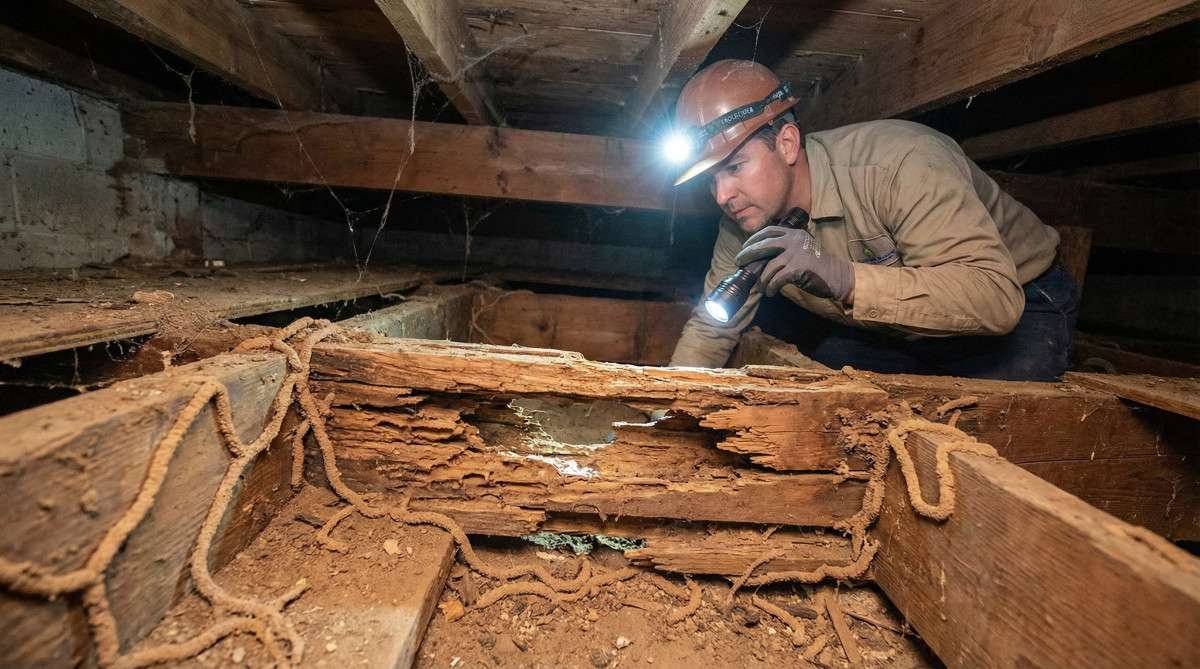
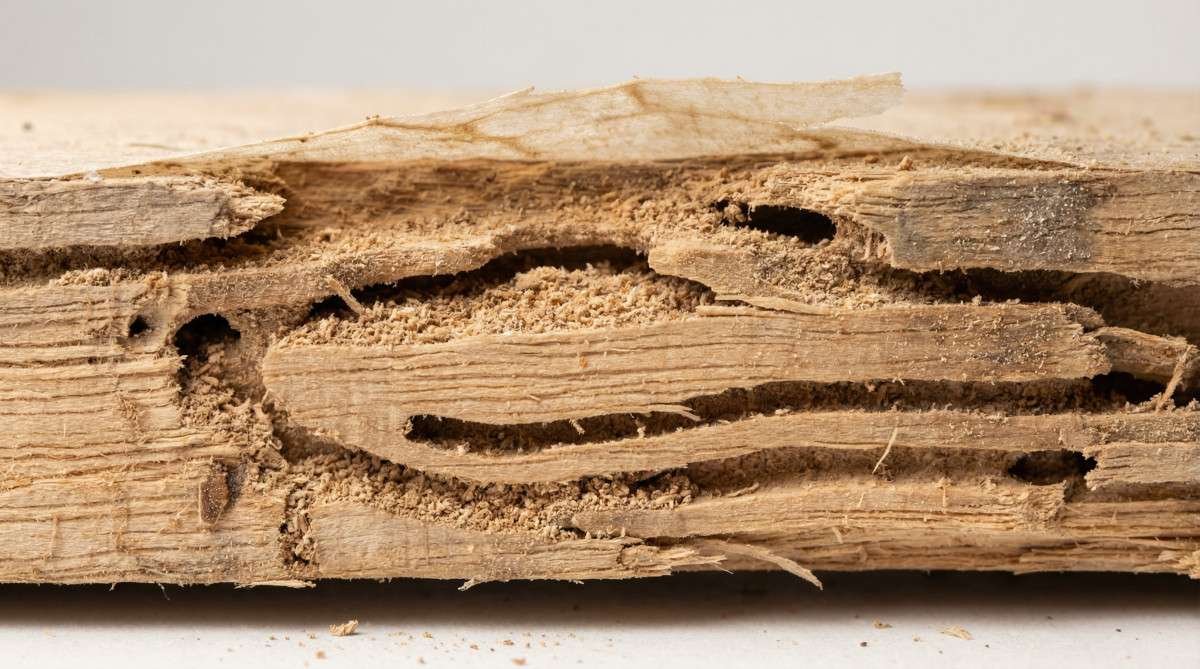
The first and most critical step in the repair process is a comprehensive damage assessment. Termites typically consume wood from the inside out, leaving a thin veneer of intact timber on the surface. Therefore, a visual inspection alone is insufficient. Professionals use specialized tools, such as moisture meters, borescopes, and simple probing tools like screwdrivers, to test the density and integrity of the wood. By systematically probing joists, studs, and sill plates, inspectors can map out the exact boundaries of the compromised material.
During this assessment, the crucial distinction must be made between cosmetic damage and structural damage. Cosmetic damage refers to instances where termites have chewed through non-load-bearing elements, such as baseboards, window casings, or hardwood flooring. While unsightly and requiring replacement, this type of damage does not threaten the building’s stability. Conversely, structural damage occurs when termites attack the fundamental framework of the house, including support beams, floor joists, and load-bearing wall studs. If these elements are severely hollowed out, the building is at risk of sagging or, in extreme cases, localized collapse, necessitating immediate and robust engineering solutions.
Methods for Repairing Termite Damage
Answer Capsule: Termite damage is typically repaired using one of two primary methods: “sistering” new wood alongside the damaged members for support, or completely removing and replacing the compromised timber.
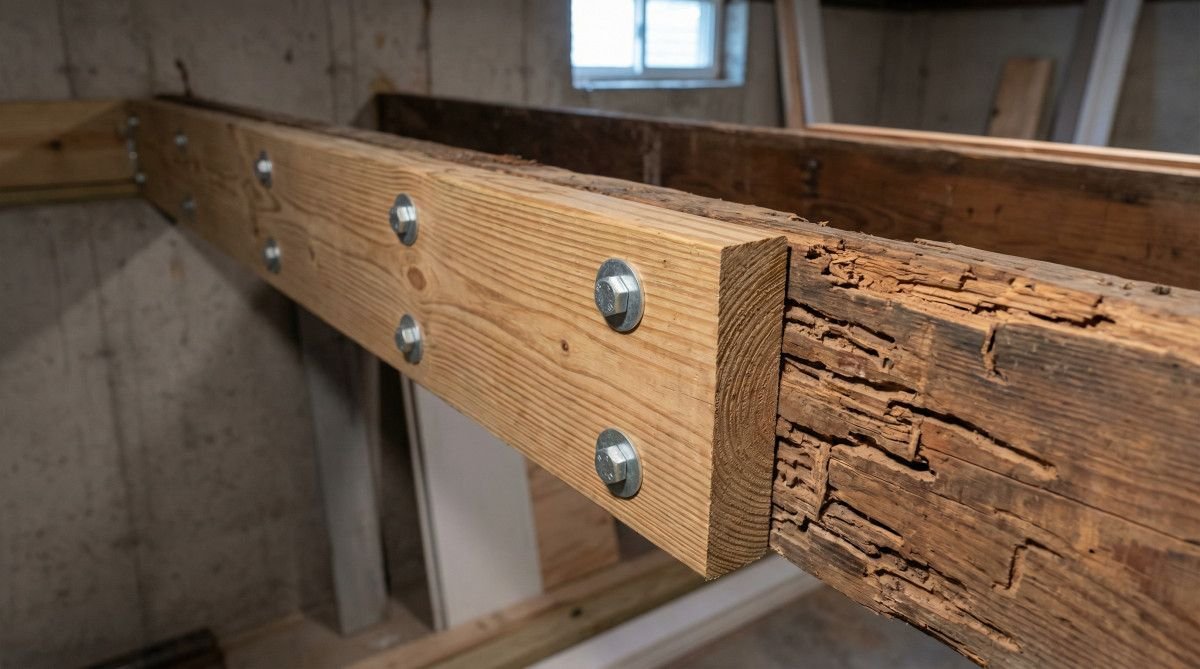
The chosen method for repairing termite damage depends entirely on the severity of the structural compromise and the location of the affected wood. For moderate damage where the existing timber retains a significant portion of its structural integrity, contractors often employ a technique known as “sistering.” This process involves cutting a new, healthy piece of pressure-treated lumber to match the dimensions of the damaged joist or stud. The new wood is then placed directly alongside the damaged member and securely fastened using heavy-duty carriage bolts or structural screws. Sistering effectively transfers the structural load from the weakened wood to the new timber, restoring the building’s stability without the invasive process of complete removal.
However, when the termite damage is extensive and the wood has been hollowed out to the point of structural failure, complete replacement is the only viable option. This is a far more complex and expensive undertaking. Before the damaged wood can be removed, the contractor must install temporary hydraulic jacks and shoring to support the weight of the structure above. Once the area is safely stabilized, the compromised timber is cut out and discarded. A new, pressure-treated structural member is then precisely cut, maneuvered into place, and secured with specialized structural hardware. This method ensures that all damaged material is eliminated and the home’s framework is returned to its original strength.
Preventing Future Termite Infestations
Answer Capsule: Preventing future termite damage requires a multi-pronged approach, including the elimination of wood-to-soil contact, resolving moisture issues, and maintaining an active, professional termite baiting or chemical barrier system.
Repairing termite damage is a costly endeavor, making proactive prevention essential. Termites are fundamentally drawn to two things: wood and moisture. Therefore, the most effective preventative strategy is to eliminate these attractants around the home’s perimeter. Homeowners must ensure there is absolutely no wood-to-soil contact anywhere on the property. This means keeping firewood stacks elevated and well away from the foundation, ensuring wooden siding or trim maintains at least a six-inch clearance from the soil, and avoiding the use of wood mulch directly against the house.
Furthermore, addressing moisture issues is critical, as damp soil provides the ideal environment for subterranean termites to thrive. Gutters and downspouts must be kept clean and functional, directing rainwater far away from the foundation. Any plumbing leaks, particularly in crawlspaces or basements, must be repaired immediately. Finally, physical preventative measures should be combined with professional pest control solutions. Maintaining an active termite baiting system around the perimeter or having a professional apply a liquid termiticide barrier to the soil offers the most robust defense against future infestations, ensuring that the newly repaired structural elements remain safe and intact.
Frequently Asked Questions
Does homeowners insurance cover termite damage repair?
In the vast majority of cases, standard homeowners insurance policies do not cover termite damage or the cost of removal. Insurance companies classify termite infestations as a preventable maintenance issue rather than a sudden, accidental peril.
How much does it cost to repair termite damage?
The cost varies wildly depending on the extent of the damage. Minor cosmetic repairs may cost a few hundred dollars, while extensive structural repairs involving shoring and complete joist replacement can easily exceed $10,000.
Can I repair termite damage myself?
While minor cosmetic repairs (like replacing baseboards) can be DIY projects, any structural damage involving load-bearing walls, joists, or beams must be handled by a licensed contractor or structural engineer to ensure the home remains safe and up to building codes.
Conclusion
Answer Capsule: Termite damage repair is a critical process that begins with complete pest eradication, followed by a professional structural assessment and precise remediation using techniques like sistering or complete timber replacement.
Discovering termite damage in a home is a stressful experience that demands immediate, methodical action. The structural integrity of a property relies entirely on the strength of its hidden wooden framework, and termites systematically destroy that strength. By prioritizing professional eradication before attempting any repairs, homeowners ensure that their investments in remediation are not wasted on an ongoing infestation.
Whether the necessary repairs involve straightforward cosmetic fixes or complex structural engineering, relying on qualified professionals is paramount. Proper assessment and execution of repair techniques like sistering or complete member replacement will restore the home’s safety and value. Ultimately, combining these rigorous repairs with vigilant, ongoing preventative measures is the only way to permanently protect a property from the silent destruction of termites.