Life often feels like an endless series of stressors. You might feel overwhelmed by a tough day at work, a conflict with a friend, or sudden feelings of anxiety that seem to come from nowhere. Emotional overload is common, but it does not have to be your default state. Emotional well-being is the ability to handle these highs and lows without losing your grip. Dialectical Behavior Therapy, or DBT, provides a proven framework to help you manage these moments. By learning and applying DBT skills, you can change how you react to your feelings and improve your overall quality of life.
Understanding Dialectical Behavior Therapy (DBT) Fundamentals
DBT skills Long Beach CA help people who struggle with intense emotions. The core of this therapy is the “dialectic,” which means holding two opposite ideas at once: acceptance and change. You accept yourself as you are, while also working to change behaviors that cause pain. Unlike general therapy, which focuses on talk and insight, DBT is a practical system. It acts as a set of tools you can use every day.
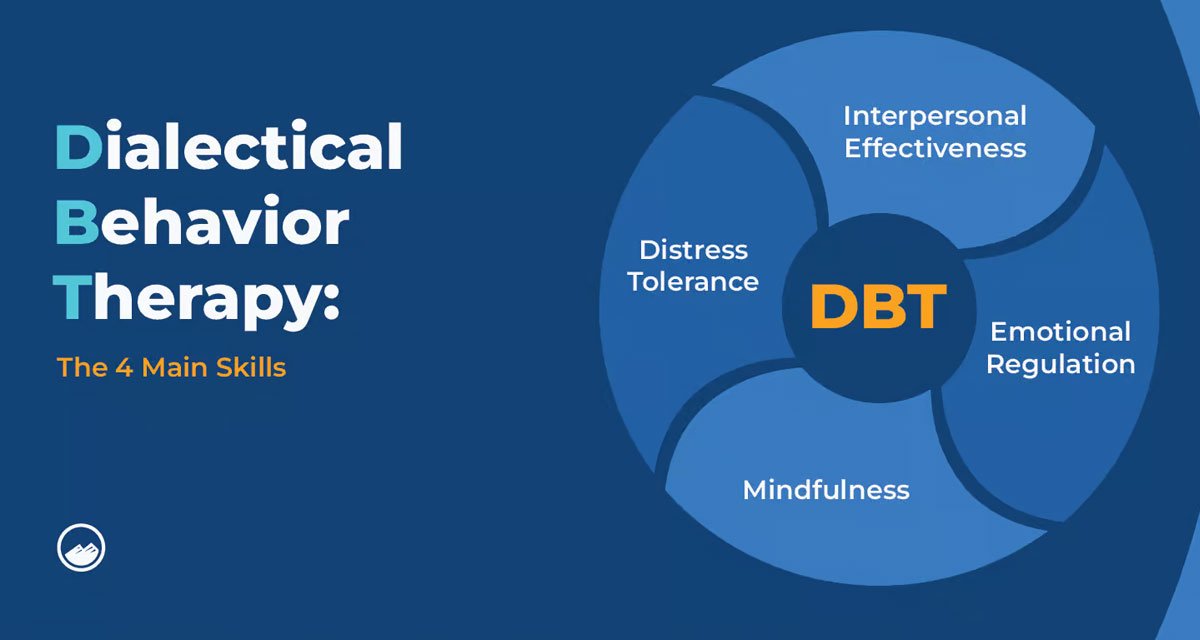
The Four Core Modules of DBT
DBT splits its teachings into four specific modules. Each one covers a different area of your life.
Mindfulness: Learning to be fully aware of the present moment without judging it.
Distress Tolerance: Getting through a crisis without making the situation worse.
Emotion Regulation: Understanding your feelings and changing the ones that do not help you.
Interpersonal Effectiveness: Getting your needs met while keeping your relationships healthy.
DBT as a Skills-Based Approach
You can think of DBT as a training program rather than just a conversation. It requires active effort through learning and applying DBT skills in everyday situations. You cannot simply read about these skills and expect change; you must practice them. Often, therapists assign homework to ensure you can use these tools in real-world scenarios. The goal is to make these skills second nature so they kick in automatically when stress levels rise.
The Target: Emotional Dysregulation
Emotional dysregulation happens when your feelings become too intense. You might feel like your emotions run your life rather than you running them. When you are dysregulated, you stay at a high level of stress for a long time. It is hard to return to your normal baseline. This instability disrupts your work, your sleep, and your relationships. Improving your well-being starts with lowering this reactivity.
Mindfulness: The Cornerstone of Emotional Awareness
You cannot manage a feeling if you do not know you are having it. Mindfulness is the foundation of all other DBT skills. It teaches you to observe your internal states without judgment. This creates a small gap between a feeling and your reaction. In that gap, you have the power to choose how you behave.
Observing and Describing Your Internal Experience
The “What” skills in mindfulness are about observation. You learn to step back and watch your thoughts and feelings as if they are clouds passing in the sky.
Observe: Notice the feeling without trying to push it away or hold onto it.
Describe: Use words to label your experience. Say to yourself, “I am feeling frustrated because I am tired.”
When you name your feelings, they often lose their power. You move from being swept away by an emotion to being an observer of it.
Staying Present: The “What” and “How” Skills
Being present means focusing your attention on the current moment. You use “How” skills to stay grounded.
Participate: Fully throw yourself into what you are doing right now.
One-mindfully: Do one thing at a time. If you are washing dishes, only wash dishes.
Effectively: Do what works, not what feels good in the moment.
For example, if you feel anger building because someone cut you off in traffic, you can choose to stay one-mindful. Focus on your breathing and the road instead of the anger. This prevents the initial irritation from turning into a full-blown emotional spiral.
Distress Tolerance: Surviving Crisis Without Making It Worse
Sometimes, life throws situations at you that you cannot fix immediately. You might be in pain, but you have to keep going. Distress tolerance skills are for these moments. They are not about fixing the problem; they are about surviving the storm without causing damage to yourself or your relationships.
Crisis Survival Skills (TIPP)
When your emotions are at a ten out of ten, you need physical interventions. The TIPP skills help you change your body chemistry to calm your brain.
Temperature: Splash cold water on your face to trigger a natural calming reflex.
Intense exercise: Do jumping jacks or run for a few minutes to burn off excess energy.
Paced breathing: Slow your exhale down to signal safety to your nervous system.
Paired muscle relaxation: Tense and release your muscles to let go of physical stress.
Distraction Techniques for Immediate Relief (ACCEPTS)
When the urge to act on a painful emotion is strong, use distraction to buy yourself time. The ACCEPTS acronym helps you pivot your focus:
Activities: Go for a walk or clean your room.
Contributing: Do something nice for someone else.
Comparisons: Remember a time you made it through something even harder.
Emotions: Watch a funny movie to change your mood.
Pushing away: Put the problem out of your mind for a few hours.
Thoughts: Count backward from one hundred or read a book.
Sensations: Hold an ice cube or listen to loud music.
Emotion Regulation: Changing Unwanted Emotions
Once you can handle a crisis, you can start to modify your daily emotional patterns. Emotion regulation is about reducing the frequency of negative emotions and building up positive ones.
Understanding the Functions of Emotions
Every emotion has a job. Fear warns you of danger. Anger tells you when your boundaries are crossed. Guilt tells you that you may have violated your own values. Problems arise when your emotions go into overdrive or trigger when they are not needed. Your goal is to learn what each emotion is trying to tell you and decide if the message is helpful.
Building Positive Experiences (Opposite Action)
Opposite action is a powerful tool. It involves doing the exact opposite of what your emotion tells you to do. If you feel fearful and want to hide, opposite action means approaching the thing you fear. If you feel sad and want to isolate, opposite action means reaching out to a friend. By acting against the urge, you send a signal to your brain that the emotion is not in charge.
Interpersonal Effectiveness: Healthy Relationships Foster Well-Being
Your emotional well-being is tied to how you connect with others. If you struggle to express your needs, you will build up resentment. DBT provides clear strategies for talking to others while keeping your self-respect intact.
Getting Your Needs Met Effectively (DEAR MAN)
When you need to ask for something, use the DEAR MAN technique to keep the conversation on track:
Describe the facts of the situation.
Express your feelings clearly.
Assert your request directly.
Reinforce by explaining the benefit to the other person.
Mindful: Stay focused on your goal.
Appear confident.
Negotiate if needed.
This method keeps you from becoming passive or aggressive, which are the main killers of relationships.
Maintaining Relationship and Self-Respect (GIVE and FAST)
To maintain good relationships, use GIVE: Be Gentle, act Interested, Validate the other person, and use an Easy manner. To keep your own self-respect, use FAST: be Fair, don’t apologize for having an opinion, Stick to your values, and be Truthful. These tools ensure that you do not sacrifice your own needs to please others.
Saying No Without Guilt
Setting boundaries is a part of emotional health. You are allowed to say no to requests that drain your energy or violate your values. When you say no, keep it simple. You do not need to give a long list of excuses. A clear, kind, and firm no protects your time and your emotional state.
Integrating DBT Skills for Sustainable Emotional Health
DBT is more than just a set of tips. It is a way to build a life that feels worth living. You start by building awareness through mindfulness. You learn to survive intense pain through distress tolerance. You modify your patterns through emotion regulation and fix your relationships through interpersonal effectiveness.
Consistency is the secret to success. You do not need to be perfect. Every time you catch yourself before reacting or choose to use a skill, you build a stronger foundation for your well-being. Start small, pick one skill this week, and practice it until it feels natural. Over time, these habits will transform your emotional landscape and provide the balance you need to thrive.