Georgia is widely considered one of the easiest and most appealing places to get married, offering a smooth legal process alongside memorable wedding experiences. Whether you are a Georgian citizen or a foreign visitor, the system is flexible enough to allow both formal civil ceremonies in official venues and personalised celebrations in locations of your choice.
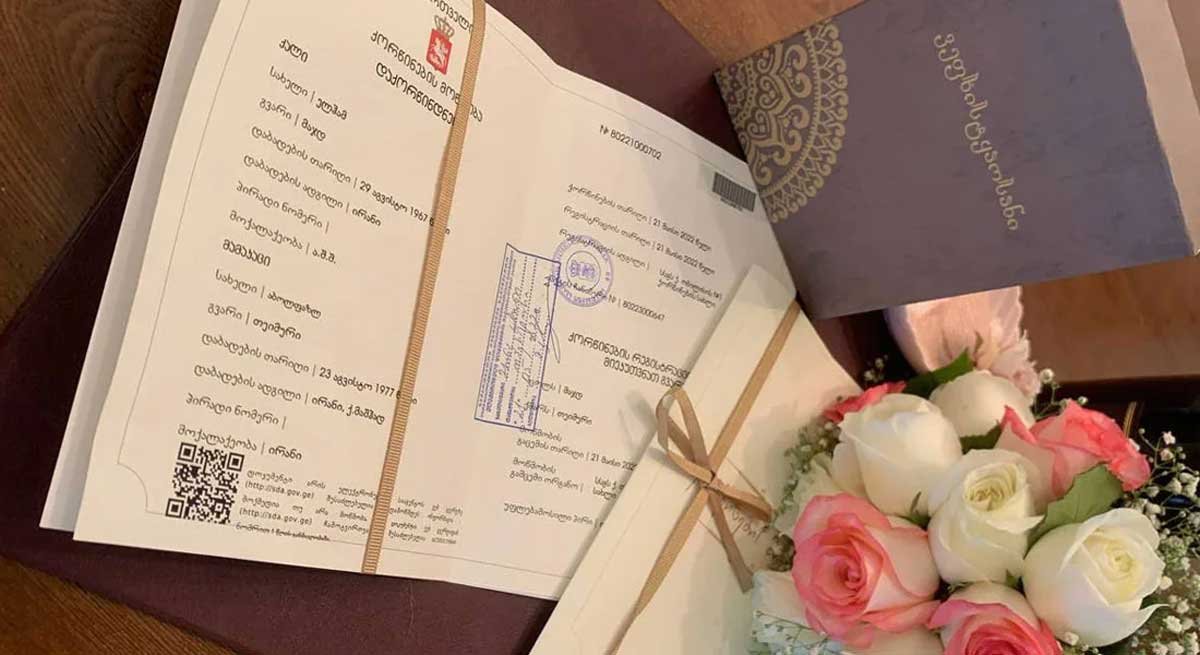
The administrative side is refreshingly simple and efficient, but before celebrating, it is important to understand how the registration process works in practice.
Who Can Get Married in Georgia?
Under Georgian law, there is no distinction between citizens and foreign nationals when it comes to the right to marry. As long as individuals are staying in Georgia legally, they are entitled to the same marriage rights as locals.
This means foreign couples can marry each other or Georgian citizens without additional legal barriers.
Basic eligibility requirements include:
- both individuals must be at least 18 years old
- marriage is legally permitted only between a man and a woman under current Georgian legislation
What Documents Are Required?
Compared to many countries, the document requirements in Georgia are minimal and manageable. The process is designed to reduce stress and allow couples to focus more on their celebration.
Typically, you will need:
- a joint written application submitted at the Public Service Hall
- valid passports for both partners
- passports of two adult witnesses
- proof of termination of any previous marriage (if applicable)
If documents are not in the Latin alphabet, they must be translated into Georgian, notarised, and in some cases apostilled. This can be arranged either in your home country or after arrival in Georgia.
What Does It Cost to Get Married in Georgia?
Marriage registration in Georgia can be very affordable. In some cases, it may even be free, depending on the type of ceremony you choose.
Common options include:
- standard registration at a Public Service Hall or Community Center without a ceremony – free
- registration with a simple ceremonial service – approximately GEL 75
- wedding hall ceremony on weekdays – approximately GEL 135
- wedding hall ceremony on weekends – approximately GEL 225
Additional costs may apply for:
- document translation and notarisation
- apostille or legalisation
- professional coordination services
If you choose to work with a wedding agency, fees typically vary depending on the level of support required.
How the Registration Process Works
Once your documents are ready and your preferred ceremony type is selected, the process itself is straightforward.
Step-by-step overview:
- submit your application and documents at the Public Service Hall
- pay any applicable service fees
- your documents are reviewed for compliance
- you receive confirmation of your ceremony date, often the same day
- attend the ceremony and complete the registration
In many cases, the timeline from application to registration can be very short.
What Can Prevent a Marriage from Being Registered?
Although the process is simple, Georgian law includes standard restrictions that must be observed.
Marriage cannot be registered in the following situations:
- if one of the individuals is already married
- between direct ancestors and descendants
- between siblings (including adopted relationships)
- between an adoptive parent and adopted child
These rules are consistent with common legal standards in many countries.
Final Thoughts
For couples looking to avoid complicated procedures, long waiting periods, and excessive costs, Georgia offers a practical and attractive solution. The process is fast, accessible, and designed to minimise bureaucracy.
In many cases, all you need are your passports, the correct supporting documents, and two witnesses to complete the process.
How Lotus Wedding Can Help
Planning a legal marriage abroad can still involve unexpected challenges, especially when dealing with document preparation and local requirements.
Lotus Wedding supports couples by:
- guiding document preparation
- coordinating translations and notarisation
- assisting with appointment scheduling
- organising the ceremony
- helping with certificate legalisation for international use
With the right support, the process becomes not only simple but also enjoyable, allowing you to focus on your wedding experience rather than paperwork.