On January 16, 2019, a suicide bomber detonated an explosive vest inside a restaurant in Manbij, Syria. Among the four Americans killed was Senior Chief Petty Officer Shannon Kent — a decorated Navy cryptologic technician, an Arabic linguist, a mother, and Joe Kent’s wife. She was 35 years old.
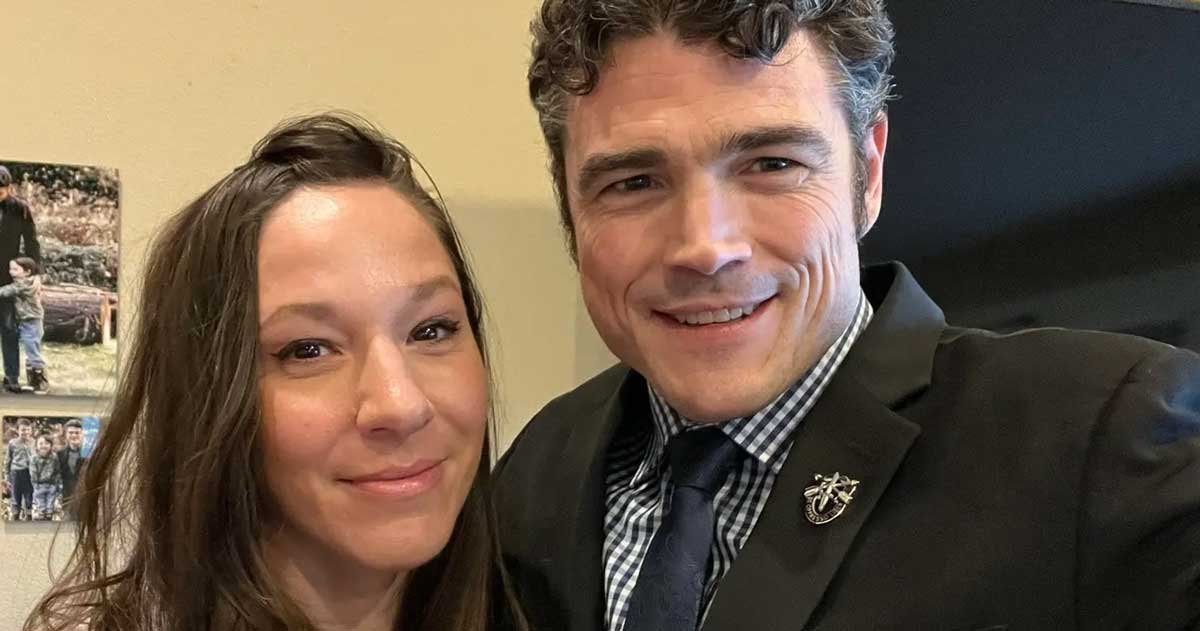
Shannon Kent was one of the most accomplished intelligence professionals of her generation, voluntarily embedding with special operations forces across multiple combat deployments in Iraq and Syria. Her death shattered a family and ignited a public figure.
This article covers Shannon Kent’s full biography — her upbringing in upstate New York, her extraordinary military career, her marriage to Joe Kent, the family they built together, the 2019 Manbij bombing, and how her sacrifice became the defining force behind Joe Kent’s political identity.
Who Was Shannon Kent?
Shannon Mary Kent was a U.S. Navy Senior Chief Petty Officer (E-8) and Cryptologic Technician Interpretive (CTI) — one of the Navy’s most demanding and selective intelligence specialties. She was killed on January 16, 2019, in a suicide bombing in Manbij, Syria, while forward-deployed in support of a special operations task force. She was 35 years old and had served for over a decade.
Growing Up in Pine Plains, New York
Shannon was born and raised in Pine Plains, New York, a small rural community in Dutchess County. The town is far removed from the world of special operations and foreign intelligence. That upbringing forged exceptional discipline and clarity of purpose. People who knew her described a young woman who was driven, fiercely competitive, and deeply loyal to the people around her.
She excelled academically and athletically. Those who later served alongside her said that intensity never changed — she brought the same drive to a combat deployment that she brought to everything before it. Joining the Navy was not an accident or a fallback plan. It was a deliberate choice made by someone who wanted to operate at the highest possible level.
Choosing Cryptology and Arabic
Shannon enlisted in the U.S. Navy and pursued the CTI rating, a specialty requiring demonstrated aptitude in foreign language acquisition and signals intelligence analysis. She became fluent in Arabic — a skill that would define her operational value and eventually take her into some of the most dangerous environments in the world.
CTIs assigned to Naval Special Warfare support units embed directly with special operations forces — Navy SEALs, Army Special Forces, and joint task forces — operating in denied or hostile environments. Shannon qualified for that track, excelled in it, and kept choosing it.
| Detail | Shannon Kent |
|---|---|
| Hometown | Pine Plains, New York |
| Branch | U.S. Navy |
| Rating | Cryptologic Technician Interpretive (CTI) |
| Final Rank | Senior Chief Petty Officer (E-8) |
| Languages | Arabic (primary) |
| Primary Support Role | Naval Special Warfare / JSOC intelligence support |
| Date of Death | January 16, 2019 — Manbij, Syria |
| Age at Death | 35 |
Shannon and Joe Kent: Marriage and Family Life
Shannon and Joe Kent met through the special operations community they both inhabited. Shannon’s role as a Navy CTI supporting Naval Special Warfare placed her in the same operational orbit as Joe, a decorated Army Special Forces officer. Their relationship developed between deployments, built on mutual understanding of the risks they each carried every time they left.
How Shannon and Joe Kent Met
Shannon and Joe Kent did not simply share a marriage — they shared a professional world. Both operated within the tight-knit special operations community where their career paths naturally intersected. In interviews and public appearances after Shannon’s death, Joe has consistently described her as his closest partner: someone who understood the mission at the same depth he did, because she was in it too.
That shared context was the foundation of their relationship. Most accounts of Shannon Kent focus on her death. The real story of who she was to Joe Kent — professionally, personally, and as a co-parent — is what competitors almost entirely skip.
Life as a Dual-Military Couple
Being a dual-military couple in the special operations community is logistically brutal and emotionally demanding. Both Shannon and Joe faced repeated overseas deployments, often simultaneously, requiring extraordinary coordination around childcare and household stability. They made it work through a shared commitment to service that neither was willing to abandon.
Joe Kent has spoken publicly about the way Shannon approached military life — not as a burden or a compromise, but as a calling. That alignment of values sustained their marriage through the separations and uncertainties that erode most relationships operating under the same pressure.
Their Children and Home Life
Shannon and Joe Kent had two children together. The mechanics of that life — school pickups handled by whoever was stateside, holidays shaped by deployment rotations — rarely make national news. They represent the full human cost of sustained military service that casualty statistics don’t capture.
| Family Dimension | Shannon | Joe |
|---|---|---|
| Branch | U.S. Navy (Senior Chief Petty Officer) | U.S. Army (Special Forces Officer) |
| Operational Community | Naval Special Warfare Support | Army Special Forces (Green Berets) |
| Deployments | Multiple combat/combat-support tours | Multiple combat tours |
| Post-2019 Role | Killed in action, Manbij, Syria | Single father, public advocate, congressional candidate |
After Shannon’s death, Joe Kent became a single father navigating grief while raising their children. The family Shannon and Joe built together did not end with her death. It became the lens through which Joe Kent addressed the world — and eventually, the country.
Shannon Kent’s Military Career and Decorations
Shannon Kent served as a Navy CTI for over a decade, earning the Bronze Star with Valor and multiple other decorations across repeated combat deployments. Her career placed her among the most decorated enlisted women in Naval Special Warfare support history.
What the CTI Role Actually Means
Cryptologic Technician Interpretive is one of the most demanding and selective enlisted ratings in the U.S. Navy. CTIs are language-enabled intelligence professionals trained to collect, analyze, and exploit foreign signals and human intelligence. Shannon’s Arabic fluency made her exceptional in the Middle East theater, where that skill was in constant operational demand.
Shannon was not a passive analyst working from a secure facility. CTIs assigned to Naval Special Warfare support embed directly with special operations forces in hostile environments. She chose that assignment voluntarily, repeatedly. She was a forward-deployed intelligence operator in everything but formal designation, and her career reflected what military women were actually doing long before policy fully acknowledged it.
Deployments and Combat Record
Shannon Kent completed multiple overseas deployments in the Middle East, supporting operations in Iraq and Syria. According to tributes from the Naval Special Warfare community and reporting by military publications, she deployed at least four times to combat or combat-support environments — each time volunteering to return.
Those deployments were not administrative. Embedding with special operations task forces meant operating in small, exposed teams in areas with active enemy contact. Shannon’s language skills and intelligence analysis directly enabled targeting decisions and force protection for the units she supported. She was present at the edge of the mission, by her own choice, on every tour.
Awards and Decorations
Shannon Kent’s military honors reflect sustained excellence across more than a decade of demanding service. The Bronze Star with Valor is awarded for specific acts of valor in direct combat — not for tenure, but for documented actions under fire. It is one of the most significant decorations an enlisted service member can receive.
| Award | Significance |
|---|---|
| Bronze Star Medal with Valor Device | Acts of valor in direct combat operations |
| Purple Heart | Awarded posthumously for wounds received in action |
| Defense Meritorious Service Medal | Meritorious service in a joint military environment |
| Meritorious Service Medal | Outstanding non-combat service |
| Navy Commendation Medal (3 awards) | Repeated meritorious service and professional achievement |
| Afghanistan Campaign Medal | Service supporting Operation Enduring Freedom |
| Iraq Campaign Medal | Service supporting operations in Iraq |
| Global War on Terrorism Service Medal | Sustained service supporting GWOT operations |
Shannon Kent’s decorations are not a tribute to longevity. They are a documented record of repeated excellence under pressure, across theaters, in conditions that most people never face. According to the official Defense POW/MIA Accounting Agency and the U.S. Navy’s casualty records, Shannon Kent’s service is among the most extensively decorated of any enlisted woman in Naval Special Warfare support history.
The January 2019 Manbij Attack
On January 16, 2019, an ISIS suicide bomber killed four Americans — including Shannon Kent — in Manbij, Syria. The attack unfolded at a time of acute political tension over American troop presence in Syria and permanently altered the trajectory of Joe Kent’s life and career.
What Happened at the Palace of Princes Restaurant
The bombing occurred at the Palace of Princes restaurant in Manbij, a city in northern Syria where U.S. forces had been operating alongside Kurdish-led Syrian Democratic Forces. A suicide bomber detonated an explosive vest inside the building, killing 19 people. The four Americans killed were Shannon Kent, Chief Warrant Officer Jonathan Farmer, Defense Intelligence Agency civilian Scott Wirtz, and Syrian-American interpreter Ghadir Taher. All four deaths were confirmed by the Department of Defense.
| Name | Role | Organization |
|---|---|---|
| Shannon Kent | Senior Chief Petty Officer, CTI | U.S. Navy |
| Jonathan Farmer | Chief Warrant Officer | U.S. Army |
| Scott Wirtz | Civilian Intelligence Officer | Defense Intelligence Agency |
| Ghadir Taher | Interpreter | U.S. Government Contractor |
ISIS claimed responsibility almost immediately. The attack came weeks after President Trump announced a surprise withdrawal of U.S. troops from Syria, declaring ISIS defeated. The Manbij bombing was a direct contradiction of that claim, delivered in the most brutal terms possible.
Joe Kent’s Grief and Public Response
Joe Kent was a serving Special Forces officer when Shannon was killed. His grief was raw, public, and specific. In the days following the attack, he spoke not in abstractions but in particulars — about Shannon’s qualities as a mother, her professionalism, and her identity as a warfighter who had chosen this assignment with full knowledge of its risks.
“She was the most complete person I’ve ever met,” Joe Kent told reporters in the aftermath, describing Shannon as someone who never separated being a mother from being a warrior. He was explicit: Shannon had volunteered for the Manbij deployment. She chose to be there. That distinction mattered deeply to him then, and it has remained central to how he talks about her.
Joe’s grief was never passive. Within months of Shannon’s death, he was speaking at public events, directing pointed criticism at U.S. foreign policy, and framing her loss not as private tragedy alone but as a demand for accountability from the leaders responsible for the decisions that sent her to that restaurant.
Political Criticism and the Accountability Demand
Joe Kent directed sustained criticism at U.S. foreign policy in the months following Shannon’s death. He challenged the logic of open-ended deployments in Syria, questioned the strategic clarity of American objectives in the region, and publicly argued that Shannon Kent and the other Americans killed in Manbij died not for a defined, achievable objective but for a mission whose political basis had already collapsed — as evidenced by the President’s own withdrawal announcement just weeks before.
This was not venting. It was a Special Forces officer with direct operational experience making a specific, sustained argument about the cost of strategic incoherence. That argument became the core of Joe Kent’s public identity and, eventually, his political platform.
How Shannon’s Sacrifice Shaped Joe Kent’s Political Career
Shannon Kent’s death directly triggered Joe Kent’s decision to run for Congress. Within two years of losing his wife, he announced his candidacy for Washington’s 3rd Congressional District. Shannon’s sacrifice was not background context — it was the foundation of his entire political identity, and the explicit justification for his campaign.
From Gold Star Husband to Congressman
Joe Kent entered the 2022 race as a Gold Star husband with a pointed message: the people who sent Shannon into harm’s way owed the American public accountability. He built his campaign around her service, arguing that open-ended foreign interventions cost American lives without producing strategic results worth that price. Shannon’s name appeared in his launch materials, fundraising appeals, and stump speeches — not as emotional appeal, but as argument.
Joe Kent’s opposition to open-ended military deployments, his skepticism of the foreign policy establishment, and his America First positioning all trace directly back to January 16, 2019, in Manbij, Syria. The platform and the grief share a single origin point.
| Year | Milestone | Connection to Shannon |
|---|---|---|
| 2019 | Shannon killed in Manbij ISIS bombing | Catalyst for Joe’s public advocacy and political trajectory |
| 2020–2021 | Joe Kent becomes vocal foreign policy critic | Directly cites Shannon’s death in media appearances |
| 2021 | Congressional campaign announced (WA-3) | Shannon’s legacy named as primary motivation |
| 2022 | Joe Kent wins Republican primary for WA-3 | Gold Star identity central to campaign narrative |
| 2024 | Joe Kent elected to Congress (WA-3) | Shannon’s sacrifice remains the defining frame of his public identity |
Shannon Kent’s Lasting Legacy
Beyond Joe Kent’s political career, Shannon Kent’s legacy is honored across the military and veterans community. The Navy named a training facility in her honor. Gold Star organizations have featured her story as a testament to the role of military women in non-traditional combat support positions. Her children are raised by a father whose public life is built on ensuring her sacrifice is never reduced to a footnote.
Shannon Kent’s career demonstrates what military women were actually doing in the post-9/11 era — performing combat-adjacent intelligence work long before formal policy or public recognition acknowledged it. Her Bronze Star with Valor, her repeated voluntary deployments, and her final mission in Manbij are a documented record. They belong in any serious account of American military service in that period.
Shannon Kent did not choose a political life. Joe Kent chose one in her name. That distinction matters when understanding who he is as a public figure — and why her story, not just her death, deserves to be told in full.
Frequently Asked Questions
Who is Joe Kent’s wife?
Joe Kent’s first wife was Shannon Mary Kent, a U.S. Navy Senior Chief Petty Officer (E-8) and Cryptologic Technician Interpretive (CTI) who was killed in action on January 16, 2019, in a suicide bombing in Manbij, Syria. Shannon was 35 at the time of her death and had served for over a decade, earning the Bronze Star with Valor among other decorations. She was Joe Kent’s partner, co-parent, and a fellow member of the special operations community.
How did Shannon Kent die?
Shannon Kent was killed when an ISIS suicide bomber detonated an explosive vest inside the Palace of Princes restaurant in Manbij, Syria, on January 16, 2019. The attack killed 19 people, including four Americans: Shannon Kent, Chief Warrant Officer Jonathan Farmer, Defense Intelligence Agency civilian Scott Wirtz, and interpreter Ghadir Taher. The attack came weeks after President Trump announced a U.S. troop withdrawal from Syria. ISIS claimed responsibility.
What did Shannon Kent do in the Navy?
Shannon Kent served as a Cryptologic Technician Interpretive (CTI), specializing in Arabic-language signals and human intelligence collection and analysis. She embedded with Naval Special Warfare and JSOC units on multiple combat deployments in Iraq and Syria, providing direct intelligence support to special operations forces. She rose to the rank of Senior Chief Petty Officer (E-8) — among the highest enlisted grades in the Navy.
What awards did Shannon Kent receive?
Shannon Kent’s decorations included the Bronze Star Medal with Valor Device, the Purple Heart (posthumous), the Defense Meritorious Service Medal, the Meritorious Service Medal, three Navy Commendation Medals, the Afghanistan Campaign Medal, and the Iraq Campaign Medal. The Bronze Star with Valor is awarded for specific acts of valor in direct combat, making it one of the most significant decorations available to enlisted service members.
Did Shannon Kent’s death lead Joe Kent to run for Congress?
Yes. Joe Kent has stated explicitly that Shannon’s death in the January 2019 Manbij bombing was the direct catalyst for his decision to enter politics. He ran for Washington’s 3rd Congressional District in 2022, framing his campaign around accountability for the foreign policy decisions he believed cost Shannon her life. He won the seat in 2024 and represents WA-3 in Congress as of 2025.
Did Shannon and Joe Kent have children?
Yes. Shannon and Joe Kent had two children together. After Shannon’s death, Joe Kent became a single father while navigating public grief and political advocacy. He has referenced his children in public remarks, and Shannon’s identity as a mother alongside her identity as a warrior is a consistent part of how Joe Kent describes her life and legacy.
Where is Shannon Kent memorialized?
The U.S. Navy named a training facility in Shannon Kent’s honor following her death. She is also memorialized by several veterans and Gold Star organizations, including the Tragedy Assistance Program for Survivors (TAPS) and the Foundation for Women Warriors. Shannon Kent is buried at West Point Cemetery in West Point, New York.
Conclusion
Shannon Kent was a Senior Chief Petty Officer, an Arabic linguist, a Bronze Star recipient, a mother, and Joe Kent’s wife. She was killed at 35 years old doing exactly the job she had chosen, on the deployment she had volunteered for. Her death on January 16, 2019 in Manbij, Syria was the consequence of a career built on the deliberate pursuit of the hardest assignments available — not circumstance, but character.
Joe Kent carries Shannon’s story into every public appearance he makes. Her service record stands independent of his politics — it belongs to the documented history of American military women who operated at the edge of the mission before the country fully acknowledged they were there. Shannon Kent’s legacy is not reducible to how she died. It is defined by how she lived, what she chose, and what she built.