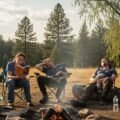
Multi-generational camping is most successful when you engineer toward comfort, not as an add-on. The idea isn’t to be tough – it’s to create a trip that an 8-year-old and a 72-year-old can both have a good time on, without either feeling like they’re slumming it.

Choosing the right campsite before anything else
There’s nothing particularly virtuous about choosing a rugged, remote campsite then “toughing out” the consequences. Your pleasure in the site will be pure torment for your elders as they stumble across unlevel ground in the dark, looking for a bush. Choose campgrounds where the nearest loo is a five-minute walk and you’ll be paying the consequences of your coolio off-the-grid site all week. Instead, find a campground with good toilet and shower blocks and book closer to ground zero. Many national parks have a selection of powered sites bookable online and park infrastructure is often excellent. Yes, these are booked out months in advance – so plan that long weekender with plenty of notice and book your powered site early.
Flat ground isn’t a compromise either. As far as I can tell, there’s this law of physics that says the steeper a campsite is, the fiercer the streams and tree roots will be that bisect it. This is no accident. Both will wreck your knees and ruin your night wandering about in the bush. A flat, powered site with paths connecting the loo, car, and tent isn’t making any concessions. It’s just sensible design.
The shelter question is the whole ballgame
Proper rest is the biggest factor in the success of a multi-generational camping trip. If your crew arrives at your chosen idyllic spot tired after a day of early starts, long drives, and usual work responsibilities, they won’t magically transform into different people because you’ve pitched tents in a pretty location.
What they will be is grumpy, inflexible, and unreasonable versions of themselves – not great if you’re asking grandparents to be continually patient with noisy kids, or trying to encourage said noisy kids to become better friends with nature. Additionally, if you have no base in camping and set your more elderly members up on the ground in standard tents, they’re guaranteed to wake up the next morning stiff, sore, and deeply regretting every life choice that led to this point.
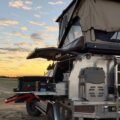
We’ve mentioned the practical need to upgrade your sleep gear elsewhere on this list, but let’s get serious: tenting isn’t going to cut it if you’re over 50, and you should seriously consider camper trailers and hybrid caravans (which combine hard-walled sleeping areas with fold-out canvas sections). Families who invest in this kind of gear consistently report better outcomes, and Austrack Campers builds setups specifically designed for rugged Australian conditions. They still give you that camping feel – surrounded by nature, able to open plenty of windows and breathe fresh air – but provide an actual bed that’s raised off the ground, has some real weather protection, and doesn’t require you to pretend you just love waking up to the rising sun and the sound of the kookaburra.
Power planning is non-negotiable
Many camping trips are this multi generational outing for the family nowadays, and the camping industry has really cottoned on to fulfilling their specific needs. One of the most obvious areas where this is the case is power.
CPAP machines are now common among older campers, and they draw continuous power overnight. Factor that in before you book. A campsite with a powered outlet is the easiest fix, but if you’re heading somewhere more remote, your camper needs a reliable dual-battery or solar system that can handle medical equipment alongside lights, phones, and whatever else the family needs. Don’t assume a basic setup will cover it – audit the actual load requirements before you leave home.
Keep communication devices charged as a baseline rule. If anyone in the group has a medical condition, make sure at least two people know the details and that your first aid kit covers both ends of the age spectrum – pediatric supplies for the kids, and enough room for prescription medications for the seniors.
Building an itinerary that doesn’t exhaust half the group
The camping default – start with a punishing morning hike, lather and rinse in the river all afternoon, then break your back to coddle your fire and feed your belly for six hours – pretty much ensures that adults in good to moderate shape have a good time. Everyone else, not so much.
It’s a subtle shift but a crucial one: instead of planning a big, splashy exhausting activity and finding something quiet and more convenient for Grandma to do in the meantime, plan a marquee event that happens to be low-impact and serene at the same time, which weaklings like Grandma would enjoy. Because they love nothing more. Then hold something for ultra-intrepid Grandma to do later, after the sun’s at its zenith and the rush dies down. Voilà! You’ve just tweaked the frame. Scenic drives, birdwatching, fishing, and quiet time reading under an oversized blue tarp are NOT alternatives for the less able – they are activities of equal merit in the experience you are offering. It’s all about how you frame it.
Setting up a central hub the whole family actually uses
A key component of a successful multi-generational trip vs. a chaotic one is a common area that’s all yours. A large gazebo or retractable awning with actual seating to accommodate the group gives you somewhere to come together – for meals, for games, for shelter when the weather shifts.
The meal prep you do before you go is the other half. Batch-cooked meals that just need heating up take the logistical stress out of feeding a large mixed-age group three times a day over a camp stove. Less cooking stress means more actually hanging out together.
That central hub is the gravitational centre of the trip. It’s where the grandkids learn card games from their grandparents, where the coffee is, where everybody ends up, whatever they’ve been doing all day. Get the infrastructure right, and it all slots into place.