The Infrastructure-First Approach to Home Entertainment
Many individuals ensure that their home entertainment system will remain relevant by first investing in the best available television. However, this is not the optimal approach. The monitor will eventually be upgraded. Nevertheless, the wiring, network, and control systems will remain the same. If you set up these components correctly, you can easily replace and upgrade the hardware later on.
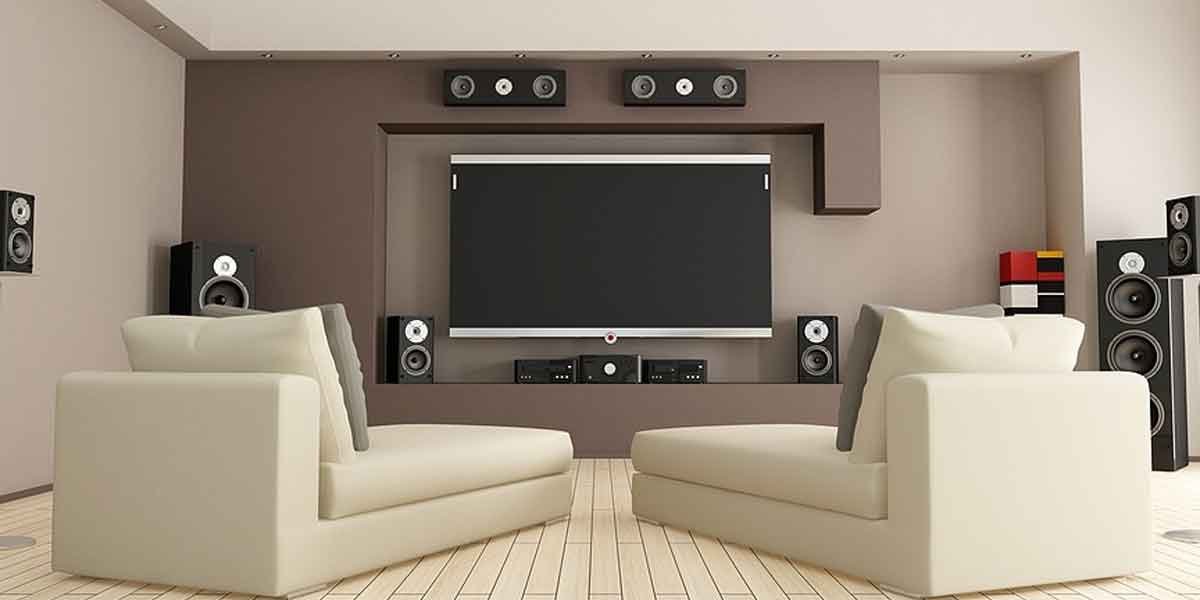
Start With the Wiring, Not the Display
If you have the incredible fortune of building a home theater with hidden wiring in the walls, make sure you future-proof it. No, I’m not going to suggest you over-engineer it with Cat7 on your power runs, but seriously consider putting in more conduit than you think you need. I’ve never spoken to a homeowner who regretted it, and I’ve talked to several who wish they’d done more.
Cat6A or Cat7 ethernet cables carrying 10Gbps data rates will be just fine until you retire and open your dream museum of retro analog gear. Current Wi-Fi can’t guarantee that all the time, particularly in dense residential buildings where spectrum congestion is reaching epic proportions.
But that’s not the point. Four words: uncompressed 8K streams. If you think the difference between your 1080p Blu-ray discs you still cherish and 4K content isn’t massive, the jump to 8K (and a whole other digital cinema camera generation) is going to blow your mind.
But still, that’s not the point. The point is that the stuff you’re going to stream over that Cat7 isn’t even being announced today. When those 8K content libraries finally start to grow and the first 8K sets people in your stratosphere buy are likely to arrive in the (next) timeframe, you want to be ready. W-Fi 6E is awesome, Wi-Fi 7 will be just peachy, but they’re still shared bandwidth. Your private Cat6A run directly to any panel you’re thinking of showing this stuff on is a different kind of asset to your home’s value.
Control Systems and Smart Home Integration
The solution the Matter and Thread protocols provide is to a problem we’ve all experienced as technology early adopters: your fabulous new toy’s suddenly an albatross, because it refuses to play with your other toys. If your control isn’t compliant, you’re stuck before you even started.
For homes that want a display in each room, the complexity ramps up fast, managing signal distribution, syncing playback, routing different sources to different screens without latency. This is where professional installation makes the difference. Teams that specialize in video systems nyc handle exactly this kind of multi-zone distribution architecture, where signal integrity and timing across rooms can’t be left to consumer-grade switching.
Choosing Displays With Longevity in Mind
OLED offers black levels that MicroLED cannot achieve at existing consumer price levels. However, OLED has brightness constraints and long-term burn-in risks for static images. MicroLED is modular and far brighter since it is important in HDR how many nits are delivered.
Peak brightness and dynamic range are the real-time experience standards, not just resolution. Content in HDR10+ with 1,000 nits highlights look better on a well-tuned OLED than 8K content on a lousy screen. Better display is more important than getting the highest resolution.
Audio That Survives an Upgrade Cycle
An excellent AV receiver serves as the audio brain of your system that’s ready for the future. And the feature that assures longevity more than any other is eARC, Enhanced Audio Return Channel, over HDMI. Secure in the knowledge that one cable will soon carry full-resolution Dolby Atmos and DTS:X object-based audio (OBA) from your 8K TV to your receiver with no messing about.
OBA transforms the listening experience from a rigid grid of speakers to something far more immersive and variable. Height channels, ceiling bouncing drivers, overhead speakers, they’re all a part of the mix and all reliant on the ability of your AVR to decode and direct the signal. Get eARC right and you can swap out or upgrade single pairs of speakers over time, sure in the knowledge they’re being fed the best possible signal.
Dolby Atmos and DTS:X aren’t checkboxes or marketing kipple any more. They are the container format for pretty much all premium audio-visual content. This is a technology that’s 100% happening and the delivery mechanism is standard and agreed. If your receiver’s future-ready check box doesn’t support both, it isn’t the only box that it has failed to tick.
Thermal Management and Hidden Aesthetics
High temperatures have a more detrimental effect on AV equipment than anything else. Receivers, media players, and network switches that operate within sealed cabinetry will deteriorate over their ten-year life, in ways that are difficult to track down and costly to repair. AV racks with ventilation and active cooling are not a luxury in a pro install, they’re a must-have.
Cooling and looks are not at odds with each other. Rack enclosures keep cables neat, airflow consistent, and all components reachable for future hot-swaps. A system that looks tidy is also a system that’s easy to keep tidy.
The Mindset Shift That Makes This Work
As streaming volumes increase (Cisco predicted that video will be 82% of all internet traffic), and that number goes up every year, the strain put on our home internet and wireless systems gets exponentially larger. All our gadgets become obsolete. A smart home replete with solid wiring, protocol-agnostic control, and modular audio system becomes a utility, something like a road that can always accommodate more cars, rather than a car that needs to be replaced every few years.