Most individuals start building their jewelry collection in the wrong order. They purchase a large cocktail ring or a trendy item they fancy, to then notice that nothing matches. The wiser method is to assemble your collection as an architect does with a building, foundation first, decoration later.
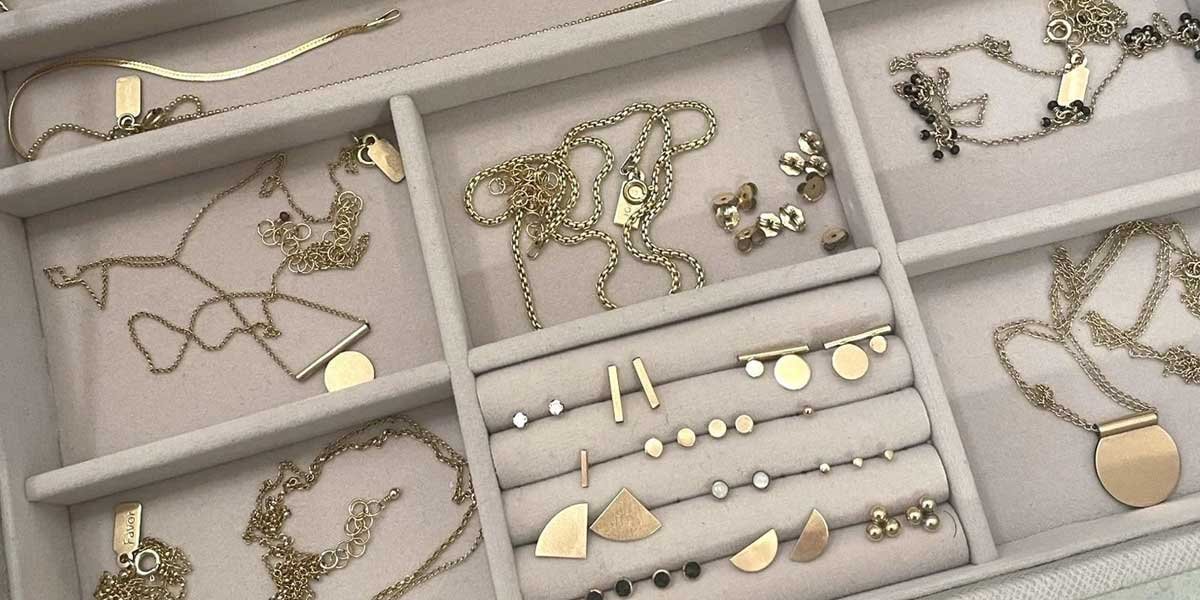
The essential pieces are less than what you would imagine. A pair of diamond studs with a simple bezel or four-claw setting. A gold chain with enough weight to be worn on its own. A watch that is versatile enough to be worn at work or to go out. These three pieces will be the center around which everything else revolves. They might not be exhilarating at the beginning, but they will be the reason why some people appear nicely put together while others seem to wear someone else’s jewelry every day.
Do not underestimate how difficult it is to find the right versions of these essentials, and the most common mistake is to rush them.
Metal and Stone Selection For Longevity
Select the colour of your metal based on the undertones in your skin, not based on trends. Yellow and olive complexions (warm undertones) tend to look better against yellow or rose gold. White metals such as platinum or white gold complement pink or ruddy undertones (cool undertones). It almost seems like fashion advice, but there’s a real benefit: you feel good in pieces that look good on you. Pieces you don’t, no matter how valuable, are more likely to collect dust in a drawer.
For gemstones, the so-called “big three”, sapphires, rubies, and emeralds, have held cultural and financial relevance across centuries because their colour is inherently dramatic and their symbolic associations are deep-rooted. A sapphire solitaire or an emerald set in a clean bezel doesn’t read as belonging to a particular decade. Coloured stones also tend to carry more personality than diamonds at a similar price point, which is worth considering when you’re building a collection that’s meant to reflect you rather than a style guide.
For sourcing pieces that genuinely qualify as investment-grade, particularly high-end watches and bespoke work, Trilogy Jewellers Mayfair is the kind of boutique environment where that conversation can happen properly, with people who understand both the craft and the market.
The Cost-Per-Wear Argument is the Only Maths That Matters
Fashion jewellery seems economical until you track how long it actually lasts. A £50 plated bracelet worn thirty times before it tarnishes costs roughly £1.67 per wear. A solid 18k gold chain at £1,500 worn almost daily for a decade costs well under 50p per wear, and holds its melt value throughout.
This isn’t an argument for spending more money. It’s an argument for spending money once.
Heirloom quality isn’t a marketing term. It describes a practical threshold, the point at which a piece becomes repairable rather than disposable. Mechanical watch movements can be serviced indefinitely. Hallmarked precious metals can be remodelled by a jeweller if your taste changes. Plated brass cannot. When you’re evaluating a potential purchase, the question isn’t “do I love this?”, it’s “will this still exist in twenty years, and will I still be glad I have it?”
How to Think About Watches in a Jewellery Context
Watches are the true intersection of fashion and jewelry, and should be treated as such.
More consideration should be given to the silhouette question than the prestige of a brand. Integrated bracelet watches, where the bracelet is a direct extension of the case, have typically maintained their aesthetic relevance over decades more than strap-changing watches, precisely because their proportions are seen as one object and not two. They blur the sports/dress line in both contexts without looking out of context in either.
If you’re doing this for the money, the category works. Luxury watches have enjoyed a ten-year price increase of around 138%, outperforming most other passion investments soundly (Knight Frank Luxury Investment Index). This doesn’t mean every watch goes up, but it does mean that well-selected pieces in this category are a different kind of spend than most.
When making that selection, choose mechanical movement (automatic or manual) over quartz. Not because they’re quartz, per se, but because they’re throw-away. A quartz movement from twenty years ago often can’t be repaired because the module is dead. A mechanical calibre from the same period is quite possibly still in production.
The Heritage Anchor
A robust collection always contains at least one item that has weight meaning not just material but a story. A watch that was someone else’s. A ring that was custom-made to a specific brief. A piece by a reputable craftsman with a design language recognizable because it has been borrowed from the Art Deco period or another architecture-and-design era.
This piece is the anchor. Everything else can move around it as your taste shifts, but the heritage item remains constant and gives the collection coherence.
Collecting jewelry properly is slower than it seems. Buy fewer things. Buy them better. Let the collection grow over years, not seasons, and what you end up with will be truly your own.