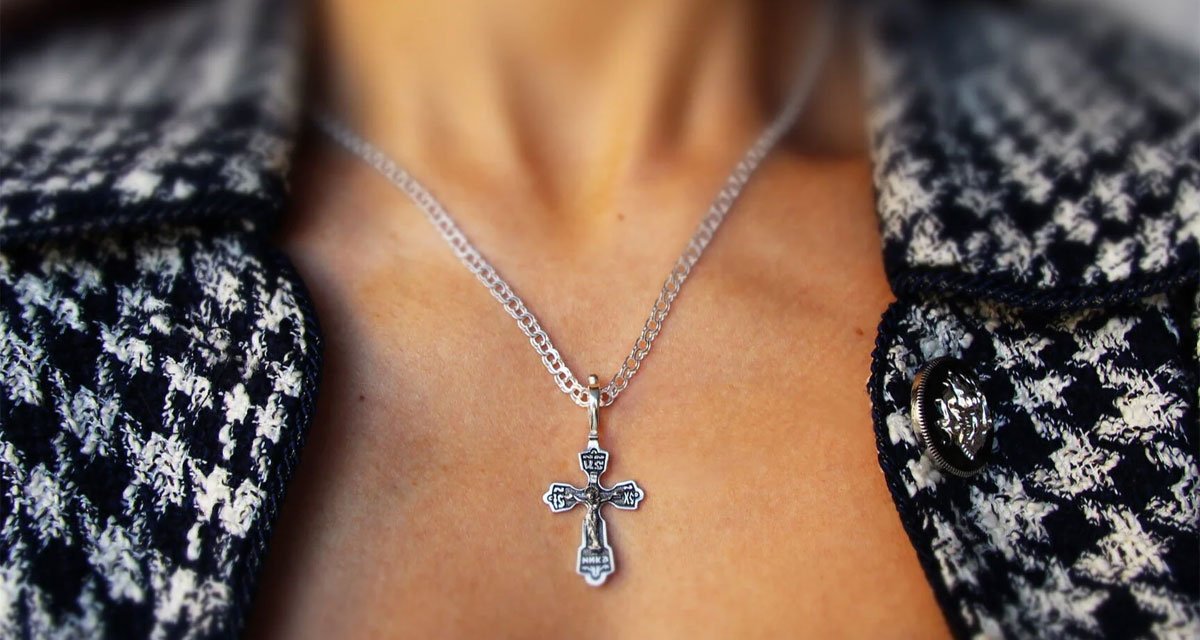
Orthodox cross jewelry unites spiritual significance and polished style at formal gatherings. These pieces, rooted in Eastern Christian tradition, set themselves apart from Western crosses with their three-bar form. The upper bar denotes the inscription board, the middle serves as the main crossbeam, and the lower slanted bar indicates the footrest. This arrangement holds considerable theological depth yet delivers clean lines that complement evening clothes.
Integrating the Cross with Formal Attire
Formal parties demand outfits that blend refinement with individual expression. Guests opt for gowns, tailored suits, and selected accessories to convey a considered look. An Orthodox cross pendant or necklace fits naturally into this environment without conflicting with the rest of the attire. The geometric outline generates interest against silk, velvet, or fine wool. Finishes in polished gold, brushed silver, or rose gold capture the gentle illumination common in ballrooms and dining rooms, earning understated notice instead of commanding the entire appearance.
Design Variations and Proportions
Cross designs adjust readily to different dress codes. Those with minimalist outlines and smooth edges prove suitable for black-tie occasions that prioritize restraint. Other options include modest enamel details or light engraving that add texture without overdoing it. Scale shapes the overall impression in important ways. A medium pendant placed just below the collarbone works well with open necklines or open shirt fronts. Smaller examples suit higher collars or layered pearls and maintain proper balance.
Expressing Personal Faith in Social Settings
This jewelry at formal events signals something beyond mere aesthetic choice. It indicates a personal dedication to faith that stays apparent yet controlled. In settings rich with conversation and interaction, the orthodox cross operates as a subtle indicator of identity. Individuals familiar with the shape often identify its connection to Orthodox practice. The wearer senses continuity between private conviction and public presentation. The result steers clear of showiness while upholding principles that persist after the evening ends.
Material Choices for Quality and Visual Effect
Material selection shapes both durability and appearance. Solid gold resists tarnish and preserves its finish through repeated dinners and receptions. Sterling silver produces a cooler hue that contrasts successfully with warmer complexions or dark garments. Some designs blend metals or set small gemstones where the bars meet, generating secondary focal points that stay secondary to the cross. Even weight distribution remains critical. A properly made pendant hangs level and remains centered, needing little repositioning while moving or seated in conversation.
Chains, Lengths, and Complementary Accessories
The chain or cord that holds the cross deserves equal care. Fine matching-metal links keep attention on the pendant. Thicker chains give a stronger outline for anyone who prefers that presence. Chain length changes how the piece meets the neckline. An 18-inch length works for most formal necklines, while longer ones let the cross rest lower on a plunging dress or open jacket. Other jewelry should stay simple. Stud earrings or a slim bracelet avoid clutter and leave the Orthodox cross in the central place.
Cultural Roots and Shared Recognition
Cultural background strengthens the choice to wear these pieces. Orthodox communities have long treated crosses as objects of devotion kept close to the body. At formal parties with mixed guests, the jewelry links personal heritage to current fashion expectations. It shows respect for tradition without needing spoken explanation. Guests from similar backgrounds often respond with quiet recognition and form brief connections through the shared symbol. Those who do not know the design sometimes ask about its meaning, which opens room for thoughtful talk amid lighter conversation.
Practical Features for Reliable Wear
Practical details help the jewelry stay reliable through a full evening. Secure clasps lower the chance of loss during dancing or lively discussion. Smooth surfaces reduce the risk of catching on delicate fabric. In outdoor settings or rooms with shifting light, the metal’s reflective quality keeps the cross noticeable without strong illumination. Regular cleaning between events maintains the surface and leaves the piece ready for the next occasion.
Selecting Pieces for Specific Events and Styles
Choosing the right piece means matching it to the event and to personal style. Corporate galas usually call for restrained designs that fit a professional tone. Wedding receptions or anniversary celebrations allow slightly more detailed versions that suit a festive mood. Body type and clothing cut guide the scale. Broader shoulders handle larger crosses comfortably, while narrower frames look better with smaller ones that keep the balance intact.
Resolving the Tension Between Style and Conviction
Orthodox cross jewelry eases a common tension at formal parties. Many guests want to show deeper convictions without upsetting the evening’s tone. These pieces handle that need through their natural dignity. The three-bar form carries historical and spiritual weight that turns ordinary accessories into markers of continuity. Wearers continue a visual language shaped across generations and now fitted to modern social settings.
Proportion, Placement, and Visual Clarity
Proportion and placement sharpen the final effect. Keeping the cross clear of competing pieces such as bold necklaces or heavy brooches maintains clarity. With monochromatic clothing the jewelry stands out through simple contrast. Against patterned fabric, plainer crosses avoid visual conflict. Such decisions show careful thought rather than casual choice.
Developing a Consistent Personal Signature
Regular use of Orthodox cross jewelry at formal events gradually forms a consistent personal signature. People come to link the wearer with both refined taste and steady conviction. Individual pieces gather private associations with particular evenings and conversations. Professional polishing or careful storage keeps them in good condition so the same item can appear across seasons and occasions.
Religious Symbols in Contemporary Social Life
The practice shows how religious symbols adjust to present-day social life. Formal parties serve as places for self-presentation, where clothes and accessories signal status, taste, and belonging. Adding an Orthodox cross widens the range of those signals. It confirms that faith and fashion can share the same space. The resulting appearance feels complete, rooted in tradition and still responsive to the moment. Those wishing to deepen their understanding of the faith expressed through such symbols often turn to Bible studies for further reflection and insight.
Maintaining Authentic Traditional Forms
Attention to authenticity reinforces the impression. Reliable sources supply crosses with accurate traditional proportions. Steering clear of overly stylized or commercial versions protects the form’s integrity. In this way the jewelry works both as a decorative piece and as a true representation.
Uniting Appearance with Conviction in Evening Ensembles
Orthodox cross jewelry contributes to formal attire by uniting appearance with conviction. Careful choices in design, proportion, and placement give evening ensembles added depth. The pieces invite recognition of lasting symbols inside settings built around temporary celebration. The overall effect stays measured and professional while staying tied to personal history.