If you live in a single-family home built between the 1980s and 2000s, there is a good chance your HVAC system breathes through a web of flex duct snaking through your attic. When that ductwork fails, and it will eventually, replacing it costs between $1,500 and $6,000 or more.
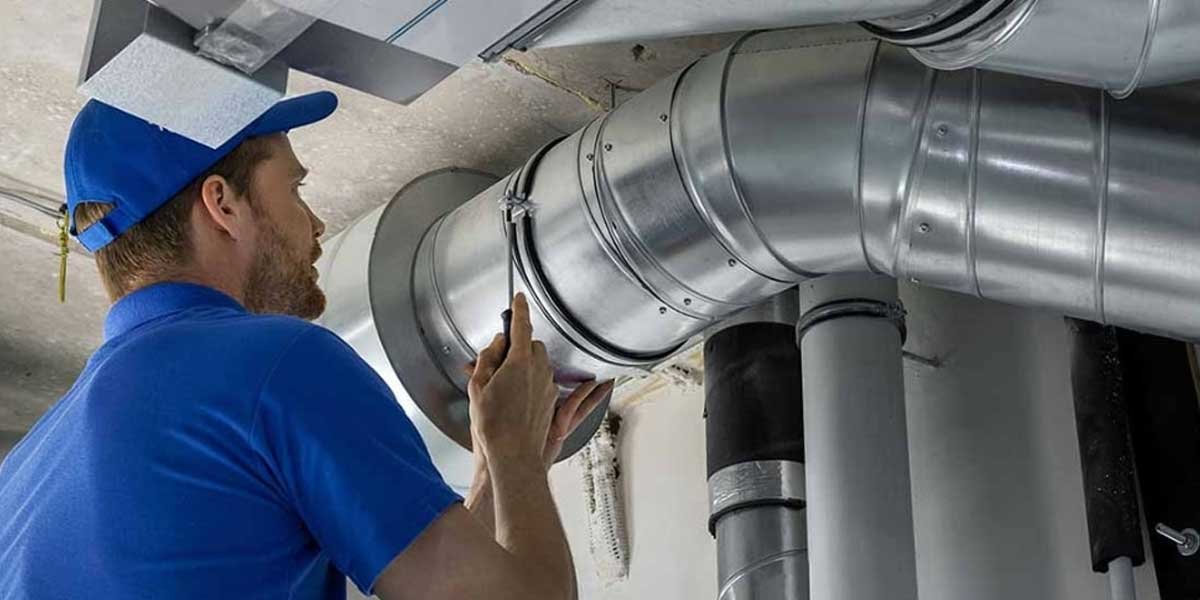
That is not a typo: attic work is simply more expensive than the same job in a crawlspace or basement.
The reason comes down to three uncomfortable realities: insulation, heat, and access. Attic temperatures in summer can hit 140°F, which degrades flex duct faster and forces contractors to use higher-grade materials with better R-value insulation. Cramped truss spacing and low clearance turn a straightforward swap into a contortionist’s job.
And before any new ductwork goes in, old insulation often has to be removed and reinstalled — adding $500 to $1,500 to the final bill. This guide breaks down exactly what drives those costs, from flex duct vs rigid duct decisions to the real-world impact of duct sealing and climate zone pricing.
Attic Ductwork Replacement Cost Breakdown (2026 Pricing)
Replacing attic ductwork typically runs between $1,500 and $6,000 for a standard single-family home, with most homeowners landing around $3,500. That range is wider than a basement or crawlspace job because attics present unique complications: extreme heat, cramped access, and the unavoidable need to remove and reinstall insulation. Here is exactly where that money goes.
Cost by Duct Material (Flex vs. Rigid vs. Metal)
The material you choose determines roughly 30–40% of the total project cost. Flex duct is the default for most attic replacements because it is cheap and easy to snake through tight truss spacing. Rigid fiberglass and sheet metal cost more but last longer and perform better in extreme temperatures.
| Material | Cost per Linear Foot (Installed) | Attic-Specific Pros | Attic-Specific Cons |
|---|---|---|---|
| Flex duct (insulated) | $2 – $4 | Lowest upfront cost; easy to route around obstacles | Prone to sagging in 140°F summer attics; shorter lifespan (10–15 years); restricts airflow if kinked |
| Rigid fiberglass duct board | $4 – $8 | Better insulation value (R-6 to R-8); resists sagging | Heavier and harder to maneuver in low-clearance attics; requires careful sealing at joints |
| Sheet metal (galvanized) | $8 – $12 | Longest lifespan (25+ years); smooth interior maximizes airflow | Expensive; requires skilled fabrication; difficult to install in attics with truss spacing under 24 inches |
Flex duct is the most common choice for attic replacements because it balances cost and ease of installation. But there is a catch: in attics that regularly exceed 130°F, the inner plastic liner can degrade faster than manufacturers advertise. Rigid fiberglass or metal makes more sense if you plan to stay in the house longer than 10 years.
When deteriorated insulation or intense heat strains your climate setup, keeping up with structural updates is essential to maintain general efficiency. Homeowners facing these situations often need a trusted expert to evaluate the system, and they can click for service to secure professional maintenance that stops energy waste before it affects their monthly bills.
Labor Costs for Attic Access
Labor rates for HVAC work range from $75 to $150 per hour nationally. Attic work adds a 20–40% premium on top of that. Why? Three reasons.
First, attic temperatures can hit 140°F in summer and drop below freezing in winter. Contractors often work in 30-minute bursts with cooling breaks, which stretches the timeline. A basement duct job that takes two days might take three in an attic.
Second, access is physically demanding. Low clearance — sometimes under 30 inches — forces workers to crawl or lie on their stomachs. Some contractors send smaller-framed technicians specifically for attic jobs, and they charge accordingly.
Third, insulation removal adds time. You cannot replace ducts buried under 12 inches of blown-in fiberglass without pulling that insulation out first. That is not a five-minute task. It adds half a day to a full day of labor, depending on attic size.
A typical attic duct replacement for a 2,000-square-foot home requires 16–24 labor hours. At $100 per hour, that is $1,600 to $2,400 just for labor.
Additional Costs: Insulation, Permits, and Sealing
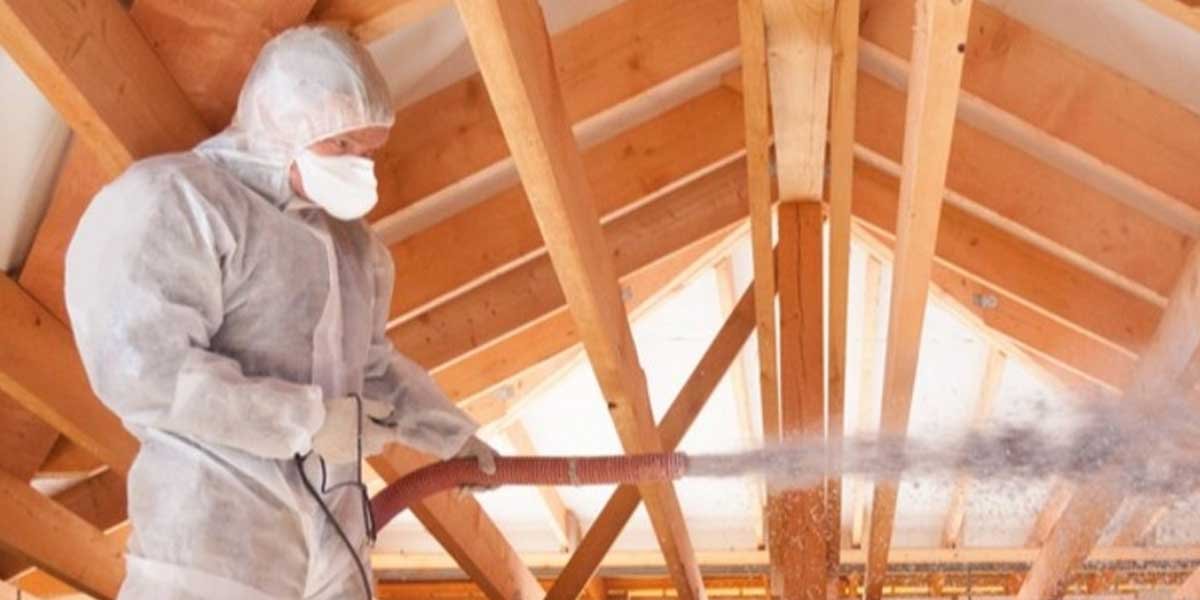
Insulation removal and replacement is the cost that blindsides most homeowners. If your attic has existing blown-in cellulose or fiberglass, the contractor must clear it from the duct paths, replace the ducts, then reinstall fresh insulation. That runs $500 to $1,500 on top of the ductwork itself. Some contractors quote the duct replacement separately and treat insulation as a change order , ask upfront whether the quote includes insulation work.
Permit fees are small but non-negotiable in most jurisdictions. Expect $50 to $300 for a mechanical permit, plus the cost of a rough-in inspection and a final inspection. Skipping permits is tempting but risky: if a fire starts or a duct leak causes mold, your insurance company may deny the claim.
Duct sealing with mastic adds $0.50 to $1.50 per linear foot. This is not optional in attics. Unsealed joints leak conditioned air into the attic space, wasting 20–30% of your HVAC system’s energy output. Mastic-based sealing is far more durable than standard duct tape, which degrades quickly in attic heat.
5 Factors That Drive Up Attic Ductwork Replacement Costs
The price tag on an attic ductwork job jumps around because of five specific conditions that don’t apply to basement or crawlspace work. Extreme heat, tight access, insulation handling, code enforcement, and regional climate all push the final number higher , sometimes by 40% or more.
Extreme Attic Temperatures (Heat/Cold)
A sealed attic in July can hit 140°F. That heat degrades standard flex duct faster than any other environment in a house. The plastic inner liner gets brittle. The insulation jacket compresses. Within a few years, you’re losing conditioned air through micro-cracks that a visual inspection won’t catch.
Cold climates create a different problem. Attics in Minnesota or Maine drop below freezing for months. Uninsulated or poorly sealed ductwork sweats condensation inside the insulation layer, which leads to mold growth and R-value collapse. Contractors in these regions typically spec R-13 duct insulation instead of the minimum R-8, adding roughly $0.50–$1.00 per linear foot in material cost.
The 2021 International Energy Conservation Code requires R-8 minimum for ducts in unconditioned attics, but many pros bump that to R-13 in extreme zones as a standard practice.
Cramped Access & Crawlspace Constraints
Most attics built between 1980 and 2000 use trusses spaced 24 inches apart with a peak height of maybe 36 inches. That’s not standing room. That’s crawling. A contractor working in those conditions moves slower, carries less equipment at once, and often needs a second person just to hand materials through the access hole.
Labor rates for attic work run $75–$150 per hour, but the total hours climb. A basement duct job that takes 8 hours can take 12–14 hours in a tight attic. Some companies send smaller-framed workers specifically for attic access , not discrimination, just physics. One regional HVAC contractor told me they budget 30% more labor hours for any attic job under 42 inches of clearance.
Insulation Removal & Reinstallation
You can’t replace ductwork buried under 12 inches of blown-in cellulose without moving that insulation first. Removal runs $500–$1,500 depending on square footage and whether the old material is contaminated with rodent droppings or moisture damage. Reinstallation adds another $300–$800, assuming you reuse the same material.
The real cost driver here is code compliance. Building codes now require a minimum R-38 attic insulation in most climate zones. If your existing insulation is only R-19 , common in homes built before 2000 , you’ll need to add more after the ductwork goes in. That’s not optional if you want the job inspected and permitted. Blown-in cellulose runs roughly $1.00–$1.50 per square foot at R-38 depth.
For a 1,500-square-foot attic, that’s $1,500–$2,250 on top of the ductwork itself.
Ductwork Permits & Code Compliance
Skipping the permit saves maybe $50–$300 in fees. It also voids your homeowners insurance if the failed ductwork causes a fire or flood. Most jurisdictions require a mechanical permit for any ductwork modification in an attic, and inspections check for proper support spacing (every 4 feet for flex duct), fire-rated materials near penetrations, and sealed connections.
One thing contractors rarely explain: permit inspections often catch insulation deficiencies, electrical hazards, and structural issues that have nothing to do with the ducts. That can trigger additional repair costs you weren’t planning on. But it also means the work meets code, which matters when you sell the house. A home inspector will spot unpermitted ductwork in about 30 seconds with a flashlight and a ladder.
Regional Price Variation (South vs. North)
| Climate Zone | Typical Labor Rate | Preferred Duct Material | Common Cost Range (attic only) |
|---|---|---|---|
| Hot-Humid (TX, FL, GA) | $85–$130/hr | R-8 flex duct with vapor barrier | $2,000–$5,500 |
| Mixed-Humid (NC, VA, TN) | $80–$115/hr | R-8 flex duct standard | $1,800–$4,500 |
| Cold (NY, IL, MI) | $90–$140/hr | R-8 rigid duct preferred | $2,500–$5,800 |
| Marine/West Coast (CA, OR, WA) | $95–$150/hr | R-8 flex or rigid (varies) | $2,200–$6,000 |
How to Get Accurate Attic Ductwork Quotes (Step-by-Step)
Getting a reliable quote for attic ductwork replacement means forcing contractors to account for the conditions that actually drive costs , heat, insulation, and access. A generic “$2,500 flat” bid is a red flag. Here is the step-by-step process to get quotes that reflect reality, not guesswork.
What to Ask Every Contractor
Five questions separate pros who understand attic work from generalists who will bill you for surprises later.
First: “Does your quote include insulation removal and reinstallation, or is that a separate line item?” Most homeowners discover too late that insulation work adds $500 to $1,500. Second: “What duct material do you recommend for my attic climate, and what R-value are you installing?” Attic ducts require R-8 to R-13 per most building codes.
Third: “Are permits included in the price, or billed separately?” Permit fees run $50 to $300, but the inspection itself is where code violations get caught. Fourth: “What sealing method do you use , mastic, foil tape, or both?” Mastic ($0.50–$1.50 per linear foot) outperforms tape in high-heat attics. Fifth: “Can you itemize labor vs. materials?” If they hesitate, they are hiding the attic access surcharge.
Red Flags to Watch For
Lowball quotes below $1,500 for a full attic replacement almost certainly exclude insulation work, duct sealing, or both. A contractor who says “permits aren’t necessary” is wrong , most jurisdictions require permits for attic ductwork under the International Energy Conservation Code. Vague material specifications like “standard flex duct” without naming the R-value or brand should end the conversation.
Another flag: contractors who quote by the job without inspecting the attic. Attics vary wildly in truss spacing, clearance height, and insulation depth. A quote given over the phone is a guess, not a bid. Demand a site visit.
Permit Requirements by Region
Permit rules vary, but the pattern is predictable. The table below shows when permits are typically required for attic ductwork replacement.
| Scenario | Permit Required? | Typical Fee | Why It Matters |
|---|---|---|---|
| Full duct replacement in conditioned attic | Yes | $100–$300 | Energy code inspection for R-value and sealing |
| Partial repair or section replacement | Often | $50–$150 | Fire code compliance for attic access routes |
| Duct sealing only (no material replacement) | Varies by municipality | $50–$100 | Some cities exempt sealing from permit requirements |
| DIY replacement (no contractor) | Yes , homeowner permit required | $50–$200 | Inspector will verify insulation and connections |
Skipping permits can void your homeowner’s insurance if a fire or failure traces back to unpermitted work. In practice, the inspection is where you catch problems like sagging flex duct or unsealed joints , problems that cost far more to fix later than the permit fee itself.
Attic Ductwork vs. Ductless Mini-Splits: Which Is Cheaper?
For most homeowners with an existing forced-air system, replacing attic ductwork is the cheaper upfront option. But the math gets complicated when your attic has no ductwork, or when your old flex duct is so degraded that sealing it is pointless. In those scenarios, a ductless mini-split system can actually cost less to install , and save you money on monthly bills.
Here is the raw cost comparison for a typical single-family home:
| System Type | Typical Installation Cost | Best For |
|---|---|---|
| Attic ductwork replacement (flex) | $1,500 – $4,000 | Homes with existing ductwork that is failing but accessible |
| Attic ductwork replacement (rigid/metal) | $4,000 – $6,000+ | Homes in extreme climates where flex duct degrades quickly |
| Ductless mini-split (single zone) | $3,000 – $8,000 | Homes with no existing ductwork or severe attic access issues |
| Ductless mini-split (multi-zone, 3-4 heads) | $8,000 – $15,000 | Homes needing zoned heating/cooling without attic ductwork |
Cost Comparison , Ductwork vs. Mini-Split
On paper, ductwork replacement looks cheaper. A basic flex duct job in an accessible attic runs $1,500 to $4,000. But that price rarely includes fixing the root cause of the problem , namely, the attic itself. If your attic hits 140°F in summer, that new flex duct will sag and leak within 5-7 years. You are paying for a temporary fix.
A single-zone ductless mini-split costs $3,000 to $8,000 installed. That is more upfront. But mini-splits eliminate duct losses entirely. According to the U.S. Department of Energy (2024), duct losses in unconditioned attics can waste 20-30% of heating and cooling energy. A mini-split with a SEER2 rating of 20+ recovers that waste through higher efficiency and zoned operation. Over 10 years, the energy savings can offset the higher installation cost.
One thing contractors rarely explain: ductwork replacement in a hot attic may also require upgrading your insulation to R-8 or R-13 per current building codes. That adds $500 to $1,500 to the job. Suddenly, your $3,000 duct job becomes a $4,500 project , right in mini-split territory.
When to Choose Ductless
Ductless mini-splits make sense in three specific situations. First, if your attic has no existing ductwork and you are starting from scratch. Running new flex duct through a cramped, low-clearance attic with truss spacing under 24 inches is miserable work. Labor costs spike. A mini-split avoids the attic entirely.
Second, if you want zoned heating and cooling. A single ductless head serves one room or zone independently. That means you can cool the master bedroom without freezing the guest room. Ductwork systems in attics typically serve the whole floor as one zone, which is less efficient for homes with uneven occupancy.
Third, if your attic access is so bad that even small-framed workers struggle. Some attics have clearances under 24 inches. In those cases, contractors may quote 40% more labor simply because the job takes twice as long. A mini-split wall unit requires no attic work at all , just a small refrigerant line set run through an exterior wall.
“Just got quoted 33K for A/C and heater in Austin for 1,000 sq ft house. Most of the cost was ductwork replacement in the attic — they said the existing flex duct was 25 years old and falling apart.”
Frequently Asked Questions
How much does it cost to replace ductwork in attic per linear foot?
Flex duct runs $2–$4 per linear foot for materials alone in an attic. Rigid fiberglass ductwork costs $4–$8 per linear foot. Sheet metal, the most durable option, runs $8–$12 per linear foot. Those material prices double once you add attic labor, insulation handling, and sealing. A typical 1,500-square-foot home needs roughly 100–150 linear feet of main trunk ductwork plus branch runs. Total installed cost lands between $6 and $18 per linear foot depending on material choice and attic accessibility. Get a per-foot breakdown in writing , many contractors quote a flat project price that hides the markup on materials.
Is it worth replacing old ductwork in attic?
Yes, if your ducts are more than 15 years old, showing visible sagging between supports, or leaking at seams. The U.S. Department of Energy estimates that poorly sealed attic ductwork loses 20–30% of conditioned air before it reaches your living space. That waste shows up directly in monthly utility bills. Replacing old flex duct with properly sealed and insulated R-8 rated ductwork typically pays for itself in energy savings within 3–5 years in extreme climates. The secondary benefit is improved indoor air quality , old ducts accumulate dust, mold spores, and rodent debris that recirculate through your home.
How long does it take to replace ductwork in an attic?
A professional crew of two to three workers completes a full attic ductwork replacement in one to three days. Simple jobs with clear attic access and no insulation removal take one day. Complex attics with tight truss spacing, multiple stories, or existing insulation that must be removed and reinstalled push the timeline to three days. Crawlspace attics with less than 24 inches of clearance can add a full day because workers move slower and take more breaks in extreme temperatures. Get a timeline commitment in your contract , some contractors quote one day then stretch it to three when they encounter unexpected obstacles.
Can I replace attic ductwork myself?
Technically yes, but most homeowners should not attempt it. DIY ductwork replacement saves labor costs of $75–$150 per hour, but the risks are substantial. Improperly sealed joints reduce system efficiency by 20% or more, negating any savings. Undersized or oversized duct runs damage HVAC equipment and void manufacturer warranties. Attic work in summer heat above 130°F creates genuine safety hazards , heat exhaustion and falls through ceiling joists are real risks. If you have HVAC experience and a helper, you might tackle a small attic with flex duct. For anything larger than 500 square feet of conditioned space, hire a licensed contractor. Permit inspectors in most jurisdictions require proof of licensed installation for attic ductwork.
Does replacing ductwork increase home value?
Replacing attic ductwork does not directly increase appraised home value the way a kitchen remodel does. What it does is remove a major negotiating point for buyers. Home inspectors flag old, sagging, or uninsulated attic ductwork on every pre-sale inspection report. A buyer who sees that report will ask for a $4,000–$8,000 credit or walk away. Replacing ductwork before listing your home eliminates that objection. In competitive markets, a home with documented new ductwork and a recent HVAC tune-up sells 7–10 days faster than comparable homes with old systems, according to National Association of Realtors data from 2024.
Conclusion
The Bottom Line on Attic Ductwork Costs
Replacing ductwork in an attic runs between $1,500 and $6,000 for most single-family homes, with the average job landing around $3,500. That range widens fast when you factor in attic-specific variables: insulation removal and reinstallation ($500–$1,500), the choice between flex duct and rigid duct, and whether your local code demands a minimum R-8 insulation wrap on every supply run.
A job that looks cheap on paper , say, a $1,800 quote for flex duct only , often excludes the insulation work, duct sealing with mastic, and permit fees that turn a weekend project into a code violation.
Why You Need Three Quotes (Minimum)
Contractors price attic work differently. One might quote $2,200 for flex duct with no insulation mention. Another bids $4,800 for rigid fiberglass ductboard with full R-8 wrap and mastic-sealed joints. They’re not the same job, and the cheaper quote will cost you more in energy loss within two summers.
Ask each contractor for a line-item breakdown that specifically addresses attic HVAC ductwork access, insulation R-value requirements, and whether they handle permit filing. A contractor who can’t tell you the difference between flex duct vs rigid duct for your climate zone hasn’t worked enough attics.
One Thing Before You Call a Contractor
Before you pick up the phone, walk your attic with a flashlight and a notebook. Note the insulation depth, the condition of existing duct seams, and any sagging in flex runs. That five-minute inspection , the same one detailed in the downloadable checklist , gives you leverage. You’ll know whether you’re dealing with R-19 blown-in that needs full removal or just spot patching.
You’ll catch the contractor who tries to upsell you on a full replacement when a duct sealing job would suffice. And you’ll walk into every conversation knowing roughly what you’re looking at, which is more than most homeowners can say.