Homeowners want reliable power when the grid fails, and home battery backup systems now make that possible without a noisy gas generator. The first question most people ask is simple: how much does a home battery backup actually cost today? Prices vary a lot, but you can narrow them down once you know the main cost drivers, from battery size to installation complexity and incentives in your area.This guide breaks down average costs, cost per kWh, and what you pay for whole‑home versus partial backup. It also explains how modern systems, including flexible solutions like Anker SOLIX, can fit different homes and budgets. Use this as a starting point before requesting quotes from local installers or energy providers.

Average Cost of Home Battery Backup
Typical Price Range
Most battery backup home systems cost between $8,000 and $20,000 installed, before tax credits and rebates. Smaller partial‑backup systems usually fall on the low end, while whole‑home backup with higher capacity and more powerful inverters lands on the high end or above.If you pair a battery with a new solar system, installers often bundle pricing, so the battery portion might range from $6,000 to $15,000 of the total project. Stand‑alone battery retrofits typically cost a bit more per kWh because the electrician must update your main panel, backup loads panel, and wiring.Premium systems with advanced monitoring, smart controls, or expandable modules—such as multi‑component setups using inverters, battery modules, and smart inlet boxes—push costs higher but add flexibility.
Cost Per kWh Explained
To compare systems fairly, many homeowners look at cost per kWh of usable storage. A typical installed price falls around $900 to $1,400 per usable kWh in many U.S. markets before incentives, depending on brand and configuration.For example, if a 10 kWh system costs $12,000 installed, the cost is $1,200 per kWh. Larger systems sometimes have a lower cost per kWh because labor and permitting do not scale perfectly with capacity.Also check power ratings, not only storage. A system like Anker SOLIX E10 uses a power module plus B6000 battery modules and can deliver up to 7,680W continuous output and 10,000W turbo backup output, which affects how many appliances you can run at once during an outage.
What Factors Affect Home Battery Costs?
Battery Size and Capacity
Battery size sits at the center of your total cost. Systems with 5–10 kWh of usable storage usually support essential loads only, such as lights, internet, fridge, and medical devices. They keep the upfront price down but may not cover heating, cooling, or well pumps for long.Systems in the 15–30 kWh range move toward whole‑home backup. They can keep larger homes running longer, especially when paired with solar. Naturally, each extra kWh increases hardware cost and may require more labor to mount and wire additional modules.Modular products, such as systems that pair one power module with one or more battery modules, let you start small and add capacity over time. This flexibility helps control initial spending while preserving an upgrade path.
Installation and System Features
Installation complexity can change quotes by several thousand dollars. Costs rise when electricians must upgrade service panels, reroute circuits into a backup loads panel, or add a smart inlet box and transfer switch for generator or grid integration. Roof type, wall structure, and distance between the inverter, battery, and main panel also affect labor.System features matter too. Anker SOLIX E10, for example, includes a Power Dock, modular B6000 Battery Modules, Wi‑Fi and Bluetooth connectivity, and support for PV solar input up to 4,500W and DC generator input up to 4,500W. Higher continuous output (7,680W, 32A) and turbo backup output (10,000W, 41.6A) support more demanding homes but add value and complexity, which installers factor into final pricing.
Whole-Home Backup vs Partial Backup Costs
Cost Differences and Use Cases
Partial‑backup systems target the most critical circuits. Electricians move selected loads—like lighting, fridge, outlets for internet and work devices—to a dedicated backup panel. These systems often start in the $8,000 to $12,000 range installed, depending on capacity and region. They suit smaller homes, apartments, and budgets that prioritize resilience over comfort.Whole‑home backup aims to run nearly everything: HVAC, well pumps, cooking appliances, and more. These projects need larger batteries, higher‑power inverters, and more labor to integrate with existing infrastructure or solar arrays. Costs usually land between $15,000 and $25,000+ before incentives. Homes in areas with frequent or long outages often justify this higher investment.
Solutions Like Anker SOLIX
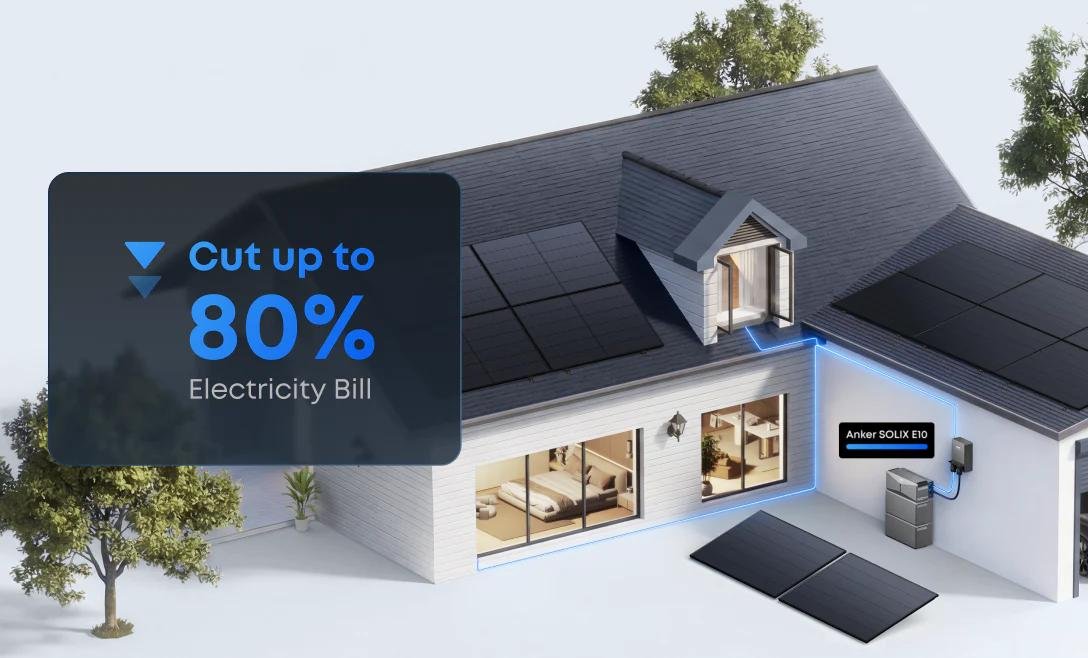
Modular systems such as Anker SOLIX E10 help bridge the gap between partial and whole‑home backup. The E10 Power Module supports 120 / 240 VAC split phase output at 60Hz, with 7,680W continuous output and up to 10,000W turbo backup for about 90 minutes when paired with a battery.By adding more B6000 Battery Modules and even multiple inverters, homeowners can scale from essential‑load backup to broader coverage. The system’s AC input port recharging (9,600W, 240V / 40A) and PV solar input (up to 4,500W) help recharge quickly between outages.This approach lets you start as a partial backup solution and expand toward whole‑home support as budget and needs evolve, without replacing the core hardware.
Conclusion
Home battery backup costs depend on storage capacity, power output, installation complexity, and smart features, but most systems fall between $8,000 and $20,000+ before incentives. Partial‑backup setups keep essentials running at a lower price, while whole‑home systems demand more investment for full comfort and convenience.Modular solutions such as Anker SOLIX E10, with its scalable battery modules, robust 7,680W continuous output, NEMA 4 (IP66) outdoor‑ready enclosure, and smart connectivity, give homeowners a flexible path to reliable backup power.By understanding cost per kWh, comparing quotes, and using incentives wisely, you can choose a system that matches your budget, protects your home during outages, and supports long‑term energy independence.