Nummazaki occupies a narrow coastal strip in Shizuoka Prefecture, south of Numazu City along Suruga Bay. Its highlights include dramatic clifftop hiking trails, traditional fishing villages, exceptional Mount Fuji views across the water, abundant marine wildlife, and a local seafood culture that puts most Japanese coastal towns to shame.
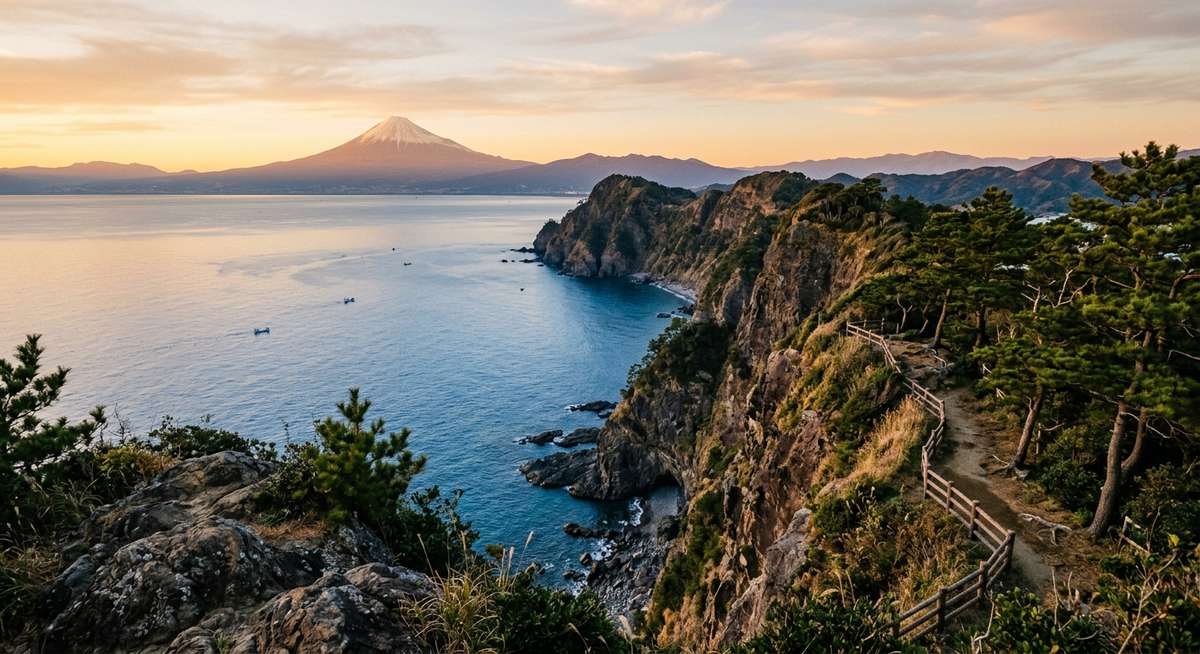
highlights of nummazaki — dramatic coastal cliffs above Suruga Bay with Mount Fuji visible across the water at golden hour
Where Is Nummazaki and How to Get There
Nummazaki sits on the southern shore of Suruga Bay in Shizuoka Prefecture, roughly 130 kilometers from central Tokyo by rail. Direct Shinkansen services from Tokyo reach Mishima or Numazu stations in under an hour, with local trains and buses covering the final stretch to the coast. The trip from Shizuoka City takes around 40 minutes by local train.
The area’s compact geography works in its favor. Most attractions sit within walking distance of each other or a short ride apart, and the layout is intuitive even for first-time visitors. Unlike more remote Japanese destinations, Nummazaki requires no elaborate logistical planning.
| Route | Approximate Time | Notes |
|---|---|---|
| Tokyo to Mishima (Shinkansen) | ~50 minutes | Then local train or bus to Numazu |
| Tokyo to Numazu (direct train) | ~90 minutes | JR Tokaido Line options available |
| Shizuoka City to Numazu | ~40 minutes | JR Tokaido Line |
| Within Nummazaki area | 5–30 minutes | Local buses and walking |
For travelers coming from Osaka or Kyoto, the Shinkansen reaches Mishima in approximately 2 hours. The Japan Guide’s Numazu regional overview provides current timetable details and transport options worth checking before departure.
The Coastline: Clifftop Trails, Hidden Coves, and Ocean Panoramas
Nummazaki’s coastline features accessible walking paths along dramatic clifftops with views across Suruga Bay. Trails range from 30-minute strolls to half-day hikes, with observation points offering unobstructed sightlines toward Mount Fuji on clear days. The experience is quiet in a way that few coastal destinations in Japan can still claim.
The cliffs themselves are the product of sustained erosion by Pacific swells, carved into shapes that catch morning light differently from any direction. Where the cliffs give way to lower ground, the coast shifts into quieter terrain: small beaches with smooth pebbles, sheltered coves with tide pools, and stretches of shoreline where the closest other person is often out of sight. Most visitors report having these areas entirely to themselves on weekday mornings.
From the elevated trail sections, the view takes in Suruga Bay in the foreground and, on days when atmospheric conditions cooperate, Mount Fuji appearing as a clean white triangle above the opposite shore. Sunrise brings warm light across the water; sunset from the clifftops casts the bay in amber and rose before everything goes dark.
Full-day hikers can connect several sections of coastal trail for a more complete traverse, while casual walkers can limit themselves to the most rewarding viewpoints without committing to more than an hour on foot. The trail infrastructure is well maintained and does not demand specialist gear or experience.
Practically no other coastline in Japan combines this level of visual drama with this level of accessible solitude. The crowds that fill Kamakura’s beaches or the Izu Peninsula’s resort spots simply do not come here, which is either the region’s best-kept secret or its best unadvertised advantage.
Traditional Fishing Villages and the Culture of the Sea
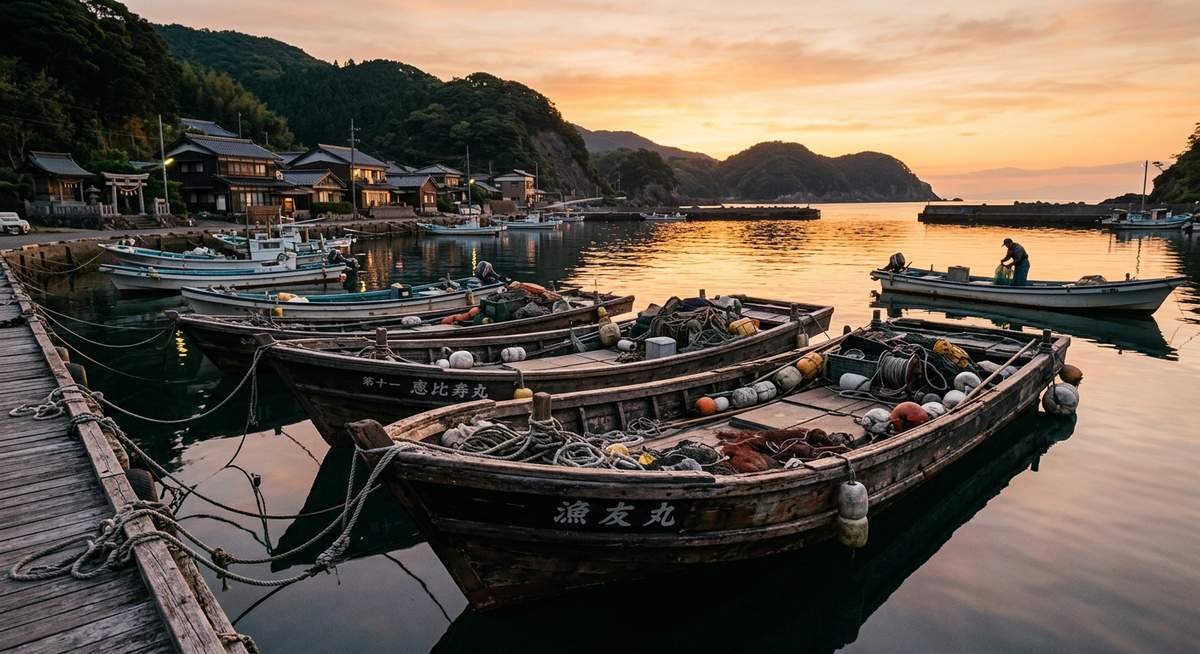
The fishing villages along Nummazaki’s shore operate on schedules that predate modern tourism. Boats leave before dawn and return with the morning tide, and the catch moves from boat to market to restaurant table within a few hours. Visiting at dawn means standing at the harbor as that sequence begins.
At 5:30 on a clear morning, the quays are already in motion. Fishermen unload wooden crates packed with the previous night’s catch, seabirds crowd the pier edges, and the smell of salt water and fresh fish mixes with diesel from the returning engines. By 8:00, the same fish are appearing on plates in nearby restaurants. The speed of that cycle, and the fact that it has repeated without fundamental change for generations, is what makes the fishing village experience genuinely affecting rather than merely scenic.
The local seafood culture extends well beyond the harbors. Small family-run restaurants serve kaisendon, layered rice bowls topped with whatever came in that morning, at prices that reflect the absence of a tourist markup. Grilled fish, sashimi platters, and street food from harbor vendors round out a culinary scene built entirely around proximity to the source.
- Morning fish markets at the working harbors (arrive before 7:00 for full activity)
- Kaisendon restaurants serving seasonal catches at lunch and dinner
- Harbor vendors with skewered seafood and traditional coastal snacks
- Cafés overlooking the water, many serving regional green tea alongside meals
The relationship between the fishing community and the coast here is not packaged for visitors. It simply continues alongside them, which gives the experience a weight that purpose-built tourist attractions cannot replicate.
Marine Life and the Depths of Suruga Bay
Suruga Bay, the body of water Nummazaki directly faces, is the deepest bay in Japan, reaching approximately 2,500 meters at its lowest point. That depth supports marine biodiversity unusual for a bay this size, including year-round dolphin populations, sea turtles, and deep-water species rarely seen in shallower Japanese coastal zones. According to documented data on Suruga Bay, the bay records over 1,000 marine species across its varied depth zones, a figure linked to its position above a tectonic subduction zone, creating the conditions for one of Japan’s most ecologically rich coastal environments.
Most visitors engage with this marine environment from the surface. Boat tours running from Nummazaki harbors offer dolphin observation during the warmer months, with encounters reported reliably between May and October. Snorkeling is possible in the sheltered coves during summer, where visibility in clear weather extends several meters. Shore-based wildlife spotting from the clifftop trails adds another option: seabirds, migratory species, and occasional cetaceans visible from the elevated paths during their seasonal movements.
A bay with 2,500-meter depths visible from a walking trail above sea level: that contrast between surface accessibility and underwater extremity is something most visitors process only gradually. The water looks calm from the cliffs. What lies beneath it is anything but ordinary.
Shrines, Festivals, and the Spiritual Rhythms of the Coast
Nummazaki is home to Shinto shrines and Buddhist temples that have maintained active ties to the local fishing community for centuries. The most significant of these are perched on clifftops or set into forested hillsides, and they remain working spiritual spaces rather than heritage attractions.
The calendar of seasonal ceremonies connected to the fishing fleet distinguishes this area from more tourist-oriented shrine districts. Blessing ceremonies before the new fishing season draw the local community rather than audiences; lantern-lit processions tied to maritime traditions move through harbor areas with no admission fee and no staged performance. Annual fleet blessing ceremonies, connected to Shinto maritime traditions documented throughout the Suruga Bay coastal communities, gather fishing boats in the bay below as proceedings continue at the clifftop shrine above.
Walking through the torii gates of a coastal shrine while fishing vessels move below on the water produces a specific kind of quiet that is difficult to manufacture elsewhere. The timing of a visit to coincide with a seasonal festival adds another dimension, though the shrines themselves are worth visiting on any ordinary morning when the ceremony is simply the ritual of everyday devotion.
When to Visit and Practical Travel Tips
Spring (March to May) and autumn (September to November) offer the clearest Mount Fuji views and the most comfortable hiking conditions in Nummazaki. Summer brings warmer water for snorkeling and swimming but higher humidity; winter delivers crisp visibility and the smallest crowds alongside cooler temperatures on the exposed clifftop trails.
| Season | Conditions | Best For |
|---|---|---|
| Spring (Mar–May) | Mild, clear skies, cherry blossoms inland | Hiking, Mount Fuji views, photography |
| Summer (Jun–Aug) | Warm, humid, occasional rain | Snorkeling, dolphin tours, seafood festivals |
| Autumn (Sep–Nov) | Clear, cooling, low crowds | Hiking, wildlife observation, fishing village visits |
| Winter (Dec–Feb) | Cold, very clear, quietest crowds | Mount Fuji views, shrine visits, uncrowded trails |
Accommodation options run from local guesthouses to traditional ryokan inns, most of which include dinner prepared from the day’s catch. Cash remains the reliable payment method in the smaller villages, as card acceptance is uneven outside the main town areas. A light jacket is useful year-round given the coastal breeze on exposed clifftop sections. Comfortable walking shoes with grip handle the uneven paths and rocky sections without difficulty.
The Visit Japan Chubu destination guide includes current practical information on accommodation and transport across the broader Shizuoka region.
Frequently Asked Questions About Nummazaki
What is Nummazaki famous for?
The highlights of Nummazaki include dramatic coastal cliffs above Suruga Bay, traditional fishing villages with active morning fish markets, Mount Fuji views across the water, and some of the freshest seafood available in Shizuoka Prefecture. The area remains one of Japan’s less-visited coastal destinations, which preserves the authenticity that more popular spots have lost.
How do I get to Nummazaki from Tokyo?
From Tokyo, the fastest route uses the Tokaido Shinkansen to Mishima Station (approximately 50 minutes), followed by a local train or bus to the Numazu and Nummazaki area. The full journey takes around 90 minutes to 2 hours depending on connections. Direct Tokaido Line trains from Tokyo to Numazu without the Shinkansen take roughly 90 minutes.
What are the best things to do in Nummazaki?
The most rewarding activities among the highlights of Nummazaki are hiking the clifftop coastal trails above Suruga Bay, visiting the working fishing harbors at dawn, taking boat tours for dolphin observation, exploring traditional Shinto shrines along the coast, and eating kaisendon at harbor restaurants. Most of these activities require no advance booking and can be combined in a single day.
Is Nummazaki suitable for solo travelers?
Nummazaki works well for solo travelers. The area is compact and navigable without Japanese language skills, the trail network is clearly marked, and restaurants and guesthouses accommodate single visitors without difficulty. The absence of mass tourism means solo travelers are unlikely to feel out of place or overwhelmed by crowds at any point during the visit.
When is the best time to see Mount Fuji from Nummazaki?
The clearest Mount Fuji views from Nummazaki occur during winter mornings (December through February), when dry air and minimal haze produce sharp visibility across Suruga Bay. Spring mornings before mid-morning also offer reliable views. Afternoons tend to build clouds around the summit, and the rainy season (June and July) reduces visibility significantly.
A Coastal Japan That Doesn’t Perform for Visitors
What makes the highlights of Nummazaki worth the journey is not any single attraction but the cumulative weight of a place that functions on its own terms. The fishing boats go out because the community depends on them, not because tourists pay to watch. The shrines hold their ceremonies because the rituals matter to the people who perform them, not because a tourism board scheduled them.
That distinction is increasingly rare in Japan’s most-visited coastal destinations. In Nummazaki, it remains intact.