Have you ever wondered why the river turns a murky brown after a heavy downpour? That color is a cry for help from our planet. It signals a problem that runs deeper than muddy water—a problem of soil erosion, environmental degradation, and increased flood risk that affects us all.
This isn’t just an environmental issue; it’s a critical challenge for our communities and infrastructure. Uncontrolled soil and sediment clog our waterways, damage aquatic ecosystems, and threaten our homes and businesses. An earth control measure (ECM) is our frontline defense in this battle, a crucial set of strategies designed to hold our ground, literally.
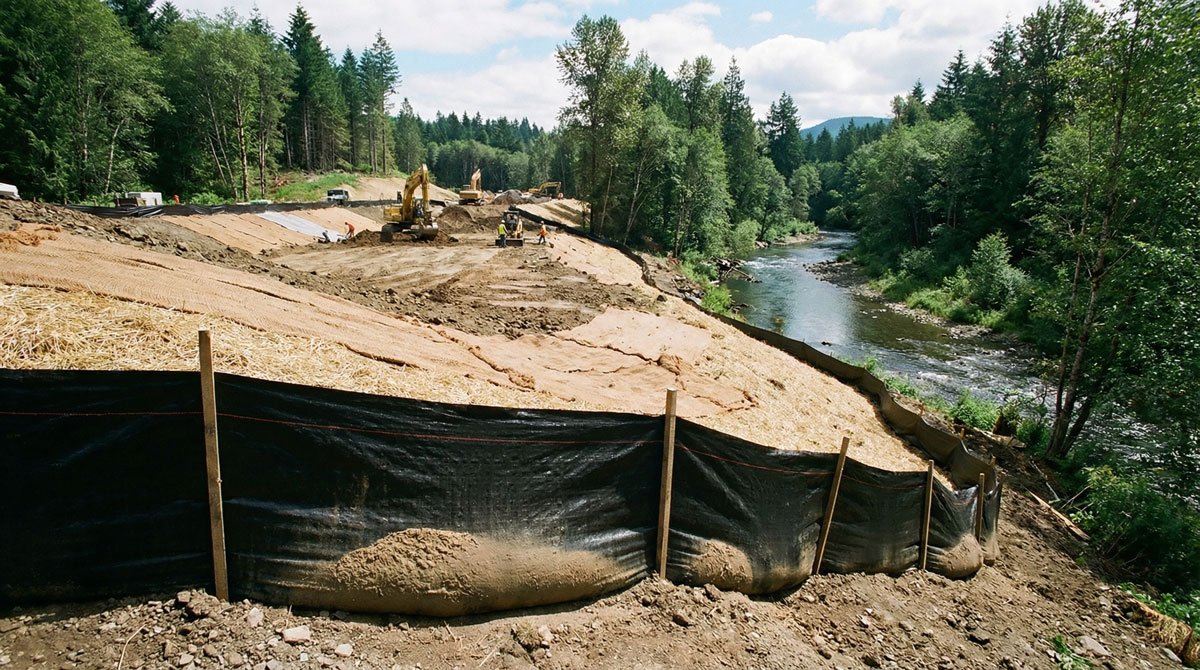
This article demystifies the world of earth control measures. We will explore what they are, why they are more critical than ever in our changing climate, and how they are implemented worldwide. Whether you are a concerned citizen, a construction professional, or a policymaker, understanding these measures empowers you to be part of the solution, protecting our shared home from the ground up.
What Are Earth Control Measures? A Simple Explanation
An Earth Control Measure (ECM) is a planned strategy to keep soil in its place. Think of it as a safety net for the land. When we build, farm, or alter landscapes, we expose the earth. This makes it vulnerable to being washed away by rain or blown away by wind. An earth control measure is a tool we use to prevent this from happening.
These measures are not just about tidiness. They are about managing a fundamental natural process. The goal is to control soil before it becomes a problem. This involves a three-part strategy: preventing soil from dislodging, capturing any soil that has moved, and managing water flow to reduce its erosive force. It’s a proactive approach to land management.
The Core Purpose of Earth Control Measures
The primary purpose of ECMs is to prevent soil erosion and sediment pollution. Loose soil doesn’t just disappear. It travels, clogging our drains and polluting our rivers, lakes, and reservoirs. This sediment damages aquatic habitats and can carry harmful pollutants with it, affecting water quality for everyone.
By implementing a proper earth control measure, we protect our infrastructure and ecosystems. We ensure that our drainage systems can handle heavy rainfall, reducing the risk of floods. We also preserve the health of our natural water bodies. It is a critical link in the chain of environmental stewardship and sustainable development.
Why Construction Sites Are Ground Zero for Erosion
Construction sites are a major source of erosion. The process involves clearing vegetation and excavating large areas of land. This removes the natural protective cover that holds soil together. The result is a landscape that is highly susceptible to the forces of nature. A single heavy storm can wash away tons of soil.
Without effective earth control measures, a construction site becomes a significant polluter. The runoff carries sediment directly into public drains. This is why many regions have strict regulations requiring comprehensive ECM plans before any work can begin. It’s about building responsibly from the ground up.
The Ripple Effect: From Soil to Waterways
The journey of a single soil particle can have far-reaching consequences. It starts on an exposed patch of land. Rain dislodges it, and runoff carries it away. It joins millions of other particles, forming a muddy torrent that flows into our drainage systems. The drains become choked, increasing the risk of urban flooding.
If the particle reaches a river, it contributes to turbidity. This cloudy water blocks sunlight, harming aquatic plants and fish. The sediment eventually settles, smothering riverbeds and destroying habitats. This ripple effect demonstrates how a local issue on a construction site can become a widespread environmental problem.
| With Earth Control Measures | Without Earth Control Measures |
|---|---|
| Clear water runoff | Muddy, sediment-laden runoff |
| Stable soil and slopes | Severe soil erosion and land degradation |
| Functional drainage systems | Clogged drains and increased flood risk |
| Healthy aquatic ecosystems | Polluted waterways and damaged habitats |
| Regulatory compliance and project efficiency | Fines, delays, and costly cleanup efforts |
The Critical Importance of Earth Control Measures in a Changing Climate
The conversation around earth control measures has shifted. It is no longer a niche topic for civil engineers and environmental scientists. It has become a cornerstone of our global response to a rapidly changing climate. The stability of our soil is directly linked to the stability of our future. Ignoring it is a luxury we cannot afford.
From protecting precious water resources to bolstering our defenses against extreme weather, ECMs are a critical tool. They offer a practical, ground-level strategy that delivers environmental, economic, and social benefits. This is where global climate action meets local implementation.
Protecting Our Waterways: The Environmental Case
Sediment is the single largest pollutant of our rivers and streams by volume. When soil erodes, it carries with it a cocktail of fertilizers, pesticides, and heavy metals. These pollutants degrade water quality, harm aquatic life, and can even contaminate our drinking water sources. The environmental case for ECMs is crystal clear.
Effective measures keep soil on the land and out of the water. This protects fragile aquatic ecosystems and preserves biodiversity. Clean water is not a given. It is the result of responsible stewardship, and that stewardship begins with controlling erosion at its source.
Climate Resilience and Soil Health
Healthy soil is a powerful ally in the fight against climate change. It acts as a natural sponge, absorbing water during heavy downpours and reducing the risk of flash floods. This is a vital function in a world where extreme weather events are becoming more common. A well-designed earth control measure helps maintain this natural resilience.
Furthermore, healthy soil is a massive carbon sink. By preventing erosion, we keep carbon locked in the ground instead of releasing it into the atmosphere. This makes soil conservation a direct form of climate action. It is a nature-based solution, sometimes related to broader concepts like Geoengineering, that works in harmony with our planet’s systems.
Economic Benefits: Prevention vs. Cleanup
The economic argument for earth control measures is overwhelmingly positive. Prevention is far cheaper than the cure. The cost of soil erosion in the United States alone is estimated to cause significant agricultural losses, potentially reaching over $100 per acre annually. In Europe, the annual loss in agricultural productivity is estimated at $1.38 billion.
These figures don’t even include the off-site costs. Dredging sediment from reservoirs, repairing flood damage, and treating polluted water are all expensive undertakings. A single ton of eroded soil can add up to $5 in dredging costs downstream. Investing in ECMs upfront saves public and private funds, reduces infrastructure maintenance costs, and protects property values.
Global Examples: How Different Regions Approach ECM
Governments worldwide are recognizing the importance of ECMs. In the United States, the Environmental Protection Agency (EPA) mandates erosion and sediment controls for construction projects disturbing one or more acres of land through its Construction General Permit (CGP) program. This reflects a national commitment to protecting water quality.
Singapore, a densely populated island nation, has one of the world’s most comprehensive ECM frameworks. Its national water agency, PUB, requires detailed ECM plans for all construction projects to protect its vital reservoirs and waterways. This proactive approach has been key to the nation’s water security and flood management success.
These examples show a global trend towards stricter regulation and greater emphasis on proactive soil management. They also highlight that effective ECM strategies are adaptable to diverse legal and environmental contexts, from continental nations to small island states.
Erosion Control vs. Sediment Control: Understanding the Difference
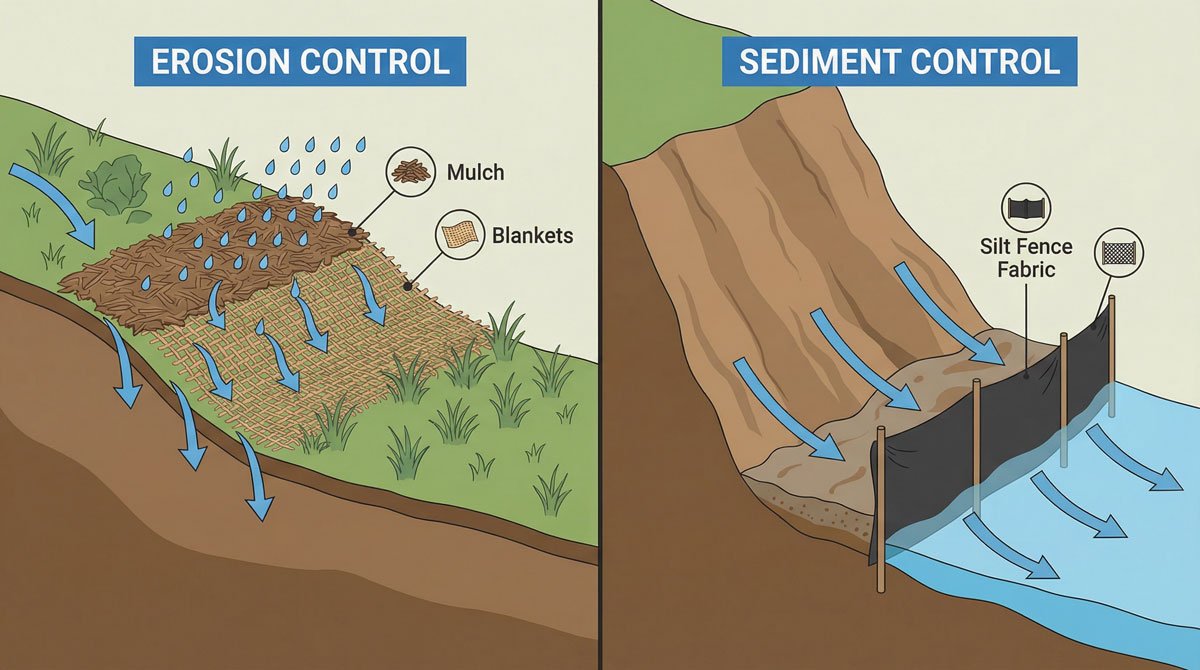
In the world of earth control measures, two terms are fundamental: erosion control and sediment control. They sound similar, but they represent two distinct lines of defense. Understanding their differences is key to designing an effective strategy. One is proactive, the other is reactive. Both are essential.
Erosion control is about prevention. It aims to stop soil from being dislodged in the first place. Sediment control, on the other hand, is about containment. It is designed to capture soil that has already started to move. A successful ECM plan doesn’t choose between them; it integrates them into a resilient, multi-layered system.
Erosion Control: Stopping Soil Loss at the Source
Erosion control is the first and most important line of defense. It focuses on protecting the soil surface and minimizing the forces that cause erosion. By keeping soil in place, you reduce the burden on downstream sediment control measures. It’s the most effective and often most cost-efficient approach.
Common methods include covering exposed soil and reducing the speed of water flow. This can be done through vegetative cover, such as planting temporary grasses or permanent landscaping. Mulching with materials like straw or wood chips also provides a protective layer. On steep slopes, erosion control blankets made of straw or coconut fiber can be rolled out to shield the soil while vegetation takes root.
Sediment Control: Capturing Soil That Moves
Sediment control is the essential backup plan. When erosion inevitably occurs, these measures are in place to trap the moving soil before it leaves the site and enters waterways. They are the physical barriers and traps that filter runoff and allow sediment to settle out.
Silt fences are one of the most common sights on a construction site. These fabric barriers slow water flow, causing sediment to drop out of suspension. For larger volumes of runoff, sediment basins or traps—essentially small, temporary ponds—are constructed at low points on the site. They hold runoff long enough for sand, silt, and clay to settle to the bottom.
Integrated Approaches: Combining Methods for Maximum Effectiveness
Neither erosion control nor sediment control is sufficient on its own. The most effective strategies combine both. This integrated approach creates a defense-in-depth system. It starts with minimizing disturbance and maximizing erosion control at the source. Then, robust sediment controls are placed strategically to catch anything that gets past the first line of defense.
This layered approach provides resilience. If one measure fails or is overwhelmed during a particularly heavy storm, others are in place to back it up. It ensures that the overall system is robust and effective under a wide range of conditions, providing the best possible protection for our environment.
| Feature | Erosion Control | Sediment Control |
|---|---|---|
| Goal | Prevent soil from moving | Capture soil that is already moving |
| Approach | Proactive (Prevention) | Reactive (Containment) |
| Timing | Applied before or immediately after soil is disturbed | Installed downslope of disturbed areas |
| Examples | Seeding, mulching, erosion blankets, terracing | Silt fences, sediment basins, check dams, inlet protection |
| Cost-Effectiveness | Generally more cost-effective in the long run | Can be costly if relied upon as the primary method |
| Analogy | Putting a lid on a pot to prevent spills | Wiping up a spill after it has happened |
How to Implement Earth Control Measures: From Planning to Maintenance
An effective earth control measure strategy is not a document that gathers dust on a shelf. It is a living plan that guides action on the ground from day one. Success hinges on a systematic process that moves from careful planning to diligent maintenance. Skipping steps is a recipe for failure, leading to environmental damage and costly repairs.
This process can be broken down into three critical phases: pre-construction planning, correct installation, and ongoing maintenance. Each phase builds on the last, creating a robust framework for managing erosion and sediment throughout the entire lifecycle of a project. It’s about being proactive, not just reactive.
Pre-Construction Planning: Site Assessment and Strategy
Success begins before a single shovel hits the ground. A thorough site assessment is the foundation of any good ECM plan. This involves analyzing the site’s topography, soil types, drainage patterns, and proximity to sensitive areas like rivers or wetlands. This data informs the selection and placement of the most appropriate control measures.
A comprehensive ECM plan should be developed based on this assessment. It should act as a blueprint, clearly mapping out where and when different measures will be installed. This plan must be integrated with the overall construction schedule, ensuring that controls are in place before land disturbance begins.
Installation Best Practices: Getting It Right the First Time
The best plan in the world is useless if the measures are installed incorrectly. A poorly installed silt fence, for example, will fail during the first significant rainfall, rendering it completely ineffective. Proper installation is not a corner to be cut; it is a critical investment in the success of the project.
This requires training and attention to detail. Silt fences must be trenched into the ground and securely staked. Sediment basins need to be sized correctly for the anticipated runoff volume. Erosion control blankets must have good contact with the soil surface. Following manufacturer specifications and industry best practices is non-negotiable.
Ongoing Maintenance: The Often-Overlooked Critical Step
Earth control measures are not a “set it and forget it” solution. They require regular inspection and maintenance to remain effective. This is the phase where many ECM plans fall apart. A system that is not maintained is a system that is destined to fail, often at the worst possible moment.
Inspections should be conducted regularly, especially after every significant rainfall event. Maintenance involves removing accumulated sediment from traps and fences, repairing any damage, and adjusting measures as the site changes. A clear maintenance schedule and assigned responsibilities are crucial for ensuring this critical work gets done.
Common Mistakes That Lead to ECM Failure
Learning from common failures is a powerful way to improve practices. Many sites suffer from the same handful of preventable mistakes. Recognizing these pitfalls is the first step toward avoiding them.
Installing Controls Too Late: Measures must be in place before earth-moving begins. Poor Installation: Not following specifications leads to immediate failure. Ignoring Maintenance: Sediment buildup and unrepaired damage render controls useless. Incorrect Measure Selection: Using a silt fence where a sediment basin is needed, for example. Disturbing Too Large an Area: Phasing construction to limit exposed soil is a more effective strategy.
The Future of Earth Control: Smart Technology and Innovation
The field of earth control is undergoing a technological revolution. Traditional methods are being enhanced and, in some cases, replaced by innovative solutions that offer greater efficiency, accuracy, and sustainability. This shift is moving the industry from a reactive to a predictive and proactive stance, leveraging data and automation to protect our soil and water like never before.
These advancements are not just incremental improvements. They represent a fundamental change in how we approach erosion and sediment control. From drones in the sky to intelligent sensors on the ground, technology is providing powerful new tools in the fight against environmental degradation. This is the cutting edge of construction and land management.
Smart Monitoring Systems: Real-Time Erosion Detection
The days of relying solely on manual site inspections are numbered. Smart monitoring systems are emerging as a game-changer. These systems use a network of sensors to provide real-time data on turbidity (water cloudiness), rainfall, and soil moisture. This allows for instant alerts when a control measure might be failing or when runoff exceeds acceptable limits.
Technologies like drones equipped with high-resolution cameras and LiDAR are also transforming how we monitor large sites. They can quickly generate detailed 3D maps of a site, identifying potential erosion hotspots before they become major problems. AI-powered systems can then analyze this data to predict sediment runoff and optimize the placement of control measures, as highlighted by innovations in the field.
Biodegradable and Eco-Friendly Materials
A major criticism of some traditional erosion control methods has been their reliance on plastic netting and synthetic materials, which can become permanent pollutants. The industry is responding with a new generation of biodegradable and eco-friendly materials. These products offer effective erosion control while breaking down naturally over time, leaving no harmful residue.
Geotextiles made from natural fibers like coir (coconut fiber) and jute are becoming increasingly popular for slope stabilization and vegetation establishment. Even more advanced are fully biodegradable nonwoven geotextiles, which are designed for environmentally conscious projects and decompose completely once their job is done, leaving behind only a stabilized, vegetated landscape.
Data-Driven Decision Making in ECM Design
Data is the new soil. The design of effective ECM plans is becoming less of an art and more of a science, thanks to the power of data analytics. By combining site-specific data with historical rainfall patterns and soil models, engineers can design more resilient and cost-effective control systems.
This data-driven approach allows for a much more nuanced understanding of risk. Instead of using a one-size-fits-all solution, designers can tailor measures to the specific challenges of a site. This leads to better performance, lower costs, and a higher degree of environmental protection, shaping the future of responsible land development.
Earth Control Measures Around the World: Regulations and Standards
Earth control is not just a local concern; it is a global imperative. As awareness of environmental degradation grows, nations around the world are implementing increasingly stringent regulations to manage soil erosion and sediment pollution. While the specific rules vary, the underlying principle is the same: holding developers accountable for the land they disturb.
This global patchwork of regulations creates a complex but essential framework for environmental protection. From the dense urban landscapes of Asia to the sprawling developments of North America, the message is clear. The era of unchecked soil disturbance is over. Responsible land management is now a legal and social expectation.
Singapore’s Comprehensive ECM Framework
Singapore stands out as a global leader in earth control management. As a small, low-lying island nation heavily reliant on its reservoirs for water supply, protecting water quality is a matter of national security. The country’s national water agency, PUB, has established a comprehensive and rigorously enforced ECM framework.
Before any construction work can begin, developers must submit a detailed ECM plan designed by a Qualified Erosion Control Professional (QECP). This plan must outline the specific measures that will be used to prevent silty discharge into the public drainage system. The standard is strict: the Total Suspended Solids (TSS) in the runoff must not exceed 50 mg/L, a benchmark for clean water.
United States EPA Standards and Requirements
In the United States, the primary federal regulation governing stormwater runoff from construction sites is the National Pollutant Discharge Elimination System (NPDES) program, administered by the Environmental Protection Agency (EPA). The program’s Construction General Permit (CGP) is a key tool for enforcing earth control standards.
The CGP requires operators of construction sites that disturb one or more acres of land to develop and implement a Stormwater Pollution Prevention Plan (SWPPP). This plan must describe the erosion and sediment control measures that will be used to protect water quality. While the specific requirements can vary by state, the federal framework ensures a baseline of protection for all U.S. waterways.
European Union Environmental Directives
The European Union addresses soil protection through a variety of directives, including the Water Framework Directive and the Environmental Impact Assessment Directive. These regulations require member states to manage their water resources sustainably and to assess the environmental impacts of major projects, including construction.
While there isn’t a single, EU-wide permit equivalent to the U.S. CGP, the principles of preventing pollution at the source and ensuring good ecological status for all water bodies drive the implementation of robust earth control measures across the continent. The focus is on integrated river basin management, where upstream construction activities are managed to protect downstream water quality.
Earth Control Measures and Climate Resilience: Building a Sustainable Future
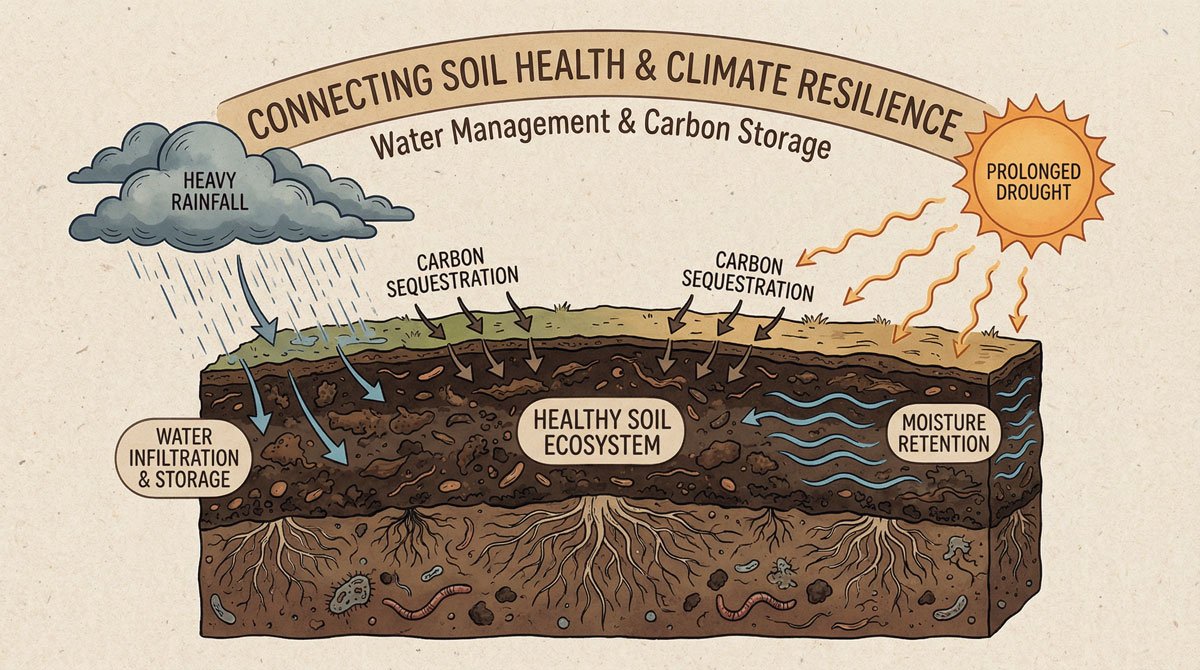
Earth control measures are more than just a tool for managing construction sites. They are a fundamental component of climate resilience and sustainable development. By protecting our soil, we are safeguarding our food systems, our water supplies, and our planet’s ability to regulate itself. This is where local land management practices have a direct and powerful global impact.
This connection elevates the importance of ECMs from a simple best practice to a critical climate solution. It reframes the conversation, showing that the choices we make about how we treat our land have far-reaching consequences for the health of our planet and the well-being of future generations. It’s about thinking globally while acting locally.
Soil Health as a Climate Solution
Healthy soil is one of the largest and most overlooked carbon reservoirs on the planet. It holds more carbon than the atmosphere and all of the world’s forests combined. When soil erodes, this stored carbon is released into the atmosphere as carbon dioxide, contributing to climate change. Effective erosion control is, therefore, a direct form of carbon sequestration.
By keeping soil in place, we are not only preventing pollution but also keeping carbon locked in the ground where it belongs. Practices that build soil health, such as using vegetative cover and mulching, further enhance this carbon sink. This makes soil conservation a powerful and cost-effective nature-based solution in the fight against climate change.
Water Management and Climate Adaptation
Climate change is intensifying the water cycle, leading to more extreme rainfall events and longer periods of drought. Earth control measures are a critical tool for adapting to this new reality. Healthy, stable soil acts like a natural sponge, absorbing large amounts of water during storms. This recharges groundwater supplies and reduces the volume of runoff, mitigating the risk of flash floods.
In times of drought, this stored soil moisture becomes a vital resource, sustaining plant life and reducing the need for irrigation. By managing water at the landscape level, ECMs help build resilience to the water-related impacts of climate change, ensuring a more stable and secure water future for our communities.
Aligning ECM with Global Sustainability Goals
The principles of every earth control measure are deeply aligned with the United Nations’ Sustainable Development Goals (SDGs). These 17 goals provide a shared blueprint for peace and prosperity for people and the planet. Effective soil management is a key enabler for achieving many of them.
Protecting soil and water directly supports SDG 6 (Clean Water and Sanitation) and SDG 15 (Life on Land). By preventing land degradation and desertification, ECMs contribute to SDG 2 (Zero Hunger) and SDG 1 (End Poverty). Furthermore, by building resilience to climate impacts, they are integral to SDG 13 (Climate Action). This clear alignment demonstrates that earth control is not an isolated practice but a central pillar of the global sustainability agenda.
Frequently Asked Questions About Earth Control Measures
- 1. What is an Earth Control Measure and why do I need to know about it?
- An Earth Control Measure (ECM) is a strategy used to prevent soil erosion and manage sediment runoff, especially from construction sites or disturbed land. You need to know about it because erosion affects everyone. It can lead to flooding in your community, pollute your drinking water, and damage natural ecosystems. Understanding ECMs helps you recognize responsible (and irresponsible) land development practices.
- 2. How do erosion control and sediment control differ?
- They are two sides of the same coin. Erosion control is proactive; it aims to prevent soil from moving in the first place using methods like planting vegetation or laying down protective blankets. Sediment control is reactive; it’s designed to capture soil that has already started to move using barriers like silt fences and sediment basins. A good plan uses both.
- 3. What are the most effective earth control measures for construction sites?
- The most effective approach is a multi-layered one. It starts with phasing construction to minimize the amount of exposed land at any one time. This is followed by proactive erosion controls like temporary seeding and mulching. Finally, robust sediment controls like sediment basins and properly installed silt fences act as the last line of defense to capture any remaining sediment before it leaves the site.
- 4. How do earth control measures help prevent flooding?
- When soil erodes, it clogs storm drains, streams, and rivers, reducing their capacity to carry water. During a heavy storm, these choked channels can’t handle the flow, leading to localized or widespread flooding. By keeping soil on the land and out of the waterways, earth control measures ensure that our drainage infrastructure works as intended, significantly reducing flood risk.
- 5. What are the regulatory requirements for earth control measures?
- Regulations vary by region but are becoming stricter globally. In the U.S., the EPA’s Construction General Permit (CGP) requires a detailed plan for sites over one acre. In Singapore, a plan from a Qualified Erosion Control Professional is mandatory. Most developed nations have similar legal frameworks that require developers to manage erosion and sediment to protect water quality.
- 6. How often should earth control measures be inspected and maintained?
- Maintenance is critical. Measures should be inspected at least weekly and always after a significant rainfall event (typically defined as 0.5 inches or more). Sediment needs to be removed from traps and fences when they are half full, and any damage must be repaired immediately. Neglecting maintenance is one of the most common reasons for ECM failure.
- 7. Can earth control measures help address climate change?
- Absolutely. Healthy, stable soil is a massive carbon sink. By preventing erosion, we keep vast amounts of carbon stored in the ground instead of being released into the atmosphere. Furthermore, ECMs help us adapt to climate change by reducing flood risk from more intense storms and conserving soil moisture during droughts, making them a vital nature-based climate solution.
Taking Action: Your Role in Protecting Our Planet
We’ve journeyed from the muddy river to the intricate world of global regulations, and the message is clear: the ground beneath our feet is worth protecting. The health of our soil is not a distant, abstract concept. It is the foundation of our environmental stability, our economic prosperity, and our resilience in the face of a changing climate. An effective earth control measure is the critical tool that connects our local actions to these global outcomes.
This is not a challenge reserved for engineers or policymakers alone. Everyone has a role to play. As a citizen, you can be the eyes and ears of your community, recognizing and reporting poor practices. As a business leader, you can champion a culture of environmental stewardship that goes beyond mere compliance. As a policymaker, you can advocate for stronger standards and nature-based solutions.
By embracing these principles, we do more than just control erosion. We invest in a future with cleaner water, safer communities, and a more stable climate. The choice is ours. We can either pay the high price of inaction or reap the lasting rewards of responsible stewardship. Let’s choose to hold our ground.
References
[1] Ruppert, S. (2024). A Menace to National Welfare Reconsidered, Part 1: Reviewing the Costs of Erosion. Farmdoc daily. Retrieved from https://farmdocdaily.illinois.edu/2024/03/a-menace-to-national-welfare-reconsidered-part-1-reviewing-the-costs-of-erosion.html
[2] World Resources Institute. (2020). The Causes and Effects of Soil Erosion, and How to Prevent It. Retrieved from https://www.wri.org/insights/causes-and-effects-soil-erosion-and-how-prevent-it
[3] Hansen, L. R., & Ribaudo, M. (2008). Economic Measures of Soil Conservation Benefits. USDA. Retrieved from https://www.ers.usda.gov/sites/default/files/_laserfiche/publications/47548/11516_tb1922.pdf?v=99038
[4] U.S. Environmental Protection Agency. (2025). Construction General Permit (CGP) Frequent Questions. Retrieved from https://www.epa.gov/npdes/construction-general-permit-cgp-frequent-questions
[5] Lal, R. (2004). Soil carbon sequestration to mitigate climate change. Geoderma, 123(1-2), 1-22.