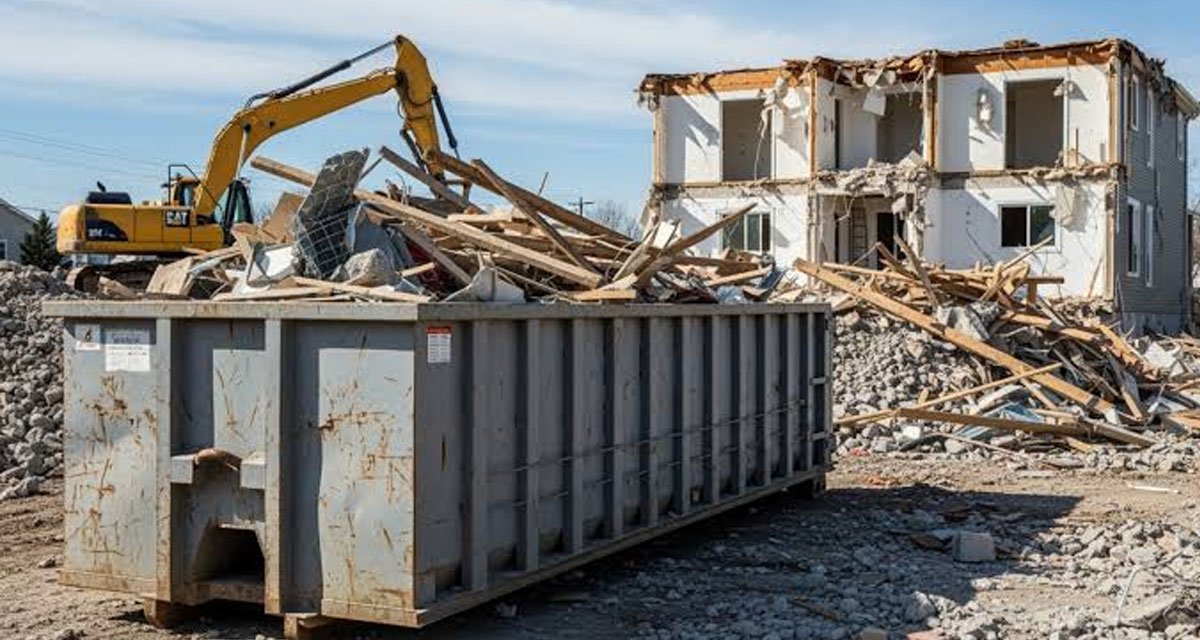
Heavy residential demolition work creates debris that is very different from ordinary renovation waste. Concrete slabs, patios, walkways, garage floors, footings, masonry steps, block walls, brick features, stone borders, and driveway sections can add weight quickly. For residential contractors, the challenge is not only getting the material off the property. It is planning how to break, move, load, and remove it without disrupting the rest of the job.
Concrete debris can fill a work area fast, but weight is usually the bigger concern. A dumpster may look only partly full while already holding a heavy load. Contractors who plan around weight, access, site protection, and disposal timing can keep heavy demolition work cleaner, safer, and easier to manage.
Start With the Demolition Scope
Before ordering a dumpster, contractors should review the full demolition scope. A small patio removal is different from tearing out a driveway, garage slab, retaining wall base, or concrete steps. Thickness, reinforcement, surface area, access, and whether the concrete is attached to other materials all affect the debris plan.
The site review should also look for hidden complications. Old concrete may have multiple layers, buried wire mesh, rebar, asphalt patches, gravel base, brick edging, soil, or drainage materials mixed in. These materials can change how the concrete breaks apart and how much total debris must be removed.
A clear scope helps contractors choose the right container plan before crews begin breaking material.
Plan Around Weight First
Concrete disposal planning should start with weight, not volume. Broken concrete, brick, block, stone, and compacted base material are dense. Even a relatively small area can produce a load that reaches practical limits long before the dumpster is full to the top.
Contractors should estimate how much heavy debris the project will create and avoid assuming one large container solves every problem. Depending on the size of the project, staged loading or planned swaps may work better than trying to load everything at once. This is especially important when the job includes concrete plus other demolition materials.
Working with Waste Removal USA can help residential contractors coordinate dumpster rental options around heavy demolition debris, container placement, and service timing. The right plan reduces the risk of overloading and helps keep the project moving.
Choose Placement Carefully
Dumpster placement affects labor, safety, and access. Concrete is tiring to carry, wheelbarrow, or move with equipment, so the container should be close enough to the removal area to reduce hauling distance. At the same time, it should not block driveways, garages, sidewalks, homeowner access, equipment routes, or material deliveries.
Contractors should consider how the service truck will reach the container for pickup. Heavy loads require clear access, and the area around the dumpster should stay open throughout the project. Vehicles, tools, pallets, and debris piles should not block the approach.
A good placement plan supports loading and pickup without taking over the entire property.
Protect Driveways and Surfaces
Residential properties can be vulnerable during heavy demolition. Driveways, lawns, walkways, patios, landscaping, curbs, and finished surfaces can be damaged by broken concrete, equipment traffic, dragging debris, or repeated wheelbarrow routes.
Contractors should identify which surfaces need protection before work begins. Plywood, mats, controlled haul paths, and careful staging can help reduce damage. If the dumpster sits on a driveway, contractors should consider how the surface will handle the container and the weight of the debris.
Debris removal should not create new repairs while solving the original problem.
Break Concrete Into Manageable Pieces
The way concrete is broken affects how easily it can be removed. Pieces that are too large may be unsafe or inefficient to lift. Pieces that are too small can create extra handling, dust, and cleanup. The goal is to break material into pieces that match the crew, equipment, and loading method.
Projects involving slabs, sidewalks, or patios may need saw cuts, jackhammers, sledgehammers, pry bars, compact equipment, or staged breaking. Contractors should choose a method that controls debris size and keeps the work area clear enough to move.
A controlled breaking process makes loading easier and reduces time spent fighting oversized chunks.
Separate Concrete From Mixed Debris
Heavy residential demolition often produces more than concrete. Crews may also remove wood forms, metal railings, posts, tile, brick, insulation, landscape fabric, soil, gravel, asphalt, plastic drainage parts, or old fixtures. Mixing everything together can make loading less efficient and may create disposal complications.
Concrete, brick, block, and stone should be separated from lighter or questionable materials when practical. Metal, wood, plastic, and general demolition debris should be staged separately if they are not approved for the same container. This makes it easier to monitor weight and keep the load clean.
A simple sorting system prevents confusion once demolition speeds up.
Watch Reinforcement and Embedded Metal
Concrete features may contain rebar, wire mesh, anchors, brackets, bolts, fence posts, or other embedded metal. These materials can make pieces harder to break and move. They can also create sharp hazards for crews and damage equipment or tires if left loose around the site.
Contractors should watch for reinforcement as demolition begins. Metal may need to be cut, separated, bent down, or staged safely before loading. Workers should avoid leaving exposed rebar or sharp mesh in walking paths.
Managing embedded materials early keeps the jobsite safer and more organized.
Account for Base Materials
Concrete removal often exposes gravel, sand, soil, clay, compacted base, or old fill material. Contractors should decide whether these materials will stay, be reused, be regraded, or be removed. That decision affects both disposal volume and jobsite preparation.
If base material is being removed with the concrete, it can add significant weight. If clean gravel can stay for future work, removing it may be unnecessary. If soil is mixed into the debris stream, crews should monitor the load carefully.
Base materials should be included in the plan, not treated as an afterthought.
Coordinate With Recycling and Disposal Goals
Some concrete and demolition materials may be candidates for recycling depending on the project, local options, and material cleanliness. Contractors should think about separation early if recycling is part of the plan. Once concrete is mixed with trash, treated wood, plastic, soil, or other debris, it may be harder to manage.
Industry groups such as the Construction and Demolition Recycling Association highlight the importance of thinking about construction and demolition materials as recoverable resources when conditions allow. For residential contractors, that often starts with keeping clean concrete and masonry separate from mixed waste.
Even when recycling is not available for every job, cleaner sorting supports better disposal decisions.
Load in Stages
Loading heavy debris in stages is usually better than breaking everything first and dealing with one large pile later. If crews demolish too much before loading, concrete can block access, create unstable footing, and make the site harder to manage.
A staged process keeps the work area controlled. Break one section, move the debris, load it carefully, and then continue. This gives the contractor a better view of how much material remains and how the dumpster is handling the load.
Staged loading also helps prevent the container from being filled too quickly with dense material in one spot.
Keep Equipment Routes Clear
Heavy residential demolition may require wheelbarrows, dollies, skid steers, compact loaders, concrete saws, jackhammers, generators, or trailers. These tools need clear routes. Broken concrete should not be allowed to block the path between the work area and the dumpster.
Contractors should identify equipment routes before demolition begins and keep them open throughout the job. Loose chunks, dust, cords, hoses, and small fragments should be cleared regularly. If the route crosses lawn or soft ground, protection may be needed to prevent ruts.
Clear movement keeps the job safer and faster.
Monitor the Dumpster Throughout the Job
Concrete loads should be monitored as they are created. The crew leader should know how much heavy material is going into the dumpster and when to stop. Waiting until the container looks full is not enough because weight may become the limiting factor first.
If the job produces more concrete than expected, contractors should schedule service before debris piles up around the site. A timely pickup or swap can prevent downtime and keep the work area clear.
Capacity management is one of the most important parts of concrete debris planning.
Avoid Common Concrete Dumpster Mistakes
One common mistake is choosing a dumpster based only on visible debris volume. Another is placing the container too far from the demolition area, which increases labor on every load. Contractors should also avoid mixing heavy concrete with random debris unless that plan has been approved.
Overbreaking the entire area before loading can create another problem. Large piles of concrete make the site harder to navigate and increase the chance of double handling. A better approach is to break, move, and load in a controlled rhythm.
Good planning keeps heavy demolition debris from controlling the project.
Concrete dumpster planning for heavy residential demolition work requires careful attention to weight, placement, access, sorting, and loading sequence. Residential contractors may be removing patios, walkways, slabs, steps, masonry features, or driveway sections, and each one can create dense debris that fills capacity faster than expected.
By reviewing the scope, planning around weight, protecting surfaces, separating materials, watching reinforcement, managing base material, and loading in stages, contractors can keep concrete removal more efficient. A strong debris plan helps protect the property, support crew movement, and keep the demolition phase ready for the next step.