
Most people know the name Cesar Chavez. Far fewer can name his wife. Helen Fabela Chavez — the Cesar Chavez wife whose story has been quietly overshadowed for decades — was not simply a supportive spouse standing in the background. She was a co-architect of one of the most important labor movements in American history.
She raised eight children on almost nothing. She ran the United Farm Workers Credit Union for over two decades. She canvassed dusty farmworker camps, got arrested on picket lines during strikes, and held the financial infrastructure of the UFW together through boycotts and near-constant crisis. All while Cesar got the headlines.
Without Helen’s administrative discipline, her economic stewardship, and her unshakeable personal faith, the movement may not have survived its most turbulent years. Her quiet strength was not passive — it was strategic, tireless, and indispensable.
If you searched “Cesar Chavez wife” looking for a quick biographical sketch, stay longer. This is a full account of Helen’s life — from her childhood in Delano’s farmworker community, through the heart of the movement, to the woman she became after Cesar’s death in 1993.
Who Was Helen Fabela Chavez? Early Life in Delano
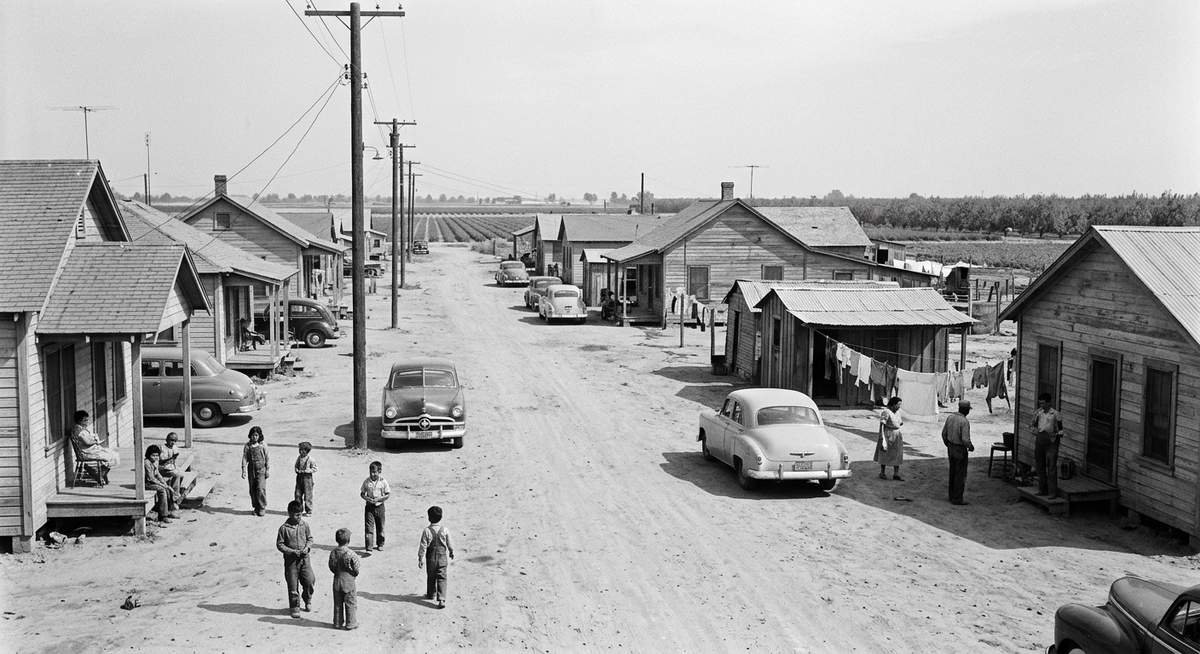
Helen Fabela Chavez was born in 1928 in Brawley, California, and raised in Delano — a farmworker town in the heart of the San Joaquin Valley where Mexican-American families built tight, faith-centered communities despite persistent poverty and racial exclusion. Long before she became known as Cesar Chavez’s wife, Helen was shaped by a world that demanded resilience as a baseline for survival.
Growing Up in Delano’s Farmworker Community
Delano in the 1930s and 1940s was a study in contradictions. California’s Central Valley produced enormous agricultural wealth — and the families who harvested it lived in some of the most precarious conditions in the country. Helen’s family was rooted in that reality.
Poverty was not an abstraction in the Fabela household. It was the daily arithmetic of making wages stretch, of community members pooling resources, of the Catholic Church serving as both spiritual anchor and social safety net. Those conditions forged a particular kind of character: practical, generous, and unafraid of hard work.
The Mexican-American community of Delano gave Helen something no classroom could. Mutual aid, shared sacrifice, the quiet dignity of families who worked the fields — these were the values she carried into her marriage, into the labor movement, and into the credit union she would one day manage for over two decades.
| Formative Influence | How It Shaped Helen |
|---|---|
| Delano farmworker community | Instilled collective responsibility, solidarity, and mutual aid as daily practice |
| Catholic faith | Provided a moral framework centered on service, sacrifice, and perseverance |
| Economic hardship | Built resourcefulness and financial discipline she later applied to the UFW Credit Union |
| Mexican-American cultural identity | Grounded her sense of justice and obligation to community |
Meeting Cesar Chavez and a Shared Vision
Helen met Cesar Chavez in the mid-1940s in Delano — the kind of ordinary moment that quietly changes everything. Their courtship unfolded against the backdrop of a community where young Mexican-Americans were navigating dual identities: deeply rooted in their heritage, yet confronting a society that offered them limited opportunity.
Their shared Catholic faith was not incidental to their relationship. It was the connective tissue. Both Helen and Cesar understood sacrifice, service, and suffering through a religious lens that would later give the farmworker movement much of its moral vocabulary — the fasts, the pilgrimages, the sense of righteous struggle.
Helen and Cesar married in 1948. She was twenty years old. That marriage became the operational foundation of a movement neither of them could yet fully envision. Helen didn’t follow Cesar into activism. She entered it as a full partner, already formed by the same Delano soil that had shaped him.
Helen’s Role in Building the United Farm Workers
Helen Fabela Chavez was not a supporter of the United Farm Workers — she was a builder of it. From canvassing dusty labor camps in the late 1950s to managing the UFW Credit Union for more than two decades, Helen’s operational contributions were structural, not symbolic. Without her administrative discipline and grassroots labor, the movement Cesar Chavez is celebrated for could not have sustained itself financially or organizationally.
Organizing on the Ground
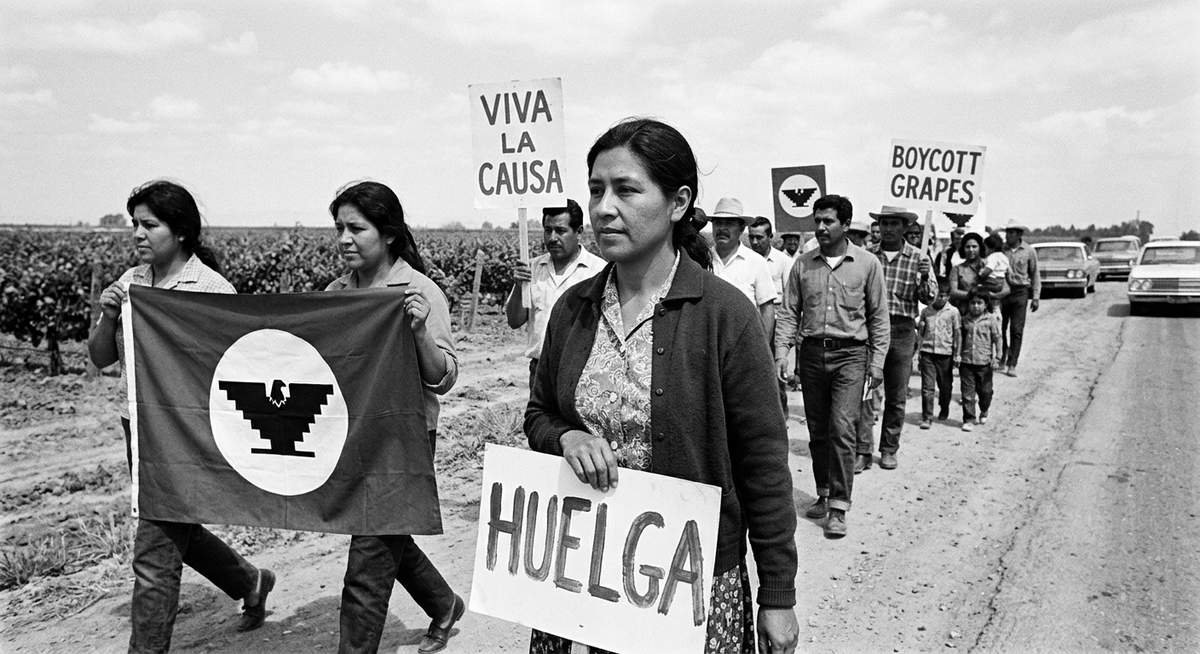
Long before the UFW had a name, Helen was doing the unglamorous work that movements run on. In the late 1950s, while Cesar worked with the Community Service Organization, Helen canvassed farmworker camps alongside him — knocking on doors, registering voters, and persuading exhausted field workers that collective action was worth the risk.
She did this while raising young children, often bringing them along or leaving them with family. Helen’s participation was not occasional — it was consistent, week after week, in a community where organizing carried genuine economic danger for families who depended on grower goodwill for their housing and wages.
When Cesar founded the National Farm Workers Association in 1962 — the organization that would eventually become the United Farm Workers of America — Helen was present at its formation. Her voter registration work in the Central Valley helped build the civic infrastructure that gave the early movement its local credibility.
Managing the UFW Credit Union
This is the part of Helen’s story that most accounts consistently underreport: she ran the UFW Credit Union for over two decades, and that role was not administrative busywork. It was a critical economic lifeline for farmworkers who were routinely denied access to fair banking services.
Farmworkers in California’s Central Valley faced a predatory financial landscape — payday lenders, labor contractors who skimmed wages, and banks that simply refused accounts to seasonal workers without fixed addresses. The UFW Credit Union, under Helen’s management, offered an alternative: fair loans, savings accounts, and basic financial services rooted in the community’s actual needs.
The operational challenges were significant. Helen managed a member base of low-income workers with irregular income cycles, navigated federal credit union regulations, and maintained the institution’s solvency through the UFW’s own turbulent financial periods in the 1970s and 1980s. According to the United Farm Workers Foundation, the credit union became one of the most tangible, day-to-day benefits the union delivered to its members — and Helen was the person who kept it functioning.
Supporting the Grape Boycott and Major Strikes
When the Delano Grape Strike erupted in 1965, it put every farmworker family to a test. The Chavez household was no exception. Cesar became the public face of the strike. Helen became everything else — managing family logistics, sustaining morale among strikers’ families, and keeping the financial books while the union burned through its slim reserves.
Helen did more than keep the home front running. She walked picket lines alongside other farmworker families and was arrested during strike actions, according to reporting by The Atlantic. That willingness to face jail reflected the depth of her commitment. She was not a figurehead married to a movement leader. She was on the line.
The national grape boycott that followed — stretching from 1965 to 1970 — demanded sustained sacrifice from every UFW family. For the Chavezes, that meant years of uncertainty, a movement-level salary of roughly five dollars a week, and raising eight children inside a cause that consumed every resource the family had.
| Helen’s UFW Contribution | Duration / Scale | Impact |
|---|---|---|
| UFW Credit Union Management | Over two decades | Provided fair banking access to farmworkers excluded from mainstream financial institutions |
| Voter Registration Canvassing | Late 1950s–1960s | Built civic infrastructure for early labor organizing in Delano and the Central Valley |
| Grape Boycott and Strike Support | 1965–1970 | Sustained family and movement logistics during the UFW’s most high-profile campaign; arrested on picket lines |
| Presidential Medal of Freedom | 1994 | Accepted the posthumous Medal of Freedom on Cesar’s behalf from President Clinton |
Mother of Eight — The Human Cost of a Life in Activism
Helen Fabela Chavez raised eight children while simultaneously helping to build one of the most consequential labor movements in American history. Most accounts mention the children in passing — a number, nothing more. But Helen carried the full emotional and logistical weight of family life on a movement salary that, for years, amounted to just five dollars a week.
Raising a Family While Building a Movement
Helen and Cesar Chavez’s eight children — Fernando, Sylvia, Linda, Eloise, Anna, Paul, Elizabeth, and Anthony — grew up not in a conventional family home but inside the movement itself. The family lived in modest, often cramped quarters in Delano and later at La Paz, the United Farm Workers’ headquarters in Keene, California. Stability, in the traditional sense, was a luxury they did not have.
Helen was the constant. While Cesar traveled for organizing drives, fasts, and boycott campaigns, she remained the anchor — managing school schedules, meals, illnesses, and the emotional needs of eight children on resources that would strain any family. According to accounts from UFW colleagues and family members, Helen never complained publicly about this arrangement. That silence was not passivity. It was discipline.
| Child | Connection to the Movement |
|---|---|
| Fernando Chavez | Eldest child; grew up at the center of UFW organizing from its earliest days |
| Sylvia Chavez | Part of the first generation raised entirely within the farmworker movement |
| Linda Chavez | Witnessed the Delano Grape Strike as a child; carried on family advocacy |
| Eloise Chavez | Raised at La Paz alongside UFW staff and organizers |
| Anna Chavez | Grew up during the height of the national boycott campaigns |
| Paul Chavez | Active in the Cesar Chavez Foundation; helped preserve his parents’ legacy |
| Elizabeth Chavez | Part of the large family that exemplified the movement’s human sacrifices |
| Anthony Chavez | Youngest; eventually became involved in continuing the Chavez family legacy |
Faith, Sacrifice, and Personal Character
Helen’s Catholic faith was not decorative — it was structural. It shaped how she endured long separations from Cesar, how she framed sacrifice for her children, and how she found meaning in work that offered little material reward. The same faith that drew her and Cesar together as teenagers in Delano became the moral framework she passed to the next generation.
People who knew Helen consistently describe her warmth and dry humor as disarming. She was, by multiple accounts, someone who could lighten a tense room without diminishing the seriousness of the work. That quality mattered inside a movement that ran on stress, uncertainty, and grief.
Helen didn’t subordinate her identity to the movement — she brought her full self to it. The values she instilled in her children — service, perseverance, faith, and quiet dignity — were the same values that made the UFW function at its human core. To call her simply “Cesar Chavez wife” misses the point entirely. Helen was the family’s foundation and its moral center.
Helen Fabela Chavez After Cesar’s Death — A Legacy Continued
After Cesar Chavez died on April 23, 1993, Helen Fabela Chavez spent the next two decades doing what chroniclers almost universally ignore: she kept working. She remained a steady, grounding presence within the Cesar Chavez Foundation, helping preserve her husband’s memory not as myth, but as a living call to action for farmworkers still fighting the same battles.
In 1994, Helen traveled to the White House to accept the Presidential Medal of Freedom on Cesar’s behalf from President Bill Clinton. That moment placed her in the national spotlight — a space she had spent decades deliberately avoiding. She accepted the honor with the same quiet composure that defined her entire public life.
Helen participated in annual Cesar Chavez Day commemorations across California throughout the 2000s, spoke with family members about sustaining the movement’s values, and supported the foundation’s educational and community programs. Her identity had never been reducible to “Cesar’s wife,” and her final years reflected that independence.
| Year | Milestone |
|---|---|
| 1993 | Cesar Chavez dies on April 23; Helen continues involvement with the Cesar Chavez Foundation |
| 1994 | Accepts the Presidential Medal of Freedom on Cesar’s behalf at the White House |
| 2000s | Participates in annual Cesar Chavez Day commemorations across California |
| 2016 | Helen Fabela Chavez dies on June 6, at age 88, survived by eight children and 31 grandchildren |
Helen died on June 6, 2016, at age 88. She had outlived Cesar by 23 years — and spent every one of them honoring the work they had built together. Tributes from labor leaders, politicians, and farmworker families acknowledged her not simply as a widow, but as a co-architect of one of the most significant labor movements in American history. Anyone who searches “Cesar Chavez wife” should walk away knowing her name: Helen Fabela Chavez. She left behind eight children, 31 grandchildren, and a legacy of service that stands fully on its own.
Frequently Asked Questions
Who was Cesar Chavez wife?
Cesar Chavez wife was Helen Fabela Chavez, born in 1928 in Brawley, California. She was a labor activist, mother of eight, and financial administrator who ran the United Farm Workers Credit Union for over two decades. Helen and Cesar married in 1948 and remained partners in both family and activism until his death in 1993.
How many children did Cesar and Helen Chavez have?
Cesar and Helen Chavez had eight children: Fernando, Sylvia, Linda, Eloise, Anna, Paul, Elizabeth, and Anthony. They also had 31 grandchildren. The children were raised in modest conditions within the UFW movement, often at La Paz, the union’s headquarters in Keene, California.
What did Helen Fabela Chavez do for the UFW?
Helen was a co-builder of the United Farm Workers. Her contributions included canvassing farmworker camps, registering voters in the Central Valley, walking picket lines during the Delano Grape Strike, getting arrested during strike actions, and managing the UFW Credit Union for over two decades — providing fair financial services to farmworkers denied access by mainstream banks.
When did Helen Fabela Chavez die?
Helen Fabela Chavez died on June 6, 2016, at age 88. She had continued working with the Cesar Chavez Foundation for more than two decades after Cesar’s death in 1993. In 1994, she accepted the Presidential Medal of Freedom on Cesar’s behalf from President Bill Clinton.
Did Helen Chavez receive any awards or recognition?
Helen accepted the posthumous Presidential Medal of Freedom awarded to Cesar Chavez in 1994. While she personally avoided the spotlight throughout her life, she received widespread recognition upon her death in 2016 from labor organizations, political leaders, and the farmworker community for her decades of service to the movement.
Where did Helen and Cesar Chavez meet?
Helen and Cesar met in the mid-1940s in Delano, California — the San Joaquin Valley farmworker town where both grew up. Their shared Catholic faith and roots in the Mexican-American agricultural community formed the foundation of a partnership that would shape the American labor movement for decades.
You Might Also Like...
 7 Ways You Can Still Build Your Credit Profile without a Credit Card
 MyGreenBucks Kenneth Jones: The Complete Guide to Smart Money, Financial Freedom, and Sustainable Wealth Building
 Healthy Habits That Help Protect Your Body in Demanding Jobs
 AmateurAllrue: The Complete Guide to This Creative Platform
