Carpet installation DIY vs professional is not one decision but three: does the room have stairs, does the warranty matter, and is it bigger than one small room. If none of those apply, a careful DIY install in a closet or a small landing can save the $1 to $3 per square foot a professional charges for labor. If any of them apply, or if you want the floor to last under warranty, a professional’s power stretch and seam work is hard to match, and the honest middle is to do the demo yourself and let a crew lay the carpet.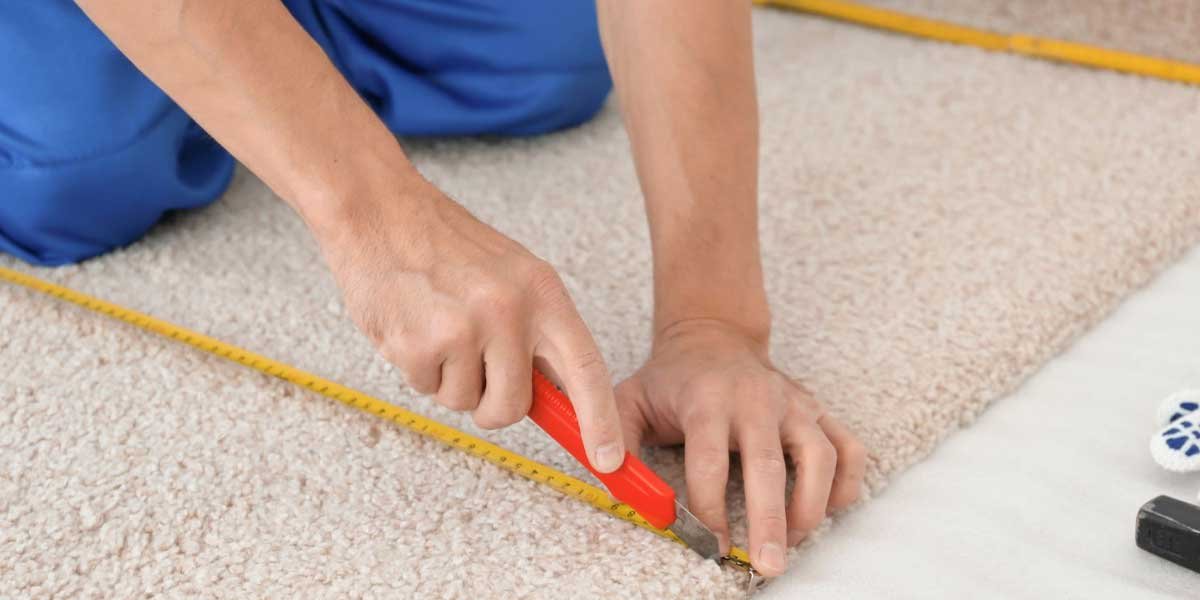
The reason carpet is different from click-lock floors is tension. Carpet must be stretched drum-tight with a power stretcher, which the Carpet and Rug Institute’s CRI 105 standard requires, and a knee kicker alone leaves slack that turns into ripples within a year or two as humidity cycles. That is why a carpet that looks perfect at install can wrinkle later, and why the cost comparison is fuller than just the labor line.
Below is what each path really takes, what DIY saves and what it costs, and a decision rule that matches the option to the job instead of declaring a winner.
What each choice actually is
DIY carpet installation means renting a stretcher and seam tools and doing the tack-strip, stretch, and seam work yourself over a weekend, saving the labor but keeping the tools, time, and risk. Professional installation means a crew power-stretches to the standard and seams with a hot iron. The two differ in tension and seams, where the result shows.
Professionals use a power stretcher that spans the room, braces against the far wall, and pulls the carpet even and tight, which the Carpet and Rug Institute sets as the standard for residential carpet in CRI 105. A knee kicker, the tool a beginner reaches for, only snugs carpet near a wall and is meant for closets, not whole rooms. Skipping the power stretch leaves slack in the middle, and that slack appears as wrinkles when the air dries out in winter.
The question is not whether carpet can be installed by hand. It is whether the room you care about can be stretched and seamed to a standard that will not ripple or split a year later, and that is where the two paths genuinely differ.
The cost side: what DIY really saves
Professional carpet labor runs about $1.50 to $3.50 per square foot, or roughly $450 to $1,050 on a 300-square-foot room, before tool rental and materials. DIY saves that labor line, but only if you subtract the tool rental, consumables, waste, disposal, and a weekend. On one small room the savings hold; on a large area or a staircase they compress fast while the risk stays high.
| Cost line | Professional | DIY |
|---|---|---|
| Labor (300 sq ft example) | $450-$1,050 | $0 you keep |
| Tool rental | Included | Power stretcher, knee kicker, seam iron: adds up |
| Consumables | Included | Tack strips, seam tape, adhesive, transitions |
| Waste | Minimal, experienced cuts | First cuts cost material you buy twice |
| Disposal | Included or add-on | Old carpet and pad: dump run |
| Time | Before lunch | Two to three days |
The math is honest but uncomfortable. A 300-square-foot room saves up to $1,050 in the labor column, then the tool rental for a power stretcher, the seam tools, the tack strips and tape, the material you ruin on a first cut, and the disposal of the old carpet eat into that number. On anything more than one small, plain room, the savings compress toward little while the exposure to a bad stretch grows, which is why the per-square-foot figure in a flat price is rarely the whole story, a point This Old House makes in its flooring guidance.
Why carpet must be power stretched
Carpet has to be pulled tight across the whole room, not snugged, and a power stretcher is the only tool that does it evenly. CRI 105 requires power stretching, and most warranties assume it, because a carpet laid with only a knee kicker holds hidden slack that turns into ripples later.
The reason shows up over a year, not on day one. Carpet backing expands and contracts with humidity, and in a dry climate that swing is large, so the slack that was never stretched out surfaces as ripples across the floor months later.
Re-stretching that carpet costs more than doing it right the first time, and a claim can be rejected if the install did not meet the standard.
Seams are the other hidden skill. Two pieces of carpet meet at a seam, are trimmed and joined with a heat-activated tape, and a seam placed in the wrong spot or pulled too loose stays visible.
Stairs take the most practice, and they are costed per step because they are slow, unforgiving work.
The warranty side of the decision
Installing carpet yourself can void the warranty, because most carpet warranties are conditional on how the carpet was installed, not on who bought it. Carpet warranties assume power stretching per CRI 105, hardwood warranties exclude damage from humidity or moisture content outside spec, and luxury-vinyl warranties assume a prepared subfloor, so a floor can fail as physics predicted and the claim still be denied.
Professional installation usually carries a workmanship warranty on top of the product warranty, and that second policy is the one that matters when a seam opens in month eight. When you install it yourself, you are the workmanship warranty, which means a stretch or seam mistake that shows up later is a full redo on your own time and money. On a floor you intend to keep for a decade or more, that risk is real even if the labor savings look good on paper.
Carpet installation diy vs professional: a decision table
The choice comes down to cost, tools, time, warranty, and reach, and the table below lines them up so you can pick by your own situation rather than by a blanket rule. Neither path wins on every project, and matching the option to the job beats following a single recommendation.
| Factor | DIY fits | Professional fits |
|---|---|---|
| Room size | Small, under ~200 sq ft | Large rooms, multiple rooms, whole floor |
| Layout | Square or simple, no stairs | Stairs, angles, transitions, irregular rooms |
| Material | Plain or forgiving carpet, small job | Patterned or berber that must match at seams |
| Tools | You will rent and use a power stretcher | You will not rent or learn the stretcher and seam iron |
| Warranty | Rental, low-stakes, or you accept the risk | Warranty matters and you want a workmanship guarantee |
| Time | A weekend plus the buffer for mistakes | It must be done quickly and cleanly |
| Experience | You have laid flooring before or learn fast | First-time job at room scale is risky |
The table is the fair read: DIY wins only on a small, square, no-stair room where you accept the workmanship risk, and professional wins everywhere the warranty or the stretch matters. Neither is universally better, which is exactly the point, and the honest answer for most people sits in the middle, doing the unskilled parts themselves and hiring the skilled ones.
Who should choose each option
Choose DIY for a closet, a small landing, a rental, or a spare room under about 200 square feet where perfect is not the goal and you can rent a power stretcher. Choose professional for carpet in a room you care about, for stairs, large areas, patterns, or anywhere the warranty matters. Use the middle path for most whole-room jobs.
Frequently asked questions
Is it worth it to install carpet yourself? For a small, square room under about 200 square feet with no stairs, yes, provided you rent and use a power stretcher. For anything larger, a staircase, patterned carpet, or a floor where the warranty matters, a professional is usually worth the labor cost.
How much should I expect to pay for carpet installation? Professional carpet labor runs about $1.50 to $3.50 per square foot, or roughly $450 to $1,050 on a 300-square-foot room, with material and padding on top. The total installed figure lands in a range that varies by region and material.
Is it cheaper to lay carpet yourself? Laying carpet yourself is cheaper only when you subtract the tool rental, consumables, waste, disposal, and a weekend from the labor you save. On one small room the savings hold; on a large area they largely disappear once those costs are counted.
Can DIY carpet installation void the warranty? Often, indirectly. Most carpet warranties are conditional on how the carpet was installed, and power stretching per CRI 105 is typically assumed, so a floor installed without it can have a claim rejected even if the product itself is fine.
Is carpet outdated in 2026? No, carpet remains a common and desirable bedroom and living-room choice for its softness, warmth, and sound absorption, and it is not going away. The growing DIY interest is in the installation decision, not in carpet fading from homes.
Let the stretch and the warranty decide
Ask the room whether it has stairs, whether it is small and square, and whether the warranty matters, and the DIY-versus-professional answer follows from there. A small, flat no-stair room where you will use the right tool is a fair DIY project; anything larger, a staircase, a pattern, or a floor you want guaranteed belongs to a professional, and the middle path, move and demo yourself, hire the lay, fits most homes. Once the floor is down, the rest of the room’s projects follow the same judgment, and the Home Improvement guides carry them through.