Bitcoin has returned to the spotlight following a period of strong market activity in 2026. As interest in digital assets continues to develop, attention is also turning toward the infrastructure that supports cryptocurrency networks, including Bitcoin mining and cloud-based computing services.
For people who follow the crypto industry, cloud mining is an increasingly familiar concept. Unlike traditional mining, which requires users to purchase and operate specialized hardware, cloud mining allows computing resources to be accessed remotely through data-center infrastructure.
Understanding how this model works can help readers distinguish between traditional mining, hosted mining, and cloud-based computing services.

Understanding Cloud Mining
Traditional Bitcoin mining requires specialized ASIC hardware, electricity, cooling systems, network connectivity, and regular equipment maintenance. Operating mining hardware can therefore require considerable technical knowledge and physical infrastructure.
Cloud mining takes a different approach. Instead of installing mining equipment at home or in a private facility, users access computing resources operated by a remote provider.
In a typical cloud-mining arrangement, the provider manages the physical infrastructure, including hardware deployment, data-center operations, cooling, electricity, and maintenance. Users interact with the service through an online account and select from the computing options made available by the provider.
SHRMiner is one platform that provides cloud-mining services for several supported cryptocurrencies, including BTC, ETH, DOGE/LTC, ZEC, and others.
Depending on the service and its terms, cloud-mining platforms may provide features such as:
- Remote access to mining infrastructure
- No requirement to install ASIC hardware personally
- Data-center-based computing resources
- Support for multiple cryptocurrencies
- Online account management
- Scheduled reporting or settlement based on service terms
The exact features, availability, fees, and operating conditions can vary between providers.
How Cloud Mining Works
The basic concept behind cloud mining is relatively straightforward.
First, a provider operates mining hardware and related infrastructure in a data center. The equipment is connected to the appropriate blockchain network or mining pool and performs the computational work required by the mining process.
Users then access computing capacity through the provider’s platform. Depending on the service model, the arrangement may be structured around a defined contract, computing capacity, duration, or other service terms.
The provider remains responsible for the physical operation of the equipment. This can include hardware maintenance, electricity management, cooling, connectivity, and other technical requirements.
This model can make cryptocurrency-mining infrastructure more accessible to people who do not want to purchase and maintain mining equipment themselves.
Cloud Mining Is Different From Owning Mining Hardware
One of the most important distinctions for newcomers is the difference between owning mining equipment and using a cloud-mining service.
With personal mining, the user owns or controls the hardware and is responsible for the associated operating costs. This provides greater control over the equipment but also creates additional responsibilities.
With cloud mining, the physical infrastructure remains with the service provider. The user instead accesses the computing service according to the provider’s terms.
Neither approach is automatically suitable for everyone. Factors such as electricity costs, hardware prices, technical experience, contract conditions, service fees, and cryptocurrency market conditions can all affect the overall experience.
What to Consider Before Using a Cloud-Mining Service
Anyone researching cloud mining should carefully review the terms of a service before creating an account or purchasing a contract.
Important factors to examine include:
Contract Terms
Read the contract carefully and understand its duration, computing allocation, fees, settlement rules, and termination conditions.
Infrastructure Information
Look for clear information about the provider’s mining equipment, data-center operations, and infrastructure. Transparency can help users better understand what service they are actually purchasing.
Fees and Operating Costs
Cloud-mining services may include maintenance, electricity, management, or other fees. These costs can affect the overall economics of a contract.
Cryptocurrency Volatility
Cryptocurrency prices can change significantly over short periods. The value of mined cryptocurrency can therefore fluctuate even when the underlying mining activity remains unchanged.
Service and Withdrawal Conditions
Users should review applicable account, settlement, withdrawal, and eligibility requirements before committing funds to a service.
Provider Transparency
It is important to research the company behind a cloud-mining service, its operating history, published terms, and available customer-support information.
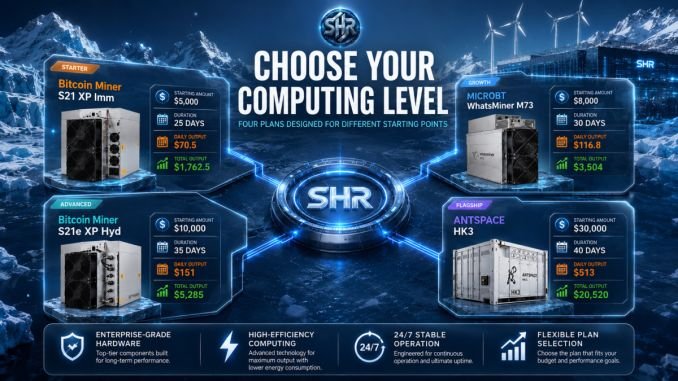
Exploring Cloud Mining Infrastructure
Cloud mining continues to attract attention as cryptocurrency mining becomes increasingly dependent on specialized hardware and large-scale infrastructure.
Services such as SHRMiner provide access to cloud-based mining arrangements without requiring users to install ASIC equipment or manage a physical mining facility themselves.
However, cloud mining should be understood as a service involving cryptocurrency and computing infrastructure rather than as a guaranteed method of generating income.
The performance and economics of any mining arrangement can depend on a variety of factors, including cryptocurrency prices, network difficulty, mining efficiency, electricity costs, service fees, contract conditions, and operational performance.
For this reason, users should review the specific terms of any service carefully and consider the risks associated with cryptocurrency-related activities before participating.
The Role of Cloud Mining in the Crypto Industry
As blockchain networks continue to evolve, mining remains an important part of the infrastructure behind proof-of-work cryptocurrencies such as Bitcoin.
The increasing scale and complexity of mining has contributed to the development of specialized data centers, high-performance ASIC hardware, and professional mining operations.
Cloud-based services represent one way of providing access to this infrastructure without requiring every participant to operate physical equipment independently.
For people interested in cryptocurrency technology, understanding how these services work can provide useful context when evaluating the broader mining ecosystem.
Rather than focusing solely on potential returns, prospective users should consider the underlying technology, service structure, fees, operational transparency, and risks involved.
Cloud mining is ultimately one component of a much larger cryptocurrency infrastructure landscape, and careful research remains important before using any related service.