Behind every Hollywood star lies a complex human story. The story of Anthony Dion Fay, Barbara Stanwyck’s adopted son, is one of profound abandonment, unmet emotional needs, and the collateral damage of fame. His life challenges our understanding of family, love, and what it truly means to belong.
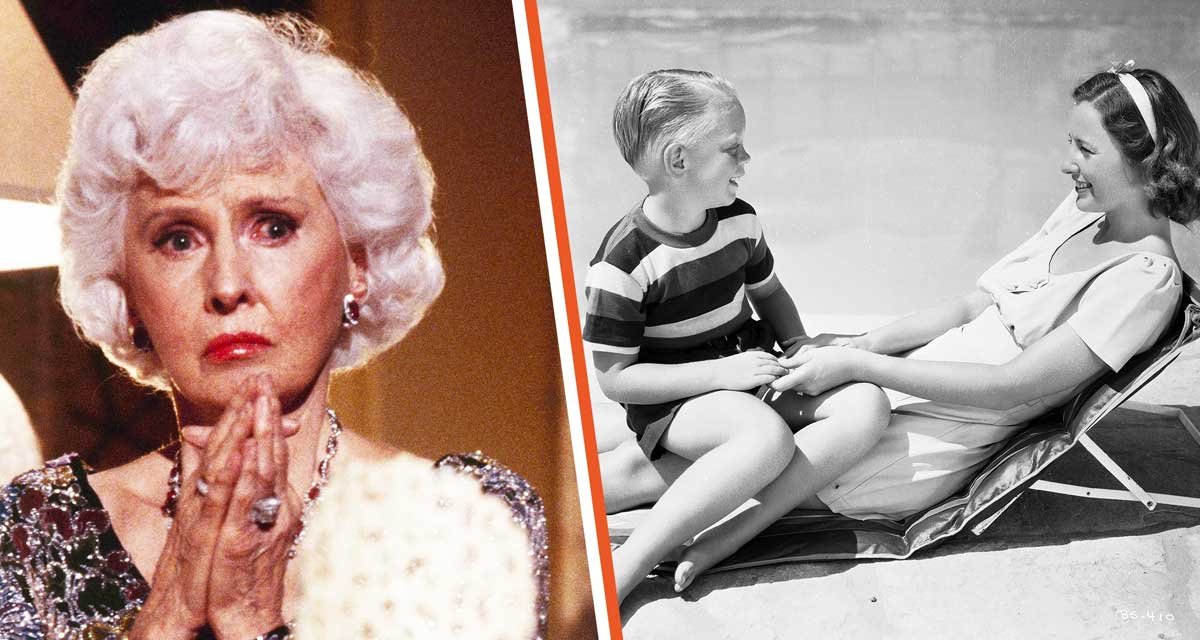
The Boy Nobody Wanted: Anthony Dion Fay’s Early Life and Adoption
Born on February 5, 1932, in the sprawling metropolis of Los Angeles, Anthony Dion Fay’s life began with a profound sense of rejection. His biological mother, whose identity remains a subject of historical debate, gave him up for adoption shortly after his birth. This initial act of abandonment cast a long shadow over his life, setting the stage for a lifelong struggle with identity and belonging. He was, from his first moments, a boy in search of a home, a stable presence in a world that seemed to have no place for him.
In December of that same year, a lifeline appeared. Hollywood’s golden couple, Barbara Stanwyck and Frank Fay, decided to adopt. Their decision, however, was not born from a simple desire to start a family. It was a desperate attempt to salvage a marriage already crumbling under the weight of Fay’s alcoholism and professional jealousy. Anthony, a ten-month-old infant, was brought into this volatile environment, not as a cherished son, but as a potential solution to adult problems. His name was changed to Dion Anthony Fay, and he was thrust into the heart of Hollywood, a world of glamour and illusion that would ultimately offer him little comfort.
The early years were a study in contrasts. While the family presented a facade of domestic bliss to the public, the reality was far from idyllic. Frank Fay, a celebrated vaudeville comedian, was a domineering and often cruel figure. His relationship with his adopted son was strained from the outset. Fay’s interest in fatherhood waned as his marriage to Stanwyck deteriorated, leaving Anthony to navigate a landscape of emotional neglect and instability. He was a pawn in their marital battles, a silent witness to the unraveling of their Hollywood dream.
This tumultuous upbringing left an indelible mark on Anthony. He was a sensitive child, keenly aware of the emotional currents that swirled around him. The absence of a consistent, nurturing presence created a deep-seated insecurity that would follow him for the rest of his life. He was a boy who had been given everything money could buy, but denied the one thing he truly needed: the unconditional love of a parent.
A House Divided: The Turbulent Family Dynamics and Childhood Struggles
The Fay-Stanwyck household was a house divided against itself. Frank Fay’s battle with alcoholism cast a pall over the family, creating an environment of fear and unpredictability. His professional decline, contrasted with Barbara Stanwyck’s rising stardom, fueled a toxic mix of resentment and jealousy. This domestic turmoil was the backdrop of Anthony’s childhood, a constant source of stress and anxiety. He was a child caught in the crossfire of his parents’ ambitions and failures.
Stanwyck, for her part, was ill-equipped for the challenges of motherhood. Her own traumatic childhood, marked by the early death of her mother and abandonment by her father, left her emotionally guarded. She poured her energy into her career, achieving a level of success that was unprecedented for women in Hollywood. But this professional triumph came at a personal cost. She struggled to connect with her adopted son on an emotional level, her parenting style often described as distant and cold. The warmth and affection Anthony craved were in short supply.
The inevitable divorce in 1935 was followed by a bitter custody battle. Stanwyck ultimately won, but the victory was a hollow one for Anthony. Frank Fay, his adoptive father, largely disappeared from his life, another profound rejection in a childhood already defined by loss. Left in the care of a mother who was more of a star than a parent, Anthony’s behavioral problems escalated. He struggled in school, his academic performance a reflection of the chaos at home. In a move that was common for wealthy families dealing with difficult children at the time, he was sent away to a military school in Indiana, a decision that only deepened his sense of isolation.
This period of his life was critical. The repeated experiences of abandonment—first by his birth mother, then by his adoptive father, and emotionally by his adoptive mother—created a deep-seated trauma. From a psychological perspective, this is a classic case of attachment disorder, where a child’s ability to form healthy emotional bonds is severely compromised. The world, to young Anthony, was an unreliable and unsafe place. This foundational belief would shape his decisions and relationships for decades to come.
The Stepfather Effect: Robert Taylor’s Role and Continued Family Dysfunction
Barbara Stanwyck’s marriage to actor Robert Taylor in 1939 brought a new male figure into Anthony’s life, but it did little to resolve the underlying family dysfunction. Taylor, a kind and gentle man, made an effort to connect with his new stepson. He acknowledged Anthony’s struggles, once remarking that he wasn’t a “bad kid,” just one who had a difficult time in school. However, the relationship remained complex. Anthony, already wary of paternal figures, struggled to find his place in this new family dynamic. He often felt like an outsider, a reminder of a past his mother was eager to forget.
The introduction of a stepfather, even a well-intentioned one, could not heal the wounds of the past. The emotional distance between mother and son persisted. Stanwyck’s focus remained on her career and her new marriage, leaving Anthony to navigate his adolescence with little parental guidance. It was during this time that the importance of alternative support systems became starkly apparent. One of the few sources of consistent kindness in Anthony’s life was his uncle, Buck. When Anthony was seriously injured at a summer camp, it was Buck who rushed to his side. Stanwyck, consumed by her work, did not visit her son in the hospital. This incident, more than any other, highlights the profound emotional neglect that characterized Anthony’s upbringing.
The presence of a stepfather did not magically create a happy family. Instead, it underscored the complexities of blended families, especially those in the public eye. Anthony’s teenage years were marked by a continued search for belonging, a desperate yearning for the love and acceptance that had been denied to him. He was a boy adrift, searching for an anchor in a sea of indifference. The failure of this new family structure to provide that anchor only compounded his sense of isolation and worthlessness.
The Psychology of Abandonment: Understanding Adoption Trauma and Its Lifelong Impact
To truly understand the trajectory of Anthony Dion Fay’s life, we must look beyond the biographical details and delve into the complex psychology of abandonment. His story is a textbook case of what modern psychology refers to as adoption trauma or relinquishment trauma. This is not to say that all adoptions are traumatic, but for a child who experiences multiple instances of rejection, the psychological impact can be profound and long-lasting. Anthony’s life was defined by a trifecta of abandonment: first by his biological mother, then by his adoptive father, and finally, through emotional neglect, by his adoptive mother.
This repeated pattern of loss can fundamentally alter a child’s developing brain. It can lead to what is known as complex post-traumatic stress disorder (C-PTSD), characterized by difficulties with emotional regulation, identity, and relationships. For Anthony, the world was a place where love was conditional and belonging was precarious. This early life experience would have instilled a deep-seated belief that he was somehow unworthy of love, a core wound that would manifest in his adult life through self-sabotage and difficulty forming healthy attachments.
The 1960 arrest for selling pornographic materials, for example, can be viewed through this lens. It was not simply a criminal act, but a cry for help, a manifestation of the inner turmoil he had been grappling with for decades. Such self-destructive behaviors are common in individuals who have experienced early life trauma. They are often unconscious attempts to reenact or gain control over past traumas. In Anthony’s case, it may have been a way to seek attention, even negative attention, in a world that had largely rendered him invisible.
Understanding the psychology of abandonment is crucial for developing empathy for individuals like Anthony Dion Fay. It shifts the narrative from one of moral failing to one of profound psychological injury. His life was not a series of bad choices, but a tragic unfolding of a destiny shaped by circumstances beyond his control. For a deeper understanding of adoption trauma, resources from organizations like the American Psychological Association can provide valuable insights.
The Adult Years: Marriage, Parenthood, and the Weight of Unresolved Trauma
As Anthony Dion Fay transitioned into adulthood, he sought the normalcy that had eluded him in his youth. He married, became a father, and took on modest jobs, including working at a motel, to support his family. This attempt to build a conventional life was a quiet rebellion against the chaotic and emotionally barren world of his upbringing. It was a search for the stability and connection he had always craved. For a time, it seemed as though he might escape the long shadow of his past.
However, the unresolved trauma of his childhood continued to exert a powerful influence. The year 1960 marked a turning point. At the age of 28, Anthony was arrested for selling pornographic books to teenagers. This event, sensationalized by the press due to his connection to Barbara Stanwyck, was a public manifestation of his private struggles. It was a desperate act, born not from malice, but from a place of deep-seated pain and a profound lack of self-worth. It was the act of a man who had never been taught his own value.
The relationship with his mother, already strained, fractured completely. Stanwyck, a woman fiercely protective of her public image, was mortified. The incident confirmed her long-held belief that her son was a lost cause. Their estrangement deepened, the emotional chasm between them now a gaping abyss. Anthony was left to face the consequences of his actions alone, another rejection in a life already defined by them. He continued to live a life of quiet obscurity, a stark contrast to the glittering world of his mother. He was a footnote in the story of a Hollywood legend, a man struggling to find his own narrative in the margins of fame.
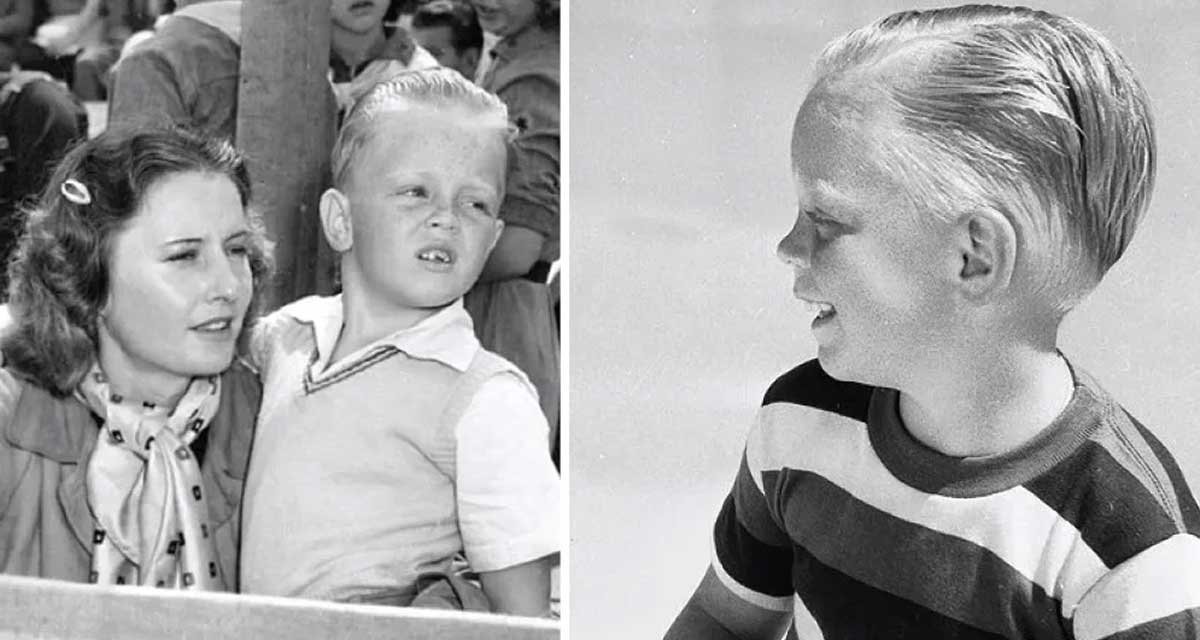
Hollywood’s Cold Heart: The Estrangement Between Mother and Son
The story of Anthony Dion Fay and Barbara Stanwyck is a chilling indictment of Hollywood’s often-toxic culture. It is a story of a mother who chose fame over family, a son who was sacrificed at the altar of public image. As Stanwyck’s star ascended, her son was relegated to the shadows, his existence a potential threat to the carefully constructed persona she presented to the world. This was not just a personal failing; it was a reflection of a system that values illusion over reality, image over substance.
The estrangement was not a single event, but a slow, agonizing process of emotional withdrawal. Stanwyck’s refusal to attend her son’s wedding was a public declaration of their fractured relationship. Her refusal to meet her own grandson was a particularly cruel act, a denial of the generational bonds that form the bedrock of family. Their last meeting was a brief, sterile encounter, devoid of the warmth and affection that should characterize a mother-son relationship. After that, the silence was deafening. Stanwyck, a woman who could command the emotions of millions on screen, was incapable of bridging the emotional chasm with her own son.
This tragic dynamic is explored in depth in Victoria Wilson’s biography, “A Life of Barbara Stanwyck: Steel True 1907-1940.” Wilson paints a portrait of a woman who was a product of her time, a woman who had to fight for every ounce of success in a male-dominated industry. But this success came at a terrible price. The same steeliness that made her a star made her a cold and distant mother. Her story is a cautionary tale about the corrosive effects of fame, a reminder that the pursuit of professional ambition can often lead to personal bankruptcy.
The comparison between Stanwyck’s public triumphs and Anthony’s private struggles is stark. While she was collecting accolades and awards, he was working in a motel, struggling to make ends meet. While she was being celebrated as a Hollywood icon, he was living a life of quiet desperation. This is the untold story of Hollywood, the story of the collateral damage left in the wake of stardom. It is a story that needs to be told, a story that reminds us that behind the glamour and the glitz, there are real people with real pain.
The Final Chapter: Anthony Dion Fay’s Death and Enduring Legacy
Anthony Dion Fay died on May 17, 2006, in Van Nuys, California. He was 74 years old. His death, like much of his life, was a quiet affair, unmarked by the fanfare and public mourning that accompanies the passing of a Hollywood figure. There were no lengthy obituaries in major newspapers, no tearful tributes from industry colleagues. The details of his death and burial remain largely private, a final testament to a life lived in the shadows. The contrast with his mother’s death in 1990 could not be more striking. Barbara Stanwyck’s passing was a major media event, a moment for the world to reflect on the legacy of a cinematic giant.
What, then, is the legacy of Anthony Dion Fay? It is a legacy of quiet resilience, of a man who, despite being dealt a difficult hand, managed to find a measure of peace and stability in his later years. It is a legacy that speaks to the enduring power of the human spirit, the capacity to love and be loved even in the face of profound trauma. He was not a celebrity, not a star, but he was a man who mattered. He was a husband, a father, a man who, in his own quiet way, triumphed over the circumstances of his birth.
His story is also a legacy of caution. It is a reminder that the glittering facade of Hollywood often conceals a darker reality. It is a call for greater empathy and understanding for the children of celebrities, individuals who are born into a world of privilege but often denied the basic emotional nourishment that all children need. Anthony Dion Fay’s life was a tragedy, but it is a tragedy from which we can all learn. It is a story that deserves to be remembered, not as a footnote in the biography of a star, but as a powerful and poignant story in its own right.
Lessons from Anthony’s Story: What His Life Teaches Us About Family, Adoption, and Love
The life of Anthony Dion Fay, though lived largely outside the public eye, offers profound lessons for our modern world. His story is not just a historical curiosity; it is a timeless exploration of family, adoption, and the enduring human need for love and acceptance. It compels us to look beyond the superficial markers of success and to consider the deeper, often invisible, wounds that shape a life.
One of the most important takeaways from Anthony’s story is the critical importance of emotional presence in parenting. Barbara Stanwyck provided for her son financially, but she was emotionally absent. Her story is a powerful reminder that children need more than just material security; they need time, attention, and unconditional love. In our own fast-paced, career-driven world, this is a lesson that bears repeating. The pursuit of professional success should never come at the expense of our most important relationships.
Anthony’s story also sheds light on the unique challenges faced by adoptive families. While adoption can be a beautiful and life-affirming experience, it is also a journey that requires a deep understanding of the psychological impact of relinquishment. His life underscores the need for pre- and post-adoption support for both parents and children. It is a call for greater awareness of the resources available to help adoptive families navigate the complex emotional terrain of their journey.
Finally, Anthony’s story is a testament to the resilience of the human spirit. Despite the immense challenges he faced, he managed to build a life for himself, to find love and to become a father. His story is a reminder that our past does not have to define our future. It is a story of hope, a story that tells us that even in the darkest of circumstances, it is possible to find a path to healing and wholeness. His life, in its own quiet way, is a triumph.
Conclusion: A Life Lived in the Echoes of Fame
Anthony Dion Fay’s story is more than just a tragic Hollywood tale; it is a profound meditation on the nature of love, loss, and the search for self. His life, lived in the long shadow of his famous mother, serves as a powerful counter-narrative to the glamorous myth of celebrity. It reminds us that fame and fortune are no substitute for the fundamental human need for connection and belonging. He was a man who was given everything but the one thing that truly mattered, and his life was a testament to the enduring consequences of that loss.
But his story is not just one of tragedy. It is also a story of resilience. It is the story of a man who, despite being set up for failure, managed to carve out a life for himself, to find love, and to experience the joys of fatherhood. In a world that often celebrates the loud and the famous, Anthony Dion Fay’s quiet life of dignity and perseverance is a powerful reminder of the true meaning of strength. His legacy is not written in headlines or box office receipts, but in the quiet courage of a life lived against the odds.
As we reflect on his story, we are invited to consider our own lives. What does it mean to be a good parent? A good child? A good person? Anthony Dion Fay’s life, in all its complexity and contradiction, offers no easy answers. But it does offer a powerful invitation: to lead with love, to choose connection over convenience, and to remember that every life, no matter how quiet, has a story worth telling.
Frequently Asked Questions About Anthony Dion Fay
The following questions address the most common inquiries about Anthony Dion Fay’s life, his relationship with Barbara Stanwyck, and the broader implications of his story for understanding adoption, family dynamics, and the human cost of fame.
- 1. Who was Anthony Dion Fay?
- Anthony Dion Fay (1932-2006) was the adopted son of Hollywood actress Barbara Stanwyck and her first husband, comedian Frank Fay. His life was marked by a troubled childhood, estrangement from his famous mother, and a quiet existence away from the spotlight.
- 2. How did Anthony Dion Fay become Barbara Stanwyck’s son?
- He was adopted by Barbara Stanwyck and Frank Fay in December 1932 when he was ten months old. The adoption was reportedly an attempt to save their failing marriage, which ultimately ended in divorce a few years later.
- 3. What challenges did Anthony Dion Fay face in his childhood?
- Anthony faced numerous challenges, including the emotional fallout from his parents’ turbulent marriage, his father’s alcoholism, and a sense of abandonment. He struggled in school and was eventually sent to a military academy. His relationship with his mother was distant and lacked warmth.
- 4. Did Anthony Dion Fay have a good relationship with Barbara Stanwyck?
- No, their relationship was famously strained and distant. Stanwyck was often emotionally unavailable due to her demanding career and her own difficult past. They became estranged in his adult life, and she reportedly never met her grandson.
- 5. Was Anthony Dion Fay involved in any legal troubles?
- Yes, in 1960, at the age of 28, he was arrested for selling pornographic books to teenagers. This event further damaged his already fragile relationship with his mother.
- 6. Did Anthony Dion Fay have children?
- Yes, Anthony Dion Fay was married and had at least one son. However, he lived a very private life, and not much is publicly known about his family.
- 7. When and where did Anthony Dion Fay die?
- He passed away on May 17, 2006, in Van Nuys, Los Angeles County, at the age of 74. His death was not widely reported, and the cause remains private.
- 8. What is the legacy of Anthony Dion Fay’s life?
- His life serves as a cautionary tale about the complexities of celebrity families, the psychological impact of adoption and abandonment, and the fact that fame and fortune do not guarantee happiness. His story highlights the importance of parental love and emotional connection above all else.
- 9. How did Frank Fay’s behavior affect Anthony Dion Fay?
- Frank Fay’s alcoholism, abusive behavior, and eventual abandonment of the family after the divorce had a profound and negative impact on Anthony’s childhood, contributing to his lifelong feelings of rejection and instability.
- 10. What can we learn from Anthony Dion Fay’s story about adoption and family?
- His story underscores the deep psychological wounds that can result from relinquishment and emotional neglect. It highlights the need for adoptive parents to be emotionally present and aware of the potential challenges their children may face, and it champions the idea that love and stability are more valuable than any material wealth.