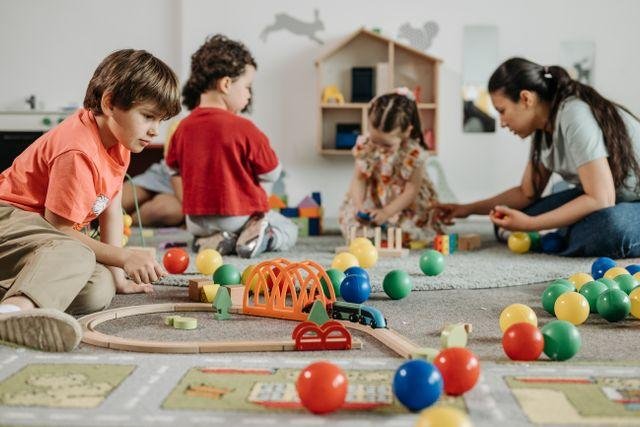
A positive learning environment isn’t an environment where no negative emotions arise or where no one is allowed to express frustration. Young children are still figuring out what sort of place the world is. That’s a pretty important and taxing job when you’re also trying to put your shoes on the correct feet. The environment around them can either make that job easier or harder. If you want the children to enjoy learning, pay attention to the little things that make a space feel welcoming, interesting and forgiving.
Let Them Have a Proper Mess
Children can be messy. But they need opportunities to make things untidy. Not permanently, of course. You don’t want your lounge room looking like a pile of mess at all times. But a learning space should allow children to spread out some paint and tip out a box of blocks.
A tidy environment that’s a tad too tidy for a child can actually send a strange message to them: don’t touch anything unless you know exactly what you’re doing. That’s not very useful when you’re four. It’s not very loving, either. Give children materials they can manipulate and change. Let them test ideas without immediately jumping in and talking about cleaning the mess.
Put Their Work Where They Can See It
Don’t hide children’s drawings in a folder. Put their work on the wall, at their eye level. They need to see it. You might not even like it, but a wonky self-portrait with one enormous ear deserves a little bit of glory.
You should practice these acts of kindness to show your children that what they make has a place. When a child walks past their painting and remembers making it, they’re also remembering that their ideas mattered. And when you display their work without correcting every little imperfection, you’re showing them indirectly that the work doesn’t have to be perfect, and that that’s okay.
Make Mistakes Boring
A child spills the water. Someone cuts the paper in the wrong place. None of these events requires a response that isn’t calm. There should be no yelling, and not all eyes should be on the child.
If you react as though every mistake is a disaster, your child may start avoiding anything they’re unsure about. Instead, treat mistakes as ordinary parts of doing things. Grab a cloth. Find another piece of paper. Build the tower again, perhaps with fewer blocks this time. When an early learning setting handles mistakes calmly, it gives young impressionable minds room to experiment, and that’s why a Dubbo early learning centre can be such a positive environment for children.
Give Quietness Somewhere to Live
Some children love noise. Others look like they’ve been personally offended by a slight increase in tone. A good learning environment respects both. It offers children a place where they can retreat when their brains have had enough.
A small reading corner with cushions is one way to do it. Let it be a place where a child can sit for a few minutes without being questioned about why they’re there. They might read. They might stare at a book upside down. That’s fine. Sometimes children need a pause before they’re ready to join everyone else again.
Keep Interesting Things Within Reach
If everything worth touching is stored on a high shelf, children spend a lot of their day asking adults for permission to explore. That’s not ideal. Put safe, useful materials where children can reach. This will also let them make some choices for themselves.
You might have baskets of fabric, paper, pencils, puzzles, natural objects or building pieces. Rotate them when they become stale. Ten interesting objects can create more thinking than fifty plastic things. Give a child something that makes them wonder what it could become.
Conclusion
A positive learning environment for children is one that allows them to be themselves and express themselves. It’s the one that offers knowledge without judgement, and the one that corrects without making all the noise. When a child is happy to be at a school or a daycare centre, it’s a sign that the education system hasn’t failed them. When a child feels free and ready to explore the world around them at school, the teachers’ approach is creating a positive environment.