Knowing hardwood flooring how to clean is mostly a matter of matching the right routine to the finish you already have. And the short version is: dust daily, damp-mop once a week with a wood-floor cleaner, and polish every two to four months. Use only slightly damp—never wet—tools, skip vinegar and steam, and wring the mop until it stops dripping. This suits solid and engineered hardwood in an average U.S. home, and it protects the finish far longer than the occasional soaking mop does.
Most people do not ruin a wood floor by skipping a weekend. They ruin it by using too much water, the wrong chemical, or a scrubber the finish cannot tolerate. The finish is what you are cleaning; the wood underneath stays protected as long as you treat that film carefully.
Below is the same route the flooring manufacturers and the National Wood Flooring Association describe, compressed into a schedule you can follow, plus the mistakes that cause most of the dull and warped floors you see in older homes.
Know your floor and finish first
The safest cleaner for any hardwood floor is a dedicated, pH-neutral wood-floor cleaner used with a microfiber mop, applied lightly damp. Before you buy anything, identify what is actually underfoot, because a solid plank and an engineered board tolerate different routines, and an oiled surface demands different care than a polyurethane one.
Solid hardwood is a single piece of wood, commonly three-quarter inch thick, and it can be sanded and refinished four to six times over its life. Engineered hardwood has a thin real-wood top layer over a plywood base; Bruce notes the standard top layer is 1/16 inch, which allows only one or two refinishes, while higher-quality engineered boards in the 3/32 to 1/8 inch range allow three or four. If the board feels like a uniform slab with no visible seam to a base layer, it is usually solid.
For the finish, the quick test is how the surface behaves under a few drops of water. Water that beads means a sealed finish like polyurethane or aluminium-oxide, which handles the routine below. Water that soaks in, or a finish that feels waxy and matte, points to an oiled or waxed surface, and that needs its own maintenance program, not the one described here. If you cannot tell, it is safest to start with a dry dust and a drop of the cleaner on an out-of-the-way corner, then check the result before covering the whole room.
The everyday routine for hardwood flooring how to clean
Wood floors stay clean through repetition rather than intensity, and the everyday method for keeping them that way is simple. Sweep or vacuum daily to lift grit, damp-mop once a week with a wood-floor cleaner, and reserve a monthly pass for corners and stubborn marks. Grit is the true enemy: sand and dirt trapped on the floor act like fine sandpaper under every footstep.
Daily: sweep or dust
Use a soft-bristle broom, a dust mop, or a vacuum set to a bare-floor mode with the beater bar turned off. A spinning brush on bare hardwood adds tiny scratches that show up as a hazy sheen over time. A microfiber dust mop traps the finest dust, which is why Wirecutter recommends it as the first pass. Do not drag that mop up and off the floor mid-stroke; keep it flat so the dust stays trapped on the pad instead of falling back down.
Weekly: damp mop with a wood-floor cleaner
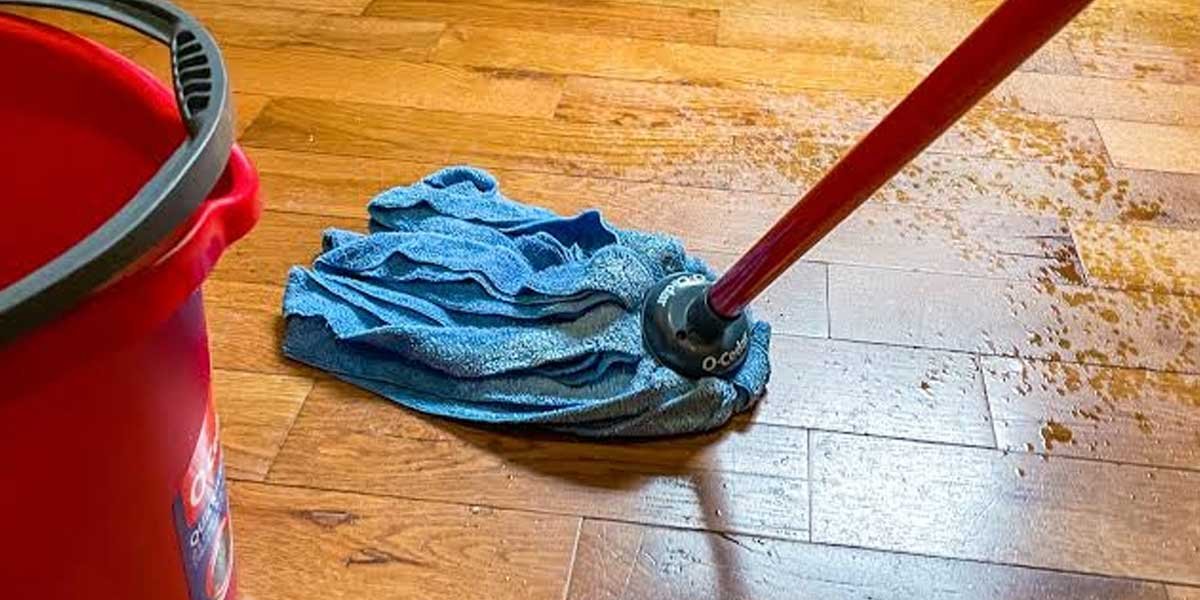
Spray the cleaner on the floor or onto the mop head, then spread it in a thin layer and wring or squeeze the mop until it no longer drips. The goal is a film that dries in minutes, not a wet sheen. Work in patches from the far side of the room back toward the door so you are not walking through the section you just cleaned. Let it air-dry for 15 to 20 minutes before moving rugs and furniture back, as the Wirecutter guide describes.
Monthly: deep-clean and spot-treat
A monthly pass handles the build-up a weekly mop leaves behind. Use a wood-floor deep cleaner for heavy dirt in the kitchen or entry, following the instructions on the bottle and keeping the mop damp rather than wet. For a stubborn mark, spray the cleaner on the mark itself and let it sit a moment before wiping along the grain. If that does not lift it, test a barely damp cloth with a few drops of dish soap on the mark, then rinse with a clean damp cloth; do not scrub in circles with an abrasive pad.
Cleaners and mops to use, and the chemicals to avoid
A pH-neutral hardwood floor cleaner is the safe default, and most brands label their product with the floor type it suits. A plain brush-free vacuum, a microfiber mop, and a clean bucket are all the tools a typical room needs. What you skip often matters more than what you pick.
| Product or tool | Safe for hardwood | When to use it | Why it matters |
|---|---|---|---|
| Dedicated wood-floor cleaner (pH neutral) | Yes | Weekly damp mop | Cleans without stripping or leaving a residue that dulls the finish |
| Microfiber mop / dust mop | Yes | Daily and weekly | Traps grit instead of pushing it; a damp pad avoids soaking the wood |
| Vacuum on bare-floor mode | Yes | Daily | Lifts dirt without a spinning brush scratching the surface |
| Vinegar or lemon-juice mixes | No | Never | Acidic cleaners can etch and dull a polyurethane finish over time |
| Steam mop | No | Never | Forces moisture into the seams, which can warp and cup the boards |
| Oil soap or wax polish | No | Never on sealed floors | Builds a sticky film that attracts dirt and is hard to remove |
The table above is the short version. The longer version, and the one the flooring industry points homeowners toward, is that the finish is the protective layer you are maintaining. An abrasive cleaner, a steel-wool pad, or any polish that adds a shine layer will not only dull what is there now; NWFA’s Brett Miller told Wirecutter that products adding shine make it harder to apply a new finish later.
What not to do: mistakes that dull or warp floors
Five routine mistakes cause most of the avoidable damage. Each is easy to fix once you watch for it, and each is cheaper to avoid than to repair.
Too much water. A mop you wring until it is only damp is correct. Water sitting on the surface seeps into the seams and can swell, cup, or buckle the planks over time. This is the single most common cause of warped hardwood in homes.
Steam and wet mops. Steam cleaners push heat and moisture into the wood. The Wirecutter guide to cleaning hardwood floors warns that a steam mop “almost certainly” deposits moisture between the boards and can warp them.
Vinegar and other acids. Vinegar dissolves mineral build-up, which is why it works on glass, but on a sealed wood floor it can slowly etch the finish. The acidity that removes hard-water spots does the same thing to polyurethane.
Oil soap on a sealed floor. Oil soap leaves a coating that attracts dirt and turns gummy, and it is very difficult to strip when the floor finally needs refinishing.
Dragging furniture, heels, and pet nails. These scratch the finish in a straight line that shows up in raking light. Felt pads under legs, a rug at the entry, and trimmed pet nails remove most of the day-to-day wear.
A maintenance schedule that fits a busy household
The difference between a floor that looks cared for and one that fades is consistency, not elbow grease. The schedule below matches what the manufacturers publish, and it assumes an average two-person household with normal foot traffic; add a step or shift it up a row if you have children, pets, or a high-traffic entry.
| Frequency | Action | Time per room | Skip it if |
|---|---|---|---|
| Daily | Sweep or vac on bare-floor mode; dust-mop the entry | 5-10 minutes | Room is unused and dusty |
| Weekly | Damp mop with a pH-neutral wood-floor cleaner | 20-30 minutes | Only if the floor looks clean; do not add water for its own sake |
| Monthly | Deep-clean heavy-traffic spots; spot-treat marks | 30-40 minutes | Lighter traffic can go to every other month |
| Every 2-4 months | Polish a sealed floor (optional, high-traffic rooms) | 15-20 minutes | Finishes without a shine product or low wear |
| Every 7-10 years | Screen-and-recoat, or sand and refinish | Professional job | Finish still beads water and the floor looks even |
Bona, one of the manufacturers publishing this schedule, says hardwood floors can be refinished every 7 to 10 years depending on wear, and that a typical floor can be sanded four to six times in its life. Home Depot’s cleaning guide gives a similar ten-year figure for sanding and refinishing. Those numbers are ranges, not promises, and they depend far more on how much grit and water reach the floor than on the calendar.
Signs your floor needs more than cleaning
Cleaning fixes a dirty floor, not a worn one. The distinction is simple to check: look at how the surface reflects light and how it handles water, and you can decide between a clean, a recoat, a sand-and-refinish, and a replacement. The repair markers route is the first step for many of these, and it applies the same “rub along the grain, don’t scrub” rule.
Just dull, scratches are shallow. The finish has worn down thin but still seals the wood. A wood-floor polish can revive it, and shallow scratches over a small area can be touched up with floor repair markers matched to the stain.
Water no longer beads, and wood looks grey or bare. The finish has worn through in patches. A screen-and-recoat adds a new top coat without sanding, and it is reversible; this is usually all a lightly worn floor needs.
Deep scratches, stains, or the finish has failed in spots. Time to sand and refinish. Solid 3/4 inch planks take this four to six times over a lifetime; an engineered board depends on its top-layer thickness, so check the number of refinishes you still have before committing.
Boards are cupped, swollen, or buckling, or there is a musty smell and black stains. This is water damage or rot, and cleaning will not fix it. If the engineered core is exposed or multiple boards are lifting, replacing the affected section is usually the honest answer; the same judgment applies when a repair would meet no edge you can match. A stained board in a kitchen is often simpler to replace than to sand, which is one reason tile flooring and installation is a common choice in wet rooms.
The rule to remember: repair when you can match the finish, recoat when the wood is sealed but thin, refinish when the wood itself is exposed but the board is thick enough to sand, and replace when the board or the core is damaged. Any of these starts from a clean floor, so do the cleaning routine first and re-check before spending money on a professional.
Frequently asked questions
What is the best thing to use to clean wood floors? A dedicated pH-neutral hardwood floor cleaner with a microfiber mop is the safest and most effective choice. The cleaner is applied lightly damp, spread thin, and left to air-dry, and it lifts dirt without stripping or leaving a residue.
Can I use Dawn or dish soap on hardwood floors? Dish soap can be used rarely and in very small amounts for a stubborn spot, diluted heavily in water and rinsed with a clean damp cloth. It is not a weekly cleaner, because built-up soap leaves a film that dulls the floor.
What should you not use to clean hardwood floors? Skip vinegar, steam mops, oil soap, abrasive pads, bleach, and any polish that adds a shine layer. Each of these either etches the finish, drives in water, or leaves a coating that complicates a future refinish.
How do you clean hardwood floors that haven’t been cleaned in years? Start with a thorough dry removal of dust and grit, then work in a small patch with a slightly damp microfiber mop and a wood-floor cleaner, repeating across the room. For old built-up grime, use a wood-floor deep cleaner and wipe along the grain; do not oversoak. If the floor has grey dry patches, the finish may already be worn and the floor may need a recoat or refinish rather than more cleaning.
Does cleaning differ for laminate, tile, or other floors? Yes. The routine here applies to hardwood only. If your space uses laminate, laminate flooring how to clean follows a separate set of rules, and hard surfaces such as tile need their own care, which is worth checking before you buy anything.
The honest bottom line
Judge your floor by how the light falls and how the surface feels, not by the calendar. When the finish still beads water and reflects evenly, you are just maintaining; when the wood turns grey and bare, you have passed from cleaning into refinishing territory. The cheapest habit is the daily dust, because it removes the grit that does the slow, invisible damage between cleanings.
If your floor has moved past simple wear and you are weighing options, the trade-offs are covered in beyond hardwood: high-performance flooring alternatives for modern living, and kitchen and high-moisture spaces commonly consider tile flooring best tiles for kitchen walls. For regular upkeep and new-room lessons, the Home Improvement guides on this site carry the rest of the routine.