Training several dogs in the same home can become confusing when every cue, reward, and distraction happens at once. A clear routine helps each dog understand when it is their turn and what behavior is being rewarded.
The goal is not to keep the dogs separated forever. Build individual skills first, then gradually practice them together while keeping everyone calm and focused.
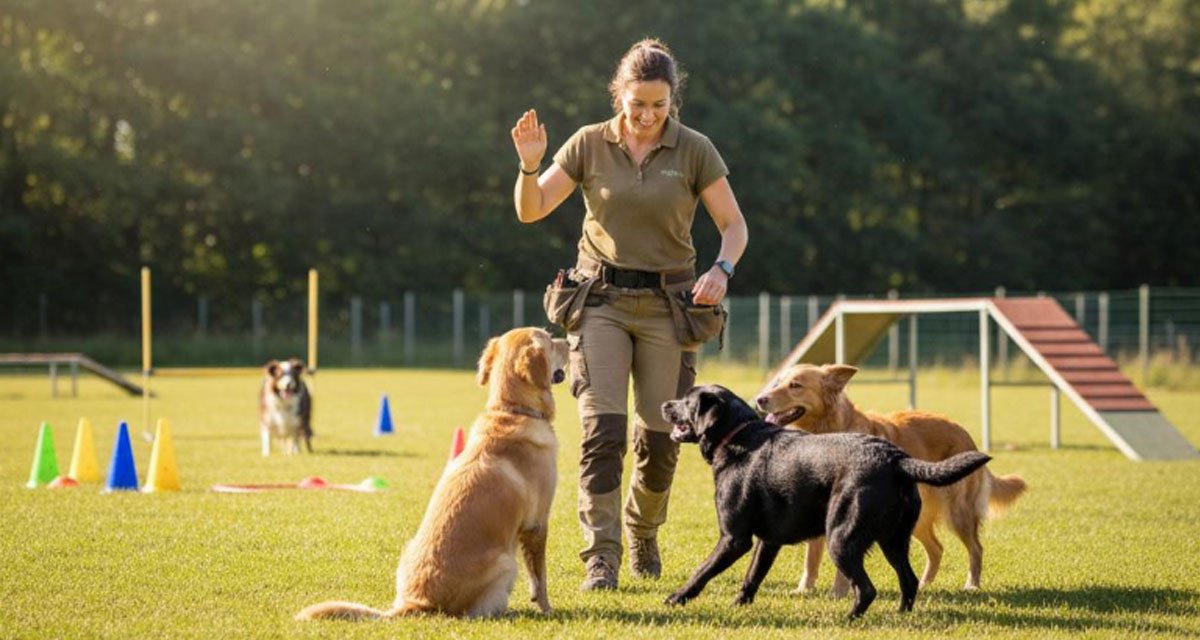
Start With Individual Training Sessions
Each dog should learn new cues on its own. This reduces competition for treats and attention.
The other dogs can stay in a separate room, behind a baby gate, in a crate, or with another person while one dog trains. Even a few focused minutes can be enough for a productive session.
Use Each Dog’s Name Before a Cue
In a multi-dog home, a cue such as “sit” may cause every dog to respond. This creates confusion when you are speaking to only one dog.
Say the dog’s name first, pause, and then give the cue. For example, say “Milo, come” or “Luna, place.” Reward only the dog you addressed so the others learn that names provide important information.
Create Clear Waiting Stations
A mat, bed, or defined spot gives each dog a place to wait while another dog is training. Teach the station separately before expecting the dog to remain there during the activity.
Useful waiting options include:
- A mat on the floor
- A raised dog bed
- A crate with the door open
- A gated area nearby
Reward calm waiting regularly. This reduces pushing, barking, and attempts to steal another dog’s treats.
Keep Rewards Organized
Deliver each reward directly to the correct dog instead of tossing food between them. Your position can also make it clearer which dog is working.
Owners seeking Mississauga dog training support may benefit from practicing reward delivery and the handler position. Small changes in delivery can make the lesson easier to understand.
Add Dogs One at a Time
After each dog has learned the exercise individually, begin practicing with two dogs before gradually bringing the entire group together. Keep early joint sessions simple and use familiar cues.
Ask one dog to stay on a mat while the other practices recall, then switch roles. Increase movement, duration, and distractions only when both dogs remain comfortable.
Watch for Competition and Stress
Dogs may become tense when they compete for food, toys, space, or attention. Watch for stiff posture, hard staring, blocking, rushing forward, lip lifting, or one dog repeatedly moving away.
Do not force dogs to train closely together when these signs appear. Increase distance, remove high-value items, and return to individual work. A professional offering dog training Toronto services can help if the dogs guard resources, fight, or struggle to settle around one another.
Keep Cues and Rules Consistent
Everyone in the home should use the same words and have the same expectations. If one person says “off” while another says “down” for the same behavior, the dogs may receive mixed information.
Post a short list of household cues where family members can see it. Consistency helps each dog respond more reliably, even when several dogs are learning at different speeds.