A low-deck transport unit might have the right deck height, the right connection type, and the right total length for the load it needs to carry. None of that matters if the axle configuration can’t legally distribute the weight of that load over the road network it has to travel. Axle configuration is the compliance variable that determines what a unit can actually haul without triggering overweight permits, and getting it wrong doesn’t just create paperwork headaches. It can make certain loads impossible to move on public roads without routes so restricted they defeat the purpose of the transport.
Why Weight Distribution Is a Legal Matter
Federal and state regulations limit how much weight can be applied to a road surface through any given axle or set of axles. These limits exist to protect road and bridge infrastructure from damage caused by concentrated loads. The federal standard gross vehicle weight limit is 80,000 pounds for a typical five-axle tractor-trailer combination, but that number tells only part of the story.
Bridge laws impose a separate set of limits on how much weight can be concentrated in a given span. The federal bridge formula calculates the maximum allowable weight based on the distance between the first and last axle in any group, and the number of axles in that group. Spreading weight over more axles, or over a longer wheelbase, increases the permissible total gross weight under the formula. This is the core reason that heavy haul units designed for higher gross weights carry more axles spaced further apart, not simply heavier axles.
Exceeding these limits without proper permits exposes the operator to fines, potential liability for road damage, and possible impoundment of the load. For operations that move heavy equipment regularly, building the right axle configuration into the transport unit from the start is far less expensive than managing permit exceptions on every move.
Single Axles, Tandem Axles, and the Load They Can Carry
Not all axles are equivalent in their legal load-carrying capacity.
Single and Tandem Axle Limits
A single axle is generally limited to 20,000 pounds under federal regulations. A tandem axle group, defined as two axles spaced between 40 and 96 inches apart, is limited to 34,000 pounds for the group. A tridem, or three-axle group, carries a higher limit that varies by state but is typically in the range of 42,000 to 54,000 pounds depending on spacing and jurisdiction.
Adding axles to a transport unit increases the legal payload capacity in direct proportion to the axle groupings added. A unit with two rear tandem axle groups can legally carry more total weight than one with a single rear tandem, and a unit with a spread axle configuration that places the rear axles further apart can qualify for higher gross weights under the bridge formula than the same number of axles grouped more closely together.
Spread Axle Configurations and Why They Matter
Spread axle configurations place the rear axles further apart than a standard tandem grouping, typically more than 96 inches apart. This spacing changes the axle group classification under the regulations and can allow higher gross weights than a standard tandem group of the same number of axles.
For heavy haul operations where total gross weight is approaching or exceeding the limit for a standard tandem configuration, a spread axle arrangement on the transport unit can be the difference between a legal standard move and one that requires an overweight permit. Permits are obtainable, but they add cost, restrict available routes, may require advance survey, and limit the windows during which travel is allowed.
The practical value of a spread axle configuration is that it extends the range of loads a unit can move without entering permit territory, which is where the real cost and scheduling complexity lives.
Axle Rating vs. Regulatory Limit
The axle configuration determines the legal payload capacity. The axle rating determines whether the hardware can physically handle that payload.
An axle rating is the manufacturer’s specification for the maximum load the axle assembly is designed to carry safely, including the hub, bearings, spindles, and associated hardware. A transport unit configured with axles rated below the actual load being carried will experience premature wear, potential bearing failure, and structural fatigue in the axle components well before the end of the unit’s expected service life.
On custom-built units, the axle rating should be specified to the actual anticipated loads with appropriate margin, not to the minimum legal limit. A unit that’s legally configured but mechanically undersized for its routine loads is a reliability problem waiting to develop. Specifying axles with appropriate ratings for the actual load range is as important as getting the axle count and spacing right for legal compliance.
How Axle Configuration Interacts With the Tractor
The transport unit doesn’t carry the load alone. The tractor contributes its own axle capacity to the equation, and the combined configuration of tractor and transport unit determines the total number of axles and their positions across the full length of the vehicle combination.
The steer axle, drive axles, and any tag or pusher axles on the tractor contribute to both the total gross weight capacity and the bridge formula calculation. A tractor with a high-capacity drive axle configuration paired with a well-configured transport unit extends the range of loads that can be moved legally. Mismatches between the tractor and transport unit axle configurations can create situations where the transport unit’s capacity exceeds what the combination can legally haul, which wastes the investment in the heavier transport unit.
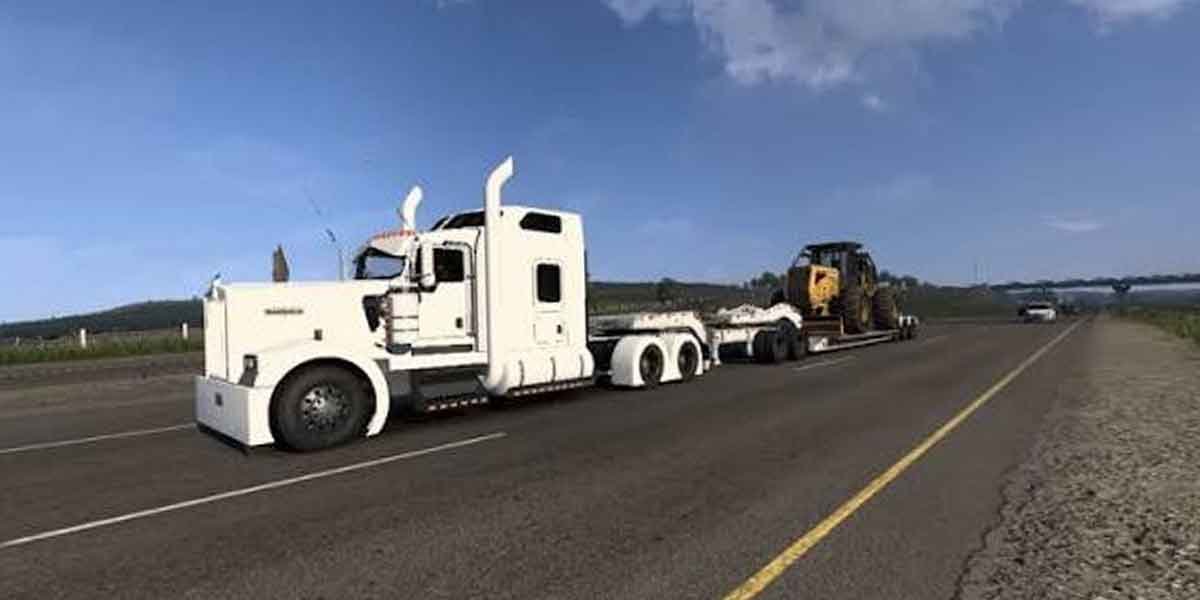
For operations building a custom lowboy trailer for a specific fleet of tractors, specifying the transport unit’s axle configuration with knowledge of the tractor’s axle ratings and positions is part of getting the full combination right.
Conclusion
Axle configuration is where the engineering of a low-deck transport unit meets the legal framework it operates within. Getting the count, spacing, and individual ratings right determines the full range of loads the unit can legally carry, the routes it can travel without permits, and how long the hardware will last under the actual loads it sees in service. All three of those outcomes are worth getting right at the design stage.