The instinct to own assets outright is understandable. Ownership feels permanent, debt-free, and clean. But the financial reality of owning versus using business assets is more complicated than that instinct suggests, and for a meaningful number of businesses, acquiring the use of an asset rather than the asset itself produces better long-term outcomes than writing the check to own it.
What Use-Based Acquisition Actually Means
A use-based acquisition gives a business access to an asset, its productive capacity, its contribution to operations, without the business necessarily holding title to it. The business makes periodic payments for the right to use the asset over an agreed period. The arrangement can take several forms with different accounting and tax implications, but the underlying concept is consistent: the business pays for the economic benefit of the asset rather than for the asset itself.
This framing matters because it recenters the financial analysis. The question isn’t “can we afford to own this?” It’s “what is the actual cost of getting the economic benefit we need from this asset, and how do we minimize that cost while preserving operational flexibility?”
Why Ownership Isn’t Always the Lowest-Cost Option
The upfront sticker price of ownership is rarely the full story.
The Depreciation Reality
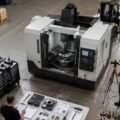
Most business assets depreciate. A piece of equipment worth $120,000 today may be worth $40,000 in five years. The business that purchased it outright absorbed the full $80,000 of depreciation over that period. A business that paid for use of the same equipment over five years and returned it at the end has paid for its productive life without absorbing the residual value loss. Which arrangement cost more depends entirely on the payment terms and the pace of depreciation, but the asset’s decline in value is a real cost of ownership that doesn’t appear on the purchase invoice.
Capital That Stays Available
Every dollar tied up in a purchased asset is a dollar unavailable for operations, new opportunities, or unexpected needs. A business with $500,000 in owned equipment has converted half a million dollars of flexible capital into a fixed asset. A business that structured the same equipment through a use arrangement retains that capital flexibility, paying a periodic cost instead of absorbing a lump-sum outlay.
For businesses operating in environments where opportunities arise unpredictably or where cash reserves provide a genuine competitive advantage, the preserved flexibility has real value that doesn’t always get accounted for in the own-versus-use calculation.
Technology and Obsolescence Cycles
Use-based arrangements make particular sense for assets where technology cycles are short. A business that owns equipment outright at the start of a rapid technology cycle may find itself holding a depreciating asset well past the point where newer options would improve operations, because the sunk cost creates an implicit bias toward continuing to use what’s already been paid for. A use arrangement with a defined term lets the business upgrade at renewal rather than continuing to operate outdated equipment to extract value from a past purchase.
What the Two Main Structures Look Like
Not all use agreements work the same way, and the distinction between them matters for how the arrangement appears on the balance sheet and how payments are treated for tax purposes.
Operating Structures
An operating arrangement keeps the asset off the business’s balance sheet. Payments are treated as operating expenses, which can simplify the financial picture and may produce favorable tax treatment depending on the business’s situation. At the end of the term, the asset is returned, often with an option to renew or upgrade.
Finance Structures
A finance arrangement functions more like a purchase agreement with deferred payment. The asset typically appears on the business’s balance sheet as an owned item for accounting purposes, the business takes on the depreciation, and the payment stream is split between principal and interest treatment. At the end of the term, the business generally owns the asset outright or purchases it at a predetermined residual value.
The right structure depends on the business’s balance sheet goals, tax position, and whether long-term ownership of the specific asset actually makes sense.
When the Math Clearly Favors Owning
Use arrangements aren’t always the better choice, and honesty about when ownership wins is part of making the right decision.
Assets with long useful lives and slow depreciation tend to favor ownership once the acquisition is affordable. Real estate typically appreciates rather than depreciates, which changes the residual value equation entirely. Assets where customization is required, where modification would be lost at the end of a term, often need to be owned rather than used on a temporary basis.
How to Read a Use Agreement Before Signing
The total payment stream is the starting point, but not the end of the analysis. Residual values at end of term, early termination penalties, maintenance obligations, and what happens if the asset is damaged or becomes obsolete mid-term all belong in the analysis before any agreement is signed.
When a business evaluates commercial leasing as part of a broader asset strategy, the question isn’t simply whether the monthly payment fits the budget. It’s whether the full term cost, including all fees, obligations, and end-of-term options, compares favorably to ownership once the cost of capital, depreciation, and flexibility are properly accounted for.
Conclusion
Use-based acquisition is a tool, not a default. When the asset depreciates quickly, when technology cycles are short, or when preserving capital flexibility matters more than the long-term cost difference, it frequently produces better outcomes than ownership. When none of those conditions apply, ownership often wins on total cost. The decision deserves honest math, not instinct.