The best robot vacuum and mop look flawless in promotional videos, but real homes have grout recesses, square corners, and kitchen grease that round robots struggle to reach. After a few weeks, many owners notice clean room centers while baseboard edges and grout lines stay darker. This guide covers grout contact, corner gaps, obstacle buffers, kitchen film, and the mop features that narrow the gap.
Table of Contents
Where the best robot vacuum and mop struggle on grout lines
Round robots navigate well but miss corners and edges
Obstacle buffers protect furniture but skip dirt nearby
Kitchen grease needs more than a damp pass
Better mop design narrows the gap without removing it
Conclusion
Where the best robot vacuum and mop struggle on grout lines
Tile floors can look easy until you look closely at the grout. The tile surface is flat and hard. The grout line sits lower, feels rougher, and holds fine dirt more easily. You can tilt a mop head, press harder, or drag a small brush along that groove. A robot has to work from a fixed body height while rolling on wheels.
Why flat pads miss recessed grout
With the grout recessed below the tile and the robot locked to a fixed body height, robot grout cleaning works better for upkeep than for deep cleaning. Regular damp passes can keep pale sealed grout looking fine. Stains that built up over months will not come out in one afternoon.
A flat pad rides the raised tile more than the recessed line. With little pressure behind it, the pad scrapes dirty water off itself and pushes it into the grout channel, where it pools instead of being lifted away.
What robot mops can and cannot fix on grout
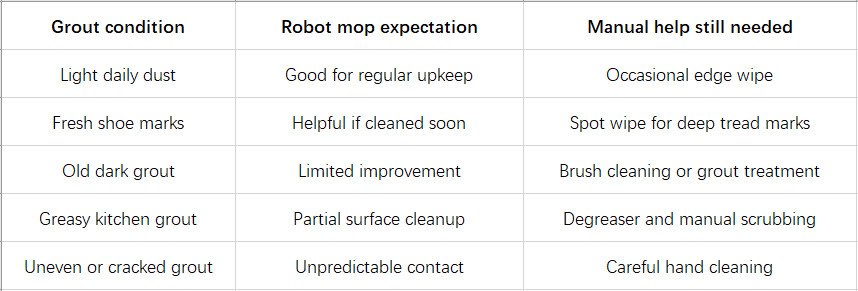
On textured floors, a robot mop slows new buildup more than it fixes old neglect. Clean grout may stay lighter longer, but ignored grout will not recover from a surface pass alone.
Round robots navigate well but miss corners and edges
Most robot vacuums are round for a good reason. A round body can turn into narrow spaces without wedging itself between furniture legs. It can back out of a hallway corner, rotate near a chair, and recover from awkward paths more easily than a square machine. That same geometry shows up anywhere tight layouts matter, from a busy kitchen to small office setups where chairs and cables shift through the day.
What helps navigation hurts corner cleaning. A round body cannot press its full mop surface into a sharp ninety-degree corner, and no tracking software changes that shape. Two walls or baseboards meeting always leave a small untouched patch. On tile floors, the gap shows up in the same spots week after week. Dry dust is easier because side brushes can flick debris toward the suction path. Mopping is harder because the wet pad or roller sits under the chassis, often leaving the deepest corner an inch or two short of full contact.
Where the corner gap shows up at home
Fine dust collects where the baseboard meets the floor
Sticky drops near kitchen cabinet corners stay behind after a run
Bathroom tile corners darken faster than the center walking path
Pet bowl areas need a hand wipe along the wall
The missed zone is often thin, but thin zones add up when the robot never reaches them. A robot that makes the open center look spotless can still leave a border that needs a cloth every week.
Obstacle buffers protect furniture but skip dirt nearby
Modern obstacle avoidance is a safety necessity. Nobody wants a robot dragging a phone charger across the room or pushing into a fragile plant stand until the pot rattles. The machine has to protect itself and the home around it.
Why safety margins leave dirt behind
That safety buffer creates another cleaning limit. When the robot sees a chair leg, toy, plant stand, or floor lamp base, it leaves a small margin around the object. The better the robot is at avoiding contact, the more likely it is to protect the object rather than scrub right up against it.
In a dining room, those margins repeat around every chair. In a home office, they appear around rolling chair legs, cable boxes, and desk supports. The eufy robot vacuum is one place to compare how different designs balance obstacle buffering against edge cleaning coverage.
How to reduce missed zones before each run
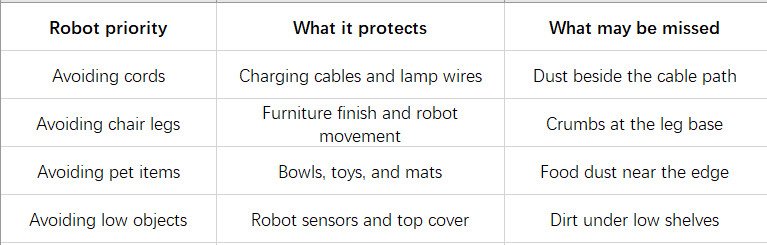
Good prep still matters. Pick up loose cords, move dining chairs when possible, and use no-go zones around delicate items. A smarter robot reduces rescue missions, but it cannot guess which clutter is safe to nudge and which one you want left untouched.
Kitchen grease needs more than a damp pass
Kitchen tile floors are where a robot mop combo faces its hardest test. The mess is not only visible crumbs. Cooking oil settles as a thin film. Sauce dries near the stove. A sugary spill can turn tacky before anyone notices. Bare feet carry that film into the walkway, and the floor looks dull even after a routine pass.
Why robots struggle with cured kitchen film
Most robot mop combos add moisture, movement, and repeatable coverage. That helps with loose dust, light footprints, and fresh spills. It is still different from deep manual cleaning with hot water, a stronger floor cleaner, and body weight behind the pad. Without heat or real downward pressure, a robot often dampens the surface layer of a dried spill instead of lifting it completely.
If the kitchen already feels sticky, do a manual reset first. Then let the robot maintain the cleaner baseline. That order saves frustration because the robot is not fighting weeks of buildup every night.
Kitchen settings that actually help
Run sooner after cooking: Fresh oil lifts more easily before it cures.
Use room-specific settings: The kitchen may need more water or a slower route than a hallway.
Vacuum dry debris before mopping: Grit turns into muddy streaks once the pad gets wet.
Keep the mop clean on longer routes: A dirty pad can spread film instead of removing it.
The best robot vacuum mop combo for a kitchen is the one that fits this rhythm, not the one that promises a spotless floor after every kind of spill. Cabinet corners and stove-side film are where mop reach shows up on tile. The eufy robot vacuum and mop groups the current combo models if you want to compare mopping setups side by side.
Better mop design narrows the gap without removing it
Two robots can list the same suction tier and the same mopping claim on the box. Whether the roller presses into a grout groove or reaches the baseboard is a hardware question that headline specs will not answer.
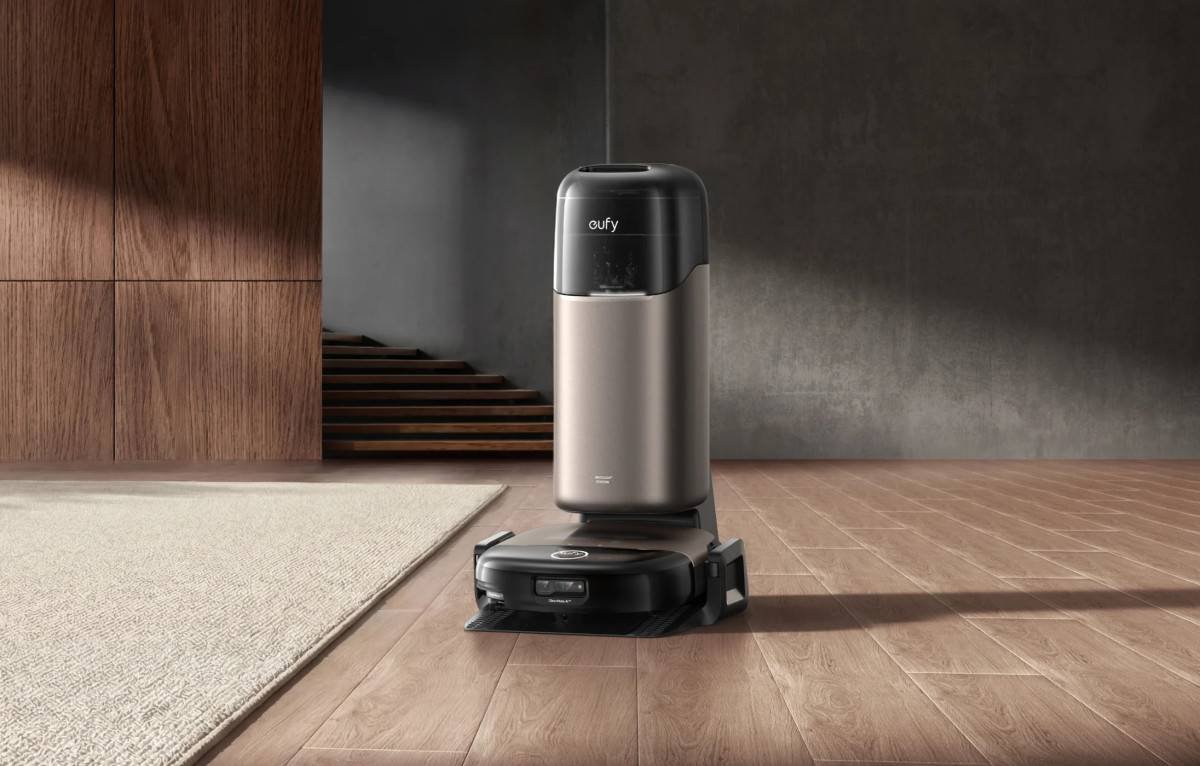
On the eufy Robot Vacuum Omni S2, HydroJet™ 2.0 applies 15N downward pressure through a self-cleaning roller mop with electrolyzed water, adding more scrubbing force on tile and light kitchen film than a passive pad. It covers tight edges and corners, with the roller extending up to 0.59 in (1.5 cm) to reach further. AirClean 5-Layer Filtration filters up to 99.99% of household allergens, capturing fine dust and airborne particles to help reduce leakage and keep indoor air cleaner while the robot vacuums grout dust and kitchen debris.
These features help, but no robot makes every grout line look hand-scrubbed. A better model may mean fewer edge, corner, and kitchen touch-ups. It cannot fix recessed grout, cured grease, or square corners. Let the robot run routine passes; save manual scrubbing for buildup and spots it cannot reach.
Conclusion
Robot mop combos make routine floor care easier, not invisible. Recessed grout, round bodies that miss sharp corners, obstacle buffers around furniture, and kitchen grease needing a manual reset still cap what automation can do. Active mopping and better edge reach matter more than headline suction. Set expectations for real floors, not showroom videos, and you will do less full-room scrubbing with touch-ups where geometry still wins.