There’s a version of balloon decor that lives in the cultural memory as sad and dated — the half-deflated latex orbs drifting across a gymnasium floor, the bunch of helium balloons tied to a mailbox outside a birthday party. That version earned its retirement. What replaced it is different enough that calling both things “balloons” barely captures the relationship.
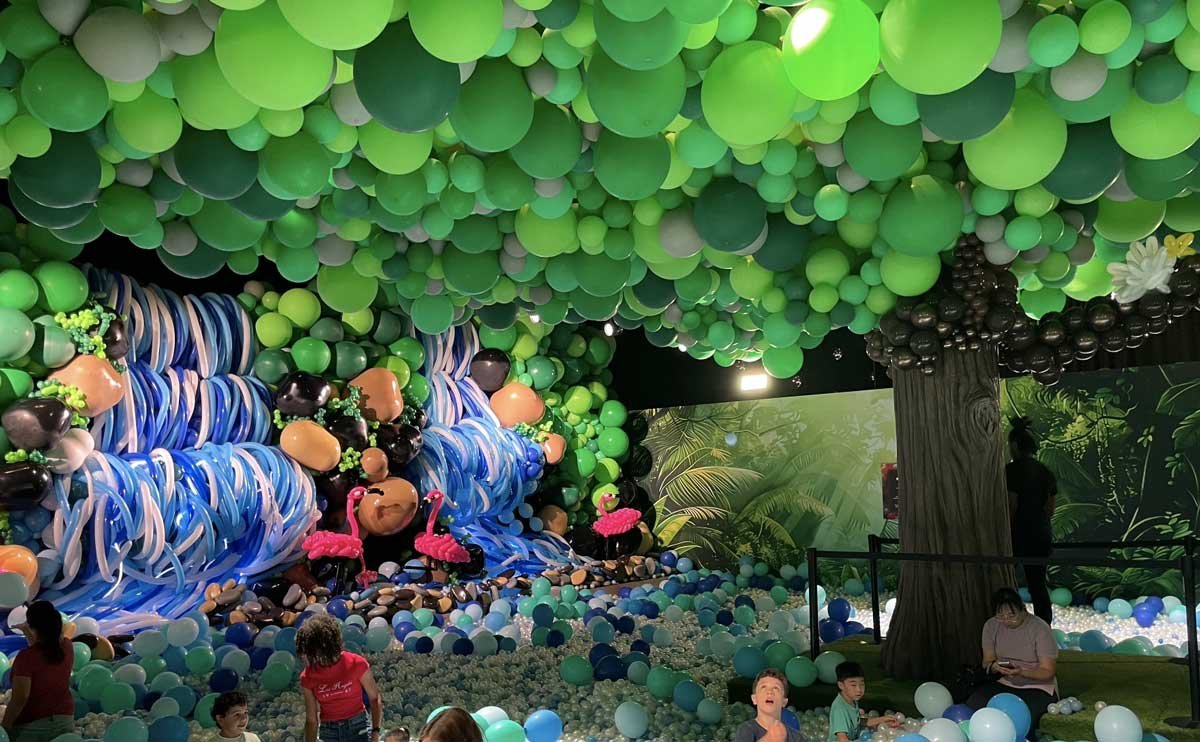
Organic balloon installations — the kind that show up in every event photo worth sharing right now — are sculptural, intentional, and surprisingly versatile across event types that have nothing to do with children’s parties. Corporate product launches, wedding receptions, brand activations, milestone birthdays, baby showers, holiday events — the event decor landscape has shifted enough in the last five years that balloons have moved from afterthought to anchor piece in a wide range of professional and personal event contexts.
The reason isn’t nostalgia. It’s that balloon installations do something that most other decor categories don’t — they create an immediate visual impact that’s photogenic from every angle, customizable to any color palette, and capable of transforming an otherwise ordinary space into somewhere that looks like it was designed rather than arranged. https://balloonlabusa.com/ is where clients in the Chicago area and beyond find BalloonLab for the kind of balloon decorations Chicago work that produces those results rather than the kind that ends up looking like it was assembled from a party supply store run.
What Modern Balloon Installations Actually Involve
The organic balloon garland — the asymmetrical, varied-size cluster arrangement that’s become the dominant form in modern balloon decor — looks effortless in photos and involves considerably more intention than it appears. The size variation, the color distribution, the density across different sections of the installation, the relationship between the balloon clusters and the surface or structure they’re attached to — each of these is a design decision that determines whether the final result looks considered or random.
Color palette is where most DIY attempts at this style fall apart. The balloon market has expanded to include hundreds of colors across multiple finish types — matte, chrome, pearl, clear, printed, foil — and the combinations that work photographically and in person aren’t always the ones that seem obvious when selecting from a catalog. A palette that looks cohesive in samples looks different when the balloons are inflated and the room’s lighting interacts with the finishes. Professional balloon designers work with these variables constantly and know how specific colors and finishes behave in specific lighting conditions.
Scale is the other dimension that separates installations that read as impactful from ones that read as adequate. A balloon garland that’s sized correctly for a backdrop produces a fundamentally different visual impact than one that’s two feet short of filling the frame. Getting scale right requires understanding how the installation will be photographed and how guests will interact with it physically — which is a design question, not just a logistics one.
What Different Events Need From Balloon Decor
Corporate events have specific balloon decor requirements that personal events don’t. Brand color accuracy matters in a way it doesn’t for a birthday party — a product launch where the balloon installation is slightly off-brand reads as a quality control issue rather than just an aesthetic preference. The balloon decor needs to integrate with the event’s other design elements — the signage, the staging, the printed materials — in a way that communicates visual coherence.
Social events have more flexibility but still benefit from an installation that’s designed for the specific space rather than adapted from a generic template. A balloon arch that works in one venue reads completely differently in another with different ceiling height, different lighting, and different surrounding decor. BalloonLab designs installations for the specific event and venue rather than producing the same arrangement in different colors — which is the difference between decor that belongs in a space and decor that was placed in it.