Most bedroom reboots die before launch. They start too soon with wobbly, vague questions, like ‘how do I want this space to feel?’ or ‘what style am I really drawn to?’ Others collapse under the weight of Instagram, with its endless conveyor belt of honed and primped mood boards of crusty mauve walls, mustard bedheads, and dusty-pink cushions. Too much too soon.
Build A Neutral Base That Won’t Trap You
The quickest way to pinpoint a bedroom’s age is to slap a band-new trendy paint on its walls. You might not realize it now, dressed in that fashionable sage green that’s everywhere on Instagram, but give it five years. You may as well have stuck a poster on the door marked 2015.
Does this mean a timeless bedroom treads a permanent line of neutral? Yes and no. Not beige and boring neutral. White with the slightest whisper of warmth, greige that would swing either way if it left the house, greige with a neighbour who blares his music too loud every other Sunday…These are not shades. They are exciting opportunities for dissatisfaction with your home decor choices. A neutral base in the sense that means it is versatile. It lets you play. It lets you update the space without having to call the painter to undo your mistakes.
Texture Over Pattern
Strong patterns become outdated relatively quickly. It may seem like a bold geometric duvet or a statement wallpaper featuring vivid colors will look up-to-date for about a year and a half, then it’s a relic of the 2010s. Texture doesn’t become dated.
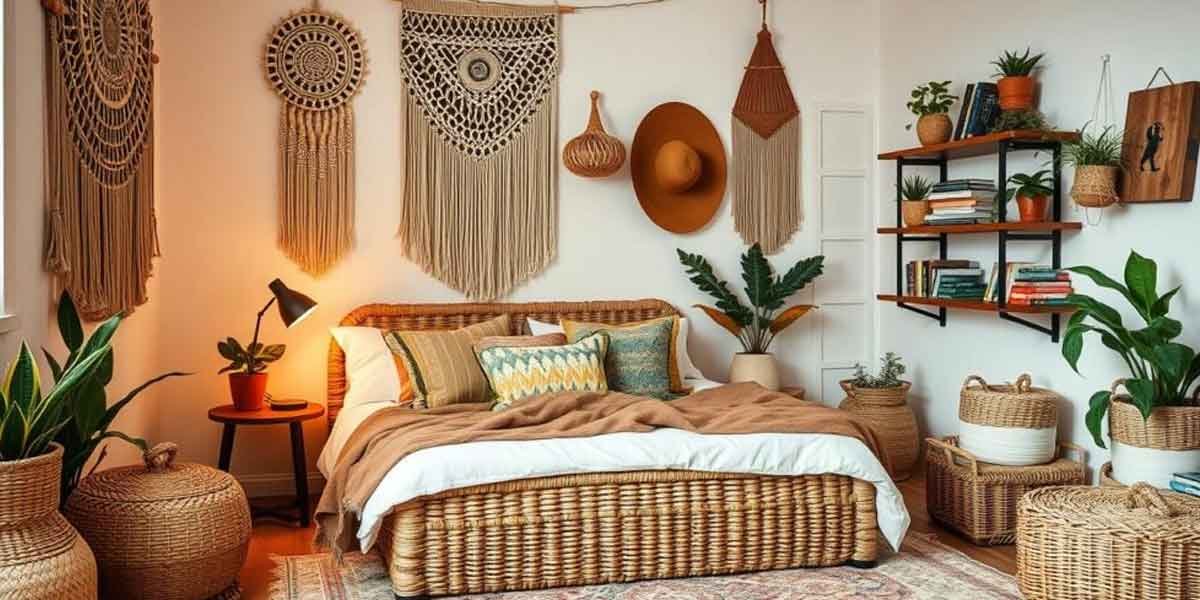
The overall feel of a room versus one that was pulled together in a hurry can usually be traced back to how textures marry up. A linen duvet against a cool, smooth timber bedside table. A woolen throw paired with a cozy, brushed-cotton sheet. These things add up in terms of layering the room and adding visual interest but not tying yourself down to the vagaries of fashion. Mixing these unique materials from natural sources – wood, linen, cotton, stone – ensures your room will feel natural and down-to-earth, no matter what’s ‘in’ on the design blogs.
The Bed Is The Decision That Shapes Everything Else
Every other choice in the room is secondary to the bed. It sets the scale, anchors the layout, and catches a large part of the visual weight of the room. Miss the point, and the remainder of the room needs to work against itself.
A well-constructed upholstered bed frame does two things at once: it brings softness into a room that might otherwise feel hard-edged, and it provides a silhouette that’s been working in bedroom design for long enough that it won’t look dated. Fabric frames also have a quieter presence than heavily carved timber or ultra-minimal metal – they sit in the room without demanding a particular style from everything around them.
The investment logic is simple. A bed that lasts fifteen years and works with three different room refresh cycles costs less, in real terms, than a cheaper one replaced every five. Quality craftsmanship in foundational pieces is a long-term financial decision as much as an aesthetic one.
Lighting Isn’t A Finishing Touch
Most bedrooms aren’t well-lit. One bulb does one job, badly, it flattens the room, steals the atmosphere and cuts cosy nooks in half.
Layered lighting is just three lights minimum working at three different heights. Ambient light (up high) for general, often daytime use, a task light (mid-level) for focused activities (reading, dressing), and a lower accent-light layer for me-time. This could be anything from a floor light, to a candle or an LED strip.
That’s it. No time spent learning about Kelvins or pity about the fact you never rewired the ceiling. Except, of course, you now love spending evenings in your room after converting it from a generic bedroom into your personal reading den/stationary bike augmented reality space/wrestling ring/play kitchen/James Turrell installation and hermitage.
Flexible Decor Is Where Trends Belong
Investing in good basics on a structural level is also an argument for spending less in total. Once the bed, the lighting, and a few permanent walls’ worth of paint are taking care of the only thing you’re replacing is the changeable layer – soft furnishings, art, small accessories.
Pillows are not a stupid thing to spend money on once you already have a bed. They’re the front line.
Rugs and bedside styling are the same. Keep the things that go on or touch the most movement-prone items tiny and you can indulge the whim of the day for the least investment. More space, less cash and less planet while updating more often. Win-win.
A room built like that doesn’t magically seem timeless. It is just a series of decisions that ensure the most expensive bits are those that should stay put, and the cheapest the ones that can afford to switch it up.