Prannoy Roy net worth is usually described through estimates, not through any official personal filing that confirms one final number. That is why published figures vary so much. 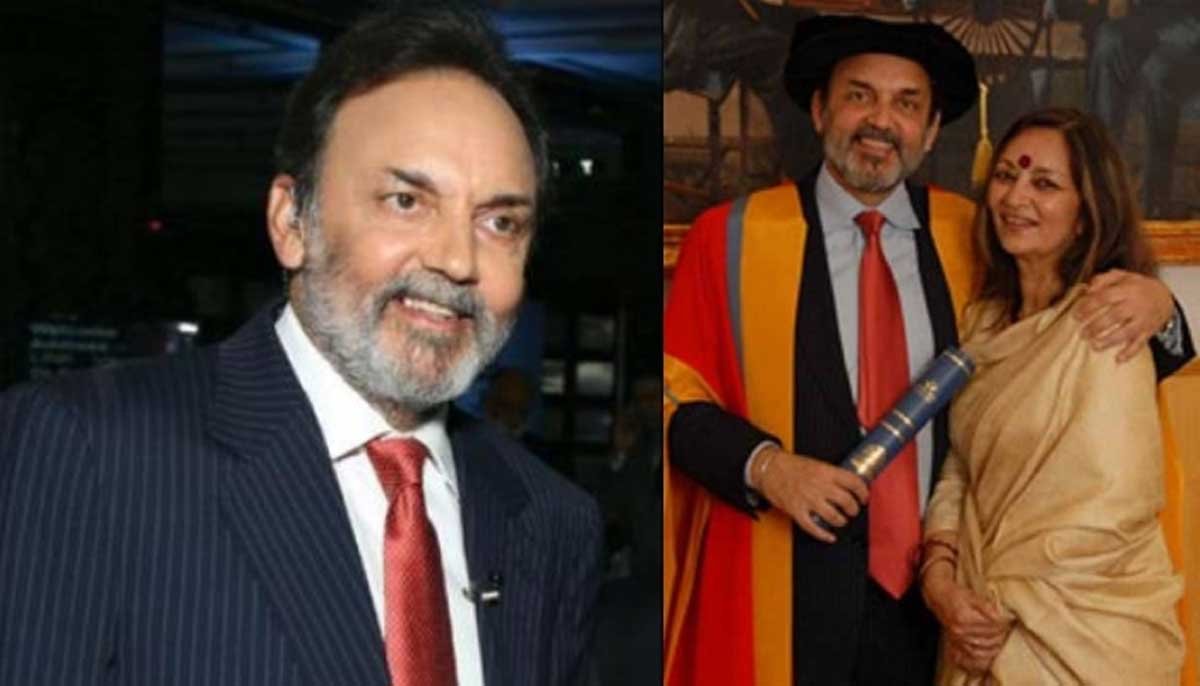 Some articles lean on NDTV-linked holdings, some use older salary-style reports, and others mix in assumptions about private assets that are hard to verify from open records.
The most reliable reading is a cautious one. Public market data, documented shareholding history, and Roy’s long role as NDTV co-founder clearly point to substantial wealth, but they do not support one universally verified net worth figure. For practical purposes, most public estimates place him in a high-value media-founder bracket rather than a billionaire-owner bracket.
Estimated Wealth in 2026
Roy’s wealth in 2026 is best treated as an estimate range, not a fixed audited total. Publicly visible signals suggest that his finances are still tied mainly to NDTV-era ownership value, long-term media influence, and whatever non-public assets sit outside market disclosures. That is why many articles arrive at different numbers while still reaching the same broad conclusion: he remains a wealthy and influential media figure.
The main reason for that variation is methodology. A market-linked estimate can change with the stock price, promoter holding data, and corporate-control changes. A biography-style estimate may add private property or older income assumptions. Once those inputs change, the headline number changes too.
Why Online Figures Do Not Match
Three different inputs usually drive the mismatch. First, some writers use current shareholding data. Second, some reuse older articles that reported a higher or lower number years ago. Third, some pages add private real estate, family assets, or business interests without showing how those values were calculated.
That is why a careful article should not pretend that every public estimate carries the same credibility. Market-linked data is usually the strongest clue. Broad personal-asset math is often the weakest part of the story unless it comes from a clearly attributed financial report.
The Most Defensible Way to Read the Number
A defensible estimate starts with visible public indicators, then adds caution. Based on open coverage, Roy’s wealth is often discussed in a broad range rather than as one exact total. The safer takeaway is that he sits well above ordinary television-income levels because of founder-era ownership value, yet below the scale of India’s biggest conglomerate-backed media tycoons.
| Public indicator | What it tells us | Confidence | How to use it |
|---|---|---|---|
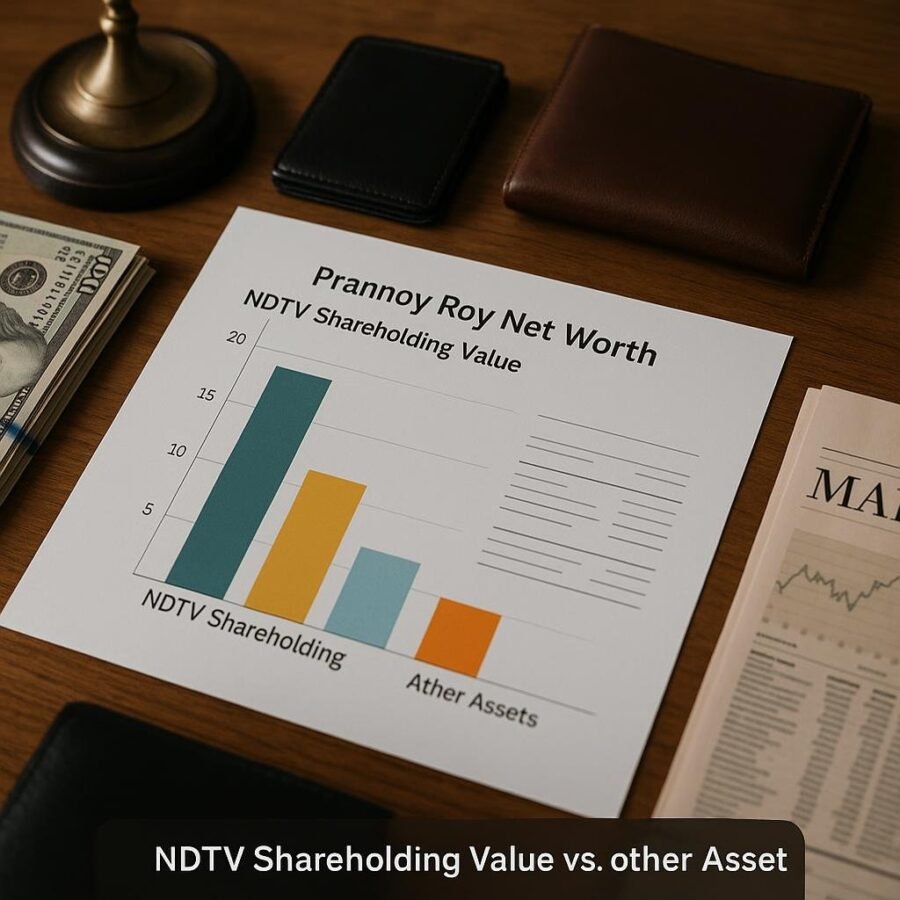
| NDTV-linked shareholding history | Shows that Roy’s wealth had a clear market-linked anchor | High | Best public baseline for any estimate |
| Older salary and net worth reports | Useful for context, but often date-sensitive | Medium | Use only as secondary support |
| Private property or investment claims | May be plausible, but rarely itemized publicly | Low | Treat as unconfirmed unless clearly sourced |
How NDTV Still Shapes His Wealth
NDTV is still the most important public reference point for understanding Roy’s wealth. Even though ownership dynamics changed, his financial reputation was built through co-founding, building, and monetizing one of India’s most recognizable television news brands. That legacy matters because founder wealth in media is often easier to trace through company history than through private ledgers.
Public pages such as Trendlyne are useful here because they show how market observers frame Roy’s visible holdings. They do not reveal a full personal balance sheet, but they do show why NDTV-linked value continues to anchor nearly every serious estimate.
Founder Value Versus Current Control
There is an important difference between historical founder value and present-day control. Roy’s wealth story is not only about what he controls today. It is also about the value created during the years when NDTV became a major media institution. Even if visible ownership is lower than before, the public conversation around his finances still begins there.
That distinction explains why current estimates can look smaller than older ones without proving that the older reports were fake. A founder’s public wealth can narrow when shareholding changes, but the long-term financial significance of the company does not disappear from the story.
Why Market-Linked Estimates Move
Any estimate linked to a listed company can move quickly. Share price changes, disclosed holdings, and ownership restructurings can all reshape the headline number. That is why an article quoting one exact dollar figure without a date is usually less useful than an article explaining what changed and when.
For context on Roy’s public profile beyond finance, the Wikipedia biography and the NDTV founders’ statement help frame his long institutional role, even if they are not net-worth documents by themselves.
| NDTV factor | Effect on wealth estimate | Why readers should care |
|---|---|---|
| Visible shareholding data | Creates the strongest public valuation anchor | Most estimate pages start here |
| Ownership changes | Can reduce or reframe founder-linked value | Explains why older and newer reports differ |
| Brand legacy | Keeps Roy financially relevant in media rankings | Founder reputation outlasts day-to-day control |
Where Prannoy Roy Stands Among Indian Media Figures
Prannoy Roy sits in an unusual financial category. He is not typically grouped with the richest promoter-owners who built giant multi-vertical empires, but he also does not fit the smaller salary-driven celebrity-anchor model. His public wealth profile is more founder-equity driven than personality-fee driven, which is why comparisons with other media figures need context.
That context matters because a person who built value through ownership will almost always be measured differently from a person whose earnings come mainly from salary, brand endorsements, or appearance fees. Roy belongs to the first category, even if the visible scale of that wealth is lower than that of the biggest regional or national media conglomerate owners.
Peer Comparison by Wealth Type
The simplest way to compare Roy is by wealth structure, not by recycled internet numbers. Some Indian media names are conglomerate owners. Some are promoter-driven television entrepreneurs. Others are primarily public-facing anchors. Roy’s profile is closer to founder-media-equity wealth than to pure salary wealth.
| Media figure type | Typical scale | How Roy compares |
|---|---|---|
| Conglomerate-backed media owner | Usually much larger | Roy is generally below this bracket |
| Founder-led broadcast entrepreneur | Mid-to-high wealth range | Roy fits most closely here |
| Salary-led TV personality | Usually lower than founder equity cases | Roy is generally above this bracket |
What Makes His Profile Distinct
What makes Roy distinct is durability. His public financial identity is still tied to a news institution he helped build, not just to a temporary period of visibility. That gives his wealth profile more structural depth than a short-term salary figure, even if it does not produce the kind of eye-catching billionaire headlines seen elsewhere in Indian media.
It also explains why so many net worth pages still circle back to NDTV, shareholding, and founder status. Those are the clearest public pieces of the puzzle, while the private pieces remain mostly invisible.
Frequently Asked Questions
Roy’s wealth is easiest to understand through a few direct questions. The short answer in every case is that public estimates exist, but they should be read carefully and dated properly.
What is Prannoy Roy’s net worth?
There is no officially confirmed public figure. Most online estimates place his wealth in a broad upper-tier media-founder range, but the exact number varies because the public inputs vary too.
Why do websites give different net worth figures?
They usually use different methods. Some rely on market-linked NDTV data, while others add private properties, older reports, or unsourced assumptions into the same final number.
Is NDTV still important to his wealth story?
Yes. Even if current control is different from the founding era, NDTV remains the strongest public anchor for understanding how Roy built visible wealth and why estimate pages still revolve around him.
Are private assets fully known?
No. That is one of the biggest reasons net worth articles should stay cautious. Public shareholding data is visible, but private investments and personal properties are much harder to verify cleanly.
What is the safest way to quote his net worth?
The safest way is to describe it as an estimate range based on public indicators and to note that no official personal filing confirms one exact number for 2026.
| Question | Best short answer | Confidence |
|---|---|---|
| Is there one official number? | No | High |
| Is NDTV central to the estimate? | Yes | High |
| Are private assets fully public? | No | High |
| Should old estimates be reused blindly? | No | High |
Conclusion
Roy’s wealth is a classic case where the most responsible answer is more useful than the most dramatic one. Public evidence clearly supports the view that he is wealthy, influential, and financially tied to the value created through NDTV, but it does not justify pretending that one exact 2026 figure has been officially confirmed beyond dispute.
If you want the cleanest takeaway, use a range-based estimate, give priority to visible shareholding and company-linked data, and treat unsourced private-asset claims with caution. That approach is less flashy, but it is far more credible.