Most structural failures don’t happen overnight. They develop over years, leaving evidence at every stage – evidence most homeowners walk past every day without recognizing it. Catching these signals early is the difference between a manageable repair and a six-figure rebuild.
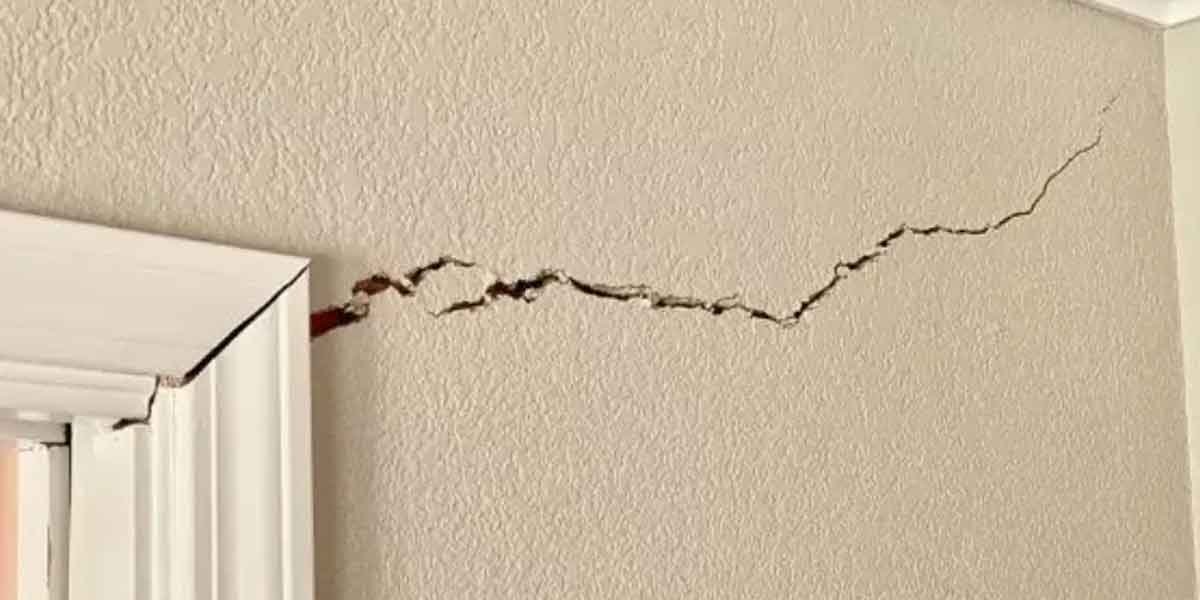
Cracks Aren’t All Equal
The first thing to understand is that all wall and foundation cracks are not created equal. Hairline cracks in drywall or plaster constitute normal shrinkage as a house settles and should be no cause for alarm. They are cosmetic. You fill them, paint over them, and forget about them.
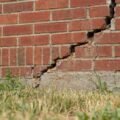
Stair-step cracks are something else. These diagonal cracks are most common in solid masonry walls. They’re caused by a stress joint between different levels of a building settling unevenly. These cracks have a distinctive stair-step pattern, following the mortar joints in brick and cinder block. As one part of the foundation settles less than the other, the masonry up top slides to accommodate the shift. This type of cracking doesn’t heal itself, and no repair will substitute for stabilizing what caused the issue in the first place.
Horizontal cracks in a basement wall are a very serious issue. While they can signal several types of problems, all of them are serious. They are invariably caused by hydrostatic pressure. (That’s a fancy way of saying “groundwater.”) As the soil outside becomes saturated from rain or snow, the water exerts lateral pressure against the foundation. If the pressure is excessive, the bottom of the wall can tilt dangerously into the basement.
Doors, Windows, and The Out-Of-Square Frame
It’s easy to think that a suddenly stuck door or a window that no longer latches has to do with humidity swelling the wood. Sometimes, that’s the case. Usually, though, the frame has shifted.
As a home’s foundation moves – whether from expansive clay soil heaving when wet, or from soil erosion undercutting the perimeter – the structural frame above it goes out of square. The door and window openings are rigid rectangles. When the surrounding frame shifts to a parallelogram, the fit’s altered. Gaps appear along the top or sides of frames. Latches miss their strike plates. If this is happening in numerous locations across the house, take it as a warning, not an inconvenience.
The Biological Threats Inside The Wood
Moisture and pests have a synergistic relationship that escalates the destruction of wood, much faster than when either factor acts alone. The sills are the most important portion to tap, the horizontal lumber that ties the wall framing to the foundation, as are any exposed floor joists in a crawl space or basement.
The tap test is easy: knock with your knuckle. Solid wood provides a tight, even sound. Wood hollowed by termite galleries or weakened by dry rot gives a hollow or papery sound. Now press a screwdriver against the surface. Good wood resists while the tip sinks into softened or hollowed wood with slight finger pressure.
Termites are responsible for over $5 billion in property damage every year in the United States, most of those costs specifically not covered by standard homeowners insurance. The financial case for early detection is overwhelming. Understanding how much do pest control services cost compared to the cost of replacing structural lumber or repairing a compromised foundation, it’s elementary: routine prevention is a fraction of the cost of remediation.
Also look for efflorescence on basement walls: white, powdery salt residues left when water seeps through concrete and then evaporates. The salt doesn’t weaken the wall structurally, but it’s a clue for the continuous penetration of moisture – and moisture is the key that lets dry rot and pest infestations flourish.
Floors That Tell You The Piers Are Failing
One of the most observable effects of structural problems in homes on stilts is sloping or uneven floors. For the most part, the interior floor of a crawl space home is supported by central support piers. When these piers sink, crack, or settle, a portion of the floor above sags or bounces. Take a slow walk across the floor, paying attention to areas that feel soft underfoot or slightly spring-loaded. Also, look for gaps between the baseboard and the floor itself. A consistent gap that runs along one wall can indicate that the floor has dropped away from the base of the wall. These aren’t cosmetic issues – they may indicate that the joist spans above the crawl space are already compromised.
Gutters, Drainage, and What Happens To The Soil
Gutter drainage is a home maintenance detail that most people treat as purely cosmetic. It isn’t. When gutters overflow or downspouts deposit water directly against the foundation perimeter, that water saturates the soil. Saturated soil loses its load-bearing capacity. Over time, it erodes or compresses unevenly, and the foundation begins to settle in ways it wasn’t designed to.
Keep downspouts extended well away from the foundation. Grade the soil so that water drains away from the house rather than pooling against it. It’s a simple fix when addressed early. By the time the foundation has moved significantly, it’s not.
The house gives you the information you need. Cracks, sticking frames, hollow wood, sagging floors, and standing water near the perimeter are a diagnostic sequence – each one pointing toward a specific mechanical failure. Read them correctly and act on them early, and the house is manageable. Ignore them, and the repairs compound.