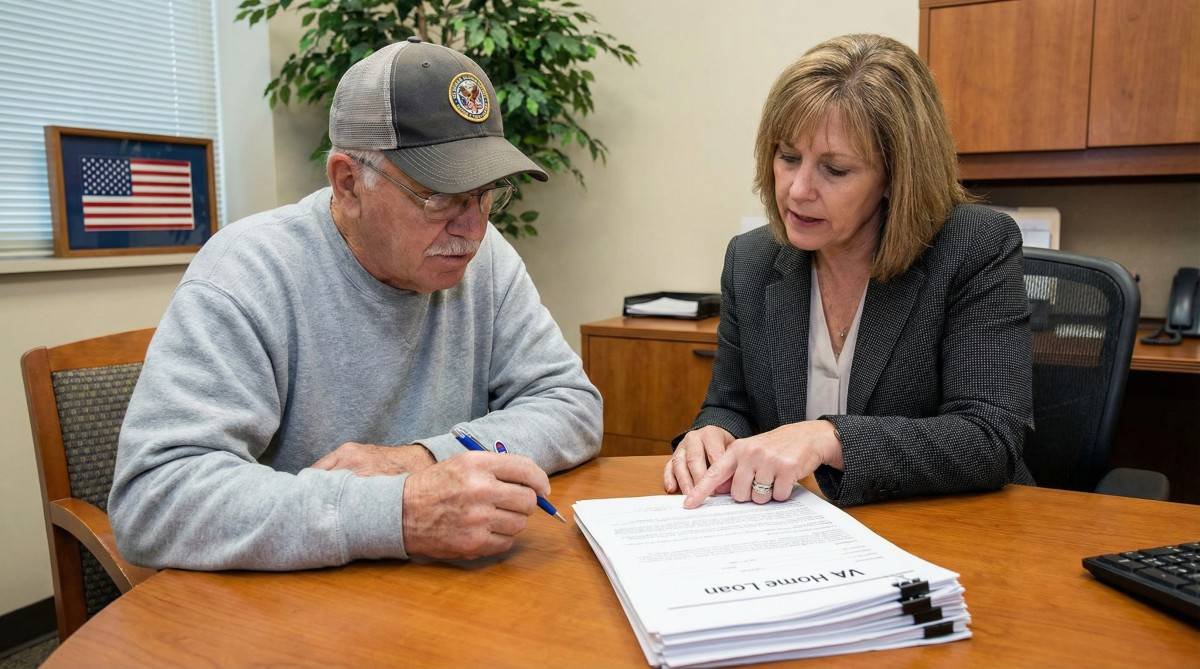
Determining how much house you can afford with a VA loan involves evaluating several financial factors, including your income, credit history, existing debts, and the specific guidelines set by the Department of Veterans Affairs and individual lenders. While VA loans offer significant benefits like no down payment, understanding your overall financial picture is essential to ensure a comfortable and sustainable homeownership experience, notes BHB Real Estate Group specialists.
Key Factors Influencing VA Loan Affordability
Several critical financial elements are assessed by lenders to determine your eligibility and the maximum loan amount you can qualify for with a VA loan. These factors collectively paint a picture of your financial health and your ability to manage monthly mortgage payments.
Income and Employment Stability
Lenders scrutinize your income to ensure it is stable, reliable, and sufficient to cover your potential mortgage payments and other living expenses. Typically, they look for a consistent employment history, often requiring two years of tax returns, recent pay stubs, and bank statements. All verifiable and consistent income sources, including military pay, benefits, and other allowances, are considered when calculating your borrowing capacity [1].
Credit Score Requirements
While the Department of Veterans Affairs (VA) does not set a minimum credit score, most VA-approved lenders typically require a FICO score of 620 or higher. A stronger credit score indicates a lower risk to lenders and can potentially lead to more favorable interest rates and loan terms, ultimately impacting how much house you can afford [2].
Debt-to-Income Ratio (DTI)
Your debt-to-income (DTI) ratio is a crucial metric that compares your total monthly debt payments to your gross monthly income. Although the VA does not impose a strict maximum DTI, many lenders prefer a DTI of no more than 41% to 45%. A lower DTI signifies that you have more disposable income to allocate towards a mortgage, thereby increasing your affordability [3].
Residual Income Guidelines
Beyond DTI, the VA also employs residual income guidelines, which assess the amount of discretionary income remaining after all major monthly expenses, including the new mortgage payment, are covered. These guidelines vary based on family size and geographic region, ensuring that veterans have sufficient funds for living expenses and unexpected costs. Meeting these guidelines is a strong indicator of affordability and financial stability [4].

The Role of Interest Rates and Loan Terms
The interest rate and the chosen loan term significantly influence your monthly mortgage payments and, consequently, the total amount of house you can afford. Understanding their impact is vital for effective financial planning.
Interest Rates: A lower interest rate directly translates to lower monthly payments for the same loan amount. For instance, a $400,000 loan at 7% interest might result in a monthly principal and interest payment of $2,661, while the same loan at 6% would be $2,398, saving $263 per month [1]. Securing a competitive interest rate can substantially increase your purchasing power.
Loan Terms: The loan term, typically 15 or 30 years for VA loans, dictates the repayment period. A longer term, such as 30 years, generally results in lower monthly payments but accrues more interest over the life of the loan. Conversely, a shorter term, like 15 years, means higher monthly payments but less overall interest paid. For example, a $250,000 loan at 7% over 15 years could be $2,247 monthly, while over 30 years, it might be $1,663 [1]. Choosing the right loan term balances monthly affordability with long-term cost.
Understanding VA Loan Specific Benefits
VA loans come with unique advantages designed to make homeownership more accessible and affordable for eligible service members and veterans. These benefits directly impact your ability to afford a home.
No Down Payment Advantage
One of the most significant benefits of a VA loan is the ability to purchase a home with no down payment. This eliminates a major barrier to homeownership for many, allowing borrowers to conserve their savings. While not required, making a down payment can reduce your loan amount and, consequently, your monthly payments, making a more expensive home more affordable [3].
No Private Mortgage Insurance (PMI)
Unlike conventional loans where private mortgage insurance (PMI) is typically required for down payments less than 20%, VA loans do not require PMI. This exemption can result in substantial monthly savings, further enhancing the affordability of a VA loan [3].
The VA Funding Fee
While VA loans do not require PMI, they do include a one-time VA funding fee. This fee helps offset the cost to taxpayers and keeps the VA loan program running. The amount of the funding fee varies based on your service history, down payment amount, and whether it
is your first or subsequent use of the VA loan benefit. For example, as of 2025, a first-time VA loan user with no down payment typically pays a funding fee of 2.15% of the loan amount [5].
Additional Costs to Consider
Beyond the principal and interest of your mortgage, several other costs contribute to your overall housing expenses. These must be factored into your budget to accurately determine how much house you can truly afford.
Property Taxes
Property taxes are levied by local governments and are typically included in your monthly mortgage payment, held in an escrow account by your lender. The amount varies significantly based on the home’s assessed value and the local tax rate. Higher property taxes can increase your monthly housing costs, impacting your affordability [1].
Homeowners Insurance
Lenders require homeowners insurance to protect their investment against damage. Like property taxes, insurance premiums are often included in your monthly mortgage payment. The cost of homeowners insurance depends on factors such as the insurer, location, coverage amount, and your credit history. Shopping for competitive insurance rates can help manage this expense [1].
Closing Costs
Closing costs are fees paid at the closing of a real estate transaction. These can range from 2% to 6% of the loan amount and include various charges such as appraisal fees, title insurance, and origination fees. While VA loans allow sellers to pay some closing costs, and some can be rolled into the loan, it’s important to understand these expenses when calculating your total affordability [3].
| Factor | Impact on Affordability | VA Loan Benefit/Consideration |
|---|---|---|
| Income | Higher income generally allows for a larger loan amount. | All verifiable income, including military benefits, is considered. |
| Credit Score | A higher score can lead to better interest rates and loan terms. | Most lenders require a minimum FICO score of 620. |
| Debt-to-Income Ratio (DTI) | Lower DTI indicates more capacity for mortgage payments. | No strict VA maximum, but lenders often prefer below 45%. |
| Residual Income | Ensures sufficient discretionary income after housing costs. | VA-specific guideline varying by family size and region. |
| Down Payment | Reduces loan amount and monthly payments. | VA loans typically require no down payment. |
| Private Mortgage Insurance (PMI) | Adds to monthly housing costs for conventional loans. | VA loans do not require PMI. |
| VA Funding Fee | One-time fee, can be financed into the loan. | Varies based on service, down payment, and loan usage. |
| Guideline | Description | Typical Threshold |
|---|---|---|
| Debt-to-Income (DTI) Ratio | Percentage of gross monthly income used for debt payments. | Often preferred below 45% by lenders. |
| Residual Income | Discretionary income remaining after all major expenses. | Varies by family size and region (e.g., $1,000 for a family of four in a high-cost area). |
Estimating Your VA Loan Buying Power
Accurately estimating your home buying power is a crucial step in the homeownership journey. Utilizing available tools and processes can provide a clear picture of what you can afford.
Using Affordability Calculators
Online VA loan affordability calculators can provide a preliminary estimate of how much house you can afford. These tools typically consider your income, debts, interest rates, and other factors to give you a general idea of your purchasing power. While useful for initial planning, these calculators provide estimates and should be followed up with a lender’s assessment [1].
The Importance of Pre-Approval
Getting pre-approved for a VA loan is a vital step. During pre-approval, a lender will conduct a thorough review of your financial situation, including your credit, income, and debts, to determine the maximum loan amount you qualify for. A pre-approval letter strengthens your offer to sellers and provides a realistic budget for your home search [3].
FAQ
Do lenders consider military income for VA loans?
Yes, all verifiable and stable military income, including active duty pay and certain allowances like Basic Allowance for Housing (BAH), is considered by lenders for VA loans [1].
What credit score is typically needed for a VA loan?
While the VA does not set a minimum, most lenders require a FICO score of 620 or higher for a VA loan [2].
Is private mortgage insurance required with a VA loan?
No, VA loans do not require private mortgage insurance (PMI), which can lead to lower monthly payments compared to conventional loans [3].
How does the VA funding fee work?
The VA funding fee is a one-time charge that helps sustain the VA loan program; its amount varies based on factors like down payment and prior VA loan usage [5].
Are there loan limits for VA loans?
For eligible veterans with full entitlement, there are generally no VA loan limits, meaning the VA does not cap the loan amount you can finance [3].
Conclusion
Understanding how much house you can afford with a VA loan requires a comprehensive look at your financial situation, including your income, credit health, existing debts, and the unique benefits and costs associated with VA financing. By carefully assessing these factors, utilizing affordability tools, and securing pre-approval, you can confidently navigate the home-buying process and achieve your homeownership goals. The VA loan program offers invaluable support to service members and veterans, making homeownership a tangible reality for many.
References
- Rocket Mortgage: How much house can I afford with a VA loan?
- Freedom Mortgage: How Much Can You Afford With a VA Loan?
- Veterans United: VA Loan Affordability Calculator
- VA Loan Network: How Much VA Loan Can I Afford?
- U.S. Department of Veterans Affairs: VA Home Loan Entitlement And Limits