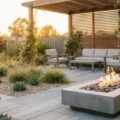
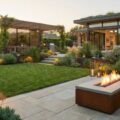
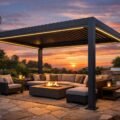
The modern home is no longer confined to its interior walls, as homeowners increasingly view their outdoor spaces as essential extensions of their living environments. A well-executed backyard design patio serves as the anchor for this transformation, providing a versatile platform for relaxation, social gatherings, and even professional work, says 1907n PM, a leading property management Bethany OK company. By integrating thoughtful hardscaping with lush landscaping, a patio creates a seamless transition between the comfort of the indoors and the refreshing ambiance of nature. As we move into 2026, the focus has shifted toward creating “outdoor rooms” that prioritize both aesthetic elegance and practical utility, ensuring that every square foot of the property is utilized effectively. This evolution is driven by a desire for sanctuary and a connection to the environment, making the backyard a primary destination for daily life.
Choosing Durable Materials for Your Backyard Design Patio
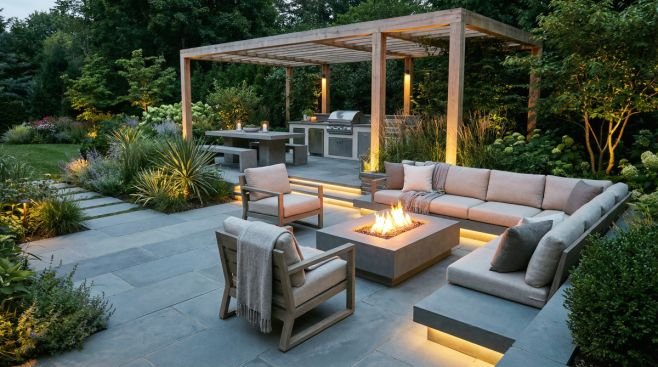
Selecting the right material for your backyard design patio depends on your local climate, budget, and desired aesthetic. While concrete and brick offer affordability and DIY potential, natural stones like flagstone or travertine provide a premium, long-lasting finish that resists extreme weather and adds significant architectural value to your home. The durability of these materials ensures that the outdoor space remains a functional asset for decades, requiring minimal intervention while maintaining its visual appeal against the elements. A well-chosen material foundation not only supports the physical structure but also sets the stylistic tone for the entire outdoor living experience, from rustic charm to modern minimalism.
When evaluating hardscaping options, homeowners often choose between natural stone and manufactured pavers. Natural stone, such as slate or bluestone, is prized for its unique textures and organic color variations, making it ideal for traditional or rustic designs. On the other hand, manufactured concrete pavers offer a more uniform appearance and are engineered for high-traffic durability, often featuring interlocking designs that simplify the installation process. According to HGTV (2026), concrete is often the most versatile and least expensive material because it can be dyed and formed into a myriad of colors and shapes, allowing for a high degree of customization without a premium price tag [1]. This versatility makes it a favorite for those looking to achieve a high-end look on a more modest budget.
For those prioritizing environmental sustainability, permeable paving systems have become a cornerstone of modern backyard design patio projects. These systems allow rainwater to filter through the joints between pavers and into the ground below, reducing runoff and preventing local drainage issues. This eco-friendly approach not only protects the surrounding landscape from erosion but also helps replenish local groundwater supplies. Whether choosing the rugged charm of flagstone or the sleek precision of modern pavers, the material foundation sets the tone for the entire outdoor living experience. The choice of material should also consider the thermal properties, as some stones can become uncomfortably hot in direct sunlight, while others remain cool underfoot even in peak summer temperatures.
| Material Type | Durability | Maintenance Level | Best For | Estimated Cost (Sq. Ft.) |
|---|---|---|---|---|
| Concrete Pavers | High | Low | High-traffic areas, modern layouts | $10 – $25 |
| Flagstone | Medium-High | Medium | Natural, rustic, or irregular designs | $15 – $35 |
| Travertine | High | Low-Medium | Pool decks, luxury finishes, hot climates | $20 – $45 |
| Brick | Medium | Medium | Traditional aesthetics, DIY projects | $8 – $20 |
| Gravel/Loose Stone | Low | High | Budget-friendly paths, fire pit zones | $5 – $12 |
Strategic Layouts for Multi-Functional Outdoor Living
Effective patio zoning involves dividing your outdoor space into distinct areas for dining, lounging, and cooking to maximize utility and flow. By using visual cues like outdoor rugs, varying floor levels, or strategic furniture placement, you can create a cohesive multi-room feel that accommodates different activities simultaneously within a single backyard footprint. This approach ensures that the backyard design patio remains a functional and organized space, whether hosting a large family gathering or enjoying a quiet evening by the fire. Zoning is particularly important for larger patios where an open, undefined space can feel cold and uninviting, whereas a zoned layout provides a sense of purpose and intimacy to each area.
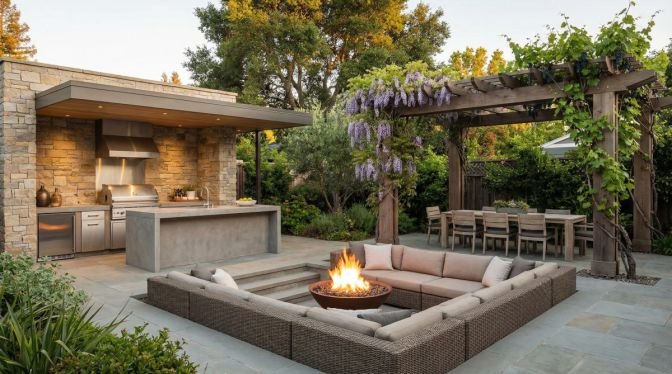
Creating the “outdoor room” feel is achieved through a combination of structural elements and thoughtful interior design principles. For instance, a pergola or gazebo can define a dining area, providing both shade and a sense of enclosure. Meanwhile, a central fire pit or an outdoor fireplace acts as a focal point for a lounging zone, encouraging social interaction and extending the usability of the patio into cooler seasons. For smaller backyards, vertical design elements such as living walls, tiered planters, and wall-mounted lighting can maximize the available space without sacrificing style or comfort. These vertical additions draw the eye upward, making a compact area feel more expansive and lush.
When planning the layout, homeowners should consider the relationship between different zones and the interior of the home. A well-placed outdoor kitchen should ideally be located near the indoor kitchen to simplify the transport of food and supplies. Similarly, a quiet lounging area should be positioned away from high-traffic zones to maintain a peaceful atmosphere. According to The Coolist (2025), today’s patios feel warm and inviting by blending indoor comfort with outdoor charm through layered lighting and greenery-filled accents [2]. This synergy between different zones creates a harmonious environment that caters to a wide range of lifestyle needs, from morning coffee to late-night stargazing.
Modern Trends and Smart Tech for Your Patio
The primary patio trends for 2026 focus on biophilic design, sustainable materials, and the seamless integration of smart technology like automated lighting and weather-resistant sound systems. These elements work together to create a sanctuary that feels connected to nature while providing the modern comforts and convenience of an indoor living environment. As technology becomes more integrated into the home, the backyard design patio has evolved into a sophisticated hub for entertainment and relaxation. This trend reflects a shift toward a more holistic approach to home design, where the boundaries between interior and exterior spaces are increasingly blurred.
Biophilic design, which emphasizes the connection between humans and nature, has become a leading influence in modern patio projects. This involves incorporating native plantings, natural stone features, and water elements that attract local wildlife and create a calming atmosphere. Beyond aesthetics, these features contribute to a healthier ecosystem and require less maintenance than traditional, manicured lawns. Homeowners are increasingly choosing sustainable materials, such as reclaimed wood and recycled composite decking, to minimize their environmental impact while achieving a high-end look. These materials are not only eco-friendly but often offer superior durability and resistance to the elements compared to traditional options.
Smart technology is the final piece of the modern patio puzzle, offering unprecedented control over the outdoor environment. Automated lighting systems can be programmed to adjust based on the time of day, enhancing both security and ambiance. High-fidelity, weather-resistant sound systems allow for seamless audio transitions from the house to the backyard, while smart irrigation systems ensure that the surrounding greenery remains lush and healthy with minimal effort. These technological advancements have transformed the backyard design patio from a simple paved area into a fully integrated living space that rivals the interior of any modern home. The integration of voice-controlled systems and mobile apps allows homeowners to customize their outdoor experience with the touch of a button.
Essential Maintenance for Long-Lasting Patio Beauty
Maintaining a backyard design patio requires regular cleaning, seasonal inspections, and specific treatments based on the material used, such as sealing natural stone or re-sanding paver joints. Proactive care prevents weed growth, minimizes staining, and protects the structural integrity of the hardscaping, ensuring your outdoor investment remains beautiful and functional for decades. This consistent attention to detail is the key to preserving the value and aesthetic appeal of any outdoor living space. Neglecting maintenance can lead to costly repairs and a diminished enjoyment of the space, making a regular schedule an essential part of homeownership.
Seasonal cleaning checklists are a practical way to stay on top of patio maintenance throughout the year. In the spring, a gentle pressure wash can remove accumulated dirt, moss, and winter debris from the surface. For stone patios, it is important to inspect the joints for any loss of sand or mortar, which can lead to weed growth or shifting pavers. During the fall, removing fallen leaves and organic matter prevents staining and moisture buildup, which can damage the surface over time. For wooden elements like pergolas or decks, an annual application of a protective sealant or stain can prevent rot and sun damage. Regular inspections of any integrated lighting or sound systems should also be part of the seasonal routine to ensure they remain in good working order.
Repairing and resealing surfaces is a critical long-term maintenance task for many backyard design patio materials. Natural stone like travertine or slate should be resealed every two to three years to maintain its color and prevent water penetration. For paver patios, reapplying polymeric sand to the joints can stabilize the surface and prevent erosion. By addressing minor issues such as cracked pavers or loose stones promptly, homeowners can avoid more extensive and costly repairs in the future. A well-maintained patio not only looks better but also provides a safer and more enjoyable environment for everyone. Understanding the specific needs of your chosen materials will help you tailor your maintenance approach for the best results.
Common Questions About Backyard Design Patio Projects
How do I design a simple backyard patio?
Designing a simple backyard patio starts with defining the primary purpose of the space, such as dining or lounging, and choosing a level area near the house for easy access. Select a straightforward layout, such as a rectangle or circle, and use budget-friendly materials like gravel or concrete pavers to create a functional foundation. Incorporate basic furniture and a few potted plants to add comfort and style without overcomplicating the design. Focus on clear lines and a cohesive color palette to achieve a professional look with minimal effort.
What is the cheapest way to build a patio in a backyard?
The cheapest way to build a patio in a backyard is typically to use loose materials like pea gravel or decomposed granite, which require minimal excavation and can be installed as a DIY project. Alternatively, using large, inexpensive concrete pavers over a simple sand base provides a more stable surface at a lower cost than natural stone or poured concrete. Reclaiming materials like bricks or stone from local classifieds can also significantly reduce the overall expense of the project. DIY labor is the most significant cost-saving measure, though it requires a commitment of time and physical effort.
How to layout a patio in a small backyard?
To layout a patio in a small backyard, focus on maximizing the available space by using vertical elements like tiered planters or wall-mounted lighting and choosing multi-functional furniture. Opt for a diagonal paver pattern to create the illusion of a larger area, and use clear boundaries to define the space without making it feel cramped. Keeping the layout simple and uncluttered ensures that the small patio remains an inviting and functional retreat. Avoid oversized furniture that can overwhelm the space, and use mirrors or reflective surfaces to enhance the sense of openness.
What are the trends for patios in 2026?
The trends for patios in 2026 emphasize biophilic design, sustainable materials, and the integration of smart technology for lighting and audio systems. Homeowners are increasingly choosing native plantings and eco-friendly hardscaping to create a natural, low-maintenance sanctuary. The use of multi-functional zones that blend indoor and outdoor living remains a key focus for modern backyard design patio projects. There is also a growing interest in year-round usability, with features like fire pits and outdoor heaters becoming standard inclusions.
How much does a 12×12 paver patio cost?
A 12×12 paver patio typically costs between $1,500 and $4,500, depending on the type of pavers selected and whether the installation is a DIY project or handled by a professional contractor. High-end natural stone pavers and complex patterns will increase the price, while basic concrete pavers and a simple layout are more budget-friendly. Labor costs can account for a significant portion of the total expense if hiring a professional for the excavation and installation. It is always advisable to obtain multiple quotes and factor in a small contingency budget for unexpected site preparation needs.
Does a patio increase home value?
Yes, a well-designed and maintained patio can significantly increase home value by expanding the usable living space and improving the property’s curb appeal. According to real estate experts, a high-quality outdoor living area can offer a return on investment of 60% to 80%, making it one of the most effective home improvement projects. A backyard design patio is a highly desirable feature for modern homebuyers who prioritize outdoor lifestyle and entertainment. In many markets, a functional outdoor space is considered as valuable as an additional indoor room.
Conclusion
The evolution of the backyard design patio into a sophisticated outdoor room reflects a broader trend toward maximizing the potential of every square foot of the home. By carefully selecting durable materials, implementing strategic zoning, and embracing modern technology, homeowners can create a versatile sanctuary that enhances their quality of life and increases property value. Whether you are looking for a quiet place to relax or a vibrant space for entertaining, a well-planned patio provides the perfect foundation for a lifetime of outdoor enjoyment. As we look toward the future, the integration of sustainability and technology will continue to shape these spaces, making them even more essential to the modern living experience.
References
[1] HGTV (2026). 50 Patio Ideas for the Backyard of Your Dreams. https://www.hgtv.com/decorating/outdoor-spaces/9-patio-design-ideas-pictures
[2] The Coolist (2025). 25 Backyard Patio Design Ideas. https://www.thecoolist.com/backyard-patio-design-ideas/