Transforming a sloped or uneven front yard into a striking landscape takes more than attractive plants; it requires thoughtful structural design. Front lawn retaining wall ideas offer a strong combination of visual appeal and practical stability, allowing homeowners to reclaim usable space while helping control soil erosion. Whether you prefer a clean modern concrete finish or the rustic character of natural fieldstone, a well-designed retaining wall can become the architectural anchor of the entire exterior, notes RPM Reliance.
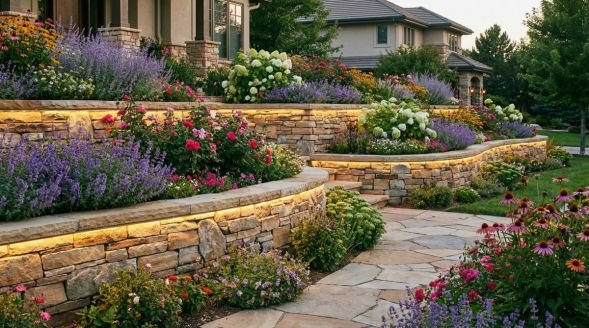
By integrating diverse materials and creative terracing, you can turn a challenging grade into a series of vibrant garden beds that enhance your property’s overall value. This guide explores the most effective materials, innovative design strategies, and critical structural requirements to ensure your front yard retaining wall remains both beautiful and durable for decades to come.
Essential Materials for Front Yard Retaining Walls
Choosing the right material for your front yard retaining wall involves balancing aesthetic appeal with structural durability. Common options include natural stone for a timeless look, interlocking concrete blocks for ease of installation, and pressure-treated timber for a cost-effective, organic feel that blends with traditional landscapes. Each material offers unique benefits in terms of cost, longevity, and the level of maintenance required to keep the structure looking its best.
Natural Stone and Fieldstone
Natural stone remains the gold standard for homeowners seeking a high-end, organic appearance that matures gracefully over time. Fieldstone and flagstone are particularly popular for front yard applications because their irregular shapes and varied color palettes create a unique, handcrafted look. According to the Interlocking Concrete Pavement Institute (2024), natural stone walls provide superior durability in diverse climates, although they often require professional masonry skills to ensure proper stacking and stability. These walls are ideal for creating a rustic or traditional aesthetic that complements established neighborhood landscapes.
Interlocking Concrete Blocks
For those prioritizing ease of installation and structural consistency, interlocking concrete blocks are an excellent choice. These manufactured units are designed with a rear lip or a pin system that automatically creates the necessary setback as the wall rises. This “built-in” engineering makes them a favorite for DIY enthusiasts and professional contractors alike. Modern concrete blocks come in a wide array of textures and colors, some of which closely mimic the appearance of natural stone while offering the uniform strength of high-density concrete.
Timber and Railroad Ties
Pressure-treated timber and reclaimed railroad ties offer a more budget-friendly alternative for low to mid-height retaining walls. The warm, natural tones of wood provide an excellent backdrop for lush greenery and colorful floral displays. While timber walls generally have a shorter lifespan than stone or concrete—typically lasting 15 to 20 years—they are much easier to install and can be a great temporary or mid-term solution for improving curb appeal. It is essential to use wood treated for ground contact to prevent premature rot and insect damage.
Innovative Design Ideas for Sloped Front Lawns
Designing for a slope requires a strategic approach that turns a challenging grade into a focal point. Multi-tiered terraces are the most effective solution, as they break up the vertical rise into manageable sections, allowing for diverse planting beds and integrated lighting that highlights the architectural lines of your home. By moving away from a single, massive wall and toward a series of smaller, stepped structures, you create a more inviting and less imposing landscape that naturally draws the eye upward toward the home’s entrance.
Multi-Tiered Terracing
One of the most visually striking ways to handle a steep front yard is through multi-tiered terracing. Instead of one tall, monolithic wall, you can build two or three smaller walls that step up the slope. This approach not only reduces the structural pressure on each individual wall but also provides multiple levels for different types of vegetation. For instance, the lower tier could feature low-growing groundcovers, while the upper tiers showcase taller shrubs or ornamental trees. This layering effect adds depth and dimension to the front lawn, significantly boosting its visual interest from the street.
Integrated Lighting and Smart Systems
Modern retaining walls are increasingly being integrated with smart technology and high-quality lighting systems. Low-voltage LED “cap lights” can be installed under the top stones of the wall to cast a soft, downward glow that illuminates walkways and highlights the texture of the wall material at night. According to the National Association of Landscape Professionals (2025), integrated lighting is one of the most requested features for front yard hardscaping because it enhances both safety and nighttime curb appeal. Smart controllers allow homeowners to schedule these lights or change their intensity via a smartphone app, providing a seamless blend of form and function.
Curved vs. Straight Wall Designs
The shape of your retaining wall can dramatically influence the overall “feel” of your front yard. Straight walls offer a clean, formal look that works well with modern or contemporary architecture. In contrast, curved walls follow the natural contours of the land and create a more organic, flowing aesthetic. Curves are also structurally advantageous, as the arching shape helps to distribute the pressure from the soil behind the wall more effectively. Whether you choose a crisp, linear design or a sweeping serpentine curve, the wall should complement the existing lines of your home and driveway.
Critical Drainage and Structural Requirements
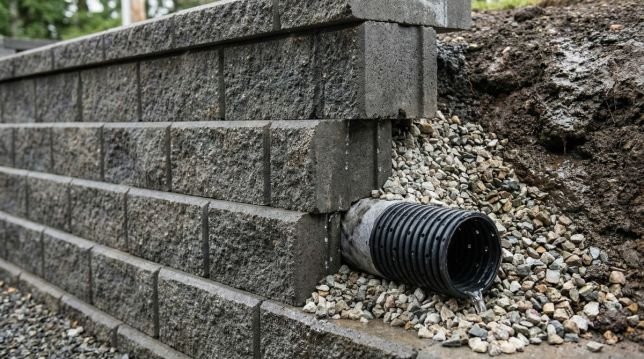
Proper drainage is the most critical factor in retaining wall longevity, as it prevents hydrostatic pressure from building up behind the structure. Incorporating a perforated pipe (French drain) and a backfill of clean gravel ensures that water moves away from the wall, protecting your home’s foundation and preventing wall failure. Without an adequate drainage system, even the most robustly built wall can eventually lean, crack, or collapse under the immense weight of water-saturated soil.
The Role of French Drains
A French drain is a simple yet highly effective system consisting of a perforated pipe buried in a trench filled with gravel. When installed behind a retaining wall, it collects groundwater and directs it to a safe discharge point, such as a storm drain or a lower area of the yard. This prevents water from pooling directly against the back of the wall. According to the American Society of Civil Engineers (2024), over 80% of retaining wall failures are caused by poor water management. Ensuring that your wall has a clear path for water to escape is the single best investment you can make in its long-term stability.
Soil Compaction and Base Preparation
The foundation of a retaining wall is just as important as the materials used to build it. A solid base starts with a trench dug into firm, undisturbed soil. This trench is then filled with a layer of compacted road base or crushed stone, which provides a level and stable surface for the first course of blocks or stones. Each subsequent layer must be carefully leveled and backfilled with gravel to ensure maximum stability. Proper soil compaction behind the wall is also necessary to prevent settling, which can cause the wall to shift over time.
Cost Analysis and Permitting for Front Yard Walls
The cost of a front lawn retaining wall typically ranges from $20 to $60 per square foot, depending on the chosen material and labor requirements. Homeowners must also account for local permitting fees, as structures over three to four feet often require a professional engineer’s seal and municipal approval. While a DIY approach can save on labor costs, professional installation is highly recommended for walls that are structural in nature or exceed standard height limits to ensure safety and compliance with local building codes.
| Material Type | Average Cost per Sq. Ft. | Estimated Lifespan | Maintenance Level |
|---|---|---|---|
| Poured Concrete | $30 – $60 | 50+ Years | Low |
| Natural Stone | $25 – $55 | 100+ Years | Very Low |
| Concrete Blocks | $20 – $45 | 30 – 50 Years | Low |
| Timber/Wood | $15 – $30 | 15 – 20 Years | Moderate |
Frequently Asked Questions
What is the cheapest way to build a front yard retaining wall?
The most cost-effective way to build a front yard retaining wall is typically by using pressure-treated timber or interlocking concrete blocks. Timber is generally the least expensive material to purchase, while concrete blocks are designed for easy DIY installation, which can significantly reduce labor costs. However, it is important to consider the long-term value, as stone or concrete walls last much longer than wood.
How can I make my retaining wall look better?
You can enhance the appearance of a retaining wall by incorporating decorative capstones, adding integrated LED lighting, or planting cascading greenery like creeping phlox or ivy that spills over the edges. Mixing different textures or using a tiered design also adds visual interest and prevents the wall from looking like a single, massive block of material.
What is the easiest retaining wall to build yourself?
Interlocking concrete blocks are widely considered the easiest material for a DIY retaining wall project. They are manufactured to fit together securely without the need for mortar, and many systems include a built-in lip that ensures the correct setback for each layer. For walls under three feet in height, these blocks provide a straightforward and structurally sound solution for most homeowners.
Does a retaining wall increase home value?
Yes, a well-constructed retaining wall can significantly increase home value by improving curb appeal and creating more usable flat space in a sloped yard. According to real estate industry standards, high-quality hardscaping projects often yield a high return on investment, as they make the property more functional and visually appealing to potential buyers.
Do I need a permit for a front yard retaining wall?
Permit requirements vary by location, but most municipalities require a building permit for any retaining wall that exceeds three or four feet in height. In some areas, front yard structures are also subject to specific zoning regulations regarding their distance from the sidewalk or property line. It is always best to check with your local building department before starting construction.
Conclusion
Investing in a front lawn retaining wall is one of the most effective ways to transform a challenging landscape into a functional and beautiful asset. By carefully selecting your materials—whether the timeless elegance of natural stone or the practical efficiency of interlocking blocks—and ensuring proper drainage and structural support, you can create a lasting improvement that boosts your home’s curb appeal. Remember that the most successful projects combine engineering precision with creative design, turning a simple slope into a multi-dimensional garden that welcomes every visitor to your home.
References
- Interlocking Concrete Pavement Institute (2024). Best Practices for Segmental Retaining Walls.
- National Association of Landscape Professionals (2025). Trends in Residential Hardscaping and Lighting.
- American Society of Civil Engineers (2024). Drainage and Stability in Residential Structures.