Feta is the fastest cotija cheese alternative you’ll find in a standard grocery store — it crumbles the same way, delivers a punchy saltiness, and holds up beautifully on tacos and street corn. But the right swap depends on what you’re making. Fresh cotija behaves differently than aged cotija, and the substitute that works brilliantly on elote might overwhelm a salad. Here’s a breakdown of every viable option, matched to the dishes where each one performs best.
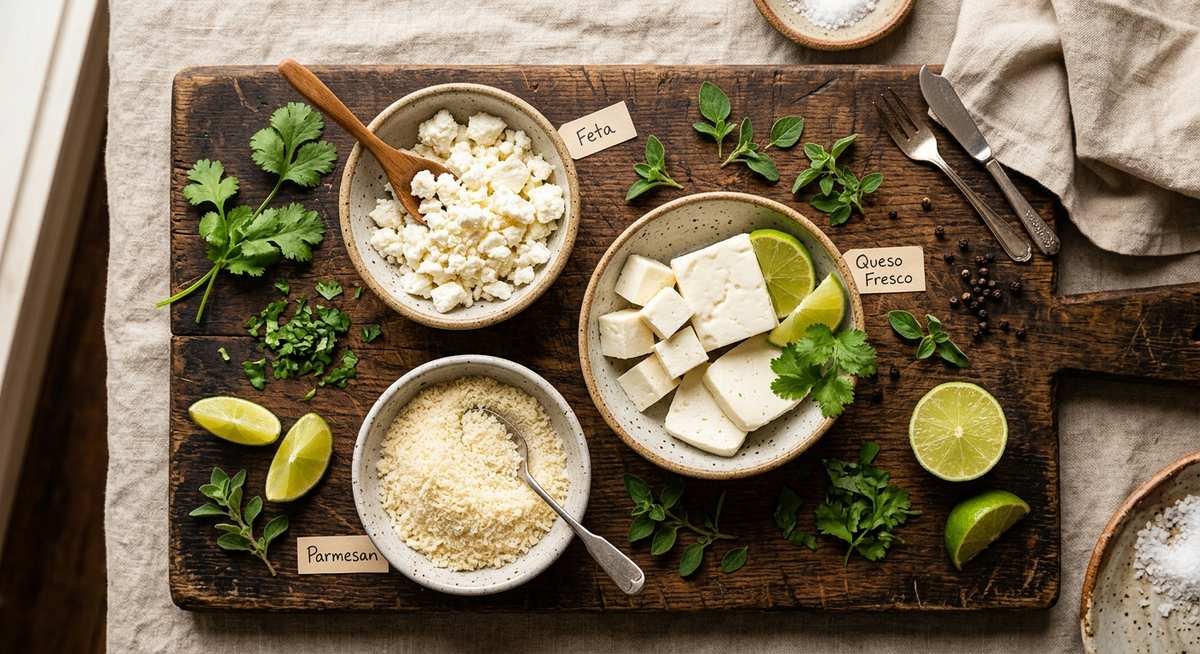
cotija cheese alternative comparison showing crumbled feta queso fresco and parmesan on wooden board with herbs and lime
What Makes Cotija Different From Other Cheeses
Cotija is a firm, crumbly Mexican cheese with two distinct forms — fresh and aged — and each behaves differently in a recipe. Fresh cotija (also called “fresco”) stays moist and crumbles easily, with a mild, salty flavor that softens when heated. Aged cotija is drier, harder, and noticeably more pungent, functioning more like a grating cheese than a crumbling one.
Both versions share a core identity: high salt content, a slightly tangy edge, and a texture that resists full melting. According to Cheese.com, cotija is named after the city of Cotija in Michoacán, Mexico, where it originated as a dry-aged, shelf-stable cheese used to flavor everything from black beans to roasted corn. That origin story matters when you’re substituting — you’re not just replacing a texture, you’re replacing a seasoning agent.
The cheese’s defining uses are Mexican street corn (elote), tacos, black beans, tostadas, enchiladas, and fresh salads. Any substitute needs to handle at least some of those roles without turning into a melted puddle or overwhelming the dish with competing flavors.
Best Overall Cotija Cheese Alternatives
Feta and queso fresco are the go-to substitutes for most recipes. Parmesan or Pecorino Romano take over when you need grated, aged cotija. Ricotta salata and anejo round out the list for specific use cases. Here’s how each one stacks up.
| Substitute | Best For | Flavor Match | Texture Match | Substitution Ratio |
|---|---|---|---|---|
| Feta | Elote, tacos, salads | High (salty, tangy) | High (crumbly) | 1:1 |
| Queso Fresco | Tacos, beans, enchiladas | Very high (mild, milky) | High (soft crumble) | 1:1 |
| Parmesan | Grating, soups, pasta | Medium (nutty, sharp) | Medium (hard, grated) | 3/4:1 |
| Pecorino Romano | Grating, beans, soups | High (salty, sharp) | High for aged cotija | 3/4:1 |
| Ricotta Salata | Salads, light toppings | Medium (mild, milky) | Very high (firm crumble) | 1:1 |
| Anejo | All Mexican dishes | Very high (sharp, salty) | High (crumbles and grates) | 1:1 |
Feta Cheese
Feta delivers the combination that most substitutes can’t: saltiness and crumbly texture at the same time. It’s brined like cotija, which gives it a similar sharp, tangy flavor without the grassiness you get from aged hard cheeses. Block feta crumbles cleanly over elote or tacos, making it the easiest 1:1 swap in most kitchens.
A Greek cheese doing Mexican food’s job this well says something about how universal the salty-crumbly-tangy flavor category actually is. Feta runs saltier than fresh cotija, so start with a slightly lighter hand and taste before you add more.
Queso Fresco
Queso fresco is the most culturally accurate substitute. Both are Mexican fresh cheeses, both crumble over warm dishes without melting into a puddle, and both play a seasoning role rather than a starring one. The key difference: queso fresco is milder and less salty than cotija, which makes it better suited to dishes where you don’t want a sharp punch, braised beans, chilaquiles, or breakfast tacos.
If your grocery store carries queso fresco but not cotija, consider yourself lucky. The flavor gap is smaller than any other substitute on this list.
Parmesan
Parmesan is the right call when a recipe specifically asks for aged cotija in grated form. The texture is nearly identical, hard, dry, and fine enough to dust over dishes. The flavor diverges more than feta or queso fresco (Parmesan is nuttier, less tangy), but the intensity level is similar. According to Healthline, Parmesan is also naturally lactose-free due to the aging process, making it an option for people with lactose sensitivity who can still tolerate hard cheeses.
Use about 3/4 of the amount the recipe calls for, Parmesan grates finer and covers more surface area, so you need slightly less to achieve the same visual and flavor impact.
Pecorino Romano
Pecorino Romano is the sharper, saltier cousin of Parmesan. It’s made from sheep’s milk rather than cow’s milk, which gives it a more aggressive flavor that actually tracks closer to aged cotija’s bite. The Pecorino Romano Consortium protects the PDO designation, meaning authentic Pecorino Romano comes from specific regions of Italy and Sardinia with a controlled production process.
For any dish where you’d normally grate aged cotija, roasted corn, soups, or grain bowls, Pecorino Romano matches the flavor intensity better than Parmesan does. Use it at a 3/4:1 ratio for the same reason: it’s punchy and concentrated.
Ricotta Salata
Ricotta salata is the low-sodium option on this list. It’s pressed, salted, and aged ricotta, firm enough to crumble but milder than feta or cotija. The texture is closer to fresh cotija than almost anything else, and the flavor is clean without the briny edge that feta brings.
It works best in salads, grain bowls, and light summer dishes where cotija would normally function as a quiet, textural garnish. Don’t reach for it on elote, it lacks the saltiness to season the corn the way cotija does.
Anejo Cheese
Anejo is Mexican cotija’s direct relative. It’s a firm, aged Mexican cheese that crumbles over fresh dishes and grates well for toppings. The flavor is sharper and more complex than either queso fresco or fresh cotija, which makes it excellent for dishes with strong competing flavors, mole, chile-heavy stews, or anything involving charred chiles.
If you can find anejo at a Mexican market or specialty grocery store, it’s arguably the most authentic substitute available. Outside of Mexico, it’s harder to source than feta or parmesan, but worth the search for the flavor payoff.
Vegan Cotija Cheese Alternatives
The best plant-based options replicate cotija’s texture and saltiness without trying to mimic its dairy character. Cashew-based crumbles, nutritional yeast blends, and commercial vegan feta all get the job done in different ways.
Cashew-based cotija crumbles come closest to the texture of fresh cotija. Soak raw cashews for 4 hours, drain, then blend with nutritional yeast, apple cider vinegar, garlic powder, and salt until coarse and crumbly. Spread on a baking sheet and dehydrate at 200°F for 45 minutes. The result is a dry, salty, slightly tangy crumble that holds its shape on warm dishes.
Violife Just Like Feta is the most convenient store-bought option. It crumbles well, carries a tangy flavor profile, and works as a 1:1 swap on dishes where you need feta-style texture. Violife Just Like Parmesan does the same job for grating applications. Both are widely available at Whole Foods, Target, and most natural grocery stores.
Nutritional yeast with fine salt is the pantry-staple fallback when no other substitute is available. It doesn’t replicate texture, but two tablespoons of nutritional yeast mixed with half a teaspoon of fine sea salt can add the umami-salty character of cotija as a finishing touch on beans, corn, or salads.

How to Choose the Right Cotija Cheese Alternative
Match the substitute to what the cotija is doing in the dish. Fresh cotija adds a soft, salty crumble to the surface of food. Aged cotija functions as a dry seasoning grated over dishes. The wrong substitute in the wrong role doesn’t ruin a dish, but the right one makes it noticeably better.
- Mexican street corn (elote): Use feta. The saltiness and crumble behavior are nearly identical, and feta’s brined sharpness complements charred corn well.
- Tacos and tostadas: Queso fresco if you want mild, feta if you want more salt. Both hold up without melting.
- Black beans and braised dishes: Queso fresco or ricotta salata, something mild enough to complement rather than compete.
- Soups and grain bowls: Grated Parmesan or Pecorino Romano, used sparingly for a salty, concentrated finish.
- Fresh salads: Ricotta salata or crumbled feta for texture contrast without overwhelming other flavors.
- Vegan recipes: Cashew crumbles for texture-forward dishes; Violife for convenience; nutritional yeast for pure flavor.
A practical note from home cooks who navigate this regularly: the substitute that consistently works across the widest range of Mexican dishes is feta. The salty, tangy, crumbly profile is close enough that most people eating the final dish won’t register the swap, which is the real benchmark for any substitute.
Frequently Asked Questions
Can I use feta cheese instead of cotija?
Yes, feta is the best widely-available substitute for cotija cheese. It matches cotija’s salty, tangy flavor and crumbles in the same way on warm or cold dishes. Use it at a 1:1 ratio. Block feta crumbles more cleanly than pre-crumbled feta, making it closer to the texture of fresh cotija.
What is the best cotija cheese substitute for Mexican street corn?
Feta is the best cotija cheese alternative for Mexican street corn (elote). Its saltiness, tang, and crumble behavior closely match what cotija does on charred corn. Coat the corn in mayonnaise or crema, then press feta crumbles into the coating the same way you’d apply cotija.
Is cotija cheese similar to Parmesan?
Aged cotija and Parmesan are similar in texture and function, both are hard, dry cheeses used primarily for grating. However, cotija is saltier and tangier, while Parmesan has a nuttier, more complex flavor. For recipes that call for grated aged cotija, Parmesan works well at about 3/4 of the specified amount.
Can I substitute queso fresco for cotija?
Yes, queso fresco is an excellent cotija substitute, especially for fresh cotija. Both are mild, crumbly Mexican cheeses that function as garnishes rather than ingredients. Queso fresco is less salty and tangier than cotija, so you may want to add a small pinch of salt when using it as a direct swap.
What is a good vegan alternative to cotija cheese?
The best vegan alternatives to cotija cheese are cashew-based crumbles (blended with nutritional yeast and salt) and Violife Just Like Feta for a convenient store-bought option. Both replicate the texture and saltiness of fresh cotija. For pure flavor without texture, a mixture of nutritional yeast and fine sea salt works as a finishing sprinkle on beans, corn, or salads.
Finding the Right Swap
Cotija may be harder to find depending on where you live, but the substitutes available in most grocery stores cover every use case. Feta handles the majority of situations cleanly. Queso fresco is the more authentic flavor match. Parmesan and Pecorino take over when the recipe needs something dry and grated. And for anyone cooking plant-based, cashew crumbles plus a commercial vegan feta cover the remaining ground. Pick the option that fits the dish, and the result will be close enough to the real thing that the distinction won’t matter.