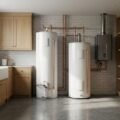
Most homeowners approach plumbing upgrades the wrong way, they look at the price tag on the quote and pick the cheapest option, observes Campus Realtors specialists. But the cheapest install is rarely the cheapest system to own. If you’re spending money on your plumbing anyway, the better question is: which upgrades will pay you back the most over the next ten years?
Hot Water Systems Deserve More Attention Than They Get
Hot water heating accounts for around 21% of total household energy use. That makes it one of the biggest cost levers in a home, and one most people completely ignore until something breaks.
The most common setup is still a traditional resistive electric storage tank. It works, but it’s expensive to run because it converts electricity directly into heat at roughly a 1:1 ratio. Every unit of energy in becomes one unit of heat out.
Heat pump technology works differently. Instead of generating heat, it moves heat from the surrounding air into the water. A well-specified unit can move three to four units of heat for every unit of electricity it consumes, that’s what the Coefficient of Performance (COP) measures. A COP of 3.5 means you’re getting 350% efficiency relative to a conventional element heater. Over the life of a system, that gap adds up to serious money.
The sticker price on a heat pump is higher than a basic tank. The total cost of ownership over a decade is almost always lower.
Why the Climate Where You Live Matters
Heat pumps extract heat from ambient air, but what they’re looking for is a differential in temperature. The warmer the air they’re pulling heat from, the less work the compressor has to do to make up the difference.
This is why heat pumps perth installations are particularly well-suited to the local climate, warm ambient temperatures through most of the year mean the compressor operates in its optimal range consistently, not just seasonally.
Inverter technology has made modern units even better at this. Variable-speed compressors modulate their output based on demand rather than cycling on and off, which reduces wear and cuts energy draw during low-demand periods.
If your region offers off-peak electricity tariffs, pairing a heat pump with a timer to run overnight can reduce your effective energy cost per kilowatt-hour substantially. That’s a free efficiency gain that requires no hardware changes.
The Fixtures and Fittings People Underestimate
Not every cost-effective upgrade is a big ticket item. For instance, low-flow showerheads and aerators on taps reduce the quantity of hot water going to waste straight away. Less hot water used means less heated, which lowers both your energy bill and the strain on your heating system.
Thermostatic mixing valves are a really good idea if you have to store water at higher temperatures in order to manage the risk of Legionella bacteria. They allow you to keep the tank hot for safety while delivering water to taps and showers at a controlled, scald-safe temperature. It’s a small fitting that sits at the outlet, not particularly expensive, and it resolves a real health and safety issue.
Sacrificial anodes are the most forgotten maintenance item in any tank-based hot water system. These magnesium or aluminum rods corrode slowly in place of the tank itself. Replace them every few years and your tank will last many more years. A replacement anode costs next to nothing compared to a replacement tank.
Strategic Additions That Reduce Waste
In a larger building or a house with a sprawling layout, a recirculating pump is a great water-saving upgrade. Insulated pipes are best, of course, but any system loses some heat through the walls of the pipe if it sits unused for a while. If the hot water must travel a long way to reach the tap, that means you’re running the water until it heats up over and over (often while wasting cold water in the process). This can amount to several gallons wasted every week and hundreds of gallons wasted over a year. A recirculating pump constantly circulates water through the hot water loop so that you don’t have to run the water as long to get it hot.
If one or two rooms are a long way from the water heater, it’s more efficient to install a small point-of-use water heater right under the kitchen sink or behind the remote bathroom. These are a smart and thrifty way to solve that problem and can be installed by a plumber for a few hundred dollars.
Smart leak detection systems are increasingly affordable and easy to retrofit. A leak that goes unnoticed for weeks inside a wall cavity or under a floor can cause structural damage that costs far more to fix than any plumbing upgrade. A detection device that shuts off the water supply on sensing a leak is cheap insurance against a very expensive problem.
The Upgrade Logic That Actually Works
Before spending money on plumbing, consider the long-term savings or protection it will provide. High-efficiency hot water systems adapted to your specific needs can help you save money on energy in the long run.
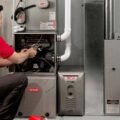
While updating plumbing fixtures reduces monthly utilities, maintaining seasonal heating systems is equally important for managing overall household budgets. Overlooking regular upkeep on your climate hardware often results in higher consumption and sudden performance failures. Coordinating with trusted services for furnace repair in Arlington helps ensure your heating equipment runs safely and efficiently when temperature demands fluctuate.
Low-flow fixtures and smart leak detection can also help you reduce water waste and avoid costly repairs.
The most wasteful investment is replacing a failing system with the same old inefficient technology. You will end up spending money on labor and a new system, only to keep high water and energy bills.