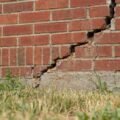
For homeowners residing in seismically active regions, the threat of a major earthquake is a persistent reality. While building codes for new construction have evolved significantly over the past few decades to incorporate advanced seismic resistance, millions of older homes remain dangerously vulnerable to the intense lateral and vertical forces generated by tectonic shifts. The most effective strategy to mitigate this risk, prevent catastrophic structural failure, and protect your family is through a process known as earthquake retrofitting, emphasizes the N Property Group Conshocken team. This specialized structural upgrade involves strengthening the critical connections between the house and its foundation, transforming a fragile structure into a resilient fortress capable of withstanding severe ground motion.
Earthquake retrofitting is not merely a preventative measure against total collapse; it is a vital investment in the long-term viability and value of a residential property. When an un-retrofitted home experiences significant seismic activity, it is highly susceptible to sliding off its foundation or suffering from “cripple wall” failure. The resulting damage is often financially devastating, frequently exceeding the cost of the home’s equity and rendering the property uninhabitable for months or even years. This comprehensive guide will explore the mechanics of seismic vulnerability in older homes, detail the core components of a professional retrofit, and explain why this structural upgrade is an indispensable necessity for homes built prior to modern seismic codes.
Understanding Seismic Vulnerability in Older Homes
Answer Capsule: Homes built before the 1980s are particularly vulnerable to earthquakes because they often lack the crucial mechanical connections—specifically foundation anchor bolts and braced cripple walls—required to resist intense lateral ground movement.
To understand the necessity of earthquake retrofitting, one must first understand how earthquakes damage residential structures. During a seismic event, the ground violently shakes side-to-side (lateral forces) and up-and-down (vertical forces). A home must be securely anchored to its concrete foundation to move with the ground as a single, cohesive unit. In many homes constructed prior to the late 1970s and early 1980s, the wooden framing of the house simply rests on top of the concrete foundation, held in place by nothing more than gravity and the sheer weight of the structure. When the ground accelerates laterally during an earthquake, the heavy concrete foundation moves with the earth, but inertia causes the unanchored wooden house above it to remain stationary. The result is that the house effectively slides off its foundation, severing plumbing, electrical, and gas lines, and causing immense structural devastation.
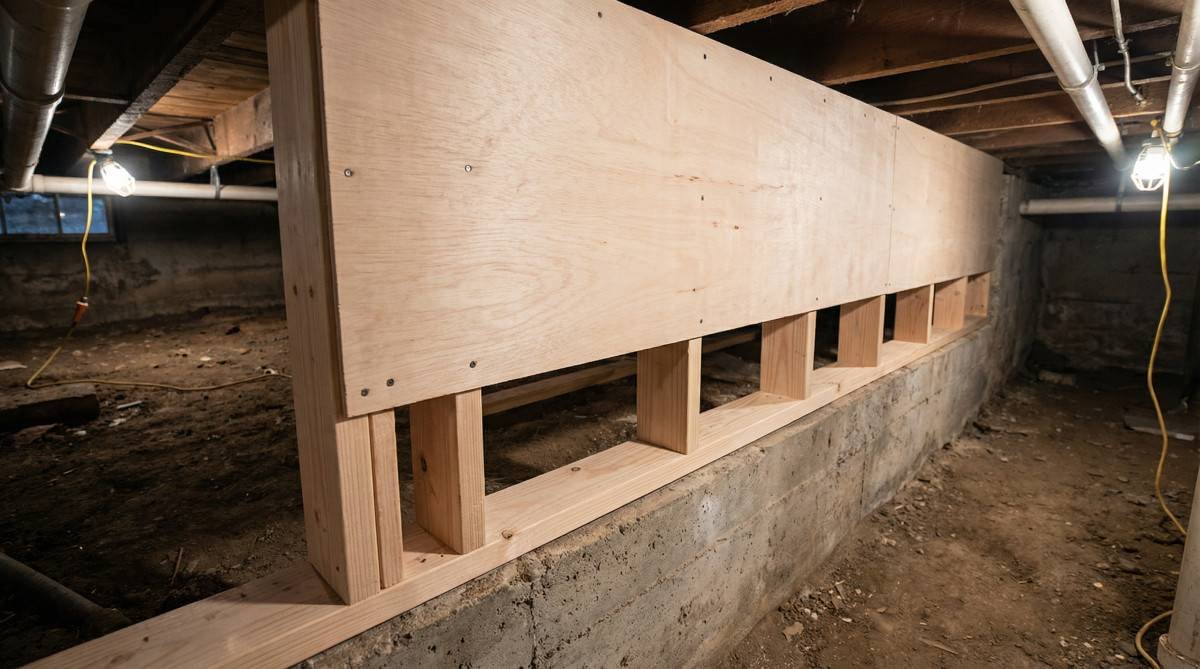
Another major point of vulnerability in older homes is the “cripple wall.” This is the short, wood-framed wall that often encloses the crawl space, extending from the top of the concrete foundation up to the first floor of the house. In older construction, these walls are typically covered only with exterior siding or stucco, which provides virtually no resistance to lateral shear forces. During an earthquake, these unbraced cripple walls can easily buckle and collapse sideways like a set of dominoes, causing the entire house to drop several feet and crash onto the foundation below. This specific type of failure is one of the most common and destructive consequences of seismic activity in vintage residential architecture.
The Core Components of a Professional Retrofit
Answer Capsule: A standard earthquake retrofit involves three primary structural upgrades: bolting the sill plate to the foundation, bracing the cripple walls with structural-grade plywood, and installing metal framing clips to secure the floor joists.
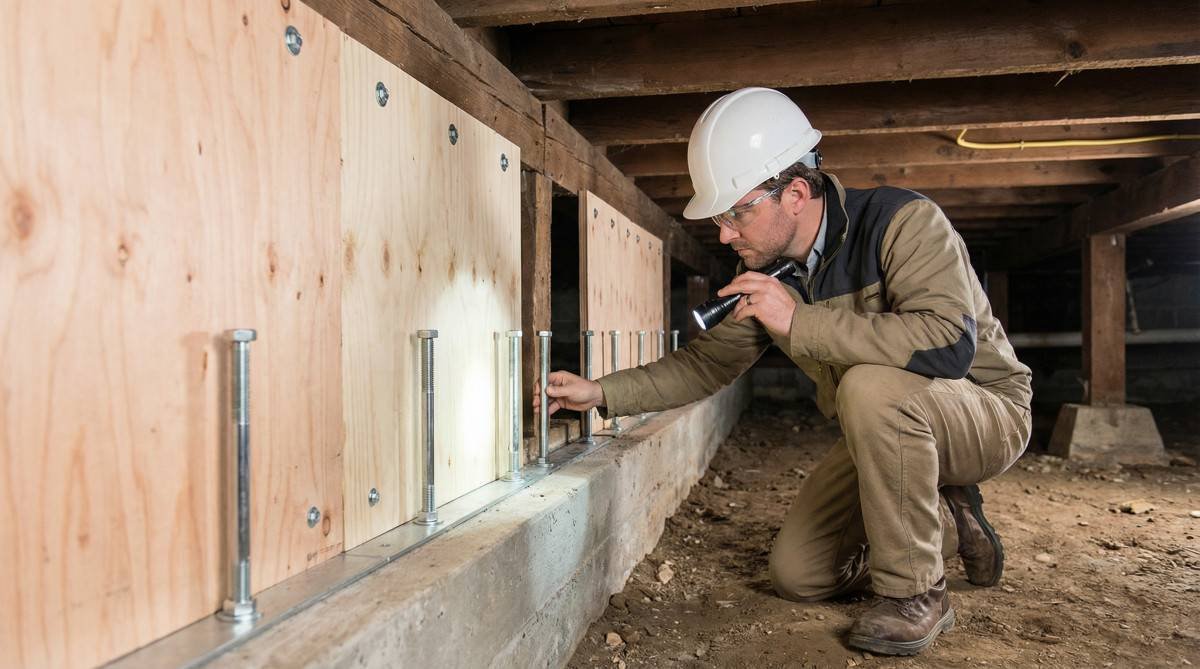
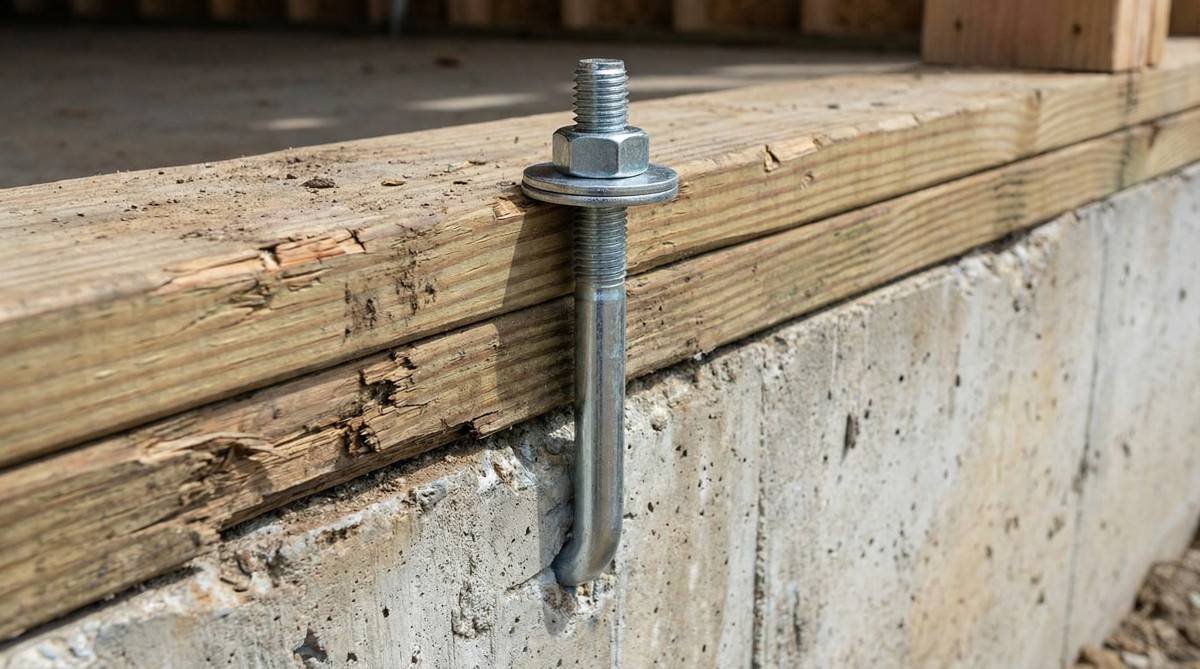
The objective of an earthquake retrofit is to create a continuous load path—a secure, unbroken chain of connections that transfers the violent seismic forces from the roof of the house, down through the walls, and safely into the concrete foundation. The first and most critical step in this process is foundation bolting. This involves drilling deep holes through the heavy wooden timber that sits directly on the foundation (known as the mudsill or sill plate) and into the concrete below. Heavy-duty steel anchor bolts or specialized epoxy anchors are then installed at regular intervals. This vital connection physically ties the wooden frame of the house to the concrete, preventing the structure from sliding laterally during ground motion.
The second essential component is bracing the vulnerable cripple walls. To prevent these short walls from buckling and collapsing under shear stress, contractors install structural-grade plywood or oriented strand board (OSB) directly onto the interior face of the cripple wall framing in the crawl space. This process, known as creating a “shear wall,” dramatically increases the lateral stiffness and strength of the sub-structure, ensuring it remains upright and rigid while supporting the immense weight of the house above. Finally, the retrofit is completed by installing specialized galvanized steel framing clips (often called shear transfer ties). These heavy-duty metal brackets are used to securely connect the floor joists of the first story to the newly reinforced sill plate and cripple walls, finalizing the continuous load path and ensuring the entire building acts as a unified, earthquake-resistant structure.
Financial Benefits and Insurance Implications
Answer Capsule: Beyond safety, earthquake retrofitting offers significant financial benefits, including a substantial reduction in earthquake insurance premiums, increased property resale value, and the prevention of ruinous post-earthquake repair costs.
While the primary motivation for earthquake retrofitting is undoubtedly the preservation of life and structural safety, the financial implications are equally compelling. The upfront cost of a professional retrofit—typically ranging from a few thousand to several thousand dollars depending on the size and complexity of the home—pales in comparison to the catastrophic financial loss associated with a foundation failure. Repairing a home that has slipped off its foundation requires lifting the entire structure with hydraulic jacks, rebuilding the concrete foundation, replacing the crushed cripple walls, and repairing severed utility lines. These repairs routinely cost hundreds of thousands of dollars and are rarely covered by standard homeowners insurance policies.
Furthermore, completing a certified earthquake retrofit can lead to immediate financial returns. In many seismically active states, such as California, the government and various insurance agencies offer substantial financial incentives for homeowners who proactively upgrade their properties. For example, homeowners who complete a qualifying retrofit are often eligible for significant discounts—sometimes up to 25%—on their annual earthquake insurance premiums. Additionally, a documented retrofit is a highly attractive selling point. When it comes time to sell the property, prospective buyers are increasingly educated about seismic risks and are willing to pay a premium for a home that has already been structurally fortified, thereby increasing the overall market value and liquidity of the asset.
Frequently Asked Questions
How do I know if my home needs an earthquake retrofit?
If your home was built before 1980 and features a raised foundation with a crawl space, it is highly likely that it requires retrofitting. You can perform a preliminary visual inspection in your crawl space to check for the presence of large anchor bolts connecting the wood framing to the concrete, and plywood bracing on the short cripple walls. If these are absent, a professional assessment is necessary.
Can I perform an earthquake retrofit myself?
While some highly skilled DIYers attempt minor retrofitting, it is strongly discouraged for the average homeowner. Proper retrofitting requires an understanding of structural engineering principles, precise installation of specialized hardware, and adherence to strict local building codes. An improperly executed DIY retrofit can provide a false sense of security and fail catastrophically during an actual earthquake.
How long does a typical earthquake retrofit take to complete?
For a standard single-family home with an accessible crawl space, a professional retrofitting crew can typically complete the installation of anchor bolts, framing clips, and plywood shear walls in two to five days. The process is generally minimally invasive, as all the work is conducted underneath the living space.
Conclusion
Answer Capsule: Earthquake retrofitting is an essential, highly effective structural upgrade that transforms vulnerable older houses into resilient homes, safeguarding both human life and long-term financial equity against the devastating forces of seismic activity.
Living in earthquake country requires acknowledging the inherent risks and taking proactive, decisive steps to mitigate them. For owners of older homes, relying on luck or the sheer weight of the structure is a dangerous gamble. Earthquake retrofitting addresses the fundamental structural weaknesses that cause catastrophic failure during seismic events. By systematically bolting the house to its foundation, reinforcing vulnerable cripple walls with shear-resistant plywood, and securing the floor framing with specialized steel connectors, homeowners can establish the continuous load path necessary to withstand violent ground motion.
The decision to retrofit is not merely a construction project; it is a profound investment in safety, stability, and peace of mind. The relatively modest upfront cost of a professional retrofit acts as a robust insurance policy against the ruinous financial devastation of foundation failure. Furthermore, the tangible benefits of reduced earthquake insurance premiums and enhanced property resale value make retrofitting an economically sound decision. Ultimately, securing your home’s structural integrity ensures that when the ground inevitably shakes, your home will stand firm, protecting your most valuable asset and, most importantly, the people within it.