Vivien Alcock’s husband was Leon Garfield, the acclaimed British children’s author known for Jack Holborn and Smith. They married in 1948 and stayed together until his death in 1996.
Alcock spent decades building a quiet, distinguished career in children’s literature — gothic atmospheres, morally complex young protagonists, stories that unsettled as much as they enchanted. She shared her life and her literary world with Garfield, one of the most celebrated children’s authors Britain ever produced. He wasn’t a background figure in her story. Garfield was a creative force, and their marriage shaped everything from the timing of her writing career to the thematic DNA running through her novels.
They raised a daughter, Jane, and built a household in Highgate, London where storytelling saturated daily life. Vivien didn’t publish her first novel until her mid-fifties — a fact that makes far more sense once you know the life she was living before she picked up the pen.
Who Was Vivien Alcock? A Life Before the Page
Vivien Alcock (1924–2003) was a British children’s author born on September 23, 1924, in Worthing, England. She published her debut novel, The Haunting of Cassie Palmer, in 1980 at the age of 55, making her one of the more remarkable late-blooming voices in twentieth-century children’s literature. Her fiction — gothic atmosphere, psychological unease, morally complex young protagonists — grew less from a conventional writing apprenticeship than from a life lived through disruption, visual art, and the influence of Vivien Alcock’s husband, Leon Garfield.
A Wartime Childhood
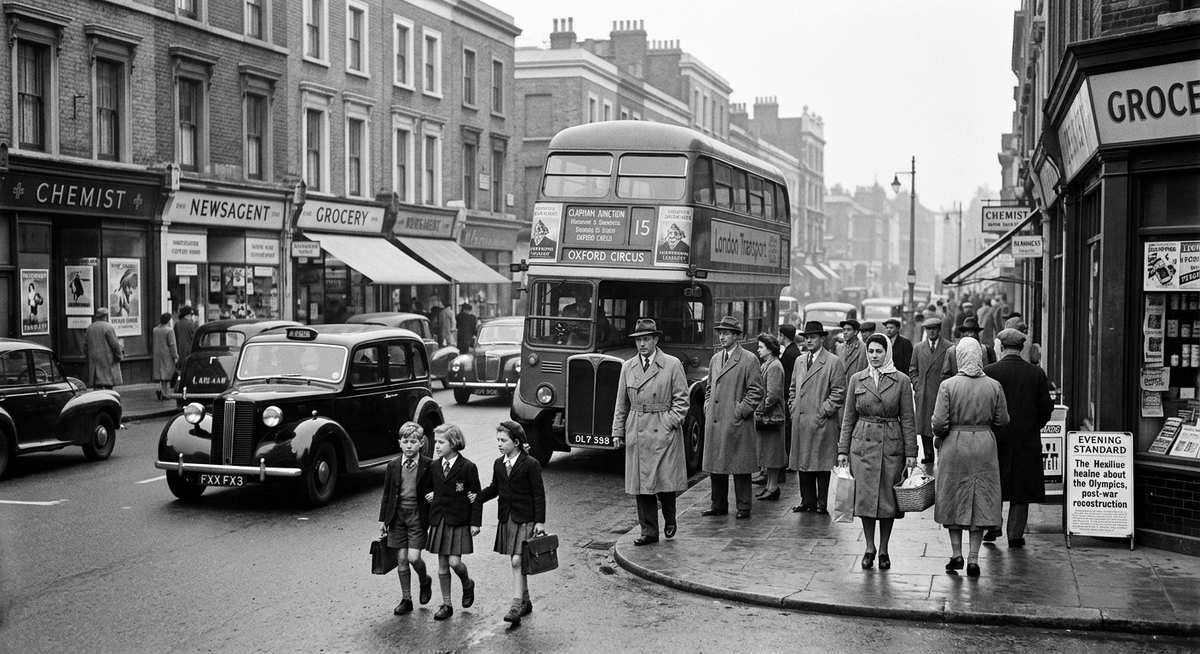
Vivien grew up during World War II, and like hundreds of thousands of British children, she experienced evacuation — the government programme that relocated children from urban centres to rural areas to protect them from German bombing campaigns. Being uprooted from home and family, placed with strangers, and left to navigate an unfamiliar world at a young age is the kind of experience that lodges permanently in the imagination.
That displacement almost certainly seeded the themes Alcock would return to repeatedly in her fiction: children alone in threatening environments, the unreliability of safe spaces, and the thin membrane between the ordinary and the sinister. Her novels don’t feel like abstract gothic exercises — they feel lived-in, emotionally precise about fear.
From Art School to Adult Life
After the war, Vivien trained as a commercial artist, a career path that occupied her through her twenties and thirties. Visual storytelling demands economy and impact — you communicate mood, character, and tension without words, through composition and image alone.
That training left a clear mark on her prose. Alcock’s writing is notably visual: scenes are rendered with a painter’s eye for atmosphere, and her pacing reflects someone accustomed to making every element carry weight. She worked professionally in illustration and commercial art before fiction claimed her attention entirely — a background that competitors rarely explore in any depth, yet one that explains a great deal about why her stories feel so precisely drawn.
| Life Stage | Period | Key Experience | Influence on Her Writing |
|---|---|---|---|
| Childhood | 1930s–1940s | Wartime evacuation | Gothic unease, displacement, children navigating danger alone |
| Early Adulthood | 1940s–1950s | Art school training | Visual storytelling, atmospheric precision, economical prose |
| Adult Life | 1950s–1970s | Commercial art career | Discipline, image-driven narrative instincts |
Leon Garfield — The Man Vivien Alcock Married
Leon Garfield (1921–1996) was a British children’s author celebrated for darkly comic, Dickensian historical novels including Jack Holborn, Smith, and his completion of Dickens’s The Mystery of Edwin Drood. He married Vivien Alcock in 1948 and remained her husband until his death.
Garfield’s literary sensibility earned him a place alongside Roald Dahl and Alan Garner in the canon of serious fiction for young readers. He was also, for nearly five decades, Vivien’s creative companion and arguably the single greatest influence on her decision to write at all.
Leon Garfield’s Life and Career
Born in Brighton on July 14, 1921, Leon Garfield grew up in a middle-class Jewish family before the upheaval of the Second World War reshaped his trajectory entirely. He served in the British Army as a biochemical technician — a role that placed him in Belgium and later in medical units, far from the front lines but close enough to the machinery of wartime suffering to leave a permanent mark on his imagination.
After the war, Garfield worked for years as a biochemical technician at Whittington Hospital in London, writing fiction in the evenings and on weekends with quiet, stubborn ambition. His debut novel, Jack Holborn, was published in 1964 — Garfield was 42. It announced a writer of remarkable originality: atmospheric, morally complex, and steeped in the fog and shadow of eighteenth-century England.
Smith, published in 1967, cemented his reputation. The story of a twelve-year-old London pickpocket caught up in murder and injustice, it drew comparisons to Dickens that were, for once, entirely deserved. Garfield received the Carnegie Medal commendation multiple times throughout his career and won the Guardian Children’s Fiction Prize. His completion of Charles Dickens’s unfinished The Mystery of Edwin Drood in 1980 demonstrated a literary confidence that few authors of any genre could match.

| Year | Leon Garfield Milestone |
|---|---|
| 1921 | Born in Brighton, England |
| 1940s | Served in WWII as a biochemical technician |
| 1964 | Debut novel Jack Holborn published, age 42 |
| 1967 | Smith published — Guardian Children’s Fiction Prize winner |
| 1980 | Completed Dickens’s The Mystery of Edwin Drood |
| 1996 | Died in London, aged 74 |
How Vivien and Leon Met
Vivien and Leon met in the years following the Second World War, two young people shaped by the same era of disruption and uncertainty. Both were working in London — Vivien as a commercial artist, Leon still at Whittington Hospital — when their paths crossed through social circles in the city. They married in 1948.
What drew them together, by most biographical accounts, was a shared inner life: a taste for the strange and the gothic, a dry wit, and a deep seriousness about storytelling even before either had published a word. Leon was not yet a writer when they married — he was still working at Whittington Hospital, quietly drafting fiction in the margins of his day. Vivien was painting, not writing. Neither had published anything. They chose each other before fame, before books, before any of it.
Marriage, Family, and a Literary Household
Vivien Alcock and Leon Garfield married in 1948 and lived together in Highgate, north London, where they raised their daughter Jane Garfield. Their household was, by any measure, unusually saturated with storytelling — two working authors under one roof, navigating deadlines and domestic rhythms simultaneously. The marriage lasted nearly five decades and shaped both writers in ways that go well beyond simple companionship.
Life Together in London
Highgate suited them. Victorian architecture, Hampstead Heath nearby, a community historically drawn to writers and painters. The neighbourhood provided both the quiet needed for sustained creative work and enough stimulation to feed two restless imaginations.
Leon was already a celebrated author by the time Vivien began writing fiction seriously. The household rhythms reflected that reality — manuscripts scattered across surfaces, editorial correspondence arriving, the particular low-grade intensity of a writer mid-project. Vivien absorbed that atmosphere daily for years before producing any fiction of her own.
Two authors sharing space means competing deadlines, competing silences, the occasional collision of two people who both need uninterrupted thinking time. Vivien and Leon managed it with mutual respect and a shared understanding of what the work demanded — a functional creative marriage in the most literal sense.
Their Daughter Jane Garfield
Vivien and Leon had one daughter, Jane Garfield. Raising Jane while both parents pursued creative careers placed particular demands on Vivien, who — like many women writers of her generation — carried the larger share of domestic responsibility alongside her own professional ambitions.
Jane’s childhood coincided with the period when Vivien was still working as a commercial artist, not yet a novelist. Those years of motherhood and family life weren’t lost time — they were the years in which Vivien was accumulating experience, observing the world with a painter’s eye, and living alongside a working author whose example would eventually catalyse her own creative ambitions.
| Household Role | Leon Garfield | Vivien Alcock |
|---|---|---|
| Primary writing career | Established from 1964 onward | Began publishing fiction in 1980 |
| Professional background | Biochemical technician turned author | Commercial artist turned author |
| Family role | Primary breadwinner (writing) | Primary caregiver alongside artistic work |
| London base | Highgate, north London | |
What the family structure ultimately produced was a writer who came to fiction fully formed rather than tentatively. By the time Vivien Alcock published The Haunting of Cassie Palmer in 1980, she was not a young author finding her voice — she was a woman in her mid-fifties who had spent decades observing, absorbing, and waiting.
How Leon Garfield Shaped Vivien Alcock’s Writing
Leon Garfield influenced Vivien Alcock’s writing directly and profoundly — through daily proximity to his working habits, his encouragement, and the creative seriousness he brought to children’s fiction. That combination, more than any formal training, pushed her toward the page.
A Late Start Inspired by Partnership
Vivien Alcock published her debut novel, The Haunting of Cassie Palmer, in 1980. She was 55. Leon had already spent nearly two decades building a formidable literary reputation by then. Watching him work, absorbing his discipline, living inside a household where storytelling was treated as serious daily labour — the cumulative effect was transformative.
Leon encouraged Vivien to write, recognising the same imaginative instincts that drove his own fiction. His confidence carried real weight. Debut novelists at 55 are rare; debut novelists at 55 who go on to produce over a dozen acclaimed books are rarer still.
What Leon modelled wasn’t just productivity — it was permission. Permission to take dark themes seriously, to trust young readers with moral complexity, and to treat children’s fiction as genuine literature rather than a lesser form.
Shared Themes, Separate Voices
The thematic overlaps between their bodies of work are striking enough to be more than coincidence. Both writers were drawn to historical atmosphere, moral ambiguity, and the uncanny. Both understood that the supernatural, handled well, is really a vehicle for exploring guilt, identity, and consequence.
| Thematic Element | Leon Garfield’s Approach | Vivien Alcock’s Approach |
|---|---|---|
| Historical setting | 18th-century London; Dickensian fog and street life | Looser period atmospheres; timeless rather than pinned |
| The supernatural | Ghosts as moral reckoning for adult characters | Ghosts as psychological mirrors for young protagonists |
| Moral complexity | Villains with comprehensible motives; murky heroism | Children confronting adult betrayal and hidden truths |
| Central protagonist | Often male, picaresque, street-smart | Predominantly female, introspective, identity-driven |
Where Vivien carved out entirely her own territory was in her focus on young female protagonists navigating fear, self-doubt, and the slow discovery of personal agency. Her girls aren’t rescued — they reckon. That distinction is hers alone.
Leon’s voice was baroque and richly theatrical; Vivien’s was quieter, more interior, and often more unsettling for its restraint. Two authors, one household, and two genuinely separate literary identities — which is perhaps the most telling measure of how strong her creative confidence became.
After Leon — Vivien Alcock’s Final Years
Vivien Alcock continued writing after Leon Garfield’s death in June 1996, publishing new work through the early 2000s despite losing the creative companion who had shaped her entire writing life.
Leon died at 74. Vivien was 71. By then she had built a substantial body of work entirely her own — over a dozen novels published since 1980. His absence must have reshaped the emotional register of her later work, given how deeply their domestic and creative lives had been interwoven. But she kept going. She had spent the first half of her adult life not writing; she was not about to stop once she had started.
She continued to live in Highgate, the neighbourhood the couple had shared for decades. Her daughter Jane remained a living connection to the life she and Leon had built together. Vivien kept working, kept publishing, kept returning to the themes of displacement and courage that had always defined her fiction.
| Period | Key Detail |
|---|---|
| 1996 | Leon Garfield dies in London, aged 74 |
| Late 1990s–early 2000s | Vivien remains based in Highgate, continues writing |
| October 2003 | Vivien Alcock dies in north London, aged 78 |
Vivien Alcock died on October 12, 2003. She had written roughly a dozen novels across a career that began at 55 and proved, with remarkable consistency, that creative timing is a personal matter — not a young person’s game.
Frequently Asked Questions
Who was Vivien Alcock’s husband?
Vivien Alcock’s husband was Leon Garfield (1921–1996), a celebrated British children’s author best known for his historical novels Jack Holborn (1964) and Smith (1967). They married in 1948 and lived together in Highgate, north London until his death.
Did Vivien Alcock and Leon Garfield write together?
No. Although they shared a household and both wrote children’s fiction, Vivien Alcock and Leon Garfield maintained entirely separate writing careers with distinct voices. Leon’s work leaned toward Dickensian historical adventure; Vivien’s focused on gothic suspense with young female protagonists. His influence on her was indirect — through encouragement and creative example rather than collaboration on the page.
When did Vivien Alcock start writing books?
Vivien Alcock published her first novel, The Haunting of Cassie Palmer, in 1980 when she was 55. Before that, she worked as a commercial artist. Living with Leon Garfield — already an established author by then — played a significant role in her decision to pursue fiction.
What is Vivien Alcock best known for?
Vivien Alcock is best known for her children’s novels featuring gothic atmospheres, supernatural elements, and morally complex young protagonists. Her most recognised works include The Haunting of Cassie Palmer (1980), The Monster Garden (1988), and The Stonewalkers (1981). She wrote approximately a dozen novels between 1980 and the early 2000s.
When did Vivien Alcock die?
Vivien Alcock died on October 12, 2003, at the age of 78. She had been living in the Highgate area of north London, the same neighbourhood she shared with her husband Leon Garfield for most of their married life.
Did Vivien Alcock and Leon Garfield have children?
Yes. Vivien and Leon had one daughter, Jane Garfield. Jane grew up in their Highgate home during the decades when Leon was building his literary reputation and Vivien was still working as a commercial artist before turning to fiction writing.