In the modern era, energy efficiency has transcended from a mere environmental buzzword to a critical financial priority for homeowners and property managers alike. As utility costs continue their upward trajectory, finding practical ways to reduce energy consumption without sacrificing comfort has become essential. Heating, ventilation, and air conditioning (HVAC) systems are notoriously energy-intensive, accounting for nearly 50% of the average household’s energy consumption. This disproportionate energy draw makes climate control the primary target for cost-reduction strategies, highlights Sunnyvale Property Management.
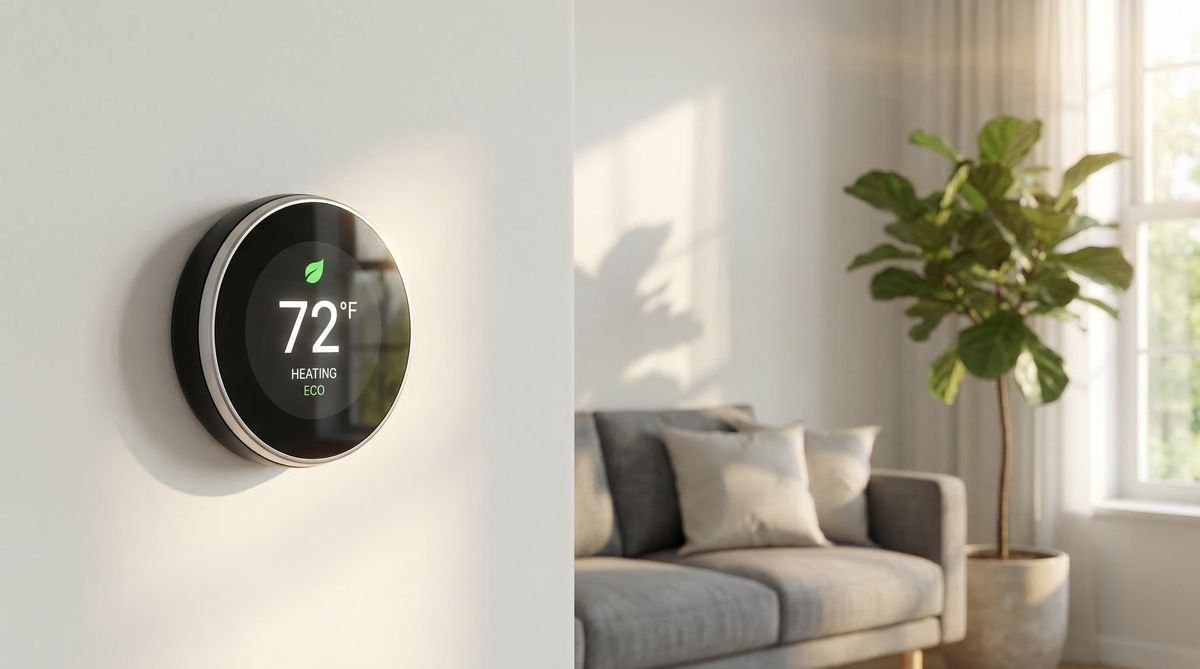
Smart thermostats use adaptive learning and real-time data to optimize home energy consumption and reduce monthly utility bills.
Smart thermostats have emerged as a powerful, technologically advanced tool for managing residential heating and cooling. Moving far beyond the basic programmable dials of the past, these modern devices offer a sophisticated suite of features—from adaptive learning algorithms and geofencing to comprehensive energy reporting and seamless integration with other smart home ecosystems. This article explores the tangible financial impact of smart thermostats, detailing how their core technologies translate directly into significant monthly utility savings and a more sustainable living environment.
The Financial Reality: How Much Can You Actually Save?
The primary motivation for upgrading to a smart thermostat is the promise of lower energy bills, and recent market data strongly supports this expectation. While exact savings fluctuate based on climate, home size, and existing insulation, the financial impact is consistently positive. Industry analysis indicates that smart thermostats typically reduce heating and cooling costs by 10% to 15% annually. For the average household, this translates to a tangible reduction in monthly utility expenses that quickly offsets the initial purchase price.
Leading manufacturers have documented substantial savings among their user bases. Data from widely adopted platforms reveals that users can save an average of 10% to 12% on heating and up to 15% on cooling, resulting in estimated annual savings of $131 to $145. Other advanced models report HVAC cost reductions of up to 26% compared to homes using traditional manual thermostats. Furthermore, the U.S. Department of Energy estimates that simply adjusting a thermostat by 7 to 10 degrees for eight hours a day can yield up to a 10% annual savings. Smart thermostats automate this precise adjustment, ensuring maximum financial efficiency without requiring daily manual intervention. Consequently, the return on investment (ROI) for these devices is exceptionally fast, with most units paying for themselves within one to three years.
The Core Mechanics of Energy Efficiency
The impressive financial savings delivered by smart thermostats are not accidental; they are the result of sophisticated technologies designed to eliminate energy waste. These devices utilize a combination of sensors, connectivity, and artificial intelligence to optimize how and when a home is heated or cooled.
Adaptive Learning and Automated Adjustments
At the heart of a smart thermostat’s efficiency is its adaptive learning capability. Unlike traditional models that require rigid manual programming, these advanced devices learn the daily routines and temperature preferences of the household over time. If the occupants consistently leave for work at 8:00 AM and return at 6:00 PM, the thermostat recognizes this pattern and automatically adjusts the climate control to an energy-saving mode during those vacant hours. By ensuring that the HVAC system is not working harder than necessary to condition an empty home, this automated optimization drastically lowers energy consumption.
Geofencing Technology
Geofencing represents a significant leap forward in automated climate control. By utilizing the location services on a homeowner’s smartphone, the smart thermostat creates a virtual perimeter around the property. When the system detects that the homeowner has crossed this boundary and left the area, it automatically switches to an eco-friendly temperature setting. Conversely, when the smartphone registers that the homeowner is returning, the thermostat begins conditioning the space, ensuring the home is comfortable the moment they walk through the door. This location-based precision guarantees that energy is never wasted on heating or cooling an unoccupied residence.
Energy Usage Reports and Insights
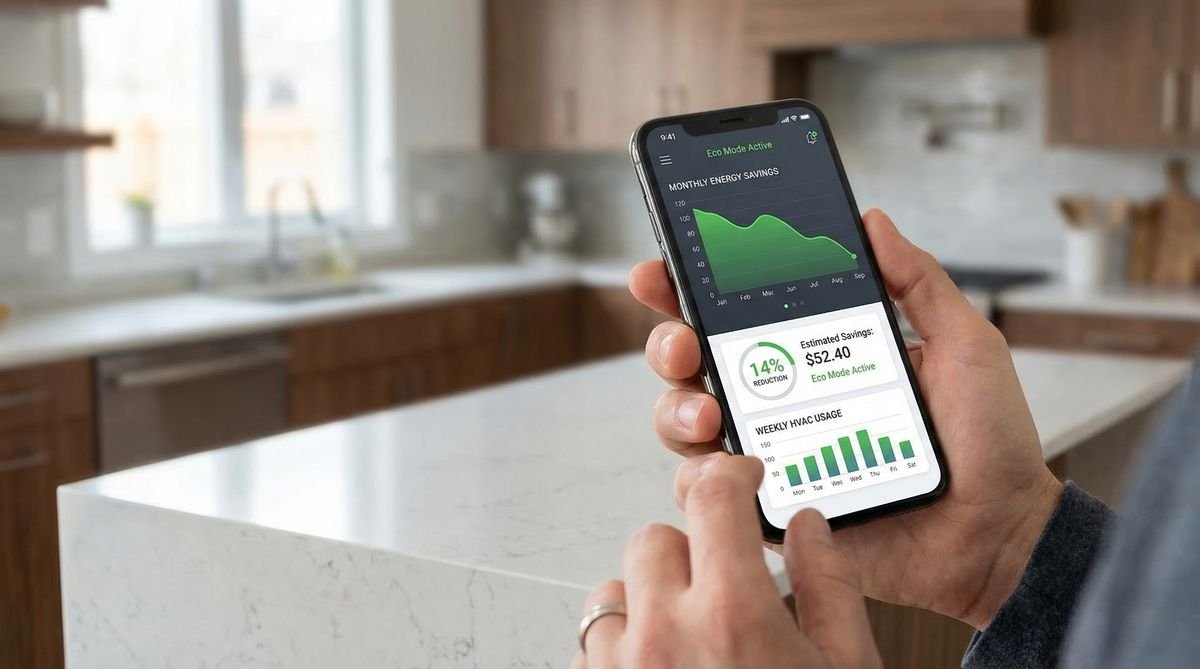
You cannot manage what you do not measure. Smart thermostats provide detailed, real-time energy usage reports directly through their companion mobile applications. These insights allow homeowners to visualize their HVAC system’s performance, track seasonal trends, and identify peak usage times. By analyzing this data, users can make informed, strategic adjustments to their daily habits to further optimize savings. Many platforms even offer personalized recommendations, gently guiding users toward the most cost-effective temperature schedules based on their unique home profiles.
Traditional vs. Smart Thermostats: A Cost-Benefit Comparison
To fully understand the financial impact of upgrading, it is helpful to compare the capabilities of traditional thermostats with their modern, smart counterparts. The difference in operational philosophy directly correlates to the difference in monthly utility bills.
| Feature / Capability | Traditional Manual Thermostat | Modern Smart Thermostat |
|---|---|---|
| Temperature Control | Requires physical, manual adjustment at the wall unit. | Offers remote control via smartphone apps from anywhere. |
| Schedule Optimization | Relies on human memory to change settings before leaving or sleeping. | Uses adaptive learning and geofencing to adjust temperatures automatically. |
| Energy Waste Prevention | High risk of leaving the HVAC running while the home is unoccupied. | Eliminates waste by detecting vacancy and entering eco-mode instantly. |
| Data and Insights | Provides zero feedback on energy consumption or system performance. | Delivers detailed energy reports, usage history, and personalized saving tips. |
| Average Annual Savings | Baseline (0% additional savings). | Proven to reduce HVAC utility costs by 10% to 15% annually. |
Maximizing ROI Across Different Seasons
The strategies for achieving utility savings vary significantly depending on the time of year. Smart thermostats excel at adapting to these seasonal shifts, ensuring that energy efficiency is maintained year-round.
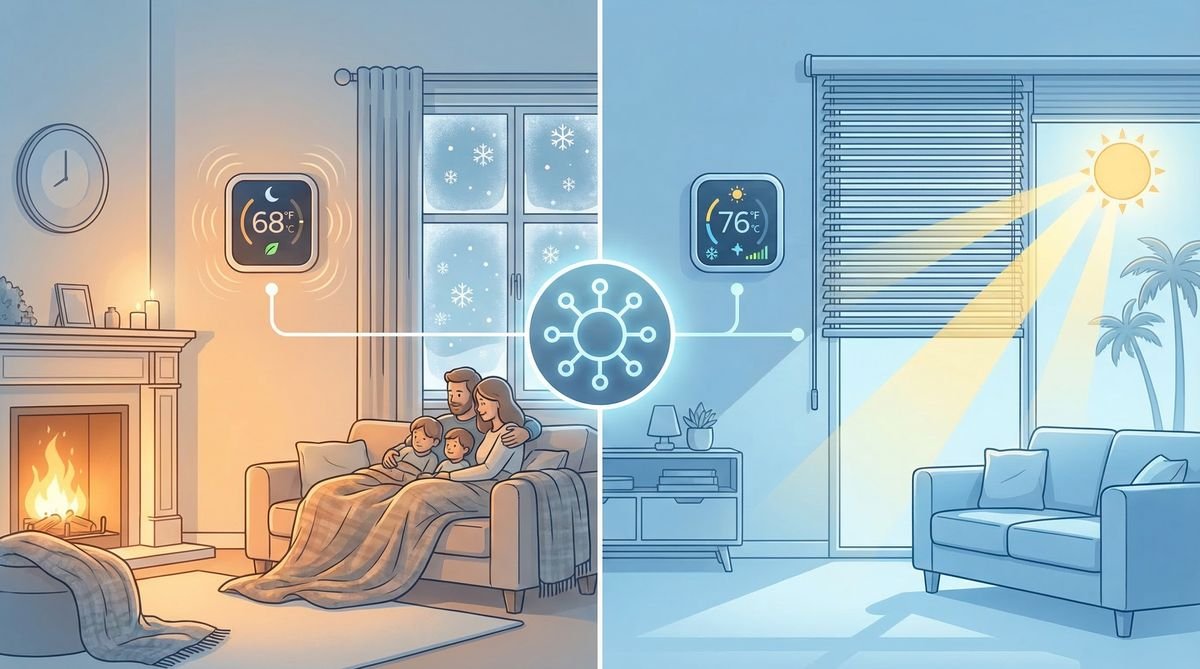
During the colder winter months, the primary goal is to minimize heating costs without waking up to a freezing house. Smart thermostats can be programmed to lower the ambient temperature significantly during sleeping hours, a practice that substantially reduces furnace activity. Because these devices learn the thermal dynamics of the specific house—understanding exactly how long it takes to warm up—they will automatically ignite the heating system just in time to reach a comfortable temperature before the alarm clock rings.
In the heat of summer, the focus shifts to reducing the immense electrical load of air conditioning units. Here, integration with the broader smart home ecosystem becomes a powerful financial tool. A smart thermostat can communicate with motorized smart blinds, automatically closing them during the peak afternoon sun to block solar heat gain. By passively keeping the house cooler, the thermostat drastically reduces the workload on the AC compressor, leading to noticeably lower electricity bills during the most expensive months of the year.
Frequently Asked Questions
Would a smart thermostat really save on my energy bill?
Yes, the vast majority of households see a noticeable reduction in their energy bills after installation. By automatically adjusting temperatures when you are asleep or away from home, smart thermostats eliminate the wasted energy that occurs when an HVAC system conditions an empty house. This precise control directly translates to lower monthly utility costs.
What runs your electric bill up the most?
In almost all residential properties, the heating, ventilation, and air conditioning (HVAC) system is the single largest consumer of electricity, often accounting for roughly half of the total monthly bill. Water heaters and large appliances like refrigerators and dryers follow closely behind. Because the HVAC system demands so much power, optimizing its usage through a smart thermostat yields the highest financial return.
How much energy can smart thermostats save annually?
While individual results vary, industry data and manufacturer studies consistently show that smart thermostats can reduce annual heating and cooling costs by 10% to 15%. In monetary terms, this often equates to savings of $130 to $150 per year, allowing the device to pay for itself relatively quickly.
Conclusion: Investing in a Sustainable Home
Smart thermostats represent a profound shift in how residential properties manage energy consumption. By leveraging remote accessibility, adaptive learning algorithms, geofencing, and comprehensive energy reporting, these devices provide a highly effective method for reigning in escalating utility costs. They transform a static, reactive HVAC system into a dynamic, intelligent network that actively works to preserve both financial resources and the environment.
The transition to a smart thermostat is not merely a technological upgrade; it is a strategic financial decision. While there is an upfront cost for the hardware and installation, the rapid return on investment—driven by consistent 10% to 15% reductions in heating and cooling expenses—makes it one of the most practical improvements a property owner can make. As energy prices continue to fluctuate and the demand for sustainable living grows, integrating intelligent climate control will remain a definitive hallmark of a cost-effective, modern home.