In 2022, Japan lowered its age of adulthood to 18, sparking a wave of confusion among travelers and residents alike. If 18-year-olds are officially adults, can they now legally enjoy a beer at an izakaya or buy sake from a convenience store? The answer is a clear and surprising no.
Despite the change to the Civil Code, Japan’s legal drinking age remains firmly at 20. This guide will explain everything you need to know about this law, why it didn’t change with the age of adulthood, how it’s enforced for tourists, and the unique cultural context behind it all.
The Official Drinking Age in Japan is 20 (And It Didn’t Change)
The law in Japan is unambiguous: the legal age to purchase and consume alcohol is 20 years old. This rule is stipulated in the country’s “Minor Drinking Prohibition Act” (Miseinen-sha Inshu Kinshi Ho), a law that has been in place since 1922.
This isn’t a flexible guideline; it’s a strict, nationwide law. It applies to everyone within Japan’s borders, including its own citizens, long-term foreign residents, and all tourists, regardless of the legal drinking age in their home country.
| Key Fact | Detail |
|---|---|
| Legal Drinking Age | 20 years old |
| Governing Law | Minor Drinking Prohibition Act (1922) |
| Applies To | All citizens, residents, and tourists |
| Age of Adulthood (since 2022) | 18 years old (does NOT include drinking rights) |
Why is Adulthood 18, But Drinking is 20? The 2022 Law Explained
The primary source of recent confusion is the amendment to Japan’s Civil Code, which officially lowered the age of majority from 20 to 18 on April 1, 2022. This was a significant legal shift — the first revision to the definition of adulthood in approximately 140 years — granting 18 and 19-year-olds new rights as adults.
With this change, individuals who are 18 years old in Japan can now sign contracts, apply for loans, obtain credit cards, and marry without requiring parental consent. However, the government made a very deliberate decision to exclude certain activities from this new definition of adulthood.
During parliamentary debates, specific exceptions were carved out for alcohol, tobacco, and gambling (including horse racing and pachinko). Lawmakers cited significant public health concerns, including the risks of addiction and potential negative physiological impacts on younger people, as the primary reasons for keeping these age limits at 20.
“Even though the age of majority has been lowered to 18, the age restrictions for drinking, smoking, and public gambling remain unchanged at 20, based on considerations of health impacts, delinquency prevention, and the protection of young people.”
— Government of Japan, Official Public Relations Online
A Tourist’s Guide to Buying Alcohol in Japan
Navigating the process of buying alcohol in Japan is straightforward, but it involves a few unique steps that tourists should be aware of.
Convenience Stores (Konbini)
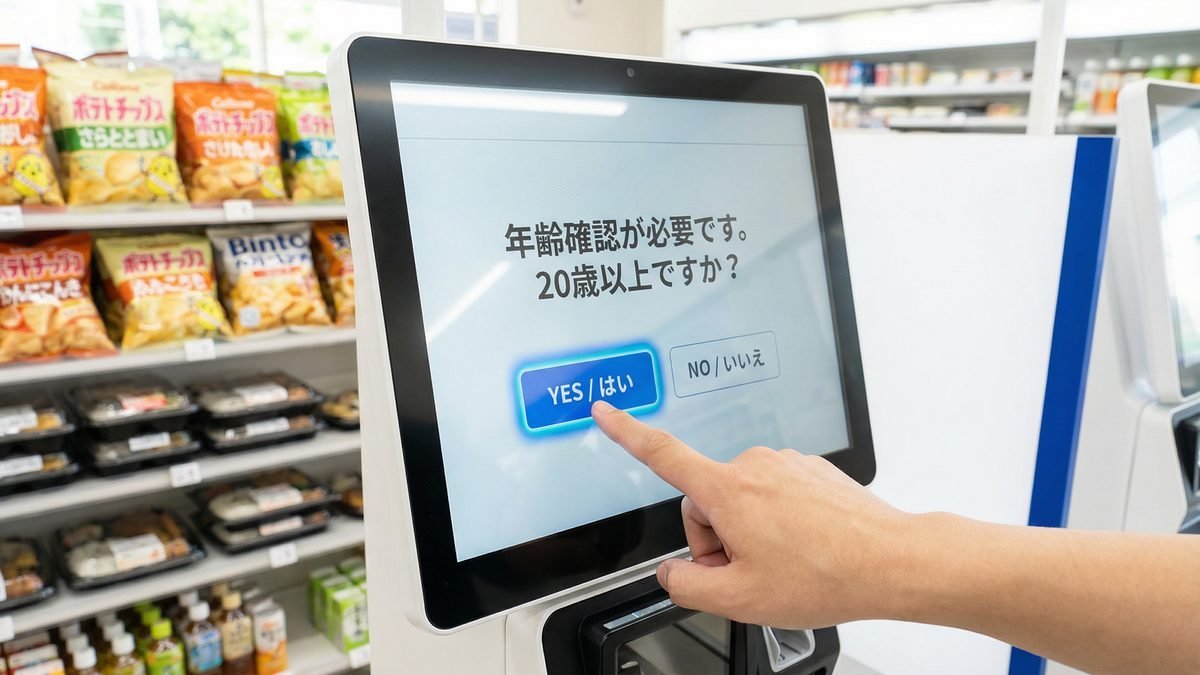
When purchasing alcohol at a convenience store like 7-Eleven, FamilyMart, or Lawson, you will be prompted to confirm your age at the register. A message will appear on a touch screen, asking you to verify that you are 20 years of age or older. You simply touch the confirmation button to proceed with the purchase. While this is often an honor system, the store clerk is still empowered to ask for identification if they suspect a customer is underage.
Vending Machines
While once a common sight, vending machines selling alcoholic beverages are now much rarer. The government has cracked down on them to prevent underage drinking. You may still find them in hotels or some older, rural establishments. Modern alcohol vending machines require a Japanese driver’s license or a My Number card to verify the user’s age via an IC chip reader, making them largely inaccessible to tourists.
Bars and Izakayas
Reputable bars and traditional Japanese pubs (izakayas), especially in major cities and tourist-heavy areas like Tokyo and Kyoto, are diligent about checking IDs. For foreign tourists, a passport is the most reliable form of identification. A photocopy may not be accepted, so it is always best to carry the original document if you plan on drinking. For foreign residents, the Zairyu (Residence) Card is the standard form of ID.
Supermarkets
The process at supermarkets is similar to that of convenience stores. When you check out, whether with a cashier or at a self-checkout kiosk, you will be required to confirm that you are of legal drinking age via a screen prompt.
Penalties for Underage Drinking: What Really Happens?
Japan’s approach to underage drinking focuses more on penalizing the provider of the alcohol rather than the minor who consumes it.
For Minors
If a person under 20 is caught drinking, the consequences are typically not severe from a criminal standpoint. They may receive a police warning, and their parents or legal guardians will be notified. However, for international students, the situation can be more serious. A police report could lead to a notification being sent to their school, potentially resulting in disciplinary action, suspension, or even expulsion, which could in turn jeopardize their student visa status.
For Businesses
The penalties for businesses that sell or serve alcohol to minors are significant. An establishment can be fined up to 500,000 yen. More critically, they risk having their business license suspended or revoked entirely. This strong deterrent is the primary reason why most stores and bars are so strict about age verification.
Public Drinking in Japan: Rules and Etiquette
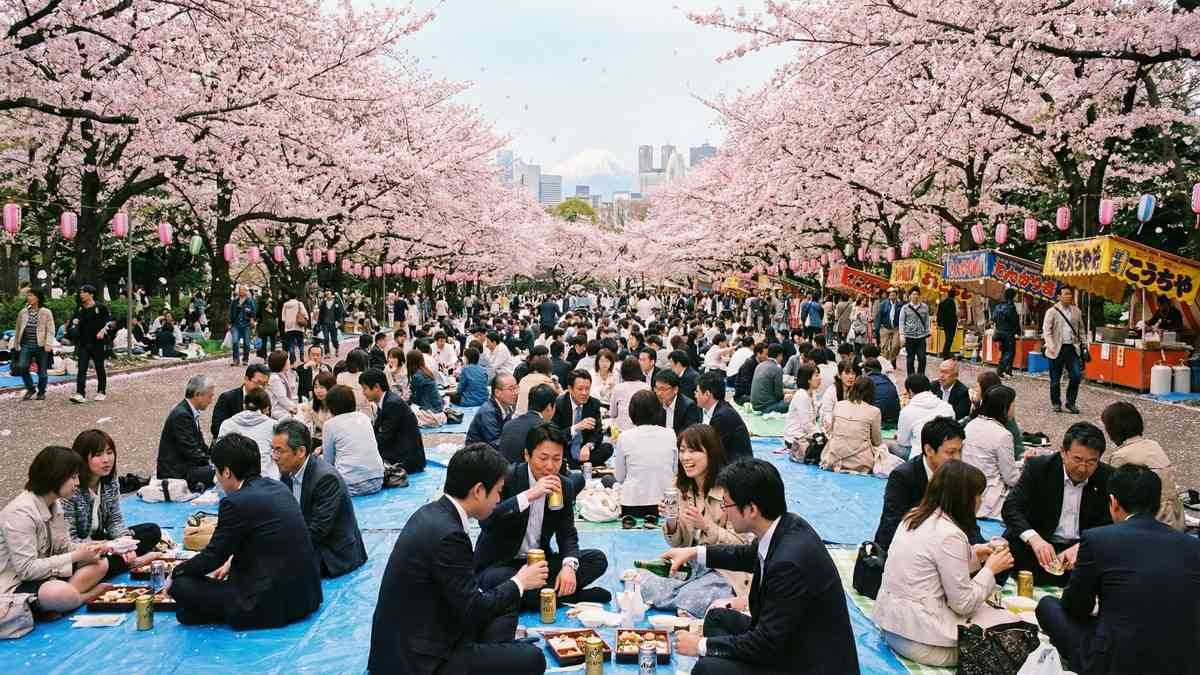
One of the most surprising aspects for visitors from countries with strict open-container laws is that public drinking is generally legal in Japan for adults aged 20 and over.
It is socially acceptable to consume alcohol in many public spaces, including parks, streets, and on public transportation. This is particularly common during hanami (cherry blossom viewing) season, when friends and families gather in parks for picnics with food and drinks. It is also not uncommon to see people enjoying a canned beverage on the Shinkansen (bullet train).
However, this legality comes with a strong cultural expectation of responsible behavior. While drinking in public is allowed, being loud, disruptive, or causing a nuisance is heavily frowned upon and can attract negative attention. The key is to be respectful of public harmony.
How Japan’s Drinking Age Compares to Other Countries
Japan’s drinking age of 20 places it in a unique position globally, especially when compared to its neighbors and other major countries.
| Country | Legal Drinking Age |
|---|---|
| Japan | 20 |
| South Korea | 19 |
| China | 18 |
| Taiwan | 18 |
| United States | 21 |
| Germany | 16 (beer & wine), 18 (spirits) |
This comparison highlights that while Japan’s age is higher than that of many European and neighboring Asian countries, it is lower than the 21-year-old requirement in the United States.
Understanding Japan’s Drinking Culture: From Kanpai to Nomikai
Alcohol is deeply woven into the social fabric of Japan, often playing a role in ceremonies, celebrations, and business.
Kanpai (乾杯) is the Japanese word for “cheers,” a staple of any social gathering involving drinks. Nomikai (飲み会) are after-work drinking parties with colleagues; while less obligatory for younger generations, they have traditionally been an important part of building team relationships and networking in the business world. Seijin no Hi (成人の日), or Coming of Age Day, is held on the second Monday of January and celebrates those who have turned 20 (or will turn 20 in the coming year), officially welcoming them into adulthood and its privileges, including the right to drink.
One important etiquette note: a key custom is to pour drinks for others in your party but not for yourself. Your companions will, in turn, fill your glass for you. Pouring your own drink is considered somewhat impolite in a group setting.
Frequently Asked Questions (FAQ)
What is the exact legal drinking age in Japan?
The legal drinking age is 20 years old for both purchasing and consuming alcohol.
Can a 19-year-old American drink in Japan?
No. The law applies to everyone in Japan, regardless of their nationality. You must be 20 to drink legally.
Did Japan’s drinking age change to 18 in 2022?
No. While the legal age of adulthood was lowered to 18, the legal age for drinking, smoking, and gambling remains 20.
How strictly is the drinking age enforced in Japan?
It is strictly enforced, particularly at the point of sale. Businesses face severe penalties for selling to minors, so they are vigilant about checking IDs and using age-verification systems.
What happens if a tourist gets caught drinking underage?
The tourist will likely receive a police warning and have the alcohol confiscated. While serious legal action is unlikely, it is a violation of Japanese law and should be avoided.
Can I use a copy of my passport for ID to buy alcohol?
It is not recommended. Most establishments require the original, physical passport to verify your age and identity.
Is it legal to drink on the street in Tokyo?
Yes, for adults 20 and over, it is legal to drink in most public places, including on the street, unless local signs specifically prohibit it.
Can parents give their children alcohol at home in Japan?
The law prohibits minors from drinking, and it also penalizes parents and guardians who fail to prevent it. Therefore, providing alcohol to a minor, even at home, is against the law.
What is the legal age to enter a club or bar in Japan?
Most clubs and bars require patrons to be 20 or older to enter, as their business model is based on selling alcohol. Some venues may have different policies, but 20 is the general rule.
Why is Japan’s drinking age so high compared to many European countries?
The decision is rooted in public health policy. The Japanese government has maintained the age at 20 due to concerns about the health risks, potential for dependency, and social problems associated with youth alcohol consumption.