Venice has always existed somewhere between performance and privacy. Its architecture invites spectacle, yet its narrow passages protect intimacy. Nowhere is this paradox more visible than during the Venetian Carnival — a period when identity becomes fluid, fabric becomes narrative, and presence becomes deliberate.
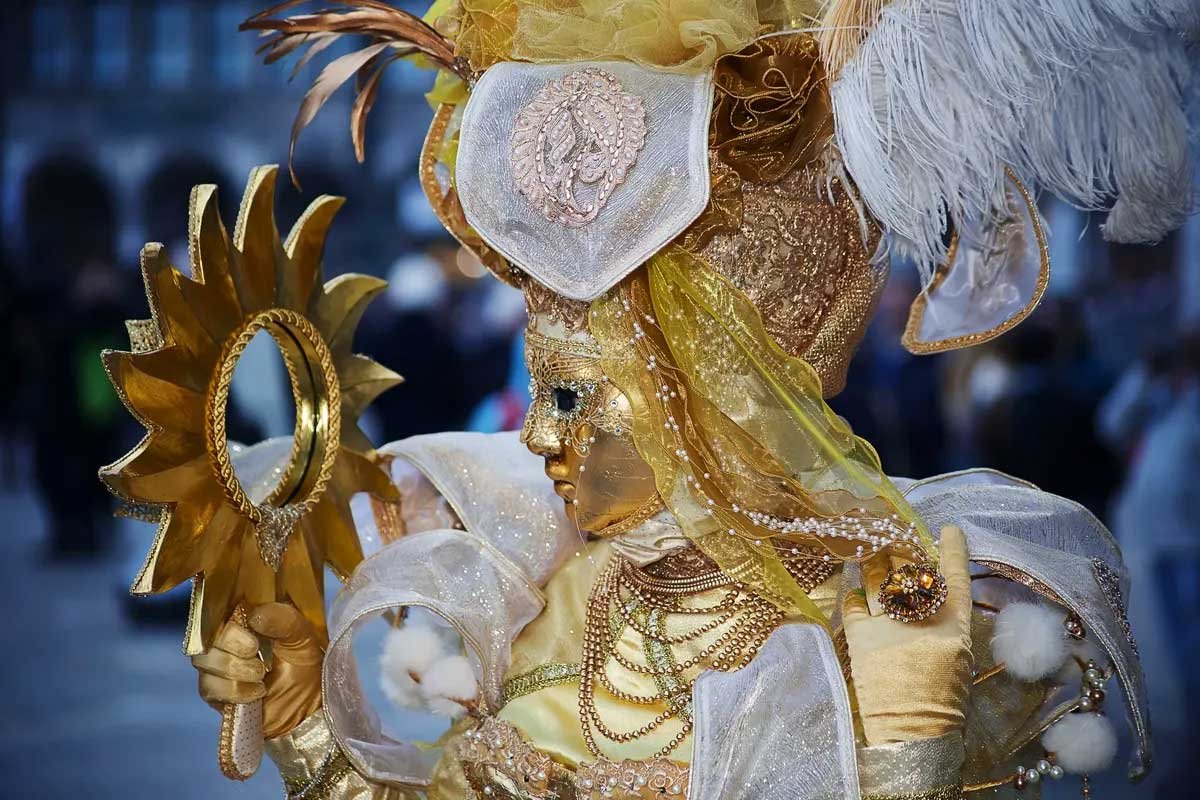
The Carnival is often misunderstood as a festival of excess. In reality, it is an exercise in restraint and refinement. Masks conceal more than faces; they alter posture, rhythm, and interaction. Costume is not worn casually. It is constructed, curated, and inhabited. Within this environment, clothing ceases to be fashion in the commercial sense and becomes character.
To photograph the Carnival is not to chase movement. It is to read it.
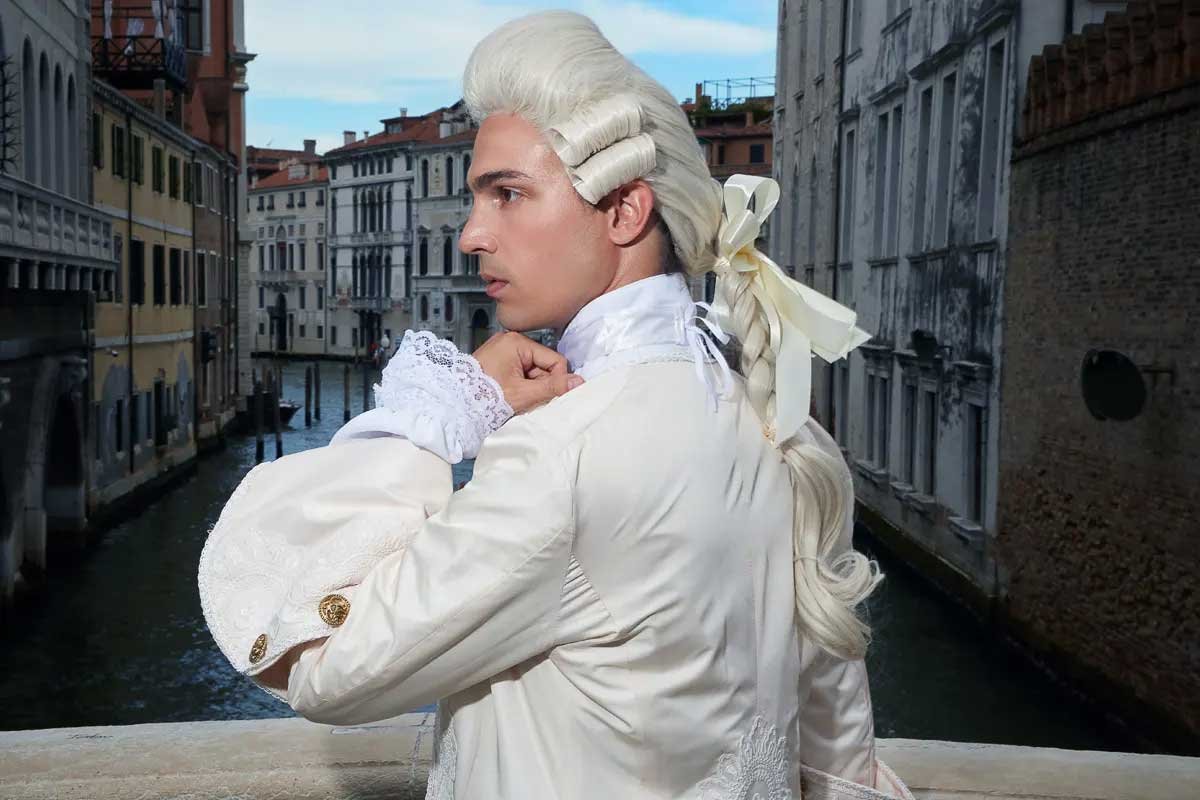
Every figure that crosses a bridge at dawn or pauses in the filtered light of a stone corridor carries layers of reference. Baroque silhouettes, monochrome minimalism, elaborate embroidery, architectural symmetry — each element interacts with the city itself. Venice does not function as a backdrop; it collaborates. Stone absorbs light differently than velvet. Water refracts colour into shadow. Narrow calli compress space, intensifying presence.
In such conditions, spectacle is easy. Nuance is not.
Italian photographer Antonio Jarosso approaches the Venetian Carnival as a study of identity rather than ornament. His perspective does not isolate costume as decorative surface; instead, it explores the relationship between garment and gesture, mask and stillness, architecture and stance. The image becomes less about documentation and more about controlled observation.
The most compelling frames often occur between moments. Before the turn of a head. After a conversation fades. When a figure stands alone against pale stone, neither performing nor retreating. These intervals carry weight. They reveal the intention behind the costume.
Carnival, at its highest expression, attracts individuals who understand ritual. The preparation of attire can take months. Textiles are selected with precision. Accessories are chosen not for attention, but for coherence. Participation is not spontaneous; it is considered.
Photographing within this world requires discretion and distance. Intrusion fractures atmosphere. Over-direction disrupts posture. The photographer must move quietly, adjusting to shifting light and subtle shifts in mood. Morning fog softens outlines; afternoon brightness sharpens detail; evening restores chiaroscuro. Each phase demands a different sensitivity.
What distinguishes the Venetian Carnival from contemporary fashion culture is the absence of immediacy. There is no runway clock. No seasonal turnover. No campaign deadline. The experience unfolds in its own rhythm. This slowness permits depth.
Images created in this setting must reflect that depth.
A masked figure positioned at the edge of a canal carries narrative tension. Reflection doubles the silhouette, merging presence with abstraction. A pair of gloved hands resting lightly on carved stone suggests both control and restraint. The tilt of a tricorne hat can redefine the entire composition. These gestures are not accidental; they are studied.
The photographer’s task is to recognize when posture aligns with environment — when the geometry of an arch echoes the curve of a sleeve, when muted colour palettes harmonize with fading daylight, when silence becomes visible.
Within rarefied gatherings that occur alongside the public Carnival — private masked evenings, curated cultural salons, invitation-only spaces — this awareness becomes even more essential. Here, presence is deliberate. Movement slows. Conversation lowers. The atmosphere tightens.
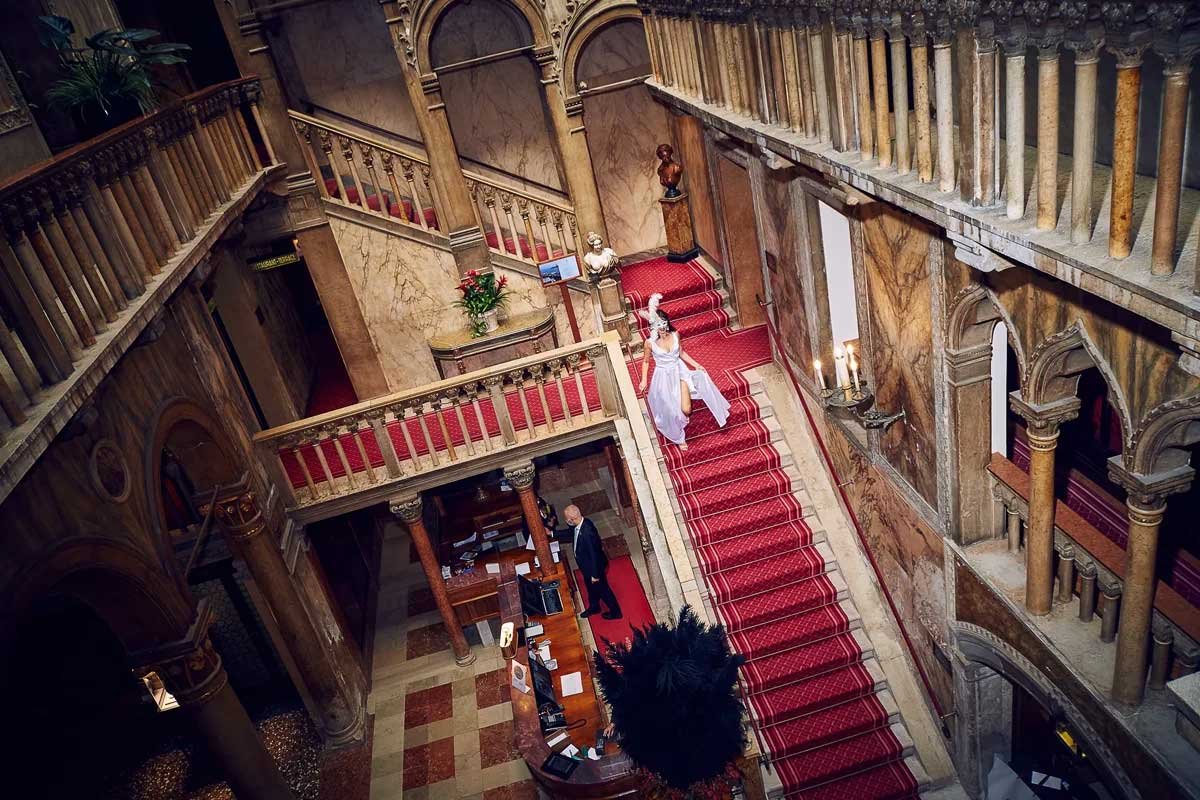
In these rooms, light is often minimal. Candle glow replaces daylight. Reflection replaces direct illumination. The camera must interpret without overwhelming. Excessive intervention collapses authenticity. The strongest frames emerge from patience — from allowing individuals to inhabit their chosen persona fully before committing to a shutter.
Venice rewards this patience. Its surfaces are textured with history. Cracks in plaster, weathered marble, darkened wood — all provide counterpoint to polished costume. When aligned thoughtfully, these contrasts elevate an image beyond decorative appeal. They introduce gravity.
The Carnival also challenges assumptions about anonymity. Masks obscure identity, yet amplify individuality. Without visible expression, the body communicates more clearly. Shoulders square or relax. Hands tighten or release. The gaze — though hidden — can be sensed in the direction of movement. Presence becomes physical rather than facial.
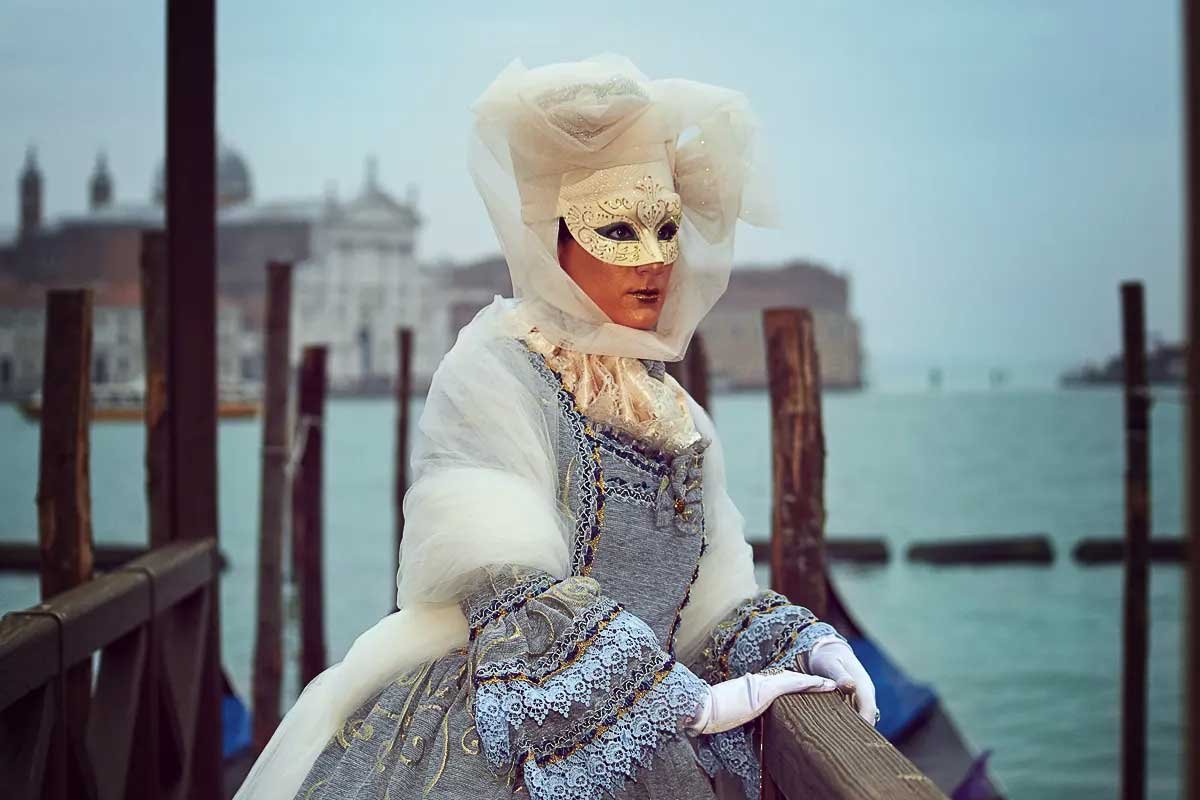
For a photographer operating within this environment, hierarchy matters less than coherence. Titles and reputation dissolve behind fabric and lacquer. What remains is stance, intention, and spatial awareness. The camera responds to these elements, not to surface status.
The resulting imagery resists spectacle. It favors composition over chaos. It values negative space. It respects silence.
When viewed collectively, such images reveal something more enduring than costume: they capture a state of suspension. Carnival exists outside ordinary chronology. It is both historical and immediate, ceremonial and intimate. Photography preserves this suspension — freezing the delicate balance between revelation and concealment.
In an era saturated with instant imagery, the Venetian Carnival offers an alternative pace. It invites contemplation. It rewards refinement. And when approached with discipline and discretion, it yields photographs that do not merely record an event, but interpret an atmosphere.
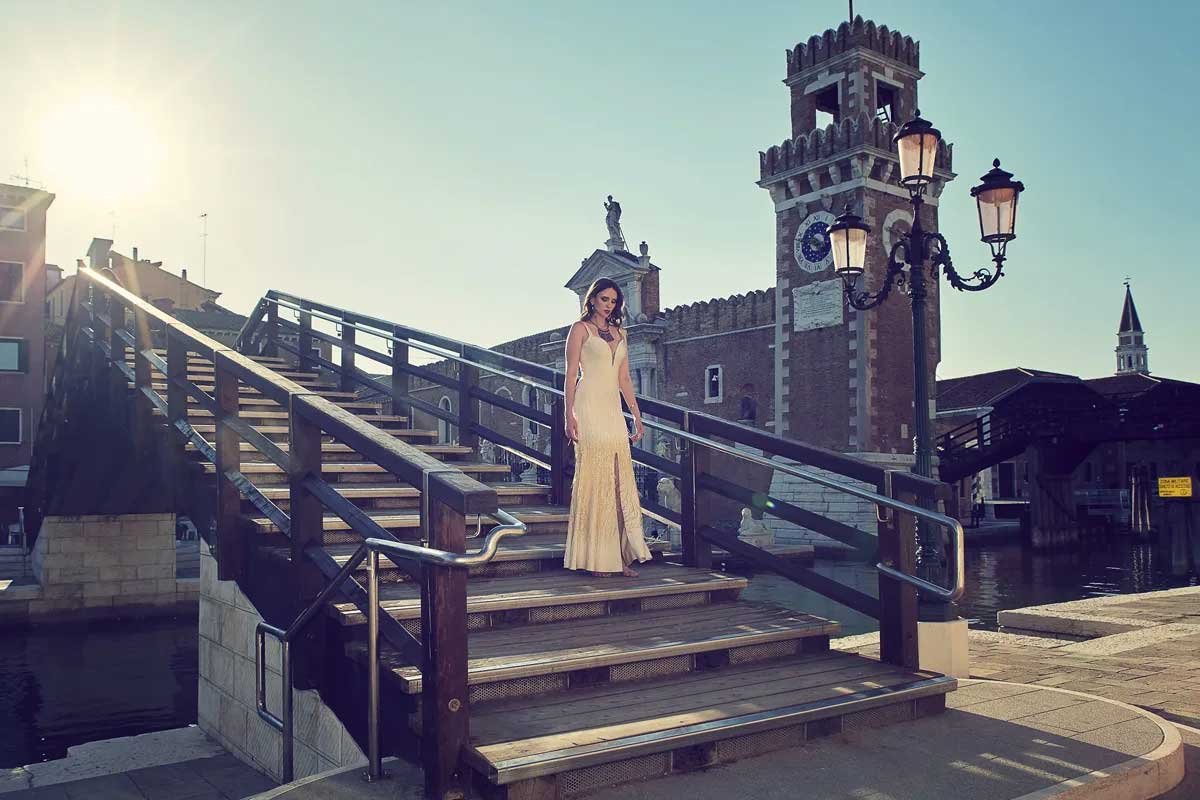
Behind every mask lies intention. Behind every gesture, decision. And behind the lens, the responsibility to recognize when identity, architecture, and light converge into something worth preserving.