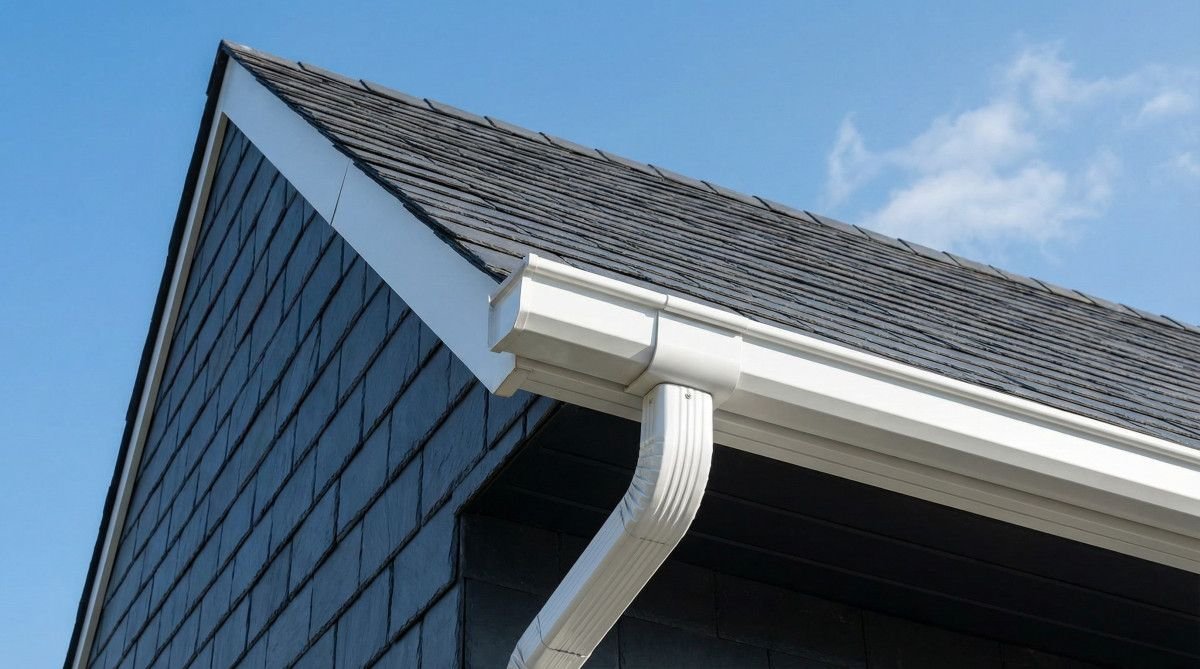
Gutters are perhaps the most underappreciated component of a home’s exterior. Often out of sight and consequently out of mind, they quietly perform a monumental task every time it rains. Understanding the gutter cleaning importance is vital for any homeowner who wants to avoid catastrophic repair bills. A functional gutter system acts as the primary water management infrastructure for a house, systematically collecting thousands of gallons of rainwater from the roof and channeling it safely away from the structure. When this system fails due to neglect, the resulting water damage is rarely isolated; it cascades from the roofline all the way down to the foundation.
The deceptive aspect of clogged gutters is that the damage happens slowly and silently. Unlike a shattered window or a blown-off shingle, overflowing gutters do not immediately sound an alarm. Instead, they allow water to seep into microscopic cracks, erode the soil drop by drop, and create damp environments where rot thrives. By the time a homeowner notices a damp spot in the basement or a sagging roofline, the structural compromise is already severe. Recognizing that routine gutter maintenance is not merely a cosmetic chore, but a fundamental necessity for structural preservation, is the first step in responsible homeownership.
Preventing Devastating Foundation Damage
Answer Capsule: The primary importance of gutter cleaning is to prevent foundation damage. When gutters clog, rainwater overflows and pools directly around the base of the house, leading to severe soil erosion, foundation cracking, and flooded basements.
The most expensive and structurally threatening consequence of neglected gutters occurs at the very base of the home. Gutters are engineered to direct water to downspouts, which then deposit the water several feet away from the house. When gutters are choked with leaves, pine needles, and roof grit, the water has nowhere to go but over the sides. This creates a waterfall effect, dumping massive volumes of water directly onto the soil abutting the foundation. Over time, this constant deluge washes away the topsoil, creating deep trenches and exposing the foundation walls to direct moisture.
Once the soil around the foundation becomes hyper-saturated, it expands, exerting immense hydrostatic pressure against the concrete or block walls. This pressure is often strong enough to cause the foundation to bow inward, crack, and eventually fail. In homes with basements or crawl spaces, these cracks become direct pathways for groundwater to enter, leading to flooding, ruined drywall, and toxic black mold growth. The financial disparity is stark: while hiring a professional to clean gutters might cost a few hundred dollars annually, excavating and repairing a cracked, bowing foundation can easily exceed tens of thousands of dollars.
Safeguarding Your Roof and Fascia Boards
Answer Capsule: Clogged gutters trap standing water against the roofline, causing the wooden fascia boards and roof decking to rot. During winter, this trapped water freezes, creating destructive ice dams that force moisture under the shingles.
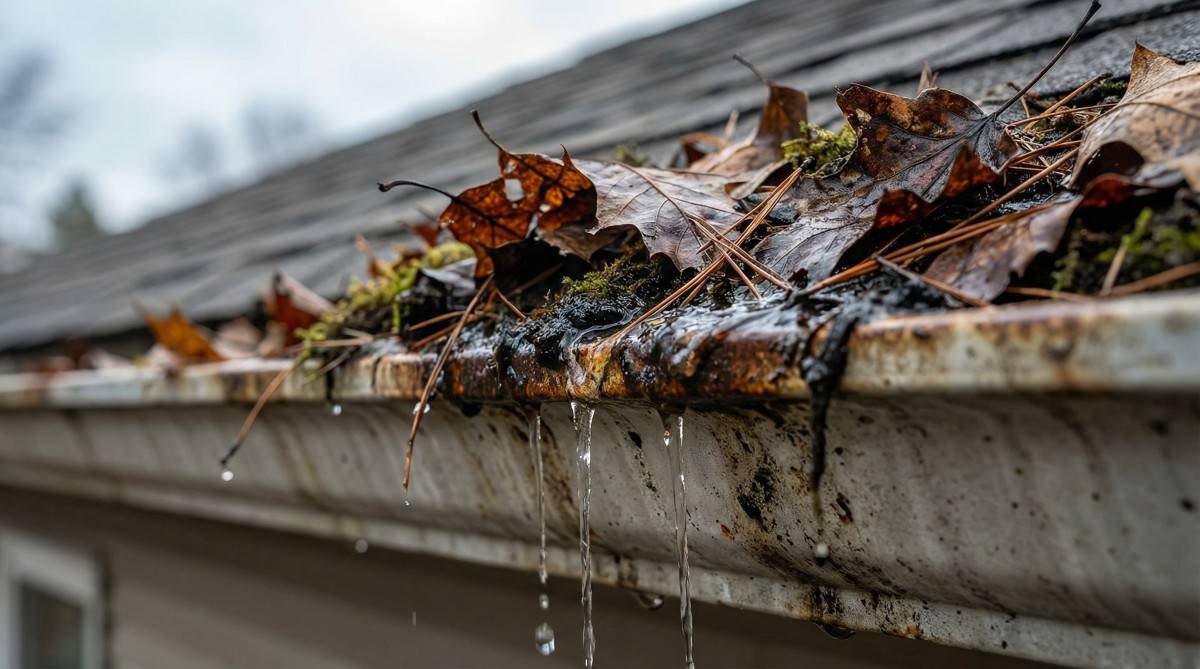
The damage caused by clogged gutters is not limited to the ground level; it aggressively attacks the roofline as well. Gutters are mounted directly to the fascia boards—the long, straight boards that run along the lower edge of the roof. When a gutter is clogged, it fills to the brim with standing water and decaying organic matter. This wet debris rests constantly against the wooden fascia and the edge of the roof decking. Wood is highly porous, and prolonged exposure to this trapped moisture inevitably leads to wood rot. As the fascia rots, it loses its structural integrity, causing the heavy, waterlogged gutters to sag and eventually pull away from the house entirely.
In colder climates, clogged gutters introduce an even more aggressive threat: ice dams. When trapped water freezes inside a clogged gutter, it creates a solid block of ice. As heat escapes from the home’s attic, it melts the snow on the upper portions of the roof. This meltwater runs down to the eaves, hits the frozen gutter, and has nowhere to go. It backs up, freezing under the lower edges of the roof shingles. As this ice expands, it lifts the shingles, breaking their waterproof seal. When the ice eventually melts, the water pours directly into the attic, ruining insulation, staining ceilings, and compromising the home’s interior.
Eliminating Breeding Grounds for Pests
Answer Capsule: Neglected gutters filled with decaying leaves and standing water create an ideal breeding ground for mosquitoes, carpenter ants, termites, and rodents, which can eventually migrate inside your home.
Beyond structural damage, clogged gutters pose a significant biological threat by creating micro-ecosystems that are highly attractive to pests. The combination of decaying organic matter (leaves and twigs) and stagnant water is the perfect recipe for an infestation. Mosquitoes, which require only a thimbleful of standing water to breed, will multiply rapidly in a clogged gutter, making outdoor living spaces miserable and increasing the risk of mosquito-borne illnesses.
Furthermore, the moisture that wicks from the clogged gutters into the wooden fascia boards softens the wood, making it an irresistible target for wood-destroying insects. Carpenter ants and termites thrive in damp, decaying wood, and a rotting roofline provides them with a direct bridge into the framing of your home. Additionally, dry debris trapped in gutters during the summer months provides excellent nesting material for birds, squirrels, and mice. Once these rodents establish a nest in the gutters, it is only a matter of time before they chew through the eaves to seek the warmth and safety of the attic.
Protecting Your Landscaping and Curb Appeal
Answer Capsule: Overflowing gutters act like waterfalls that wash away mulch, drown delicate plants, and erode carefully designed landscaping. Furthermore, the dirty overflow stains exterior siding, significantly reducing your home’s curb appeal.
Homeowners invest significant time and money into landscaping to enhance their property’s aesthetic value, but a single season of neglected gutters can wash that investment away. When water spills over the edge of a clogged gutter, it hits the ground with surprising force. This impact acts like a miniature waterfall, violently washing away expensive mulch, eroding topsoil, and exposing the delicate root systems of shrubs and flowers. Plants positioned directly beneath the roofline are quickly drowned by the excessive, concentrated water flow.
In addition to destroying garden beds, overflowing gutters severely degrade the exterior appearance of the house itself. The water that spills over is not clean rain; it is a dirty slurry mixed with decaying leaves, roof asphalt grit, and dirt. As this muddy water cascades down the side of the house, it leaves behind dark, vertical streaks on the siding, brick, or stucco—a phenomenon often referred to as “tiger striping.” These stains are notoriously difficult to remove, often requiring professional power washing, and they immediately signal to neighbors or potential buyers that the home has been poorly maintained.
Frequently Asked Questions
How often should I clean my gutters?
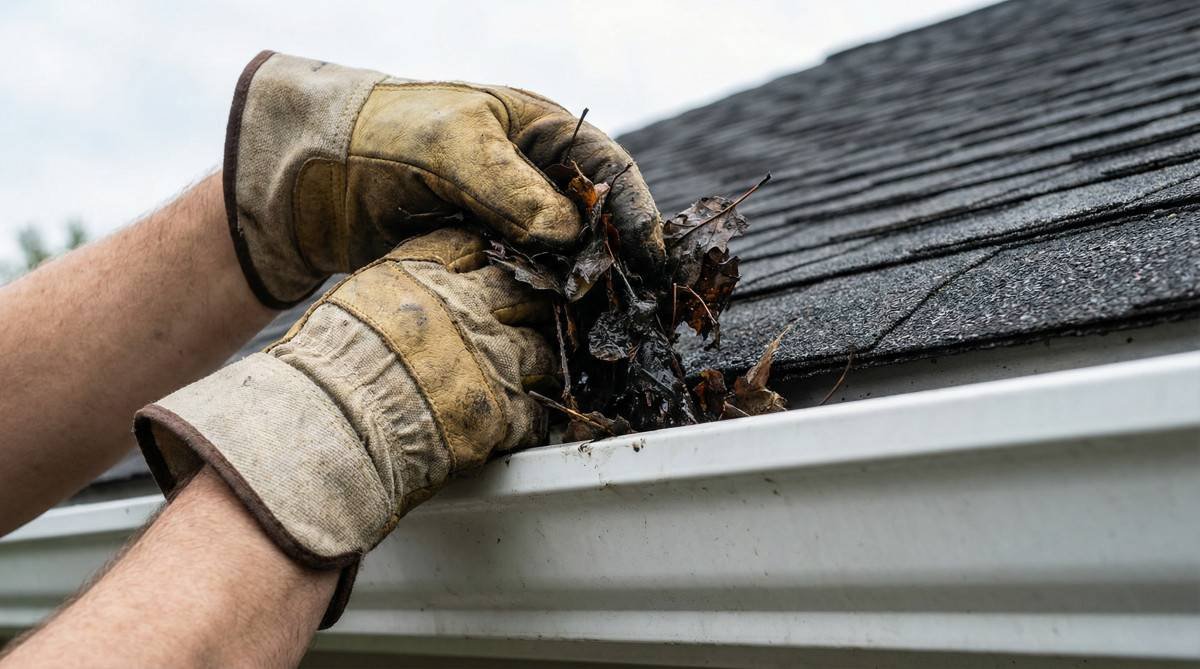
As a general rule, gutters should be cleaned at least twice a year—once in the late spring after trees drop seeds and blossoms, and once in the early fall after the leaves have fallen. However, homes surrounded by heavily wooded areas, particularly those with pine trees, may require cleaning every three to four months to prevent clogs.
What are the signs that my gutters need cleaning?
Key indicators include water visibly spilling over the edges during a rainstorm, gutters that appear to be sagging or pulling away from the fascia, visible plants or weeds growing out of the gutters, and unexplained water pooling near your foundation or in your basement.
Are gutter guards worth the investment?
Yes, high-quality gutter guards can significantly reduce the frequency of cleanings by keeping large debris like leaves and twigs out of the system. However, they do not eliminate the need for maintenance entirely, as small particles like roof grit and pine needles can still accumulate over time and require periodic flushing.
Conclusion
Answer Capsule: The importance of gutter cleaning cannot be overstated; it is a fundamental maintenance task that protects your home’s structural integrity from the roof to the foundation. Consistent maintenance prevents thousands of dollars in water-related damages and pest infestations.
While cleaning the gutters is rarely at the top of any homeowner’s list of favorite weekend activities, its role in preserving the health and value of a property is absolute. Gutters are the unsung heroes of home defense, silently routing destructive water away from vulnerable foundations, siding, and rooflines. Ignoring them transforms a highly efficient drainage system into a liability that actively invites water damage, wood rot, and unwanted pests into the home.
By committing to a regular cleaning schedule—whether by safely tackling the job yourself or hiring a reputable professional—you are making a proactive investment in your home’s longevity. The few hours or few hundred dollars spent maintaining clear, free-flowing gutters pale in comparison to the massive expense and stress of repairing a cracked foundation or a flooded basement. Ultimately, clean gutters provide peace of mind, ensuring that when the heavy rains come, your home remains dry, safe, and structurally sound.