Did you know that by 2029, agentic AI is projected to autonomously resolve 80% of common customer service issues without any human intervention? [1] This isn’t science fiction. It’s the reality of our increasingly automated world — a world where new terms like Robyoc are emerging faster than we can define them.
This guide cuts through that noise. We will provide the definitive, comprehensive explanation of Robyoc — covering both the powerful concept behind it and the platforms that bring it to life. Forget the confusion. By the end of this article, you will not only understand what Robyoc is, but also see exactly how it is shaping the future of business, creativity, and your daily digital life.
What is Robyoc? Deconstructing the Definition
The term Robyoc can be confusing because it isn’t one single thing. Think of it as a new word that represents two connected ideas simultaneously. It’s both a concept and a category of platforms that execute that concept. Understanding both layers is key to grasping its true importance.
First, Robyoc is a concept. It describes the philosophy of taking the logic and efficiency of robotics and applying it directly to the digital world. It’s about building automated, intelligent workflows into software, making our virtual interactions smarter and more seamless. This is where the “robo” part of the name originates.
Second, Robyoc refers to platforms like robyoc.online. These are the practical tools that bring the concept to life. They provide the infrastructure for users to build automated systems for tasks like managing a business, creating content, or organizing data — often with no coding required whatsoever.
The Core Components: How Robyoc Works
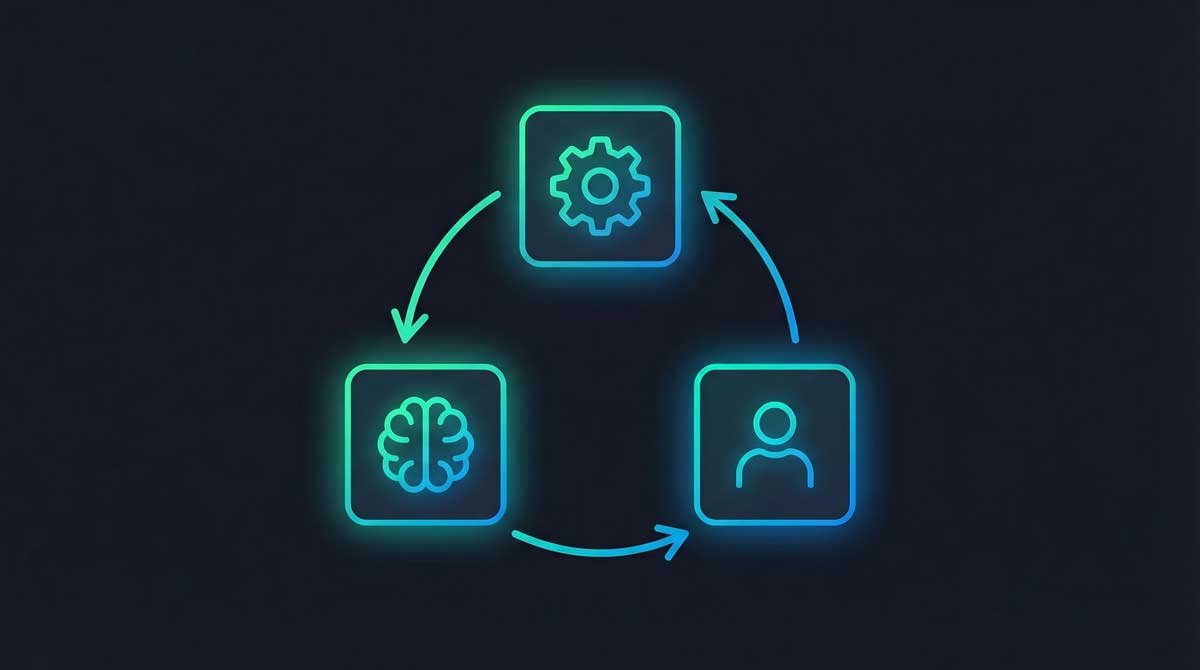
The three core pillars of any Robyoc system work in a continuous cycle.
To truly appreciate Robyoc, you need to look under the hood. Its power comes from the synergy of three key components. These elements work together to create systems that are not just automated, but also intelligent and genuinely accessible.
At its heart lies a powerful automation engine. This is far more than a simple macro recorder. It’s designed to handle complex, multi-step processes that would otherwise consume hours of human effort — streamlining everything from data entry to content publishing with robotic precision.
Next comes the brain of the operation: Artificial Intelligence. Robyoc systems integrate AI and machine learning to move beyond rigid, pre-programmed instructions. They can analyze data, predict user needs, and adapt their behavior over time. This aligns with a broader industry trend Gartner calls “agentic AI,” where systems begin to make autonomous decisions to achieve defined goals. [1]
Finally, none of this power would matter if it were difficult to use. That’s why a user-centric interface is the final, crucial piece. Robyoc is built for everyone — not just developers. Its intuitive design ensures that anyone can build and manage powerful automations without writing a single line of code.
Robyoc in Action: Real-World Applications
Robyoc isn’t just a theoretical concept; it’s already changing how we work and live. Its principles are being applied in countless tools, making complex processes simple and accessible. The applications span across professional and personal domains alike.
For business productivity, Robyoc is a game-changer. Project management tools use it to automatically assign tasks and track progress, keeping teams aligned without constant meetings. In marketing, it powers automation that nurtures leads with personalized email sequences, freeing up sales teams to focus entirely on closing deals.
Creative professionals also benefit immensely. Imagine a workflow that automatically resizes a new blog post’s hero image for Instagram, Twitter, and Facebook, schedules the posts, and then tracks engagement — all without lifting a finger. That’s Robyoc in action, eliminating tedious, repetitive work and letting creators focus on what they do best: creating.
And it’s not just for work. In our everyday lives, the Robyoc philosophy powers the smart home devices that adjust your thermostat based on your habits. It’s in the scheduling apps that intelligently find time for a meeting. It is the silent, efficient engine running in the background of modern digital life.
Robyoc vs. The World: A Clear Comparison
To truly grasp Robyoc’s unique place in the tech landscape, it helps to see it alongside related concepts. The world of automation is filled with buzzwords, but a direct comparison clarifies exactly what makes Robyoc different — and why it matters for a broader audience.
| Feature | Robyoc | RPA | No-Code / Low-Code |
|---|---|---|---|
| Primary Goal | Intelligently automate digital workflows with a focus on user experience. | Mimic human actions to execute repetitive, rule-based tasks. | Enable creation of applications with minimal coding. |
| Typical User | Business users, marketers, creatives, and individuals. | IT professionals and specialized automation developers. | Business analysts, citizen developers, and entrepreneurs. |
| Scope | Broad: from personal task management to complex business processes. | Narrow: focused on structured data and legacy system integration. | Broad: from simple websites to complex enterprise apps. |
| Technical Complexity | Very Low — designed for non-technical users. | High — often requires scripting and technical expertise. | Low to Medium — varies from drag-and-drop to some scripting. |
| Example | Automated social media posting with engagement analytics. | A bot that scrapes data from a PDF and enters it into a CRM. | Building a custom inventory management app without coding. |
Case Study: Automating a Small Online Store with Robyoc

Robyoc empowers small business owners to reclaim their time by automating digital tasks.
Meet Alex: The Overwhelmed Artist
Alex is a talented artist who runs a small online store selling handmade ceramic mugs. While Alex loves creating, the administrative side of the business is overwhelming. The day is a blur of responding to customer emails, updating inventory, and trying to post consistently on social media.
Alex’s challenge is a classic one: too many repetitive tasks are stealing time from the core, value-creating work. Using a Robyoc-inspired platform, Alex sets up three simple but powerful automations:
- Smart Customer Inbox: A workflow filters incoming emails. Common questions like “Where is my order?” are handled by a chatbot that provides tracking information, while unique issues are flagged for Alex’s personal attention.
- Proactive Inventory Alerts: The platform integrates with the e-commerce backend. When a mug is sold, inventory is instantly updated. If stock drops below five units, an alert is automatically sent to Alex’s phone.
- Automated Social Publishing: Every time Alex adds a new product to the store, the system automatically generates a beautiful post for Instagram and Pinterest, complete with product tags and a purchase link.
This is the true promise of Robyoc: empowering humans by liberating them from robotic work. The technology doesn’t replace Alex’s artistry; it protects it.
The Future is Automated: What’s Next for Robyoc?
The journey of automation is far from over. The principles embodied by Robyoc are set to become even more deeply integrated into our digital fabric. We are moving toward a future of increasingly sophisticated AI, deeper connections with the Internet of Things (IoT), and the emergence of autonomous agents that manage complex personal and professional tasks entirely on our behalf.
This rapid progress also brings critical ethical questions to the forefront. Concerns about job displacement due to automation are valid and require thoughtful planning for workforce transition and education. Similarly, as we delegate more decisions to AI, ensuring data privacy, security, and algorithmic fairness becomes paramount. The goal, ultimately, is not to replace humans, but to augment their capabilities.
“Artificial intelligence is not a substitute for human intelligence; it is a tool to amplify human creativity and ingenuity.”
— Fei-Fei Li, Co-Director, Stanford Human-Centered AI Institute [2]
The future of Robyoc lies in achieving a seamless collaboration between human and machine — where technology handles the mundane, and humans are free to focus on innovation, strategy, and genuine human connection. That is a future worth building toward.
FAQ: Your Robyoc Questions, Answered
- 1. What is Robyoc actually used for?
- Robyoc is used to automate digital tasks and create intelligent workflows. For businesses, this could mean managing customer service inquiries or streamlining marketing campaigns. For individuals, it could be as simple as organizing personal files or automating social media posts. The core purpose is always the same: increasing efficiency and reclaiming time.
- 2. Is Robyoc just another name for robotics?
- Not exactly. While it borrows principles from robotics, Robyoc applies them to the digital world — not physical machines. It’s about creating virtual “robots” (automated processes) in software to handle tasks, rather than building mechanical robots. The overlap is philosophical, not technical.
- 3. Do I need to be a coder to use Robyoc?
- No. A core principle of Robyoc platforms is user-centric design. They are specifically built to be accessible to non-technical users, often featuring intuitive drag-and-drop interfaces. The goal is to democratize automation, making it available to everyone — not just software engineers.
- 4. How is Robyoc different from regular automation software?
- The key difference is the integration of AI. While traditional automation follows rigid, pre-set rules, Robyoc systems are more intelligent. They can learn from data, adapt to user behavior, and make predictive suggestions to optimize workflows over time, making them far more flexible and powerful.
- 5. Is robyoc.online safe to use?
- Generally, platforms in this space prioritize security. However, like with any online service, it is crucial to review their specific privacy policy and security features before use. Look for industry-standard encryption and clear data-handling practices before committing any sensitive business or personal information to a platform.
Embrace Your Automated Future
Robyoc is more than just a clever buzzword; it represents a fundamental shift in how we interact with technology. It’s a move away from manual, repetitive digital chores and toward a future where intelligent systems act as our partners, handling the mundane so we can focus on what truly matters. It’s about reclaiming time and amplifying creativity.
The next time you find yourself stuck in a loop of digital drudgery, think of Robyoc. Ask yourself: “Can this be automated?” The answer, more often than not, is yes. Taking that first step to explore automation in your own digital life isn’t just about efficiency — it’s about stepping into a smarter, more empowered future.
References
- Gartner. “Gartner Predicts Agentic AI Will Autonomously Resolve 80% of Common Customer Service Issues Without Human Intervention by 2029.” Gartner Newsroom, 5 Mar. 2025.
- Fei-Fei Li. Quoted in “Top 10 Expert Quotes That Redefine the Future of AI Technology.” Nisum, 25 Jul. 2023.