Did you know that while over 80% of us diligently sort our recycling, only a tiny fraction of that material actually makes it back into new products? This shocking gap reveals a hidden truth in the world of sustainability. It’s a problem that our good intentions alone cannot solve.
This article will guide you through this crucial distinction. We will explore the fundamental difference between recyclatanteil and the commonly cited recycling rate. You will learn how to identify misleading “green” claims and understand how this single metric is reshaping industries toward a truly circular future.
The Great Divide: Recyclatanteil vs. Recycling Rate
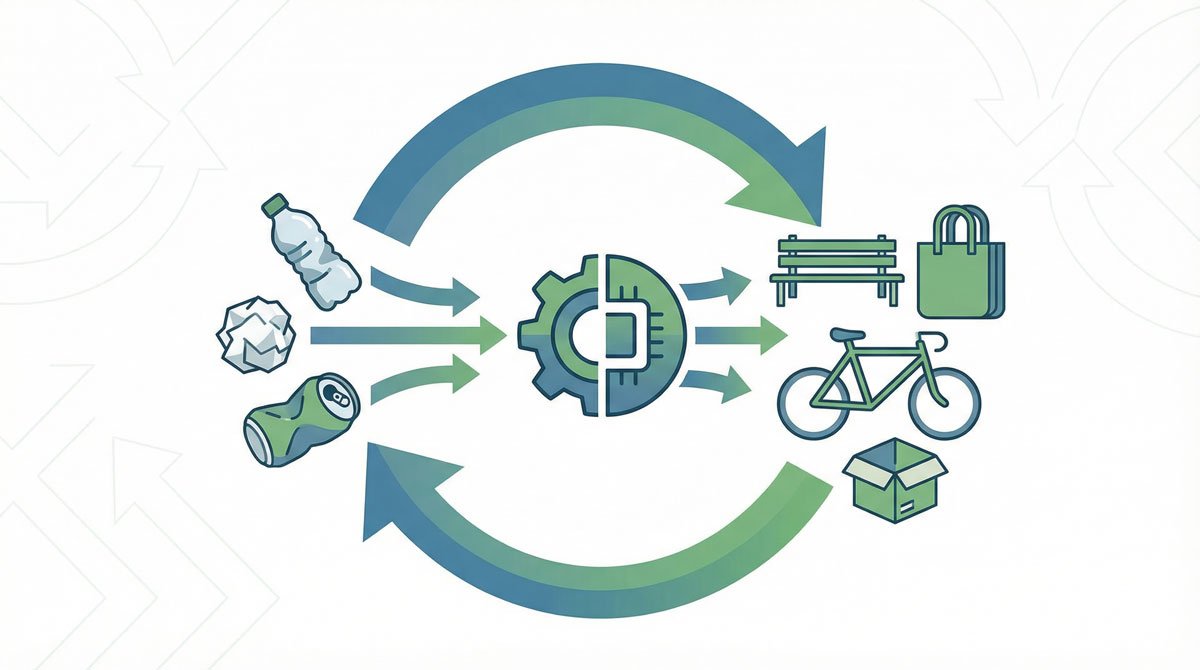
For decades, we’ve been told that high recycling rates are the ultimate goal. But this is only half the story. The real measure of progress lies in understanding the crucial difference between the recycling rate and recyclatanteil.
Think of it this way: the recycling rate is how many ingredients you send back to the kitchen to be reused. The recyclatanteil is how much of those returned ingredients the chef actually uses in tomorrow’s soup. One measures collection; the other measures consumption.
This table breaks down the key distinctions:
| Feature | Recycling Rate | Recyclatanteil (Recycled Content) |
|---|---|---|
| What it Measures | Percentage of waste collected for recycling | Percentage of recycled material in a new product |
| Whose Action | Consumer & Municipality (Collection efforts) | Manufacturer (Production choices) |
| The Question it Answers | “How much of our waste is being collected for recycling?” | “How much of this product is actually made from old materials?” |
| Example | 39.6% of glass bottles in the U.S. are collected for recycling. | This new glass bottle contains 23% recycled glass. |
The gap between these two numbers can be staggering. For instance, while the U.S. collects over 20% of its PET plastic bottles, the average recyclatanteil in new bottles is a mere 3-10%. The rest of the collected material is often downcycled into other products, exported, or even landfilled, never completing the loop.
Why Recyclatanteil is the Real Game-Changer for Sustainability
Focusing on recyclatanteil is more than just a semantic shift; it’s a fundamental change in how we approach sustainability. A high recycled content percentage directly tackles the root causes of resource depletion and waste, creating a ripple effect of positive change.
First, it dramatically reduces our dependence on virgin materials. Every ton of recycled plastic used saves precious natural resources like petroleum and lowers the immense energy consumption tied to extraction and processing. This, in turn, significantly cuts down greenhouse gas emissions, making it a powerful tool in the fight against climate change.
Economically, embracing recyclatanteil is just smart business. It can insulate companies from volatile raw material prices and, in many cases, lower production costs over the long term. More importantly, it builds a resilient brand image that resonates with a growing base of environmentally conscious consumers, creating a powerful market advantage.
Ultimately, recyclatanteil is the engine of a true circular economy. It ensures that materials don’t just get collected but are actively fed back into the production loop, creating a closed-loop system where waste is designed out. This is the pivotal move from a theoretical concept to a practical, functioning reality.
“Focusing on recycled content, not just recycling rates, is the pivotal shift required to move from a theoretical circular economy to a practical one.” – Ellen MacArthur Foundation
A Manufacturer’s Guide to Boosting Recyclatanteil
Increasing recyclatanteil is not just an environmental goal; it’s a strategic manufacturing decision. For businesses ready to lead, the journey involves smart sourcing and understanding the available technology. Here’s a simplified guide to the key choices manufacturers face.
Sourcing Your Materials: PCR vs. PIR
Not all recycled content is created equal. The two primary types are Post-Consumer Recyclate (PCR) and Post-Industrial Recyclate (PIR). Understanding their differences is crucial for both cost and impact.
Post-Consumer Recyclate (PCR) is material made from waste that has been used and disposed of by consumers. Think of the plastic bottles you put in your recycling bin. PCR has a greater environmental impact because it diverts waste directly from landfills.
Post-Industrial Recyclate (PIR), also known as pre-consumer waste, is generated during the manufacturing process itself. This includes scraps, trimmings, or defective products that never reached the consumer. While still valuable, using PIR is more about optimizing internal efficiency.
Here is a clear comparison:
| Feature | Post-Consumer Recyclate (PCR) | Post-Industrial Recyclate (PIR) |
|---|---|---|
| Source | Waste from consumer use (e.g., used bottles, containers) | Scrap from the factory floor (e.g., production cut-offs) |
| Environmental Impact | High. Directly diverts waste from landfills and oceans. | Moderate. Improves manufacturing efficiency. |
| Contamination Level | Higher and more variable, requiring intensive cleaning. | Low and consistent, as it’s a known material stream. |
| Cost | Often more expensive due to collection and processing costs. | Generally cheaper and easier to process. |
| Consumer Perception | Highly valued as “true” recycling. | Less known and understood by the public. |
Navigating the Technology: Chemical vs. Mechanical Recycling
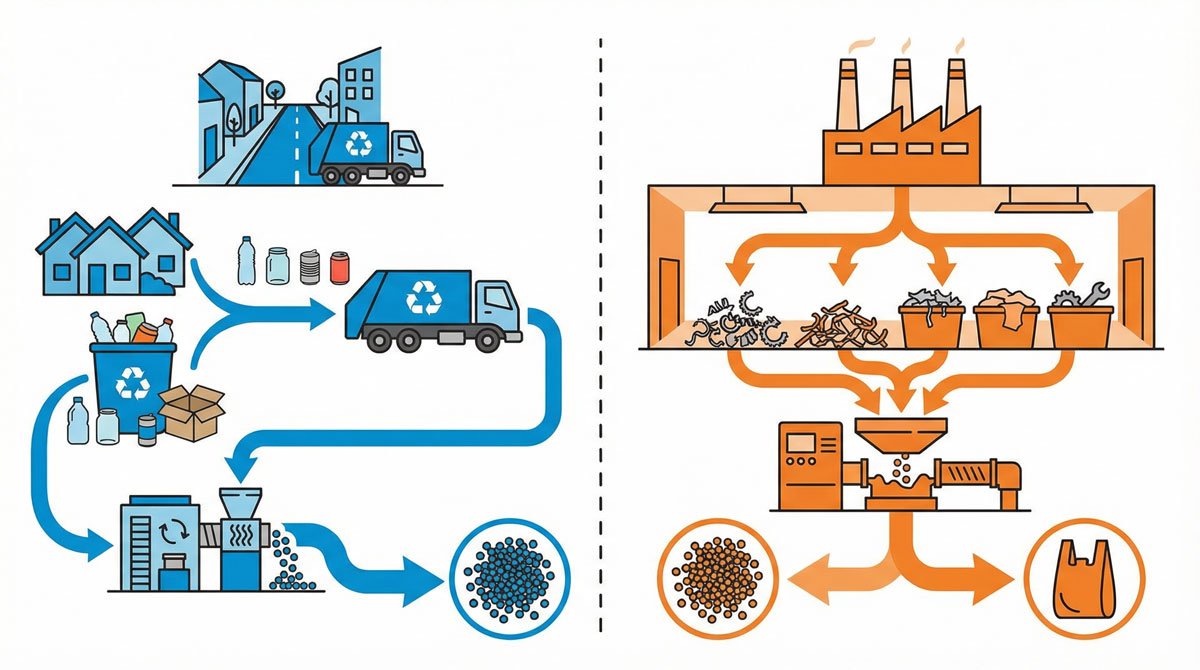
The quality of recycled material heavily depends on the recycling process. The two dominant methods are mechanical and chemical recycling, each with its own strengths.
Mechanical recycling is the most common method. It involves physically washing, shredding, and melting down plastic waste to form new pellets. It’s energy-efficient but can lead to a slight degradation in material quality with each cycle.
Chemical recycling, an emerging set of technologies, breaks down plastics into their original molecular building blocks. These can then be used to create new plastics that are indistinguishable from virgin materials. While more energy-intensive, it can handle more complex and contaminated waste streams.
The Global Landscape: How to Verify Real Recycled Content
As recyclatanteil becomes a key marketing claim, the line between genuine impact and greenwashing can blur. Navigating this landscape requires understanding global standards, regulations, and the tell-tale signs of a trustworthy claim. This section provides a clear guide for both consumers and industry professionals.
Decoding the Labels: Measurement and Certification Standards
Authentic recycled content claims are backed by rigorous standards and third-party verification. Vague statements like “eco-friendly” or “made with recycled materials” without specifics are often red flags. Look for claims that adhere to established protocols like ISO 14021, which sets the global benchmark for self-declared environmental claims.
More importantly, seek out certifications from independent bodies. Organizations like SGS and schemes such as RecyClass audit the entire supply chain—a process known as chain of custody—to verify that the percentage of recycled content claimed is accurate and traceable. A certified claim is the gold standard of authenticity.
A World of Rules: Global Recyclatanteil Regulations
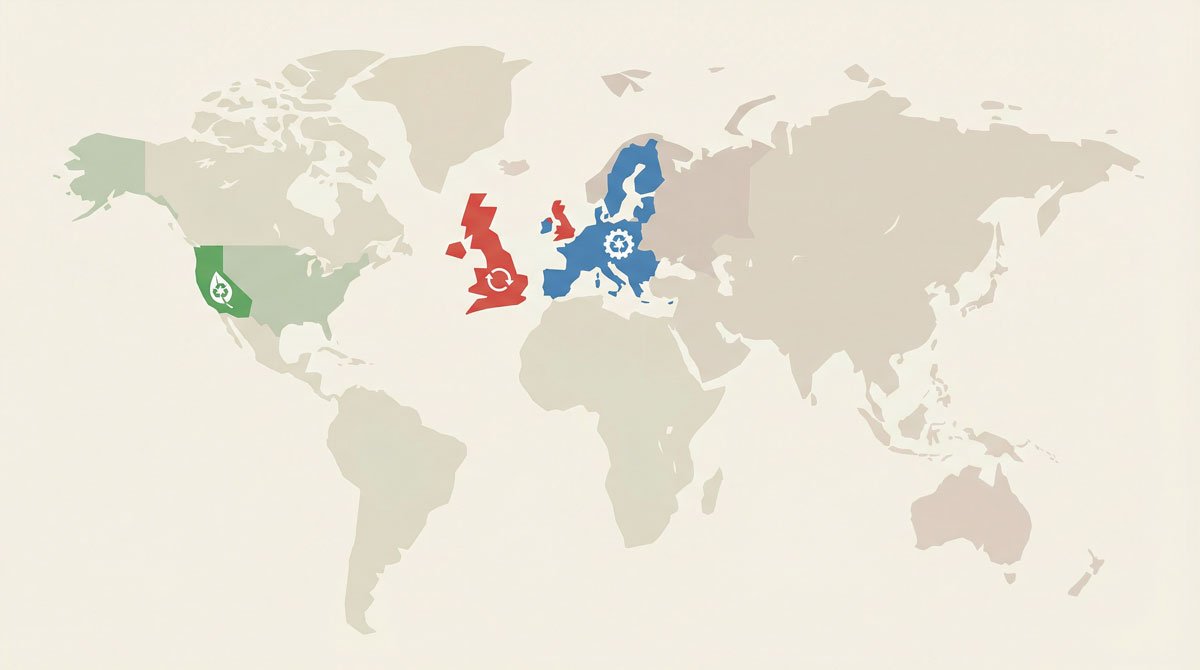
Governments worldwide are stepping in to mandate recycled content, turning voluntary goals into legal requirements. This patchwork of regulations is creating a powerful global incentive for manufacturers to increase their recyclatanteil. Here’s a snapshot of some key regulations:
| Region/Country | Regulation Highlight | Minimum Recycled Content Required |
|---|---|---|
| United Kingdom | Plastic Packaging Tax | 30% for plastic packaging to avoid a significant tax. |
| European Union | Single-Use Plastics Directive | 25% for PET bottles by 2025, rising to 30% for all plastic bottles by 2030. |
| California, USA | AB 793 | A phased increase up to 50% for plastic beverage containers by 2030. |
Your 3-Step Guide to Spotting Greenwashing
With 58-72% of consumers admitting they are misled by recycling claims, knowing what to look for is essential. Use this simple three-step guide to become a more informed consumer:
1. Look for a Number. A credible claim is specific. It will state “30% recycled content,” not just “recyclable.”
2. Check for a Certification Logo. Trustworthy claims are often accompanied by a logo from a recognized third-party verifier.
3. Understand the Material. Is it PCR or PIR? Honest brands are transparent about the source of their recycled materials, with PCR being the more impactful choice.
Frequently Asked Questions (FAQ)
recycling rate measures how much waste is collected for recycling by consumers and cities. In contrast, recyclatanteil (or recycled content) measures the actual percentage of that recycled material used by manufacturers to create a new product. The first is about collection; the second is about production.Conclusion: Beyond Recycling, Towards True Circularity
For too long, the conversation around sustainability has been dominated by recycling rates—a measure of our good intentions. But recyclatanteil shifts the focus to where it truly matters: the tangible, measurable use of recycled materials in the products we buy every day. It is the single most important metric for gauging real progress toward a circular economy.
By understanding the difference, we empower ourselves to see past the greenwashing and recognize the brands that are genuinely committed to closing the loop. The future of sustainability isn’t just about collecting more waste; it’s about demanding that this waste is transformed into something new.
Your choices matter. The next time you shop, look beyond the recycling symbol. Look for the recyclatanteil. By choosing products with higher recycled content, you send a powerful message to manufacturers that you demand more than just promises. You demand real impact.
References
- Ellen MacArthur Foundation – Circular Economy. https://www.ellenmacarthurfoundation.org/
- ISO 14021:2016 – Environmental labels and declarations — Self-declared environmental claims. https://www.iso.org/standard/34256.html
- RecyClass – Certification for Recyclability and Recycled Content. https://recyclass.eu/
- European Environment Agency – Waste Recycling in Europe. https://www.eea.europa.eu/en/analysis/indicators/waste-recycling-in-europe
- UK Government – Plastic Packaging Tax Guidance. https://www.gov.uk/guidance/plastic-packaging-tax