When you think of Ray Kroc, you picture the relentless businessman who built the McDonald’s empire. A man of ambition. A man of public triumphs. But what if I told you the most compelling part of his story isn’t about burgers and fries, but about a forgotten chapter of his heart? A chapter named Jane Dobbins Green.
She was Ray Kroc’s second wife, a name almost entirely erased from the official narrative. While his other marriages were public spectacles, Jane’s story is a whisper. Why was she overlooked? This article peels back the layers of history to reveal the woman who stood silently in the shadow of a giant, a woman whose story of grace is more relevant today than ever.
Prepare to discover the real Jane Dobbins Green. We will explore her early life, her whirlwind marriage to the McDonald’s founder, and the quiet dignity with which she handled betrayal. Her story is not just a historical footnote; it’s a powerful lesson in self-worth and the true meaning of a well-lived life, far from the glare of the spotlight.
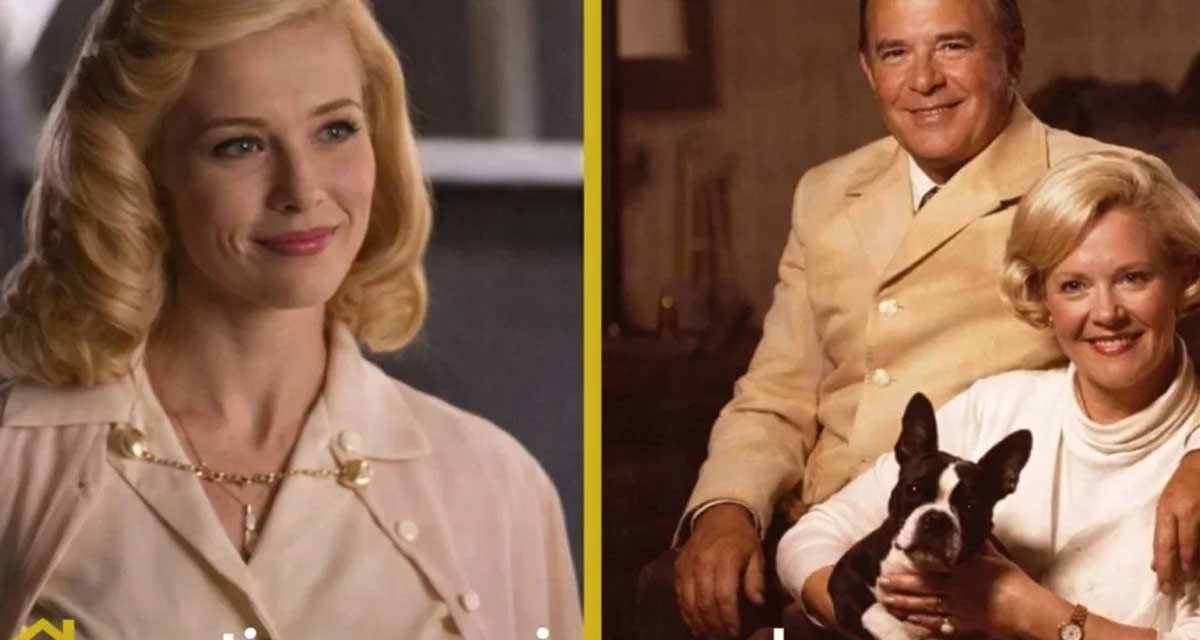
Who Was Jane Dobbins Green? Beyond Ray Kroc’s Shadow
Jane Dobbins Green was more than just a name in a legal document. She was a woman of quiet strength. A woman who valued privacy over publicity. Her story is often reduced to a single line: Ray Kroc’s second wife. But that simple label hides a complex and fascinating individual.
History has a way of forgetting the quiet ones. Jane never sought the spotlight. She didn’t give interviews. She didn’t write a tell-all book. This silence has made her a mystery. But her choice to remain private was not a sign of weakness. It was a deliberate act of self-preservation.
Those who knew her described a woman of grace and dignity. She was not defined by her famous husband. She was her own person. A woman who found happiness not in fame or fortune, but in a life lived on her own terms. This is the story of the real Jane Dobbins Green.
From Walla Walla to Hollywood: Jane’s Early Life and Career
Jane Dobbins Green’s story begins not under the bright lights of Hollywood, but in the quiet town of Walla Walla, Washington. Born on November 22, 1911, her early life was shaped by modesty and resilience. Her parents, Warren David Dobbins and Grace Myrtle Duncan, provided a simple upbringing, far from the world of fame she would later encounter.
Her childhood was not without hardship. Jane’s parents divorced when she was young, a difficult experience for any child. Her mother later remarried a man named Theodore Frechette. Jane also lost her infant sister, Eula Grace, a tragedy that undoubtedly left a lasting mark on the family. These early experiences may have contributed to her later desire for a peaceful and private life.
Before her path crossed with Ray Kroc, Jane had already built a life of her own. She worked as a secretary for the legendary actor John Wayne, a role that required discretion and professionalism. This position placed her in the orbit of Hollywood’s elite, yet she never sought the limelight for herself. She also played the organ at the Criterion Restaurant in St. Paul, Minnesota, a job that showcased her artistic side. It was this quiet confidence and self-sufficiency that defined her long before she became Mrs. Ray Kroc.
The Meeting That Changed Everything: How Jane and Ray Kroc Connected
The year was 1957. In the cozy ambiance of the Criterion Restaurant in St. Paul, Minnesota, a fateful encounter was about to unfold. Jane Dobbins Green, a woman of quiet elegance, was playing the organ. Her music filled the room, creating a warm and inviting atmosphere. It was here that her world collided with that of Ray Kroc.
Ray, ever the ambitious entrepreneur, was in the midst of his relentless drive to expand McDonald’s. His life was a whirlwind of business deals and cross-country travel. At the time, he was still married to his first wife, Ethel Fleming, a marriage of nearly four decades that was beginning to fray under the strain of his all-consuming ambition. He was a man in his mid-50s, a force of nature, while Jane was a serene presence, 26 years his junior.
What drew the fast-food tycoon to the quiet organ player? Perhaps it was her calm demeanor, a stark contrast to his own frenetic energy. Or maybe it was her understated grace, a quality that stood out in a world of loud personalities. The exact details of their courtship remain private, a testament to Jane’s lifelong discretion. But it’s clear that a powerful connection was forged, one that would lead Ray to make a life-altering decision.
Their relationship blossomed quietly, away from the prying eyes of the media. It was a connection built not on shared business interests, but on a personal chemistry that transcended their different worlds. This meeting at a Minnesota restaurant set the stage for a new chapter in both their lives, a chapter that would see Jane Dobbins Green step into the shadow of one of America’s most iconic figures.
Marriage in the Shadow of McDonald’s: 1963-1968
On February 23, 1963, Jane Dobbins Green became the second Mrs. Ray Kroc. Their wedding marked the beginning of a new chapter, not just for them, but for the burgeoning McDonald’s empire. The 1960s were a period of explosive growth for the fast-food chain. Ray was a man possessed, relentlessly pushing his vision across the nation. Jane was now married to the machine.
Life as the wife of Ray Kroc was a study in contrasts. He lived in a world of constant motion, of franchise agreements and corporate strategy. Jane, by nature a private person, was thrust into a world she had never sought. She did not take a public role in the company. You wouldn’t find her at press conferences or grand openings. Her role was a more traditional one, providing a quiet sanctuary from her husband’s chaotic business life.
Did she influence him? Undoubtedly. Jane provided a grounding force. Her calm presence was a necessary counterbalance to Ray’s volcanic energy. While he built an empire of golden arches, she built a home. A space where the titan of industry could, for a moment, just be a man. She offered a perspective untainted by balance sheets and profit margins.
Their five-year marriage did not produce any children. This was a conscious decision, perhaps a mutual understanding that Ray’s true child was McDonald’s. His ambition left little room for anything else. Jane, in her quiet way, seemed to accept this. She supported him from the background, a silent partner in a life that was anything but silent. But living in the shadow of such a colossal ambition would soon prove to be an impossible task.
The Untold Reason Behind Their Divorce: Ray’s Other Love
Every story has a turning point. For Jane and Ray, that moment arrived in the form of another woman: Joan Smith. Their marriage, already strained by the pressures of Ray’s empire, could not withstand this final blow. The divorce in 1968 was not just a legal separation; it was the quiet end of a love story overshadowed by a new, more public one.
Ray had met Joan years earlier, in 1957, the same year he met Jane. Joan was the wife of a McDonald’s franchisee in South Dakota. There was an undeniable spark between them, a connection that lingered in Ray’s mind for years. While married to Jane, he never truly let go of his feelings for Joan. Their paths crossed again at a McDonald’s convention, and the old flame was reignited, burning brighter than ever.
How did Jane handle this betrayal? With the same quiet dignity that defined her entire life. There were no public accusations. No messy tabloid battles. She did not fight for a share of the empire or for the public’s sympathy. Instead, she chose silence. A silence that spoke volumes about her character. It was a testament to her self-respect, a refusal to be drawn into a public spectacle.
In 1968, just five years after they married, Jane and Ray were divorced. Within six months, Ray married Joan. The speed of this transition was a clear, if unspoken, confirmation of the reason for the split. Jane Dobbins Green was once again a private citizen, her brief, tumultuous time in the spotlight over. She walked away not with bitterness, but with her integrity intact.
Life After Ray Kroc: Jane’s Second Act and Second Marriage
After the divorce, Jane Dobbins Green did what she had always done best: she disappeared. While Ray and his new wife Joan became a celebrated power couple, Jane retreated from the world that had never truly been hers. She did not leverage her famous connection for personal gain. She simply wanted peace, and she found it in anonymity.
For seventeen years, she lived a life of quiet solitude. Then, in 1984, love found her again. She married Paul D. Whitney, a man who shared her desire for a private life. This second marriage was everything her first was not. It was calm. It was stable. It was a partnership built on mutual respect and a shared desire for a life away from the public eye.
They settled in Los Angeles, where Jane lived out her remaining years in quiet contentment. There were no headlines, no charity galas, no public appearances. Just a simple, happy life with a man she loved. This second act of her life is perhaps the most telling part of her story. It shows a woman who, after being cast aside, did not crumble. She rebuilt. She found happiness on her own terms.
Jane E. Dobbins Whitney, as she was then known, passed away on August 7, 2000, at the age of 88. She was laid to rest at Westwood Memorial Park, not next to the fast-food king, but beside her beloved Paul. A final, poignant statement about where her heart truly belonged.
The Philosophy of Privacy: What Jane’s Life Teaches Us Today
In an age of oversharing, where every moment is curated for public consumption, Jane Dobbins Green’s life offers a radical counter-narrative. Her story is a masterclass in the philosophy of privacy. Why did she choose silence when she could have had the world’s attention? The answer lies in a profound understanding of self-worth, a value she refused to peg to public opinion.
Jane’s decision to remain private was not an accident; it was a choice. A choice to protect her inner world from the corrosive effects of fame. She understood that the spotlight, while seductive, often burns. It demands a performance, a constant negotiation between one’s true self and a public persona. Jane refused to play that game. Her silence was her power.
What can we learn from her today? Jane’s life teaches us that there is strength in discretion. That a life lived for an audience of one—oneself—can be more fulfilling than a life lived for millions. She reminds us that our value is not measured in followers or headlines, but in the quiet integrity of our choices. In a world that screams for attention, Jane Dobbins Green’s story is a whisper of wisdom: the most authentic life is often the one lived off-camera.
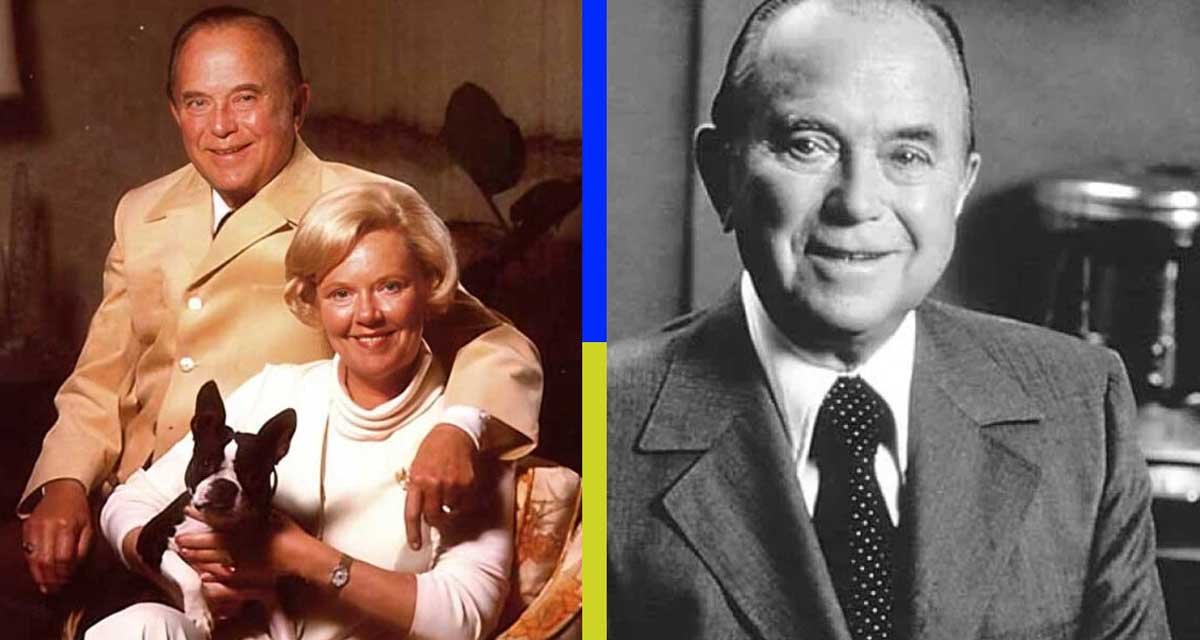
Ray Kroc’s Three Wives: A Comparative Analysis
To truly understand Jane Dobbins Green, we must see her not in isolation, but in the context of the other women in Ray Kroc’s life. His three marriages were to three very different women, each reflecting a different stage of his life and ambition. A comparative look at Ethel, Jane, and Joan reveals a fascinating story of a man’s evolution and the women who were part of his journey.
Ethel Fleming, his first wife, was the partner of his struggling years. They were married for nearly four decades, a time of relentless work and unfulfilled dreams. Ethel was the quintessential mid-century wife, a supportive but often overlooked figure. Their marriage ended as Ray’s ambition finally found its outlet in McDonald’s. She represented his past, a life he was eager to leave behind.
Jane Dobbins Green was his transitional wife. She entered his life as he was tasting real success for the first time. She was a woman of quiet elegance, a stark contrast to the brash, ambitious world he was conquering. Their marriage was a brief, five-year interlude, a moment of attempted calm in the eye of a hurricane. Jane represented a life of peace and privacy that Ray, in the end, could not embrace.
Joan Smith, his third and final wife, was his power partner. She was as ambitious and charismatic as he was. They were a true power couple, a force to be reckoned with. Joan was not just a wife; she was a partner in his empire, and later, the guardian of his legacy. She represented the culmination of his ambition, a woman who could not only keep up with him but also match his drive.
| Feature | Ethel Fleming (The Foundation) | Jane Dobbins Green (The Interlude) | Joan Smith (The Finale) |
|---|---|---|---|
| Marriage Duration | 1922–1961 (39 years) | 1963–1968 (5 years) | 1969–1984 (15 years) |
| Role in Ray’s Life | Partner of his struggling years | Wife during his rise to power | Power partner in his final years |
| Public Profile | Very private | Extremely private | Very public, a philanthropist |
| Relationship to McDonald’s | Witness to its inception | Distant observer | Active participant and heir |
| Personality | Supportive, traditional | Quiet, dignified, private | Ambitious, charismatic, public-facing |
| Legacy | The forgotten first wife | The mysterious second wife | The celebrated philanthropist |
This comparison highlights the unique position Jane occupied. She was neither the long-suffering first wife nor the celebrated final partner. She was the quiet interlude, a chapter that reveals more about Ray Kroc’s inner conflicts than any business biography ever could.
The 1960s Context: Women, Marriage, and Public Life
To appreciate the boldness of Jane Dobbins Green’s choices, we must transport ourselves back to the 1960s. It was a decade of seismic cultural shifts, but for many women, the old rules still applied. The role of a prominent man’s wife was often narrowly defined: be a smiling accessory, a gracious hostess, and a silent supporter. Your identity was a reflection of his success.
This was the world Jane entered when she married Ray Kroc. The expectation was clear. As the wife of the McDonald’s magnate, she was supposed to embrace the spotlight. To attend the galas. To be seen and admired. It was a role that came with immense privilege, but also immense pressure. A pressure to perform, to conform, to subsume one’s own identity into that of the great man.
Jane quietly refused. Her decision to remain private was not just a personal preference; it was a quiet rebellion. In an era that was just beginning to question traditional gender roles, Jane was already living the answer. She demonstrated that a woman’s worth was not dependent on her husband’s fame. That she could be a partner without being a prop. Her life was a testament to a form of female empowerment that didn’t require marches or manifestos, but the simple, radical act of choosing her own path.
Jane’s Legacy: Why Her Story Still Matters
History is written by the victors, and in the story of McDonald’s, the loudest voices have always been those of ambition and success. But what about the quiet legacies? The ones that don’t come with billion-dollar foundations or buildings bearing their name? Jane Dobbins Green’s legacy is of this quieter, more profound variety.
Her story matters because it is a powerful reminder that a life of significance is not always a life of spectacle. In a culture that increasingly equates visibility with value, Jane’s life is a testament to the power of quiet dignity. She chose a path of privacy and self-respect, even when the world offered her fame and fortune on a silver platter. This choice, in itself, is a legacy.
For modern women, Jane’s story is particularly resonant. It speaks to the challenge of maintaining one’s own identity within a partnership, especially when one partner has a larger-than-life public persona. She is a historical example of what it means to be supportive without being subservient, to be a partner without being a shadow. Her life is not a cautionary tale, but a quiet celebration of inner strength and the courage to define one’s own version of happiness.
Frequently Asked Questions (FAQ)
- 1. Who exactly was Jane Dobbins Green, and why should we care about her?
- Jane Dobbins Green was the second wife of Ray Kroc, the man who transformed McDonald’s into a global empire. Her story is important not because of her proximity to fame, but because of her quiet rejection of it. She offers a powerful example of maintaining personal dignity and privacy in a world that often demands the opposite, making her story a timeless lesson in self-worth.
- 2. How did Jane Dobbins Green and Ray Kroc meet?
- They met in 1957 at the Criterion Restaurant in St. Paul, Minnesota. Jane was working as an organ player, and Ray, already a successful and driven businessman, was captivated by her quiet grace. At the time, he was still married to his first wife, Ethel Fleming, but his connection with Jane eventually led him to end his first marriage.
- 3. Why did Jane Dobbins Green and Ray Kroc divorce?
- Their five-year marriage ended in 1968 primarily because Ray Kroc had rekindled a relationship with Joan Smith, who would become his third wife. Ray had met Joan in 1957 and never fully let go of his feelings for her. He divorced Jane and married Joan just six months later. Jane handled the situation with remarkable discretion, never speaking publicly about the betrayal.
- 4. Did Jane Dobbins Green receive any of Ray Kroc’s fortune?
- While the exact details of their divorce settlement were never made public, there is no evidence to suggest that Jane received a significant portion of Ray Kroc’s vast fortune. Unlike his other wives, she did not seek a large financial settlement and chose to live a modest, private life after their separation, further cementing her legacy as a woman who valued dignity over dollars.
- 5. What happened to Jane Dobbins Green after her divorce?
- After divorcing Ray Kroc, Jane completely withdrew from public life. She lived quietly for 17 years before finding happiness again, marrying Paul D. Whitney in 1984. They lived a peaceful life together in Los Angeles, far from the world of celebrity and business she had briefly inhabited.
- 6. How does Jane Dobbins Green compare to Ray Kroc’s other wives?
- Jane stands in stark contrast to Ray Kroc’s other two wives. His first wife, Ethel Fleming, was the partner of his early, struggling years. His third wife, Joan Smith, was a charismatic power partner who became a famous philanthropist. Jane was the quiet interlude between them—a woman who represented a life of peace and privacy that Ray ultimately could not sustain.
- 7. Is Jane Dobbins Green still alive?
- No, Jane Dobbins Green passed away on August 7, 2000, at the age of 88. She died of natural causes and is buried at Westwood Memorial Park in Los Angeles, next to her second husband, Paul D. Whitney, not Ray Kroc.
- 8. Why is there so little information about Jane Dobbins Green?
- The scarcity of information about Jane is a direct result of her own choices. She was an intensely private person who actively avoided the spotlight both during and after her marriage to Ray Kroc. She never gave interviews or sought public attention, making her a fascinating and mysterious figure in the history of one of America’s biggest empires.
A Legacy of Quiet Dignity
Jane Dobbins Green’s life was a quiet masterpiece. In a world that celebrates the loud and the lavish, she chose a different path. A path of dignity, privacy, and unwavering self-respect. She was the forgotten chapter in the epic tale of McDonald’s, but her story is no less powerful. It is a testament to the idea that a meaningful life is not measured by fame or fortune, but by the quiet courage to be true to oneself.
Her legacy is not etched in stone or immortalized in headlines. It is a whisper, a gentle reminder that the most profound strength is often the quietest. Jane Dobbins Green’s story invites us to look beyond the glare of the spotlight and find the beauty in a life lived with grace and integrity.