What if you were born into one of Hollywood’s most legendary families, yet chose to work in the shadows of international diplomacy instead of the spotlight? Caleb James Goddard’s life presents exactly this paradox. Born on September 26, 1970, to Jack Nicholson—the Oscar-winning icon of American cinema—and Susan Anspach, a celebrated actress in her own right, Caleb could have easily followed the well-worn path of celebrity offspring seeking fame and fortune. Instead, he walked an entirely different road. His story challenges everything we assume about celebrity children and what it means to define success on your own terms.

For decades, Caleb remained largely unknown outside diplomatic circles, a deliberate choice that speaks volumes about his character. While his father initially denied his paternity publicly, Caleb quietly built a meaningful career spanning broadcast journalism and international public service. He launched CNN’s Hong Kong Financial News Bureau, pioneered live internet news broadcasting at Yahoo!, and served as head of programming for Bloomberg TV Asia. Yet these impressive credentials pale in comparison to his true calling: serving as a U.S. Foreign Service Officer since 2012, working across five continents to address some of humanity’s most pressing challenges.
This article explores the life of a man who rejected the allure of Hollywood glamour to pursue something far more valuable—authentic purpose. Through education at Georgetown University and the London School of Economics, strategic career choices, and unwavering commitment to privacy and integrity, Caleb James Goddard demonstrates that true legacy isn’t built on fame or fortune, but on meaningful contribution to the world. His journey offers profound lessons about independence, values, and the courage to choose a different path.
Born Into Hollywood, Shaped by Complexity
Los Angeles in 1970 was the epicenter of American cinema’s golden age. Into this glittering world, Caleb James Goddard arrived on September 26, born to two accomplished actors whose names carried weight in Hollywood’s hierarchy. His mother, Susan Anspach, had established herself as a talented actress, earning recognition for her roles in films like Five Easy Pieces and Blume in Love. His father was Jack Nicholson—already a rising star, destined to become one of cinema’s greatest legends.
Yet Caleb’s birth came with complications that would define his early years. His parents’ relationship was brief and never formalized in marriage. When Caleb was born, Susan Anspach was married to actor Mark Goddard, who would become Caleb’s adoptive father and namesake. This family configuration—biological father absent, stepfather present—created a complex emotional landscape for the young boy. The surname “Goddard” became his anchor to stability, even as his biological paternity remained a source of public controversy.
Jack Nicholson’s response to Caleb’s birth was not what one might expect from a father. For nearly two decades, Nicholson publicly denied paternity, a rejection that reverberated through Caleb’s childhood. Media outlets seized upon the scandal, turning a private family matter into tabloid fodder. The denial was deeply painful for young Caleb, who grew up knowing that his own father refused to acknowledge him publicly. This public rejection created a wound that no child should bear.
What made this situation bearable was Susan Anspach’s fierce protection and unwavering support. She never wavered in her assertion that Nicholson was Caleb’s father, nor did she allow her son to internalize his father’s denial as a reflection of his worth. Instead, she taught him that his value came from within—from his character, his choices, and his contributions to the world. Mark Goddard, meanwhile, provided the stable, nurturing presence that a young boy needed. He offered Caleb something his biological father could not: consistent, unconditional paternal love.
Behind closed doors, however, a different story unfolded. Jack Nicholson, despite his public denials, privately supported his son. He paid for Caleb’s education, demonstrating through action what he refused to acknowledge in words. This contradiction—public rejection coupled with private support—created a confusing emotional terrain for Caleb to navigate. It taught him early that people are complex, that actions sometimes speak louder than words, and that integrity means doing the right thing even when no one is watching.
Growing up in the shadow of Hollywood’s brightest lights, Caleb learned to navigate a world obsessed with fame and celebrity. His mother’s career meant exposure to the entertainment industry’s glamour and its darker aspects. Yet even as a child, Caleb seemed to understand something fundamental: that fame was a poor substitute for meaning, and that true success required something far more substantial than public recognition. This insight would shape every major decision he would make in his life.
Education as Liberation: Georgetown and Beyond
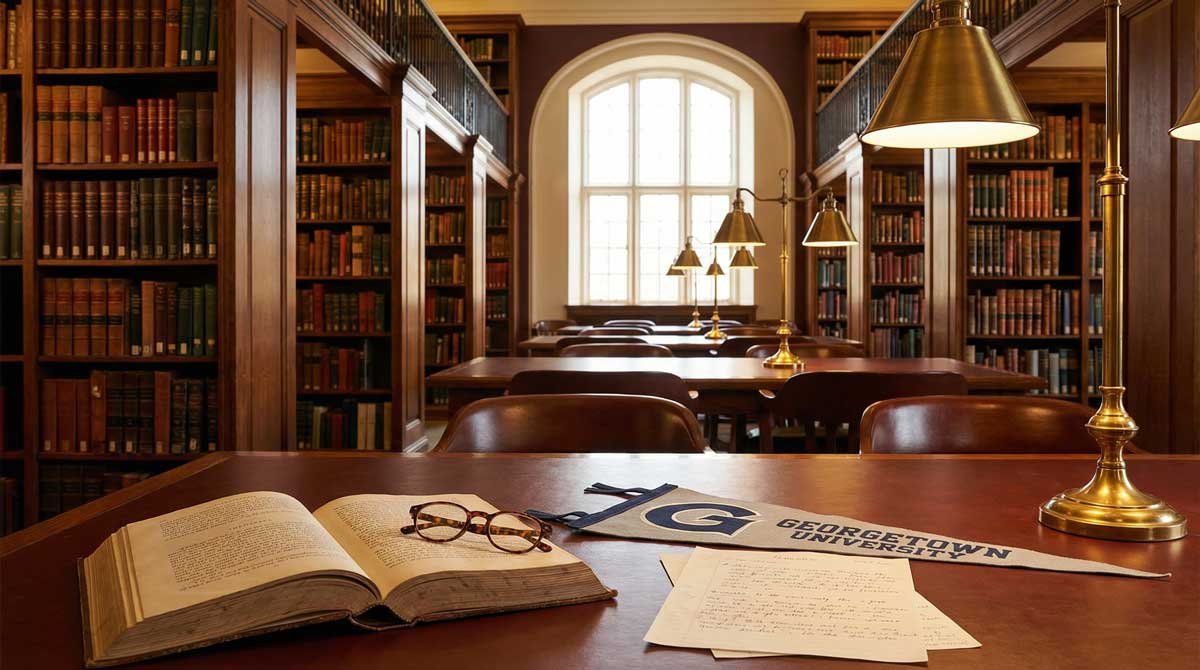
By the time Caleb reached his teenage years, he had already made a crucial decision: he would not follow his parents into acting. Instead, he would pursue education as his pathway to independence and self-definition. This choice was revolutionary in the context of his family. While his mother and father had found success in entertainment, Caleb recognized that true freedom meant building his own identity, separate from the shadow of their celebrity. Education became his vehicle for that liberation.
In 1992, Caleb graduated from Georgetown University, one of America’s most prestigious institutions. His choice of major—political science and philosophy—revealed the depth of his intellectual curiosity. These weren’t fields chosen for commercial viability or entertainment potential. Rather, they represented a genuine passion for understanding how societies function, how ethics guide human behavior, and how individuals navigate complex moral landscapes. Georgetown’s rigorous curriculum demanded critical thinking, analytical rigor, and engagement with ideas that mattered.
What made Georgetown particularly significant for Caleb was that Jack Nicholson privately funded his education. Despite their public estrangement, Nicholson demonstrated his commitment to his son’s future by ensuring he could attend an elite university without financial burden. This private support allowed Caleb to focus entirely on his studies and intellectual development, rather than worrying about tuition or student debt. It was a gift that spoke volumes about his father’s true feelings, even as public denials continued.
But Caleb’s educational journey didn’t end with his undergraduate degree. He pursued advanced studies at the London School of Economics, earning a Master’s degree in International Political Economy. This decision to study abroad, to engage with international perspectives, and to deepen his understanding of global economic systems revealed his trajectory toward international work. The LSE experience exposed him to scholars, students, and ideas from around the world, broadening his perspective and preparing him for a career in global affairs.
The combination of Georgetown’s political science and philosophy foundation, coupled with LSE’s international political economy focus, created a powerful intellectual framework for Caleb’s future. He wasn’t simply accumulating credentials; he was building a coherent worldview grounded in ethics, economics, and political understanding. These educational choices weren’t random—they were deliberate steps toward a career in public service and international diplomacy. Education had transformed him from a celebrity’s son into an intellectual prepared to engage with the world’s most pressing challenges.
Perhaps most importantly, Caleb’s educational path demonstrated his mother’s influence. Susan Anspach had instilled in him the belief that intelligence, integrity, and meaningful work were the true measures of success. She had shown him that celebrity was ephemeral, but knowledge and character were enduring. By choosing Georgetown and LSE, by studying political science and philosophy, Caleb was honoring his mother’s values while forging his own identity. Education wasn’t just about acquiring knowledge—it was about becoming the person he wanted to be.
The Journalist Years: CNN, Bloomberg, and Yahoo!
After graduating from Georgetown, Caleb didn’t immediately pursue a diplomatic career. Instead, he entered the world of broadcast journalism—a field that seemed, on the surface, to contradict his earlier rejection of entertainment. Yet journalism offered something that acting did not: the opportunity to inform, to investigate, and to tell stories that mattered. It was a way to engage with the world’s events while maintaining intellectual integrity. Caleb’s journalism career would prove to be a crucial bridge between his academic training and his eventual diplomatic work.
His first major opportunity came with CNN, where he worked in financial news. But Caleb didn’t simply accept an ordinary reporting position. Instead, he took on the ambitious project of launching CNN’s Hong Kong Financial News Bureau. This wasn’t a minor assignment—it represented a significant expansion of CNN’s international financial coverage during a critical period of Asian economic growth. Caleb’s role in establishing this bureau demonstrated entrepreneurial thinking and the ability to identify opportunities where others saw only routine work. He didn’t just report the news; he helped shape how the world received it.
From CNN, Caleb moved to Bloomberg Television, where he served as head of programming for Bloomberg TV Asia. This position elevated his responsibilities significantly. He wasn’t reporting anymore; he was making editorial decisions, shaping content strategy, and leading a team. This progression revealed his natural leadership abilities and his capacity to think strategically about media and communication. At Bloomberg, Caleb worked during the network’s expansion into Asian markets, a period of tremendous growth and opportunity. His work directly influenced how millions of viewers received financial and business news.
Perhaps most remarkably, Caleb joined Yahoo! during the internet’s explosive growth phase. He hosted the first live news broadcast on the internet—a pioneering achievement that few people remember or recognize today. This wasn’t simply reading news on camera; it was pioneering a new medium. Caleb was at the forefront of the digital revolution, understanding before most that the internet would fundamentally transform how news was delivered and consumed. His work at Yahoo! positioned him as someone who understood both traditional broadcast journalism and emerging digital platforms.
What’s striking about Caleb’s journalism career is that he never sought celebrity. He could have leveraged his famous name, his father’s connections, or his own accomplishments to become a recognizable television personality. Instead, he focused on the work itself—on journalism’s mission to inform and illuminate. He built a reputation as a competent, innovative professional who delivered quality work. Colleagues respected him not because of his family name, but because of his talent, work ethic, and vision.
By the early 2000s, Caleb had established himself as a serious media professional. He had launched a major international news bureau, led programming at a major financial network, and pioneered internet news broadcasting. Yet despite these accomplishments, he remained largely unknown to the general public. This anonymity was precisely what he wanted. His journalism career had served its purpose: it had given him real-world experience in communication, international affairs, and media strategy. These skills would prove invaluable in his next career chapter—international diplomacy.
The Diplomat: Serving Across Continents

In 2012, Caleb made a pivotal career transition. He joined the U.S. State Department as a Foreign Service Officer, leaving behind the media industry for a career in international diplomacy. This decision represented the culmination of his educational training and his earlier career experiences. His studies in political science, philosophy, and international political economy had prepared him intellectually. His work in broadcast journalism had taught him how to communicate complex information clearly. Now, he would apply these skills to serve his country on the global stage.
The Foreign Service is not a career for the faint of heart. It demands sacrifice, adaptability, and a genuine commitment to public service. Officers accept postings to challenging locations, often far from family and comfort. They work on issues that matter—issues that directly affect international relations, national security, and human welfare. Caleb’s decision to pursue this path demonstrated that his earlier rejection of Hollywood fame was genuine. He wasn’t simply avoiding celebrity; he was actively choosing meaningful work over personal comfort.
Caleb’s first major posting took him to Guinea, a West African nation with significant geopolitical importance. During his time there, he worked on issues ranging from election monitoring to humanitarian response. Guinea faced complex challenges—political instability, economic development needs, and public health crises. As a Foreign Service Officer, Caleb contributed to American diplomatic efforts to support democratic institutions and promote stability. His work in Guinea was unglamorous but essential, involving detailed reporting, relationship-building with local officials, and support for American interests in the region.
From Guinea, Caleb’s career took him to Thailand, a Southeast Asian nation of tremendous strategic importance. Thailand’s location, economy, and political situation make it a crucial partner for American foreign policy. In Bangkok, Caleb worked on various diplomatic initiatives. His responsibilities likely included election monitoring, consular services, and support for American citizens and businesses in the region. Thailand’s vibrant culture and complex political landscape presented challenges that required both cultural sensitivity and diplomatic skill—qualities Caleb had developed through his international education and media experience.
Pakistan represented another significant posting in Caleb’s diplomatic career. Pakistan’s relationship with the United States is complex and consequential, touching on issues of counterterrorism, nuclear security, and regional stability. Serving as a Foreign Service Officer in Pakistan required navigating delicate diplomatic situations and contributing to American efforts to maintain productive relations with a crucial South Asian ally. The work was sensitive, demanding, and important. Caleb’s contributions in Pakistan, though largely unknown to the public, directly affected American foreign policy in one of the world’s most strategically important regions.
Caleb’s posting to Brussels represented a shift to Europe’s diplomatic center. As the headquarters of the European Union and NATO, Brussels is one of the most important diplomatic posts in the American Foreign Service. Working there, Caleb engaged with European officials, contributed to transatlantic relations, and supported American interests in Europe. His experience in Asia and Africa had prepared him to work effectively in this sophisticated diplomatic environment. Brussels represented the pinnacle of his diplomatic career—recognition of his capabilities and his value to the State Department.
Most recently, Caleb served in Mauritius, an island nation in the Indian Ocean. Mauritius is strategically important for American interests in the Indian Ocean region and serves as a gateway to African affairs. His posting there continued his pattern of serving in locations of geopolitical significance. Throughout his diplomatic career, Caleb has handled diverse responsibilities: hostage negotiations, election monitoring, Ebola response coordination, consular services, and prisoner rights advocacy. These varied assignments demonstrate his versatility and the State Department’s trust in his abilities.
What distinguishes Caleb’s diplomatic career is its consistency and its focus on substantive work. He hasn’t sought promotions based on connections or family name. Instead, he has built a reputation as a capable, dedicated Foreign Service Officer who delivers results. His work has taken him to five continents, exposed him to diverse cultures and political systems, and given him a genuine understanding of global affairs. Unlike his father, who became famous for playing characters, Caleb has become influential by serving real people in real situations. His impact is measured not in box office returns or awards, but in the lives touched and the relationships built through his diplomatic work.
The Man Behind the Title: Values, Family, and Legacy
Beyond his professional accomplishments, Caleb James Goddard is a devoted husband and father. He married Karine Pouget on December 3, 1998, a union that has endured for over two decades. Together, they have two children—a son and a daughter—whom Caleb raises with the same values his mother instilled in him: integrity, independence, and a commitment to meaningful work. Unlike many celebrity families, the Goddards maintain an extraordinarily private life. They rarely appear in public, avoid social media, and deliberately shield their children from the spotlight that constantly surrounds celebrity families.
This commitment to privacy isn’t about hiding or shame. Rather, it reflects Caleb’s deliberate philosophy about what matters in life. He has watched his parents navigate the complexities of fame—the invasive media attention, the loss of privacy, the distortion of personal relationships by public scrutiny. He has decided that his family deserves protection from these pressures. By keeping his children out of the public eye, Caleb gives them something precious: the freedom to develop their own identities without the burden of celebrity. They can make mistakes, learn, and grow without their lives being dissected by tabloids and social media.
Caleb’s relationship with his mother, Susan Anspach, profoundly shaped his values and his life choices. Susan was more than an actress; she was a woman of principle who valued authenticity and human rights. She taught Caleb that celebrity was ephemeral, but character was enduring. She showed him that true success meant making a positive difference in the world, not accumulating fame or fortune. When Susan passed away in 2018 at age 75 from heart failure, Caleb honored her memory in a characteristically meaningful way. He encouraged friends and supporters to donate to Amnesty International, an organization Susan deeply admired for its human rights advocacy.
This gesture—directing memorial donations to a human rights organization—perfectly encapsulates Caleb’s values. It demonstrates that he hasn’t simply inherited his mother’s principles; he actively lives by them. His diplomatic work, his commitment to public service, his protection of his family’s privacy—all of these choices reflect the values Susan instilled in him. In many ways, his life is a living tribute to his mother’s legacy. She taught him what matters, and he has organized his entire life around those principles.
Financially, Caleb has achieved genuine independence. His estimated net worth of $700,000 to $2 million has been earned entirely through his own work—journalism, production, and diplomatic service. He has never relied on his father’s wealth or leveraged his family name for financial gain. This self-made success is particularly significant given his famous parentage. Many celebrity children inherit wealth or use family connections to launch lucrative careers. Caleb chose a different path. His financial independence mirrors his emotional and professional independence—he has built his life on his own terms.
Perhaps most importantly, Caleb has demonstrated that there is more than one way to be successful. In a culture obsessed with fame and celebrity, he has shown that quiet achievement, meaningful work, and authentic relationships are far more valuable. His life challenges the assumption that celebrity children must either embrace or rebel against their famous parents. Instead, Caleb has transcended that binary. He has taken the best of what his parents offered—his mother’s values, his father’s private support—while rejecting the aspects of celebrity that don’t serve his deeper purposes. His legacy isn’t measured in box office returns or awards, but in the lives he has touched through his diplomatic work and the values he is passing on to his children.
Career Timeline
| Year | Milestone | Details |
|---|---|---|
| 1970 | Birth | September 26, Los Angeles, California |
| 1988-1992 | Georgetown University | Political Science and Philosophy major |
| 1992 | Graduation | Georgetown University degree |
| 1992-2000s | CNN | Launched Hong Kong Financial News Bureau |
| 1990s-2000s | Bloomberg TV | Head of Programming, Bloomberg TV Asia |
| 1990s-2000s | Yahoo! | First live internet news broadcast pioneer |
| 2002-2003 | LSE | Master’s degree, International Political Economy |
| 2012 | State Department | Joined as Foreign Service Officer |
| 2012-2014 | Guinea | U.S. Embassy posting |
| 2014-2016 | Thailand | U.S. Embassy posting |
| 2016-2018 | Pakistan | U.S. Embassy posting |
| 2018 | Mother’s Death | Susan Anspach passes away at age 75 |
| 2018-2020 | Belgium | U.S. Embassy (Brussels) posting |
| 2020-Present | Mauritius | U.S. Embassy posting |
Conclusion
Caleb James Goddard’s life story defies the typical narrative of celebrity children. Born into one of Hollywood’s most famous families, he could have easily followed the well-worn path of leveraging his name, his connections, and his parents’ influence to achieve fame and fortune. Instead, he chose a radically different trajectory. Through education at Georgetown and the London School of Economics, through careers in broadcast journalism and international diplomacy, Caleb has built a life of genuine meaning and substance. His story demonstrates that true success isn’t measured in fame or fortune, but in the integrity of one’s choices and the positive impact of one’s work.
What makes Caleb’s journey particularly remarkable is his consistency. From his early rejection of Hollywood to his deliberate choice of privacy, from his selection of serious academic disciplines to his commitment to public service, every major decision reflects a coherent set of values. He has shown that it’s possible to honor one’s family legacy—his mother’s values, his father’s private support—while forging an entirely independent path. He has demonstrated that meaningful work matters more than public recognition, that authentic relationships matter more than celebrity status, and that integrity matters more than fame.
As the world continues to obsess over celebrity and fame, Caleb James Goddard’s quiet example offers a powerful counternarrative. He reminds us that some of the most important work happens in the shadows, away from cameras and headlines. He shows us that a life well-lived doesn’t require public validation. Most importantly, he demonstrates that we have far more control over our destinies than we often believe. Like Caleb, we can choose our values, define our own success, and build lives of genuine meaning. His story isn’t just about who he is—it’s an invitation for each of us to consider who we want to become.
Frequently Asked Questions About Caleb James Goddard
- 1. Who is Caleb James Goddard?
- Caleb James Goddard is an American diplomat, former journalist, and producer born on September 26, 1970, in Los Angeles, California. He is the son of legendary actor Jack Nicholson and acclaimed actress Susan Anspach. Unlike many celebrity children who seek fame in entertainment, Caleb deliberately chose a private life focused on public service and international diplomacy. He has served as a U.S. Foreign Service Officer since 2012, working at American embassies across Africa, Asia, Europe, and the Indian Ocean region. Before his diplomatic career, he worked in broadcast journalism for major networks including CNN, Bloomberg Television, and Yahoo!, where he pioneered internet news broadcasting.
- 2. What is Caleb James Goddard’s current profession?
- Caleb is currently a U.S. Foreign Service Officer serving with the U.S. State Department. He has held this position since 2012 and has been posted to five countries: Guinea, Thailand, Pakistan, Belgium (Brussels), and Mauritius. In his diplomatic role, he handles diverse responsibilities including hostage negotiations, election monitoring, consular services, humanitarian crisis response (including Ebola coordination), and prisoner rights advocacy. His work involves representing American interests, supporting democratic institutions, and addressing international challenges. Before joining the State Department, he had a successful career in broadcast journalism and television production, but his current focus is entirely on international diplomacy and public service.
- 3. Why did Caleb James Goddard choose privacy over Hollywood fame?
- Caleb’s choice reflects the values his mother, Susan Anspach, instilled in him from childhood. Susan taught him that authentic success comes from meaningful work and integrity, not from public recognition or celebrity status. She showed him that fame was often accompanied by invasive media attention, loss of privacy, and distortion of personal relationships. Rather than leveraging his famous parents’ names, Caleb pursued education at Georgetown University and built a career based on merit and genuine contribution to society. He has stated that he values his family’s privacy and wants to give his own children the freedom to develop their identities without the burden of celebrity. His choice of privacy isn’t about hiding; it’s about protecting what matters most—authentic relationships and meaningful work.
- 4. Where did Caleb James Goddard study?
- Caleb graduated from Georgetown University in 1992 with a degree in political science and philosophy. His choice of these disciplines reflected his intellectual curiosity about how societies function, how ethics guide human behavior, and how individuals navigate complex moral landscapes. Georgetown’s rigorous curriculum prepared him for advanced study and critical thinking. He later earned a Master’s degree in International Political Economy from the London School of Economics (LSE), which he completed around 2002-2003. His education at these prestigious institutions directly shaped his career path toward international affairs and diplomacy. His studies in political science, philosophy, and international political economy provided the intellectual foundation for his work as a Foreign Service Officer.
- 5. Is Caleb James Goddard married?
- Yes, Caleb is married to Karine Pouget. They were married on December 3, 1998, and have been together for over two decades. The couple has two children—a son and a daughter. The Goddard family maintains an exceptionally private lifestyle, deliberately avoiding public attention and social media. They rarely appear in public and work hard to shield their children from the spotlight that often surrounds celebrity families. This commitment to privacy reflects Caleb’s philosophy that family relationships and personal development are more important than public recognition. Unlike many celebrity families, the Goddards have successfully maintained a normal, grounded family life despite Caleb’s famous parentage.
- 6. What is Caleb James Goddard’s relationship with Jack Nicholson?
- Caleb’s relationship with his father, Jack Nicholson, is complex. For nearly twenty years, Nicholson publicly denied paternity, a rejection that was deeply painful for young Caleb. However, behind the scenes, Nicholson privately supported his son by funding his education at Georgetown University. This contradiction—public denial coupled with private support—created a complicated emotional landscape for Caleb to navigate. By the late 1990s, Nicholson began acknowledging their relationship, and by 1998, he spoke positively about their bond. While their relationship was strained by years of public denial, Nicholson’s private actions demonstrated his genuine care for his son. Today, their relationship appears to be cordial, though Caleb maintains his characteristic privacy about family matters.
- 7. What countries has Caleb Goddard worked in as a diplomat?
- Since joining the U.S. State Department in 2012, Caleb has served as a Foreign Service Officer in five countries: Guinea (West Africa), Thailand (Southeast Asia), Pakistan (South Asia), Belgium—specifically Brussels, the center of European diplomacy—and Mauritius (Indian Ocean region). Each posting has been strategically significant for American foreign policy. In Guinea, he worked on election monitoring and humanitarian response. In Thailand, he engaged in diplomatic initiatives supporting American interests in Southeast Asia. In Pakistan, he contributed to managing the complex U.S.-Pakistan relationship. In Brussels, he worked at the diplomatic center of Europe, engaging with European Union and NATO officials. In Mauritius, he serves as a gateway to African affairs and Indian Ocean region interests. These diverse postings demonstrate his versatility and the State Department’s confidence in his abilities.
- 8. Did Caleb James Goddard ever work in entertainment?
- Yes, before his diplomatic career, Caleb worked extensively in broadcast journalism and television production. He launched CNN’s Hong Kong Financial News Bureau, a significant expansion of CNN’s international financial coverage during a period of Asian economic growth. He served as head of programming for Bloomberg Television Asia, where he made editorial decisions and shaped content strategy for the network’s Asian operations. Most notably, he hosted the first live news broadcast on the internet at Yahoo!, pioneering the use of the internet as a news delivery platform. He also worked as a producer, writer, and location manager on film projects. These journalism and production roles allowed him to engage with storytelling and communication while maintaining intellectual integrity. However, unlike his parents, he never pursued acting or sought celebrity status, and he eventually transitioned from media to international diplomacy.
- 9. What is Caleb James Goddard’s net worth?
- Caleb’s estimated net worth ranges from $700,000 to $2 million. Importantly, this wealth has been entirely self-made through his own work in broadcast journalism, television production, and diplomatic service. He has never relied on his father Jack Nicholson’s substantial wealth or leveraged his family name for financial gain. This financial independence is particularly significant given his famous parentage. Many celebrity children inherit wealth or use family connections to launch lucrative careers. Caleb chose a different path, building his wealth through merit and hard work. His self-made success mirrors his emotional and professional independence—he has constructed his entire life on his own terms, without depending on his parents’ resources or influence.
- 10. How did Susan Anspach’s death affect Caleb?
- Susan Anspach, Caleb’s mother, passed away in 2018 at age 75 from heart failure. Her death deeply affected Caleb, who had always credited her with instilling his core values of integrity, independence, and authenticity. Susan had been his primary source of emotional support, especially during the difficult years when his father publicly denied paternity. To honor her memory, Caleb encouraged friends and supporters to donate to Amnesty International, an organization Susan deeply admired for its human rights advocacy. This gesture perfectly encapsulates how her influence continues to guide his life. Her death reinforced his commitment to living according to the values she taught him—prioritizing meaningful work, authentic relationships, and service to others. In many ways, Caleb’s entire life and career choices represent a living tribute to his mother’s legacy and the principles she instilled in him.