When the government makes a decision that impacts millions, who holds it to account? This question sits at the heart of public law. It’s a field where legal principles meet political power, and where the actions of the state are put to the test. In this high-stakes arena, a few legal minds stand out for their ability to navigate its complexities with precision and strategic insight.
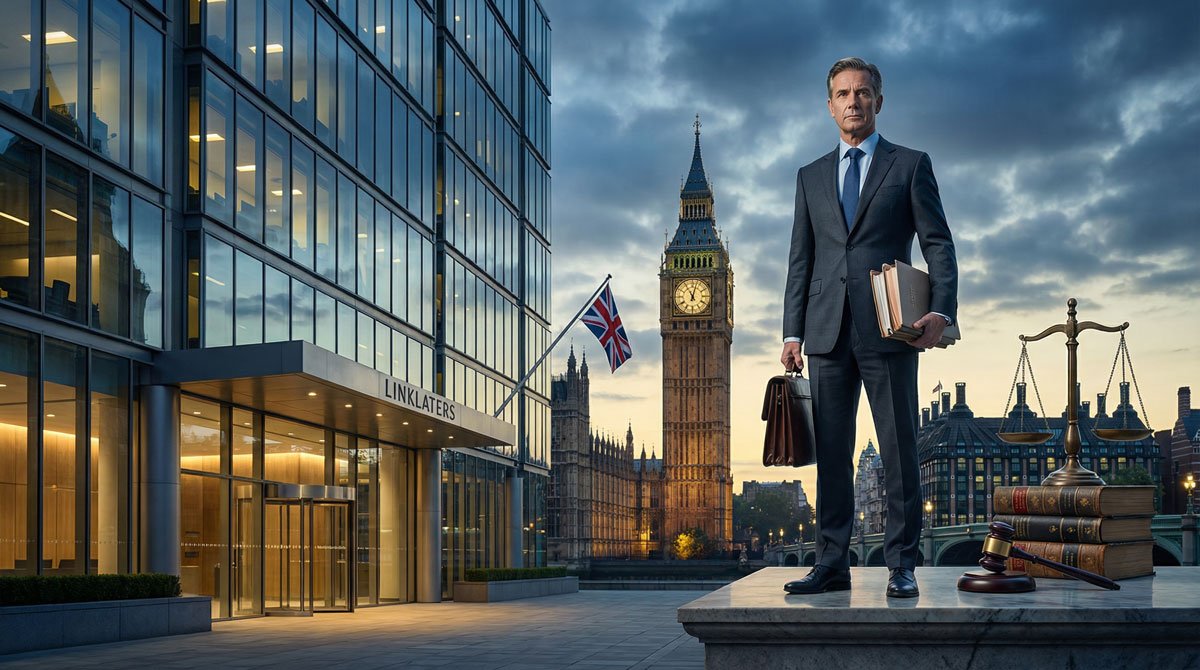
One such figure is Alex Fawke, a partner at Linklaters and a leading UK public law lawyer. He operates at the critical intersection of government, regulation, and commerce, handling disputes that often define the boundaries of state power. From challenging the award of the National Lottery to litigating against Covid-19 quarantine rules, his work has consistently placed him at the center of the UK’s most significant public law battles.
This article moves beyond a simple biography. We will explore the strategic thinking that defines Alex Fawke’s career, from his unique academic background to his insider experience within the UK government. You will gain a deeper understanding of the world of judicial review, see how high-stakes regulatory disputes are won, and discover how one lawyer’s expertise is shaping the evolving relationship between the state and the individual in a post-Brexit world.
Early Foundations: From Australia to Linklaters
A lawyer’s perspective is often shaped long before they enter a courtroom. For Alex Fawke, his formative years in Australia provided a unique foundation. He didn’t just study law. He immersed himself in a multidisciplinary education at Monash University, combining Politics, French, and Law to graduate with First Class Honours. This wasn’t a typical path, but it was a deliberate one. The study of politics provided a deep understanding of governmental systems, while learning a language sharpened his analytical and cultural sensitivities. Law provided the technical toolkit.
This combination of disciplines gave him a rare ability to see legal problems through multiple lenses. He understood that government decisions are not made in a vacuum. They are the product of political pressures, institutional cultures, and complex policy trade-offs. This understanding would become a hallmark of his legal practice. Before joining Linklaters, he served as an advisor and speechwriter to Members of Parliament in Australia, gaining firsthand experience of the political machine. He also worked as a researcher in international trade law, further broadening his global perspective.
His transition to the UK legal market and subsequent rise to Partner at Linklaters was a natural progression. Qualifying to practice in both Australia and England & Wales gave him a comparative legal perspective that few possess. He chose to specialize in public law, a field that perfectly matched his background. It is a domain where legal precision must be balanced with a sophisticated understanding of administrative decision-making. His journey to the heart of the UK’s legal establishment was not just a career move; it was the logical culmination of a unique and deliberate intellectual path.
A Deep Dive into Alex Fawke’s Core Expertise
Alex Fawke’s reputation is built on his mastery of four interconnected legal domains. He doesn’t just practice law; he navigates the intricate spaces where government power, commercial interests, and international rules collide. His work provides a compelling look into the modern challenges of public law.
Judicial Review & Public Law Mastery

At its core, judicial review is the mechanism by which ordinary citizens and organizations can hold the government to account. It allows a judge to scrutinize the lawfulness of a decision made by a public body. Alex Fawke is a master of this process. He has built a career on ensuring that government power is exercised fairly and within the bounds of the law. His work often involves high-profile cases that test the limits of executive authority.
One of the most prominent examples of his work is the challenge brought by Camelot, the long-time operator of the UK National Lottery.
Case Study 1: The National Lottery Licence Challenge
In 2022, the UK Gambling Commission awarded the fourth National Lottery licence to a new operator, ending Camelot’s 28-year tenure. The decision was monumental, impacting a national institution and billions in revenue. Camelot, represented by Alex Fawke and the Linklaters team, launched a judicial review. They argued the decision-making process was flawed.
The legal challenge was complex, involving procurement law, administrative fairness, and the specific duties of a regulator. Fawke’s strategy focused on dissecting the scoring and evaluation process, questioning whether the Commission had followed its own rules. The case demonstrated his ability to manage incredibly high-stakes litigation where commercial, political, and public interests were all on the line. While the challenge was ultimately withdrawn as part of a commercial settlement, it underscored the critical role of judicial review in ensuring transparency in major public procurement decisions.
Case Study 2: Challenging Covid-19 Quarantine Rules
During the height of the Covid-19 pandemic, the UK government introduced mandatory hotel quarantine regulations for travelers arriving from certain countries. A group of airlines, facing immense operational and financial disruption, turned to Alex Fawke to challenge the legality of these measures. This was not just a commercial dispute; it was a fundamental constitutional question about the limits of government power during a national emergency.
The case raised profound issues of human rights, procedural fairness, and the proper use of emergency powers. Fawke’s team argued that the regulations were disproportionate and had been implemented without adequate scientific justification or parliamentary scrutiny. The litigation moved at incredible speed, reflecting the urgency of the situation. It forced the government to repeatedly defend its decision-making in court, contributing to the public debate and ultimately leading to modifications in the quarantine system. This case highlighted Fawke’s ability to act decisively in a crisis and challenge the executive even on matters of national security.
Regulatory & Economic Regulation Disputes
Modern life is shaped by regulators. From the price of water to the content on our screens, their decisions have immense power. But what happens when a regulator gets it wrong? This is where Alex Fawke’s expertise in regulatory disputes becomes critical. He has extensive experience advising clients in heavily regulated sectors, including energy, water, transport, telecommunications, and financial services.
His work involves challenging price control reviews, where a regulator sets the maximum price a utility company can charge its customers. These are incredibly complex cases, blending economic theory with legal principle. He also handles disputes over licence modifications and regulatory enforcement actions. In a world where a single regulatory decision can impact a company’s viability, Fawke’s ability to bridge the gap between dense economic data and clear legal argument is invaluable. He ensures that the commercial realities of his clients are not lost in the bureaucratic process.
International Trade & Investment Law
The UK’s departure from the European Union created a new legal frontier. For the first time in decades, Britain had to forge its own trade policy. Alex Fawke was at the heart of this transformation. His expertise in international trade and investment law became more critical than ever. He advises clients on the complex web of trade remedies, customs law, and investment treaty disputes that now govern UK commerce.
What truly sets him apart is his insider experience. He spent much of 2018 and 2019 on secondment to the UK Government’s Department for International Trade. There, he helped build the country’s new trade law regime from the ground up. This wasn’t just a theoretical exercise; it was the practical construction of a new legal order. This experience gives him an unparalleled ability to advise clients not just on what the law is, but on where it is going.
Arbitration & Complex Litigation
While public law is his core focus, Fawke is also a seasoned litigator in the world of international arbitration and complex commercial litigation. He represents multinational clients in high-value disputes that often span multiple jurisdictions. His arbitration work frequently intersects with his public law expertise, particularly in cases involving state-owned entities or challenges to government measures.
This blend of public and private law experience is rare. It allows him to bring a unique strategic perspective to his cases. He understands how to litigate against a state, whether in a domestic court or an international tribunal. This versatility makes him a formidable advocate in any dispute where the actions of a government are under scrutiny.
The Insider’s Perspective: A Secondment in Government
Few private practice lawyers ever get a look inside the machinery of government. Alex Fawke did more than just look; he helped build the engine. For a significant period across 2018 and 2019, he was seconded to the UK’s Department for International Trade. This was a critical moment in British history. The country was preparing for its post-Brexit future, and a new independent trade policy had to be designed from scratch.
During his secondment, Fawke was directly involved in establishing the legal frameworks that would govern UK trade for decades to come. He wasn’t just advising on the law; he was helping to write it. This experience provided him with an invaluable insider’s perspective on how policy is made, how political considerations shape legal drafting, and how government departments operate under pressure.
This is not just an interesting biographical detail. It is a significant strategic asset. When advising clients, Fawke can draw on a level of understanding that few can match. He knows the pressure points within government. He understands the language of Whitehall. He can anticipate how regulators and officials are likely to think. This allows him to provide advice that is not just legally sound, but also politically and administratively astute. It is this unique blend of external expertise and internal knowledge that makes his counsel so sought after.
Professional Recognition and Intellectual Influence
In the legal world, reputation is earned through years of consistent excellence. Alex Fawke’s standing is formally recognized by the industry’s most respected directories. For five consecutive years, Chambers & Partners has ranked him as an “Up and Coming” leader in Administrative & Public Law. This isn’t just a token of achievement; it’s a clear signal from the market that he is considered a future leader in his field.
Similarly, The Legal 500 identifies him as a “key lawyer” in public international law. These rankings are not based on marketing, but on rigorous, independent research, including confidential feedback from clients and peers. They reflect a consensus within the legal community that Fawke combines intellectual rigour with a practical, client-focused approach.
Beyond his case work, Fawke is a committed thought leader. He has authored over 25 articles in academic and industry journals, contributing to the professional discourse on public law, trade, and arbitration. His writing is not just theoretical; it is often cited in national parliaments and by institutions like the World Trade Organization (WTO). This demonstrates a commitment not just to practicing law, but to shaping it. By sharing his expertise, he helps advance the legal community’s understanding of complex and evolving issues, cementing his role as a true authority in his field.
Sector-Specific Impact: Where Law Meets Industry

Public law is not an abstract discipline. Its impact is felt in the real world, shaping the rules that govern entire industries. Alex Fawke’s work demonstrates a rare ability to apply complex legal principles to the specific challenges of different sectors. He doesn’t just know the law; he knows the industries he serves.
Energy & Utilities
In the energy and utilities sector, regulatory decisions can be worth billions. Fawke has been at the forefront of disputes over price controls and licence modifications. He helps companies navigate the complex and often contentious process of regulatory reviews, ensuring that their arguments are heard and that the regulator’s decisions are fair and evidence-based. His work helps maintain a stable and predictable regulatory environment, which is essential for long-term investment in critical national infrastructure.
Financial Services
London’s status as a global financial hub depends on a robust and fair regulatory framework. Fawke has represented numerous banks and financial institutions in judicial reviews of decisions made by the Financial Ombudsman Service and other regulatory bodies. He helps ensure that these powerful institutions are held to the same standards of fairness and lawfulness as any other public body, protecting the integrity of the financial system.
Transport & Aviation
From railways to runways, the transport sector is heavily regulated. Fawke’s work here has been pivotal, particularly during the Covid-19 crisis. His challenge to the government’s quarantine regulations on behalf of major airlines demonstrated his ability to respond rapidly to a crisis and advocate for an entire industry. He helps transport companies navigate the complex web of rules that govern their operations, ensuring they can continue to connect people and goods efficiently and safely.
Emerging Sectors: Tech, AI, and Climate
Fawke’s practice is not just focused on established industries. He is also at the cutting edge of new legal challenges. He advises clients on the emerging regulatory landscape for technology and artificial intelligence, helping them understand how judicial review will apply to automated decision-making. Furthermore, he is increasingly involved in the growing field of climate litigation, where public law is being used to hold governments and corporations accountable for their environmental commitments.
A Global Perspective Forged in London, Singapore, and the Middle East
While his work is often focused on UK public law, Alex Fawke’s perspective is distinctly international. His career has taken him far beyond London. He has spent time working in Linklaters’ offices in Singapore and the Middle East, gaining direct experience in two of the world’s most dynamic and rapidly evolving legal markets. This is not just a line on a resume; it is a fundamental part of his strategic toolkit.
This international exposure has given him a deep understanding of how different legal systems and regulatory cultures operate. He has seen firsthand how commercial disputes and government relations play out in different parts of the world. This allows him to advise clients with a genuinely global perspective. In an era where legal and regulatory challenges rarely respect national borders, this ability to think across jurisdictions is a powerful advantage.
Whether dealing with a trade dispute that spans continents or an arbitration involving parties from multiple countries, Fawke’s international experience allows him to see the bigger picture. He understands the nuances of cross-border litigation and can anticipate the challenges that arise when different legal traditions intersect. This global mindset, combined with his deep UK expertise, makes him a uniquely effective advocate in the complex world of international public and regulatory law.
The Strategist’s Mind: Working Style & Approach
What truly distinguishes an elite lawyer is not just what they know, but how they think. Those who have worked with Alex Fawke consistently point to his methodical and strategic approach. He has a rare talent for breaking down overwhelmingly complex legal problems into their constituent parts, allowing clients to see a clear path forward. He doesn’t just present legal options; he maps out the strategic landscape, identifying both the risks and the opportunities.
His communication is precise and clear. He avoids jargon, ensuring that clients understand the legal intricacies of their case and can make informed decisions. This approach is built on a foundation of deep listening. He takes the time to understand a client’s commercial objectives, ensuring that the legal strategy is always aligned with the business goals. This client-centric focus is a key reason for his success.
Underpinning it all is a core belief in the principles of public law. He sees judicial review not as a political tool, but as a vital mechanism for ensuring accountability, fairness, and the rule of law. He believes that government should be powerful, but that its power must be exercised within clear legal boundaries. This philosophical commitment gives his work a sense of purpose that goes beyond simply winning cases. It is about upholding the fundamental principles that underpin a democratic society.
Emerging Trends & The Future of Public Law
Alex Fawke is not just a master of existing law; he is a guide to its future. His practice is increasingly focused on the emerging trends that are set to redefine public and regulatory law in the UK and beyond. He is at the forefront of helping clients navigate a legal landscape that is in a constant state of flux.
The Post-Brexit Regulatory Revolution
The UK’s departure from the EU was not an event, but the start of a process. New regulatory frameworks are being built, and old ones are being reimagined. Fawke’s insider experience in helping to design the UK’s new trade law regime makes him uniquely placed to advise on this new world. He helps businesses understand the opportunities and challenges of regulatory divergence, from subsidy control to product standards.
Climate Litigation and Environmental Accountability
The climate crisis is increasingly being fought in the courtroom. Judicial review is becoming a key tool for holding governments and public bodies to account for their climate commitments. Fawke is actively involved in this rapidly developing area, advising clients on the growing wave of climate-related litigation and the evolving standards of environmental accountability.
AI and the Challenge of Automated Government
As governments increasingly use artificial intelligence and algorithms to make decisions, a new set of legal questions is emerging. How can you challenge a decision made by a machine? Fawke is a thought leader on the application of judicial review principles to automated decision-making, helping to shape the legal frameworks that will govern the use of AI in the public sector.
Client Impact & Real-World Outcomes
The true measure of a lawyer’s impact is not found in legal directories, but in the results they achieve for their clients. For Alex Fawke, success is defined by the real-world outcomes he delivers. His work provides businesses with the certainty they need to invest and grow, while also promoting greater accountability and transparency in government.
When he successfully challenges a flawed regulatory decision, he is not just winning a case; he is creating a more stable and predictable environment for an entire industry. When he advises a company on navigating a complex procurement process, he is helping them compete on a level playing field. His work has a tangible impact, protecting jobs, enabling investment, and fostering a fairer market.
Beyond the commercial sphere, his work serves a broader public interest. By holding public bodies to account, he helps ensure that decisions are made rationally, fairly, and in accordance with the law. This strengthens public trust in government and reinforces the democratic principle that no one is above the law. The long-term relationships he builds with clients are a testament to the value he provides. They don’t just turn to him for legal advice; they see him as a strategic partner who can help them navigate their most significant challenges.
Frequently Asked Questions (FAQ)
- 1. What is judicial review and when should you consider it?
- Judicial review is a legal process where a court examines the lawfulness of a decision or action taken by a public body, such as a government department or a regulator. It is not an appeal on the merits of the decision itself, but a challenge to the way the decision was made. You should consider it when you believe a public body has acted illegally, irrationally, or with procedural unfairness.
- 2. What are the main grounds for challenging a government decision?
- There are three primary grounds: Illegality (the decision-maker acted beyond their powers), Irrationality (the decision is so unreasonable that no sensible authority could have reached it), and Procedural Impropriety (the process was unfair or biased). A breach of legitimate expectations or human rights can also be grounds for a challenge.
- 3. How long does a judicial review case typically take?
- The process can be lengthy. A claim must be filed promptly and, in any event, within three months of the decision being challenged (or six weeks for planning decisions). The initial permission stage can take several months, and if granted, a full hearing may be 6-12 months later. The entire process, including potential appeals, can often last 1-2 years.
- 4. What are the costs involved in judicial review?
- Judicial review can be expensive. Costs include court fees, barristers’ fees, and solicitors’ fees, often running into tens or even hundreds of thousands of pounds for complex cases. The losing party is typically ordered to pay a significant portion of the winning party’s legal costs, making it a high-risk form of litigation.
- 5. What sectors does Alex Fawke specialize in?
- Alex Fawke has deep expertise in several regulated sectors, including energy, water, transport, financial services, media, and telecommunications. He advises clients on matters ranging from price control reviews and licence modifications to regulatory enforcement actions and procurement disputes.
- 6. How has Brexit affected public law and regulatory disputes?
- Brexit has created a wave of new legal challenges. It has led to the creation of new UK-specific regulatory bodies and trade laws. This has increased the volume of public law and regulatory disputes as businesses and public authorities navigate the new legal landscape, particularly in areas like subsidy control, trade remedies, and environmental standards.
Conclusion: A Modern Lawyer for a Complex World
Alex Fawke’s career is a compelling story of how legal expertise, strategic insight, and a deep understanding of government can converge to create a uniquely influential legal practice. He is more than just a top UK public law lawyer; he is a strategist who helps clients navigate the most complex and high-stakes challenges at the intersection of law, politics, and commerce. His work ensures that power is exercised accountably and that the rule of law is upheld, even when it is inconvenient for the powerful.
From his multidisciplinary academic roots to his insider experience in the corridors of Whitehall, Fawke has cultivated a perspective that is both broad and deep. In an era of profound political and regulatory change, his ability to provide clear, strategic, and forward-looking advice has never been more valuable. For anyone seeking to understand the forces shaping modern Britain, the work of Alex Fawke offers a crucial and illuminating insight.