In the sprawling, complex dynasty of Marlon Brando, one of Hollywood’s most legendary and enigmatic figures, a story of quiet rebellion unfolds. Among his eleven children, scattered across continents and cultures, one daughter chose a path not of fame or fortune, but of profound privacy. Her name is Maimiti Brando, and her life offers a rare glimpse into the soul of a man who, despite his global stardom, yearned for a world far from the Hollywood glare.
Maimiti Brando, born in 1977 in the serene landscapes of Tahiti, is the adopted daughter of Marlon Brando and his third wife, Tarita Teriipaia. While not of his blood, she was unequivocally of his heart. Her story is not one of red carpets or blockbuster films, but of a life lived in deep connection with her Polynesian heritage, a testament to the values her father cherished most: family, nature, and the sacredness of a private life.
This article delves into the untold story of Maimiti Brando. We will explore her unique upbringing on the private atoll of Teti’aroa, understand the profound reasons behind her choice to remain outside the public eye, and uncover how she has become the silent guardian of Marlon Brando’s most cherished legacy—a vision of a world in harmony with nature. Join us as we journey into the heart of the Brando family’s Polynesian paradise.
The Beginning: When Hollywood Met Polynesia
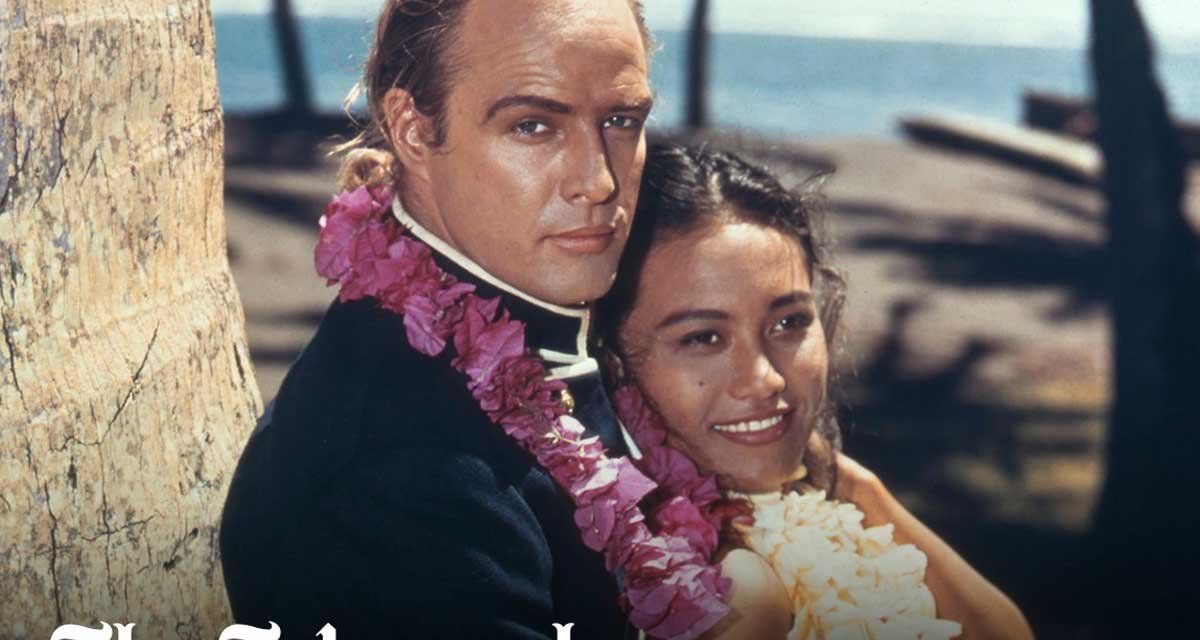
The story of Maimiti Brando begins not with her birth, but with a cinematic journey that forever altered the course of her father’s life. In 1961, Marlon Brando, already a titan of Hollywood, sailed to the South Pacific to film Mutiny on the Bounty. He was cast as the rebellious Fletcher Christian, but it was the islands of French Polynesia that truly captured his spirit. The vibrant culture, the untouched landscapes, and the warmth of the people resonated with a deep-seated yearning for authenticity that Hollywood could never satisfy.
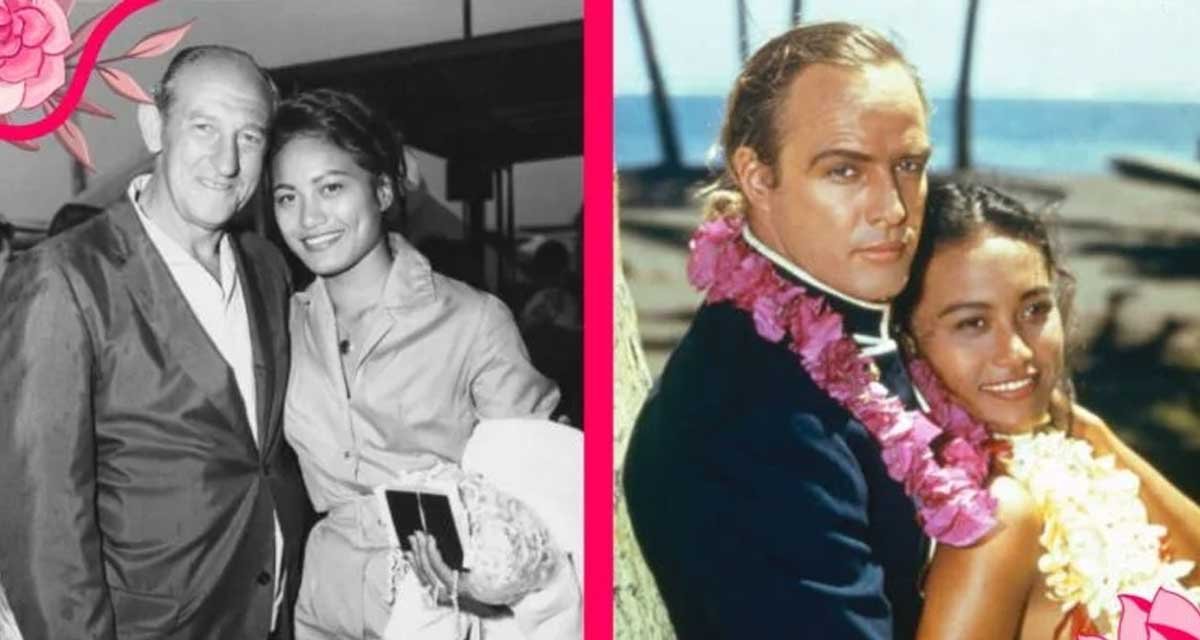
It was here, on the sun-drenched shores of Tahiti, that he met Tarita Teriipaia. A stunningly beautiful 19-year-old from Bora Bora, Tarita was cast as Princess Maimiti, Fletcher Christian’s on-screen love interest. Her natural grace and profound connection to her Polynesian roots captivated Brando. Their on-screen chemistry blossomed into a real-life romance, a powerful connection that transcended the film set. Tarita was more than just an actress; she was the embodiment of the world Brando had only dreamed of through the pages of National Geographic as a boy.
Their relationship marked a pivotal turning point for Brando. He married Tarita in 1962 and together they had two biological children, a son, Teihotu (born 1963), and a daughter, Cheyenne (born 1970). Though their official marriage ended in 1972, their bond remained unbreakable, woven together by their children and Brando’s undying love for Tahiti. It was this enduring connection that led Brando to later adopt Tarita’s daughter from a previous relationship, a girl born in 1977, whom he would also name Maimiti, forever linking her to the role that started it all.
Understanding this origin story is crucial. Maimiti’s life is rooted in this collision of two worlds: the glamour of old Hollywood and the ancient traditions of Polynesia. She was born into a legacy defined not by fame, but by her father’s deliberate escape from it.
A Timeline of Love and Legacy
To grasp the full context of Maimiti’s place in the Brando family, it’s helpful to look at the timeline of events that shaped her world.
| Year | Event |
|---|---|
| 1961 | Marlon Brando arrives in Tahiti to film Mutiny on the Bounty and meets Tarita Teriipaia. |
| 1962 | Brando marries Tarita Teriipaia. |
| 1963 | Their first biological child, son Teihotu Brando, is born. |
| 1965 | Brando purchases the private atoll of Teti’aroa. |
| 1970 | Their second biological child, daughter Cheyenne Brando, is born. |
| 1972 | Brando and Tarita formally separate, though their connection remains strong. |
| 1977 | Maimiti is born in Tahiti to Tarita from another relationship. Marlon Brando lovingly adopts her as his own. |
This timeline doesn’t just mark dates; it maps the journey of a man who found his true home thousands of miles from Hollywood, and the family he built there—and Maimiti—would come to define.
Born into Love: Maimiti’s Adoption and Childhood
Maimiti Brando’s story is a powerful testament to the idea that family is defined by love, not just blood. Born in 1977 to Tarita Teriipaia from a relationship that occurred after her formal separation from Marlon, Maimiti was welcomed into the Brando fold with open arms. For Marlon, the decision to adopt her was a natural extension of his deep-seated paternal instincts and his expansive, unconventional view of family. He had always desired a large, diverse family, one that transcended cultural and biological boundaries. Maimiti’s adoption was a profound expression of this philosophy.
This act of love reflected a core aspect of Brando’s character that was often overshadowed by his public persona. He wasn’t just a benefactor; he was a father who craved connection and sought to build a sanctuary for his children, far from the corrosive influence of Hollywood. By adopting Maimiti, he solidified her place within the Tahitian branch of his dynasty, ensuring she would grow up enveloped by the same love, culture, and natural beauty as her siblings Teihotu and Cheyenne.
Her childhood was spent not in the manicured lawns of Beverly Hills, but on the wild, pristine atoll of Teti’aroa. This private paradise, purchased by Brando in 1965, was more than a getaway; it was a living classroom and a fortress of solitude. Here, Maimiti and her siblings were raised with sand between their toes and the rhythm of the ocean as their daily soundtrack. They swam in the turquoise lagoon, explored the lush motus (islets), and learned the Polynesian traditions that their father so deeply admired. On Teti’aroa, Marlon Brando wasn’t a movie star; he was simply “Dad,” a figure who taught them to fish, to respect nature, and to find value in a life of simplicity.
A Complex and Global Family
Maimiti grew up as part of one of Hollywood’s most famously complex families. Marlon Brando fathered or adopted at least eleven children with multiple women, creating a global network of siblings. While Maimiti’s life was centered in Tahiti with her mother Tarita and siblings Teihotu and Cheyenne, she was connected to a wider, more complicated world. Her half-siblings, including Christian, Miko, and Rebecca, lived primarily in the United States, their lives more directly touched by their father’s fame and its accompanying turmoil.
This table offers a glimpse into the diverse paths of the Brando children, highlighting the unique trajectory Maimiti chose.
| Name | Birth Year | Mother | Status | Life Path & Public Profile |
|---|---|---|---|---|
| Christian | 1958 | Anna Kashfi | Deceased (2008) | A life marked by tragedy and legal troubles; high public profile. |
| Miko | 1961 | Movita Castaneda | Living | Worked as Michael Jackson’s bodyguard; maintains a relatively low profile. |
| Rebecca | 1966 | Movita Castaneda | Living | A clinical psychologist who has remained largely private. |
| Teihotu | 1963 | Tarita Teriipaia | Living | Lives a quiet, private life in Tahiti, away from the spotlight. |
| Cheyenne | 1970 | Tarita Teriipaia | Deceased (1995) | A model whose life ended in a well-publicized tragedy. |
| Maimiti | 1977 | Tarita (Adopted) | Living | Embraced a deeply private life in her native Tahiti. |
| Raiatua | 1982 | Tarita (Adopted Niece) | Living | Lives a private life, reportedly in Tahiti. |
| Petra | 1972 | Caroline Barrett (Adopted) | Living | A lawyer and humanitarian who runs a foundation. |
| Ninna | 1989 | Maria Cristina Ruiz | Living | Has remained entirely out of the public eye. |
| Myles | 1992 | Maria Cristina Ruiz | Living | Has remained entirely out of the public eye. |
| Timothy | 1994 | Maria Cristina Ruiz | Living | Has remained entirely out of the public eye. |
This sprawling, blended family, with its mix of fame, tragedy, and determined privacy, formed the backdrop of Maimiti’s upbringing. Her decision to embrace a quiet life appears not as an accident, but as a conscious choice, deeply informed by the turbulent and often painful experiences of her siblings who came before her.
Paradise Island: Teti’aroa and Marlon’s Vision for the Future
Long before “eco-consciousness” became a global buzzword, Marlon Brando was dreaming of a sustainable paradise. His purchase of Teti’aroa in 1965 was not the whim of a wealthy movie star seeking an exotic playground; it was the act of a visionary securing a sanctuary. For Brando, Teti’aroa was more than just a beautiful atoll; it was a place of profound spiritual and cultural significance, once the exclusive retreat for Tahitian royalty. He saw himself not as its owner, but as its steward, and envisioned a future where humanity and nature could coexist in perfect harmony.
Brando dreamed of transforming Teti’aroa into a “university of the sea”—a world-class center for research, education, and sustainable technology. He spent years studying the atoll’s delicate ecosystem, from its vibrant coral reefs to its unique bird populations. This was the environment in which Maimiti Brando was raised. Her playground was a living laboratory, a place where her father’s passion for conservation was a tangible, daily reality. She grew up understanding that the island’s beauty was fragile and that its preservation was a sacred duty.
Decades later, this vision has been spectacularly realized. The Brando, the luxury resort that opened on the atoll in 2014, is a monument to his forward-thinking ideals. It operates on principles of radical sustainability, powered by groundbreaking technologies that Brando himself had researched and championed. This isn’t just a resort; it’s the continuation of a promise.
Teti’aroa’s Eco-Innovations: A Legacy in Action
The resort is a marvel of green engineering, implementing solutions that were once considered science fiction. These innovations are a direct result of Brando’s relentless curiosity and his collaboration with leading scientists and engineers.
| Innovation Project | Achievement & Impact | Marlon Brando’s Vision |
|---|---|---|
| Seawater Air Conditioning (SWAC) | The world’s first and largest deep-sea water air conditioning system, it harnesses cold ocean water to cool the resort, reducing energy consumption by over 90%. | Brando was obsessed with finding an alternative to fossil-fuel-guzzling air conditioners, seeing it as the key to sustainable tropical living. |
| Mosquito Eradication Program | In partnership with a local institute, the resort releases sterile male mosquitoes to collapse the local population, virtually eliminating mosquito-borne illnesses without pesticides. | He sought a solution that was both effective for guests and harmless to the island’s delicate ecosystem. |
| Rat Eradication & Bird Sanctuary | A successful program to remove invasive rats has allowed native ground-nesting birds, like the Brown Booby and Great Frigatebird, to thrive once again. | Brando was passionate about restoring the atoll to its original state, protecting the species that had been there for millennia. |
| Green Sea Turtle Protection | The atoll is now one of the most important nesting sites for green sea turtles in the region, with thousands of turtles returning each year to lay their eggs in a protected environment. | He considered the turtles sacred and wanted to create a sanctuary where they would be safe from poachers and predators. |
| Coral Reef & Biosecurity | Strict biosecurity protocols, including inspecting all incoming goods, prevent invasive species from damaging the pristine coral reef and native flora. | His goal was to preserve the atoll’s isolation and protect its unique biodiversity from outside contamination. |
“We can study one place like Tetiaroa in microcosm and use that model… Whatever else I do there, the isolation is something I wish to preserve, because more and more, the quality of ‘less and less’ is at a premium in this life.”
— Marlon Brando, in a conversation with journalist Patt Morrison
For Maimiti, these aren’t just impressive statistics; they are the fulfillment of her father’s life’s work. Growing up on Teti’aroa, she witnessed his struggles and his dreams firsthand. Today, the thriving ecosystem and the globally celebrated eco-resort stand as a powerful, living tribute to the man who saw the future long before the rest of the world caught up.
The Path Less Traveled: Why Maimiti Chose Privacy Over Fame
In an era defined by the relentless pursuit of public attention, Maimiti Brando’s life is a radical act of defiance. While many celebrity children are drawn into the orbit of their parents’ fame, Maimiti made a conscious and unwavering choice to step away from the spotlight. This decision is perhaps the most fascinating aspect of her story, offering a profound insight into both her character and the complex legacy of her father. Her life is not an absence of ambition, but the fulfillment of a different kind—one rooted in peace, authenticity, and the quiet dignity of a private existence.
This choice was undoubtedly shaped by her father’s own deep-seated ambivalence toward Hollywood. Marlon Brando was famously contemptuous of the fame he had acquired. He saw the industry as a hollow spectacle, a machine that commodified art and devoured souls. He often spoke of his desire to escape, to find a place where he could be himself, unburdened by the weight of his own myth. Maimiti appears to have inherited not his talent for performance, but his yearning for freedom. She witnessed firsthand the destructive toll that fame took on her family, particularly the tragic trajectory of her sister, Cheyenne. For Maimiti, privacy was not a loss of opportunity; it was an act of self-preservation.
Furthermore, her decision is deeply intertwined with her Polynesian heritage. In Tahitian culture, value is often placed on community, family, and a harmonious relationship with nature, rather than on individual acclaim or material wealth. Maimiti’s choice to live a quiet life in her homeland can be seen as an embrace of these traditional values. She is not just Marlon Brando’s daughter; she is a woman of Polynesia, and her life reflects a cultural wisdom that finds richness in simplicity and strength in connection to one’s roots.
Divergent Paths: The Brando Siblings
The stark contrast between Maimiti’s life and those of her siblings underscores the significance of her choice. The Brando children were all born into the same extraordinary circumstances, yet they navigated their legacy in vastly different ways. This comparison reveals the powerful forces at play in a family shaped by genius, fame, and tragedy.
| Sibling | Career & Public Life | Relationship with Fame | Life Outcome & Key Lesson |
|---|---|---|---|
| Christian | Various jobs, no stable career | High (Negative) | A life plagued by legal troubles and addiction, demonstrating the crushing weight of the Brando name. |
| Miko | Security, construction, estate management | Low (Professional) | Found a way to work adjacent to fame (for Michael Jackson) while maintaining a professional, low-key existence. |
| Cheyenne | Fashion Model | High (Destructive) | Actively pursued the spotlight, but her life ended in tragedy, a cautionary tale of vulnerability in the face of public pressure. |
| Teihotu | Unknown | Extremely Low | Like Maimiti, he chose a life of complete privacy in Tahiti, embracing the sanctuary his father created. |
| Petra | Lawyer & Philanthropist | Medium (Purpose-Driven) | Used her platform and resources for humanitarian work, channeling her legacy into positive action. |
| Maimiti | Unknown (Private) | Extremely Low (Deliberate) | Represents the ultimate fulfillment of her father’s desire for a life of peace, authenticity, and freedom from fame. |
Maimiti’s path, when viewed alongside her siblings, is not one of passive retreat but of active, deliberate choice. She stands as a quiet counterpoint to the chaos that often surrounded her family, a living embodiment of the paradise her father sought and, in her, seemingly found.
Through Tragedy to Strength: The Bond Between Sisters
No story of the Brando family is complete without acknowledging the deep shadows of tragedy that run alongside its brilliant light. The most heart-wrenching of these is the story of Cheyenne Brando, Maimiti’s older sister. Her life, a whirlwind of beauty, promise, and profound pain, serves as a dark backdrop against which Maimiti’s quiet existence becomes even more poignant. The bond between the sisters, and the devastating loss that tore through their family, was a defining force in shaping Maimiti’s worldview and strengthening her resolve to seek a life of peace.
Cheyenne, born in 1970, was a striking beauty who, unlike her siblings in Tahiti, was drawn to the allure of the outside world. She became a successful model in Paris, her face gracing the pages of fashion magazines. But beneath the glamorous surface, she battled significant personal demons, including struggles with drug addiction and mental health. The turning point came in 1990, in an event that would shatter the family. At Marlon Brando’s Mulholland Drive home, Cheyenne’s boyfriend, Dag Drollet, was shot and killed by her half-brother, Christian Brando. Christian claimed the shooting was accidental, occurring during a struggle after Cheyenne alleged Drollet had been physically abusive.
The aftermath was a devastating spiral. Cheyenne, who was pregnant with Drollet’s child at the time, was plunged into a severe depression from which she would never recover. She was hounded by the media, and her mental health deteriorated further. Despite her father’s desperate attempts to protect her, the weight of the tragedy proved too much to bear. In 1995, at the age of just 25, Cheyenne took her own life at her mother’s home in Tahiti. Marlon Brando, who was shattered by the loss, did not attend her funeral, a decision that has been interpreted in many ways but was likely an act of a father so broken he could not face the finality of his daughter’s death.
For Maimiti, who was a teenager at the time, witnessing her sister’s tragic journey was a brutal lesson in the perils of a public life. She saw how fame, media scrutiny, and the pressures of the outside world could combine to destroy a sensitive soul. The loss of Cheyenne undoubtedly fortified the walls Maimiti was already building around her own life. It solidified the idea that the sanctuary of Tahiti and the privacy of her family were not just preferences, but necessities for survival. The healing from such a profound loss is a lifelong process, one that the family has navigated away from the public eye, reinforcing the values of unity and quiet resilience that her father always championed.
A Timeline of Crisis
The events that unfolded were a rapid and tragic cascade, leaving an indelible scar on the Brando family.
| Date | Event |
|---|---|
| May 16, 1990 | Dag Drollet, Cheyenne’s boyfriend, is shot and killed by Christian Brando at Marlon Brando’s home. |
| June 1990 | Cheyenne gives birth to her son, Tuki Brando, but her mental health declines rapidly. |
| 1990-1995 | Cheyenne is in and out of psychiatric hospitals in France and the U.S., struggling with severe depression. |
| April 16, 1995 | Cheyenne Brando dies by suicide in Tahiti at the age of 25. |
| July 1, 2004 | Marlon Brando passes away, having never fully recovered from the loss of his daughter. |
This dark chapter, while deeply painful, is essential to understanding the quiet strength of Maimiti Brando. It highlights what she chose to turn away from, and in doing so, illuminates the profound value of the peaceful life she chose to build.
Guardian of a Legacy: Maimiti’s Role in Preserving Marlon’s Vision
While Maimiti Brando has never sought a public role, her life is a quiet and powerful embodiment of her father’s most cherished dreams. As a woman of Polynesia, deeply rooted in the culture and landscape of Tahiti, she is a natural guardian of the Brando legacy—not the Hollywood legend, but the environmental visionary. Her enduring presence on the islands ensures that the spirit of her father’s vision for Teti’aroa remains authentic and grounded in the local community.
After Marlon Brando’s death in 2004, the ownership of Teti’aroa passed to a trust for his children. While the day-to-day operations of The Brando resort are managed by a dedicated team, the family, including Maimiti, remains central to the island’s identity. Her connection to Teti’aroa is not one of management or finance, but of something far deeper: a lifelong, inherited stewardship. She is part of the living history of the atoll, a direct link to the man who saw its potential and fought for its preservation.
The Brando resort is more than just a luxury destination; it is a manifestation of Marlon’s values. Every sustainable practice, from the pioneering SWAC system to the protection of native wildlife, is a continuation of his work. The resort’s success is a testament to the viability of his dream, proving that luxury and sustainability are not mutually exclusive. For Maimiti, the thriving ecosystem of Teti’aroa is a personal and profound vindication of her father’s often-misunderstood passion. It is a place where his ideals are not just remembered, but actively practiced.
Furthermore, Maimiti’s life serves as a cultural anchor. In a world where celebrity legacies are often commercialized and diluted, her quiet, private existence helps to protect the integrity of her father’s connection to Polynesia. She represents the authentic, non-performative side of the Brando family’s Tahitian story. Her life is a reminder that the most important legacies are not always the loudest, but are often carried forward in the quiet dedication of those who hold them most dear.
Lessons for Today: What Maimiti Brando’s Life Teaches Us
In our hyper-connected, social media-driven world, the story of Maimiti Brando resonates with a particular power. Her life, lived deliberately outside the glare of public attention, offers a series of profound lessons for a society obsessed with fame, validation, and the curated performance of self. She is a quiet icon for a noisy age, and her choices provide a valuable blueprint for a more authentic and meaningful existence.
First, Maimiti’s life is a powerful reminder of the courage of privacy. In an era where personal moments are broadcast for public consumption, choosing to keep one’s life private is a radical act. It requires a strong sense of self-worth that is not dependent on external validation. Her story challenges us to question our own relationship with social media and to consider what parts of our lives are sacred and worth protecting from the public gaze. She teaches us that a life undocumented can be a life fully lived.
Second, her story highlights the challenge of finding authenticity within a famous family. Maimiti navigated the immense pressure of the Brando legacy by forging her own path, one that was true to her own values and cultural heritage. This is a vital lesson for anyone who feels overshadowed by the expectations of their family or society. She demonstrates that true freedom comes not from conforming to a pre-written script, but from having the courage to write your own, even if it’s a story told in whispers rather than shouts.
Finally, Maimiti’s life is a testament to the enduring wisdom of Polynesian values. Her deep connection to nature, her prioritization of family, and her embrace of a simpler way of life offer a powerful antidote to the anxieties of modern Western culture. She embodies a worldview where wealth is measured not in dollars or followers, but in the richness of one’s relationships and the health of the land. In a world grappling with environmental crisis and a growing sense of disconnection, her life points toward a more sustainable and soul-nourishing way of being.
Maimiti Brando may never give an interview or write a memoir, but her life itself is a powerful statement. It speaks to the possibility of finding peace in a chaotic world, of honoring a complex legacy on one’s own terms, and of discovering that the most profound and fulfilling life can be the one lived far from the crowd.
Frequently Asked Questions About Maimiti Brando
To help you better understand this enigmatic figure, we’ve compiled answers to some of the most frequently asked questions about Maimiti Brando and her unique place in one of Hollywood’s most famous families.
- 1. Who is Maimiti Brando and why is she significant?
- Maimiti Brando, born in 1977, is the adopted daughter of legendary actor Marlon Brando and his third wife, Tahitian actress Tarita Teriipaia. Her significance lies in her deliberate choice to live a completely private life in her native Tahiti, embodying the values of peace and harmony with nature that her famous father cherished, thus becoming a quiet guardian of his most personal legacy.
- 2. Is Maimiti Brando Marlon Brando’s biological daughter?
- No, she is not. Maimiti was born to Tarita from a relationship after her legal separation from Marlon Brando. Brando, however, lovingly adopted her as his own daughter, raising her as an integral part of his Tahitian family.
- 3. What is Maimiti Brando’s current age and where does she live?
- As of 2026, Maimiti Brando is 49 years old. She continues to live a quiet and private life in French Polynesia, far from the public eye.
- 4. Why did Marlon Brando adopt Maimiti?
- Marlon Brando had a famously expansive and inclusive view of family. His decision to adopt Maimiti was a reflection of his deep love for Tarita and his desire to provide a stable, loving home for all his children, regardless of biological ties. It was a testament to his belief that family is built on love, not just blood.
- 5. What was Marlon Brando’s vision for Teti’aroa island?
- Marlon Brando envisioned Teti’aroa as a “university of the sea.” He wanted it to be a model for sustainability, a center for scientific research, and a pristine nature preserve. The luxury resort, The Brando, was developed to fund and fulfill this ecological vision.
- 6. What is The Brando resort and how does it relate to Maimiti?
- The Brando is an award-winning, eco-luxury resort on Teti’aroa. It operates on the principles of sustainability that Marlon Brando championed. While there is no public record of Maimiti’s direct involvement in its operations, the resort is part of her family’s inheritance and stands as the ultimate fulfillment of her father’s environmental legacy, a legacy she helps guard through her cultural connection to the island.
- 7. What happened to Cheyenne Brando and how did it affect Maimiti?
- Cheyenne Brando, Maimiti’s older sister, was a model who struggled with mental health and addiction. Her life ended tragically when she died by suicide in 1995 at the age of 25, following the traumatic death of her boyfriend. Witnessing her sister’s painful public struggle and tragic end profoundly impacted Maimiti, reinforcing her decision to lead a private life away from the potential dangers of fame.
- 8. How many siblings does Maimiti Brando have?
- Maimiti is part of a large and complex family. Marlon Brando had at least eleven children, including biological, adopted, and informally adopted children from his various relationships. This includes well-known siblings like Christian, Miko, and Cheyenne, as well as many others who, like Maimiti, have chosen to live private lives.
- 9. Why does Maimiti Brando choose to live a private life?
- Her choice is influenced by several factors: her father’s own disdain for Hollywood and fame, the tragic experiences of other family members in the public eye (like her sister Cheyenne), and her deep connection to her Polynesian heritage, which prioritizes community and nature over individual acclaim.
- 10. What is the Tetiaroa Society and what do they do?
- The Tetiaroa Society is a non-profit organization established to fulfill Marlon Brando’s vision for the atoll. It is dedicated to scientific research, conservation, and education. The society leads critical conservation programs on the island, such as protecting green sea turtles, restoring the coral reef, and managing the bird sanctuaries, ensuring the island remains a pristine natural laboratory.
The Enduring Spirit of Maimiti Brando
In the grand, often tumultuous saga of the Brando family, Maimiti Brando’s story is a quiet, steady heartbeat. It is a narrative not of rebellion in the traditional sense, but of a profound and graceful return to the source. While her father conquered the world of cinema, Maimiti has quietly guarded the world he truly loved—a small, sacred atoll in the heart of the Pacific. Her life is the embodiment of his ultimate, and perhaps most personal, ambition: to find peace, to live in harmony with nature, and to build a family grounded in love rather than legacy.
She is a living testament to the idea that true wealth is not measured in fame or fortune, but in the richness of one’s connection to culture, land, and self. In choosing a life of privacy, Maimiti has not disappeared; she has simply refused to perform. Her silence is not an absence but a powerful presence, a space where the values of her Polynesian heritage and her father’s deepest convictions can thrive, undisturbed by the noise of the modern world.
For fans of Marlon Brando and for a new generation grappling with the pressures of a hyper-visible world, Maimiti’s life offers a powerful and inspiring message. It suggests that the most meaningful legacies are not always written in headlines, but are lived out in the quiet integrity of our daily choices. She is the keeper of her father’s paradise, not just the island itself, but the ideal it represents: a world where one can be truly, authentically, and peacefully free.