Did you know Americans drink more beer on Cinco de Mayo than on the Super Bowl? Yet, many who raise a glass can’t explain what the holiday truly celebrates. It’s a day wrapped in misconceptions, often mistaken for Mexico’s Independence Day.
This common error overshadows a powerful story of resilience. A story of a nation fighting for its survival against a global superpower. It’s a tale of an unlikely victory that echoed far beyond the battlefield.
This article cuts through the noise. We’ll uncover the real history of Cinco de Mayo, explore why it became a bigger phenomenon in the United States than in Mexico, and show you how to celebrate it with the authenticity and respect it deserves.
What Is Cinco de Mayo? The Real Story Behind the Celebration
Let’s clear this up first: Cinco de Mayo is not Mexican Independence Day. That’s a different holiday on September 16. Cinco de Mayo commemorates the Battle of Puebla, a single, symbolic victory on May 5, 1862.
On that day, a small, poorly equipped Mexican army of about 4,000 men faced a formidable French force of nearly 8,000. The French army, under Napoleon III, was considered the world’s finest. They hadn’t lost a major battle in almost 50 years.
The battle raged from dawn till dusk. Against all odds, the Mexican soldiers, led by the Texas-born General Ignacio Zaragoza, forced the French to retreat. The victory was a tremendous morale boost for Mexico, a symbol of its people’s courage and determination to defend their sovereignty.
Quick Fact: The French army’s defeat at Puebla sent shockwaves across Europe. It was a true David vs. Goliath story that demonstrated the strength of Mexican resistance.
Why Was France in Mexico? The Backstory You Need to Know
The Battle of Puebla didn’t happen in a vacuum. It was the climax of a crisis that began years earlier. After the devastating Mexican-American War (1846-48) and the Reform War (1858-61), Mexico was financially shattered. The national treasury was empty.
In 1861, President Benito Juárez, a Zapotec lawyer who had risen to the nation’s highest office, made a difficult choice. He declared a two-year moratorium on all foreign debt payments. He simply didn’t have the money to pay.
This decision angered Mexico’s European creditors. France, Britain, and Spain formed a military alliance and sent naval forces to Veracruz to demand repayment. While Britain and Spain negotiated a deal and withdrew, France had bigger plans. Emperor Napoleon III saw an opportunity to expand his empire and install a monarchy in Mexico friendly to French interests.
Napoleon III also had his eye on the American Civil War raging to the north. He believed a French-controlled Mexico could support the Confederacy, weakening the United States and shifting the balance of power in the Americas. The invasion of Mexico was a strategic geopolitical move.
Timeline: Road to the Battle of Puebla
- 1861: Benito Juárez becomes president and defaults on foreign debt.
- Late 1861: France, Britain, and Spain send naval forces to Veracruz.
- April 1862: Britain and Spain withdraw; France advances inland.
- May 5, 1862: The Battle of Puebla results in a surprising Mexican victory.
- 1863: A larger French force captures Mexico City, installing Maximilian I as emperor.
- 1867: With the U.S. Civil War over, American pressure helps force the French to withdraw; Maximilian is executed.
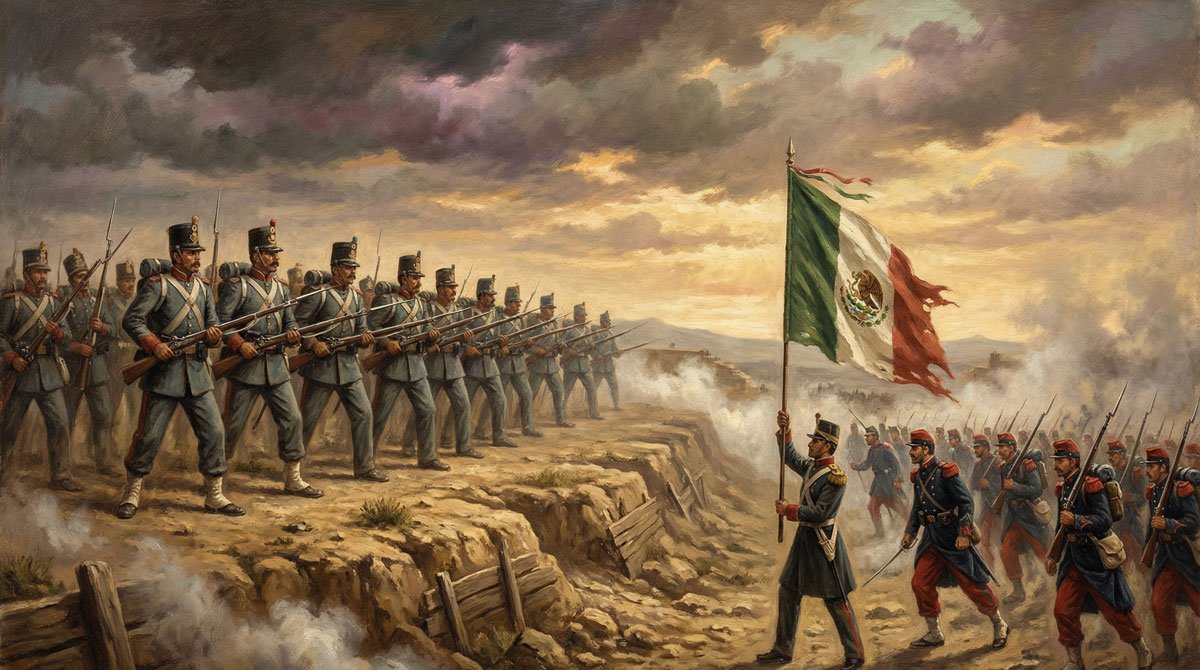
Historian Justo Sierra later argued that if Mexico had not defeated the French at Puebla, France might have aided the Confederacy, potentially changing the outcome of the American Civil War. The victory at Puebla, therefore, had implications that reached far beyond Mexico’s borders.
The Celebration Gap: Why Cinco de Mayo Is Bigger in America Than Mexico
Here lies the great paradox of Cinco de Mayo. In Mexico, May 5th is a relatively minor affair. It is not a federal holiday, so most people go to work as usual. The most significant observances are in the state of Puebla, where the battle took place. There, you’ll find military parades and solemn reenactments of the battle, a day of historical remembrance.
In the United States, it’s a different story entirely. The holiday first gained traction among Mexican immigrants in the 1960s during the Chicano civil rights movement. They saw the story of Puebla—of indigenous Mexicans defeating a European superpower—as a powerful symbol of their own struggle for recognition and justice.
Then, in the 1980s, beer and liquor companies saw a golden marketing opportunity. Their advertising campaigns transformed Cinco de Mayo into a mainstream, nationwide party. Today, it generates beer sales on par with the Super Bowl and has become a broad celebration of Mexican-American culture, heritage, and, of course, food and drink.
| Aspect | Mexico | United States |
|---|---|---|
| Holiday Status | Regional (Puebla mainly) | Widely celebrated, but not official |
| Federal Holiday? | No | No |
| Main Focus | Historical commemoration | Cultural celebration |
| Typical Activities | Military parades, battle reenactments | Parties, festivals, parades, music |
| Food & Drink | Traditional meals, local specialties | Tacos, margaritas, and lots of beer |
| Commercial Impact | Minimal | Massive (over $600M in beer sales) |
| Who Celebrates | Mainly residents of Puebla | Mexican-Americans and the general public |
How to Celebrate: Traditional Foods, Drinks & Authentic Customs
Celebrating Cinco de Mayo authentically means engaging with the culture beyond the stereotypes. It’s about savoring the rich flavors of Mexican cuisine and appreciating the vibrant artistic traditions that accompany the holiday.
Traditional Foods
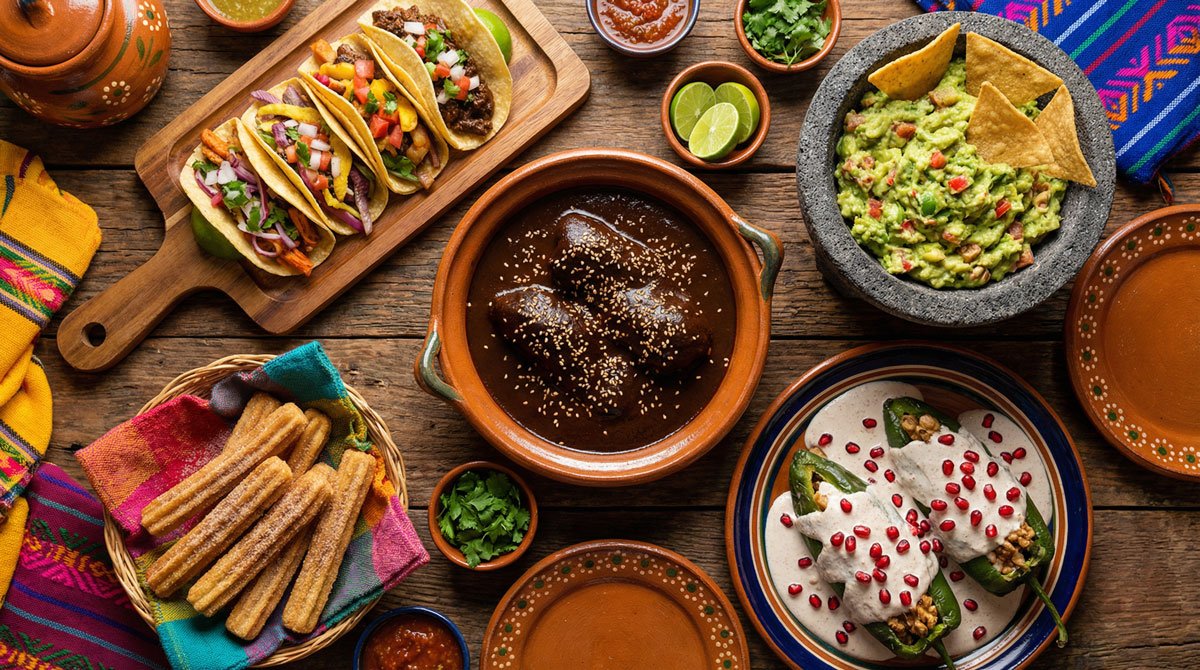
While tacos and guacamole are popular, the true star of Cinco de Mayo cuisine is Mole Poblano. This complex, savory-sweet sauce, often served over turkey or chicken, originated in Puebla and is a culinary masterpiece. Other traditional dishes include chalupas, chiles en nogada, and a variety of street foods that capture the spirit of Mexican cooking.
Traditional Drinks
Margaritas and Mexican beers are staples of American celebrations, but the world of Mexican beverages is much richer. Consider trying a Paloma, a refreshing mix of tequila and grapefruit soda. For non-alcoholic options, horchata (a sweet rice milk drink) and various aguas frescas (fruit-infused waters) are delicious and authentic choices.
Cultural Activities
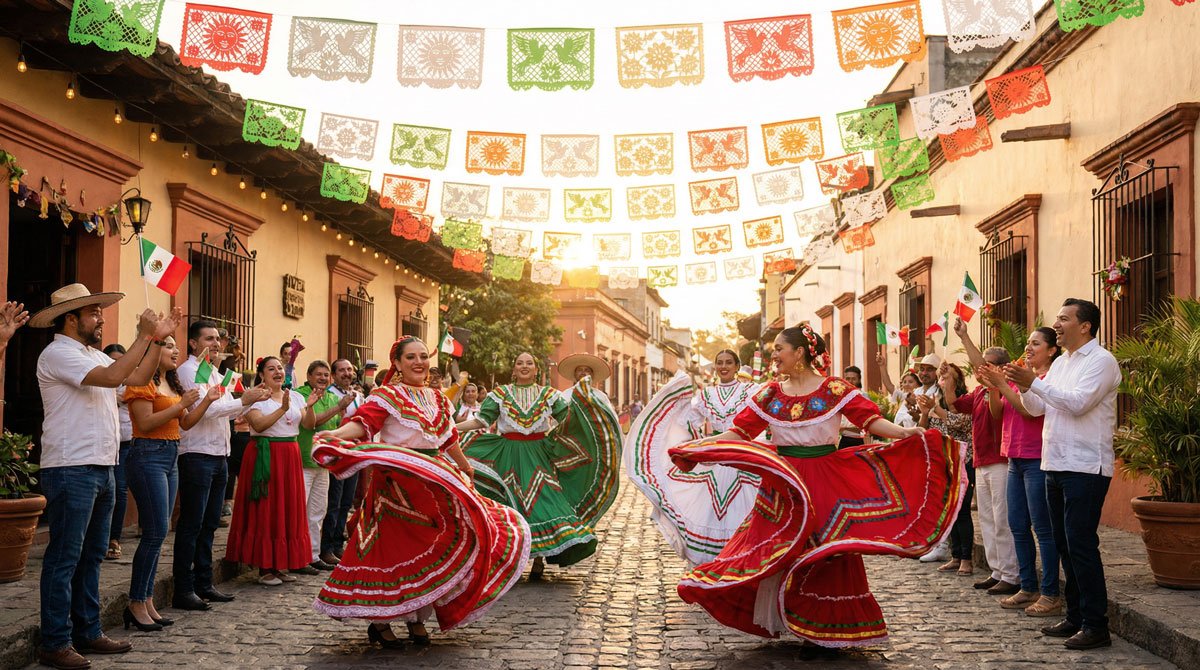
Authentic celebrations are filled with music and dance. The sounds of mariachi music, with its soaring trumpets and heartfelt vocals, are central to the experience. You might also see performances of Ballet Folklórico, a traditional dance style that tells stories of Mexican history and culture through intricate choreography and colorful costumes.
Celebrate Respectfully
- Learn the History: Understand that you’re celebrating a military victory, not just a party.
- Support Mexican-Owned Businesses: Eat at authentic local restaurants and buy from Mexican artisans.
- Appreciate, Don’t Appropriate: Enjoy the culture without resorting to offensive stereotypes or costumes.
- Attend Cultural Events: Look for local festivals, parades, or museum exhibits to deepen your understanding.
Cinco de Mayo Myths Debunked: What It’s NOT
To truly honor Cinco de Mayo, it’s crucial to separate fact from fiction. The holiday is surrounded by myths that can lead to misunderstanding and cultural appropriation. Let’s debunk the most common ones.
Myth #1: It’s Mexican Independence Day
This is the biggest misconception. Mexican Independence Day, the country’s most important national holiday, is on September 16. It commemorates the “Grito de Dolores,” a call to arms against Spanish colonial rule in 1810—a full 52 years before the Battle of Puebla.
Myth #2: It’s Mexico’s Biggest Holiday
While important, Cinco de Mayo is not a major national holiday in Mexico. Independence Day, Day of the Dead (Día de los Muertos), and Christmas are far more significant and widely celebrated throughout the country. For most Mexicans, May 5th is a regular workday.
What NOT to Do
Respect is key. Avoid wearing sombreros as party props, donning fake mustaches, or using other stereotypical costumes. These actions reduce a rich culture to a caricature. Instead of making it just another drinking holiday, take the time to learn, appreciate, and engage with the culture respectfully.
Respect the Culture
Cinco de Mayo celebrates Mexican heritage and a significant historical victory. Honor it by learning the history, supporting authentic businesses, and avoiding stereotypes or cultural appropriation.
Where to Experience the Best Cinco de Mayo Celebrations in America
While celebrations happen nationwide, some U.S. cities host particularly large and vibrant Cinco de Mayo events, drawing huge crowds and showcasing the best of Mexican-American culture.
- Los Angeles, California: Home to the largest Mexican-American population, L.A. hosts Fiesta Broadway, a massive street festival that attracts hundreds of thousands. The historic Olvera Street also holds traditional celebrations.
- Chicago, Illinois: The Pilsen neighborhood, a center of Mexican culture in Chicago, comes alive with a colorful parade and festival in Douglas Park.
- Houston, Texas: This city’s celebration in Market Square Park is a major event, featuring live music, dancing, and fantastic food, reflecting the region’s deep Tejano and Mexican roots.
- Denver, Colorado: The “Celebrate Culture” festival in Civic Center Park is one of the largest in the country, a two-day event with live music, a taco-eating contest, and a lowrider car show.
- San Antonio, Texas: With its rich Mexican heritage, San Antonio’s celebrations in Market Square are known for their authenticity, featuring music, food, and cultural events that last for days.
Planning Your Visit
If you plan to travel for a major Cinco de Mayo festival, book hotels and flights early as prices can spike. Arrive at parades and events ahead of time to get a good spot, and be sure to explore local, family-owned Mexican restaurants for an authentic taste of the culture.
Frequently Asked Questions About Cinco de Mayo
- 1. What is Cinco de Mayo and why is it celebrated?
- Cinco de Mayo commemorates the Mexican Army’s unlikely victory over the French Empire at the Battle of Puebla on May 5, 1862. It is celebrated to honor the bravery and resilience of the Mexican soldiers who defeated a much larger and better-equipped army. In the U.S., it has also become a major celebration of Mexican-American culture and heritage.
- 2. Is Cinco de Mayo Mexican Independence Day?
- No, it is not. Mexican Independence Day is celebrated on September 16th and marks Mexico’s declaration of independence from Spanish rule in 1810. Cinco de Mayo occurred 52 years later.
- 3. Why is Cinco de Mayo more popular in the U.S. than in Mexico?
- In Mexico, it’s primarily a regional holiday celebrated in Puebla. It became popular in the U.S. after Mexican-American activists in the 1960s promoted it as a symbol of cultural pride and resistance. Later, commercial advertising in the 1980s turned it into the nationwide celebration it is today.
- 4. What are some traditional foods for Cinco de Mayo?
- The most traditional dish is Mole Poblano, a rich sauce from Puebla. Other popular foods include tacos, chalupas, chiles en nogada, and fresh guacamole.
- 5. Can non-Mexicans celebrate Cinco de Mayo?
- Absolutely. The key is to celebrate respectfully. This means taking the time to learn the history, supporting Mexican-owned businesses, enjoying the culture, and avoiding stereotypes or offensive costumes.
- 6. What happened after the Battle of Puebla?
- Despite the victory, France returned with a larger force in 1863 and captured Mexico City, installing Maximilian I as emperor. However, by 1867, with American support after the Civil War ended, Mexico expelled the French and executed Maximilian.
- 7. What is the difference between Cinco de Mayo and Mexican Independence Day?
- Cinco de Mayo (May 5) celebrates the 1862 Battle of Puebla victory over France. Mexican Independence Day (September 16) commemorates the 1810 start of Mexico’s war for independence from Spain. They are separate events 52 years apart.
- 8. Where are the biggest Cinco de Mayo celebrations in the United States?
- The largest celebrations occur in Los Angeles (Fiesta Broadway), Chicago (Pilsen neighborhood), Houston, Denver (Civic Center Park), and San Antonio. These cities have significant Mexican-American populations and host multi-day festivals.
Conclusion: More Than Just a Party
Cinco de Mayo is more than just an excuse for margaritas and tacos. It is a holiday with a deep history, rooted in a story of courage, resilience, and the defense of national sovereignty. It’s a day that reminds us of the power of the underdog and the enduring spirit of the Mexican people.
While its modern celebration in the United States has been shaped by commercial forces, its core message of cultural pride remains. By understanding its true history, we can move beyond the stereotypes and celebrate Cinco de Mayo in a way that is both joyful and meaningful.
So next May 5th, as you celebrate, raise a glass not just to the party, but to the brave soldiers of Puebla and the rich, vibrant culture they fought to protect. Celebrate with knowledge, celebrate with respect, and celebrate with an appreciation for the real story of Cinco de Mayo.